
Anansi and the Pot of Shared Wisdom: A West African Folktale About Humility
Anansi and the Pot of Shared Wisdom
Long ago, beneath the cool shade of the ancient baobab trees in a vibrant West African village, there lived a spider named Anansi. Anansi was no ordinary spider; he was famous throughout the land for his quick wit, clever tricks, and insatiable curiosity. His eight spindly legs moved lightly across the earth, and his eyes sparkled with mischief and ambition. Anansi loved learning new things, but, even more, he loved being the cleverest creature in all the land.
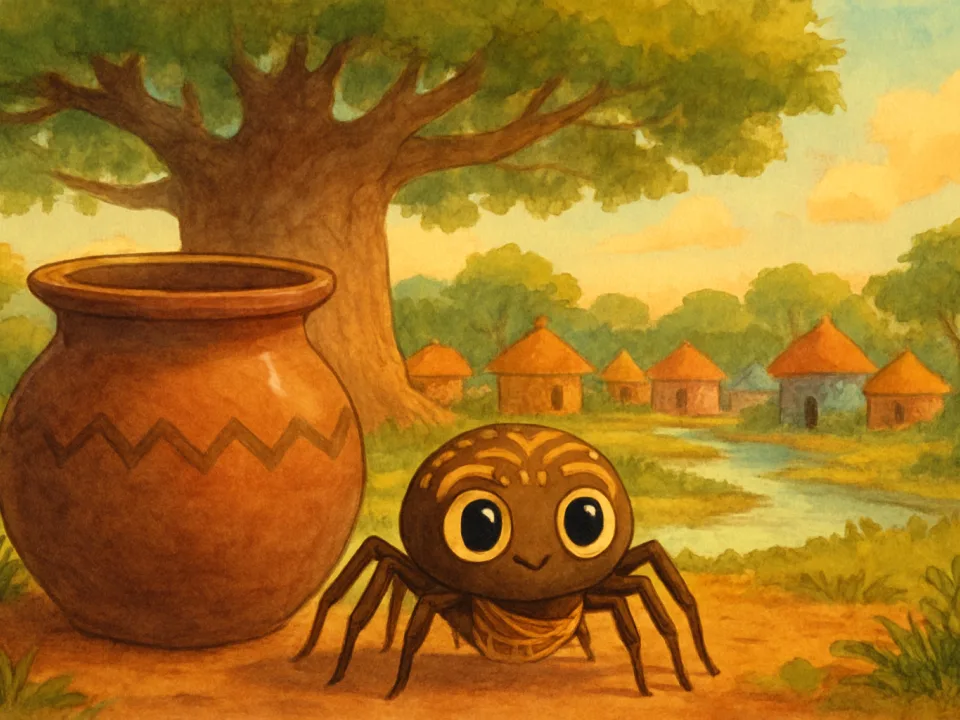
At that time, wisdom was scattered like seeds on the wind. Each villager held a piece: the fisherman knew how to read the river’s secrets, the weaver understood the stories woven into baskets, and the healer could soothe a fever with the right leaf or root. Even the children had their own clever ways—how to climb the mango tree without getting scratched, or how to coax a song from a hollow reed. But Anansi was not content with just a piece of wisdom. He wanted it all.
One night, as a silver moon rose high above the village and the crickets began their song, Anansi hatched a plan. “If I could gather all the wisdom in the world and keep it for myself,” he whispered to the night sky, “then surely, I would be wiser than anyone who ever lived! Everyone would have to come to me for advice.”
So, the very next day, Anansi began his quest. He spun a pouch from his strongest silk and set off across the village. Whenever he saw someone doing something clever—fixing a broken pot, telling a story that made the children giggle, or predicting the weather by watching the flight of birds—Anansi would creep closer. With a polite bow and a friendly smile, he’d ask a question or two, listening carefully to every answer. Each time he learned something new, he tucked the knowledge away in a large, round clay pot he had hidden under his web.
Anansi learned the secret of catching the trickiest fish with a bent thorn and a patient hand. He discovered how to weave baskets so tightly that not a single grain of millet could escape. He learned how to calm a crying baby with a gentle lullaby and how to coax the juiciest yams from the earth. He even learned how to tell when the rains would come by watching the ants move their eggs. With every secret he collected, his pot grew heavier and his heart swelled with pride.
Each evening, as the sun dipped low, Anansi would sit beside his pot, peeking inside and feeling very proud. “Soon,” he thought, “no one will be as wise as I am.” But as the pot grew heavier, so did Anansi’s pride. He began to strut around the village, boasting to anyone who would listen. “No one solves riddles like I do! No one tells tales like Anansi!” he would say, puffing out his little spider chest. The children giggled, the elders shook their heads, and even the birds seemed to chirp in amusement.
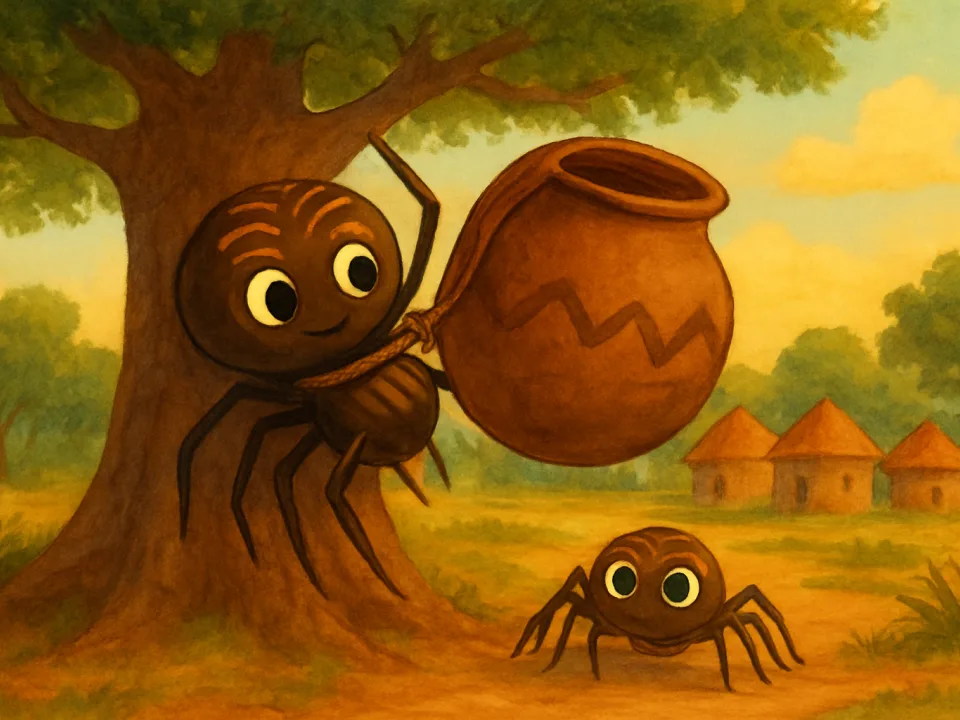
But keeping all the wisdom to himself began to worry Anansi. “What if someone finds my pot?” he fretted one night. “What if they steal my secrets and become as wise as I am?” Determined that no one else should share his treasure, Anansi decided to hide the pot where no one but he could reach it.
After much thought, he chose the tallest, oldest baobab tree in the village. Its trunk was thick, its branches stretched high into the sky, and its roots dug deep into the earth. “No one will think to look for wisdom up there,” Anansi chuckled, a twinkle in his eye.
Before dawn, while the village still slept and the rooster had yet to crow, Anansi hurried to his hiding place. He tied the pot of wisdom in front of his belly with his strongest silk thread, making sure it was snug and secure. Then, he began his climb. Up, up he went, gripping the rough bark with his nimble legs. But as he climbed higher, the pot swung and bumped against his knees, getting tangled in the branches and making every step harder.
Anansi huffed and puffed, his legs trembling as he struggled upwards. The pot swung wildly, knocking against his thin legs and threatening to slip from his grasp. Sweat dripped down his furry face as he muttered, "Why is this so difficult? Surely, the wisest spider in all the land can climb a tree!"
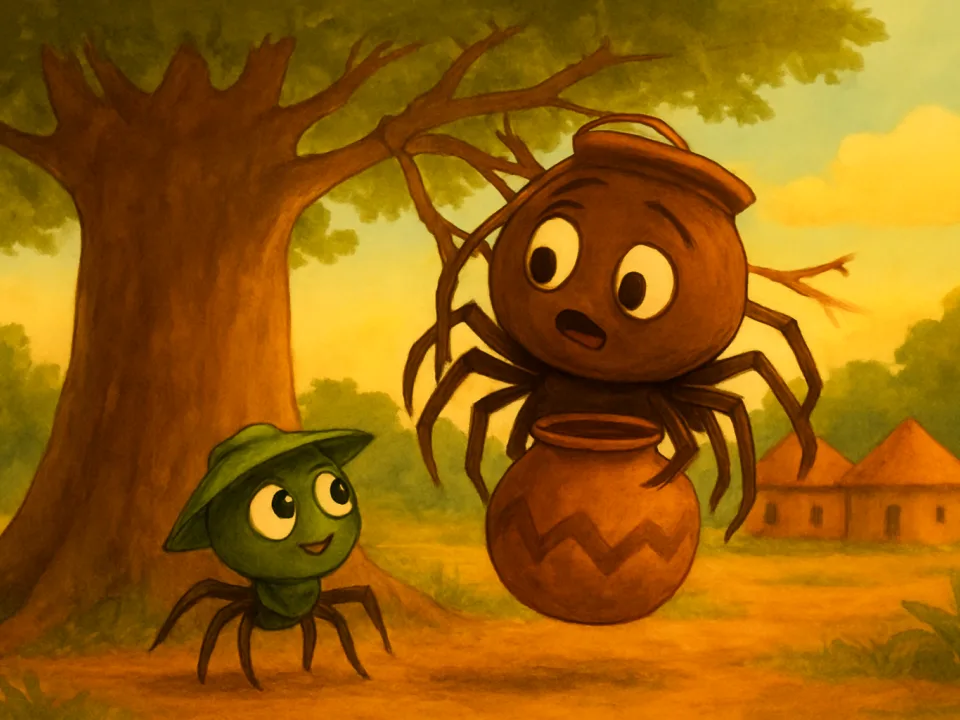
Unbeknownst to Anansi, his son, Kweku Tsin, had woken early that morning. Kweku Tsin was clever in his own quiet way—thoughtful, observant, and always ready to help. As he wandered near the baobab tree, he spotted his father, struggling and grumbling as he climbed. Kweku Tsin called out softly, "Father, why do you tie the pot in front of you? If you tie it behind your back, it won’t bump your knees and you’ll climb much easier."
Anansi froze, legs splayed awkwardly on the trunk. He stared down at his son, stunned. How could Kweku Tsin, who did not have the pot of wisdom, think of such a clever idea? Anansi’s pride swelled, then quickly deflated as he realized he had never thought of it himself. In his surprise, his grip slipped. The silk thread holding the pot snapped, and the pot tumbled from his belly, crashing through the branches with a thunderous clatter.
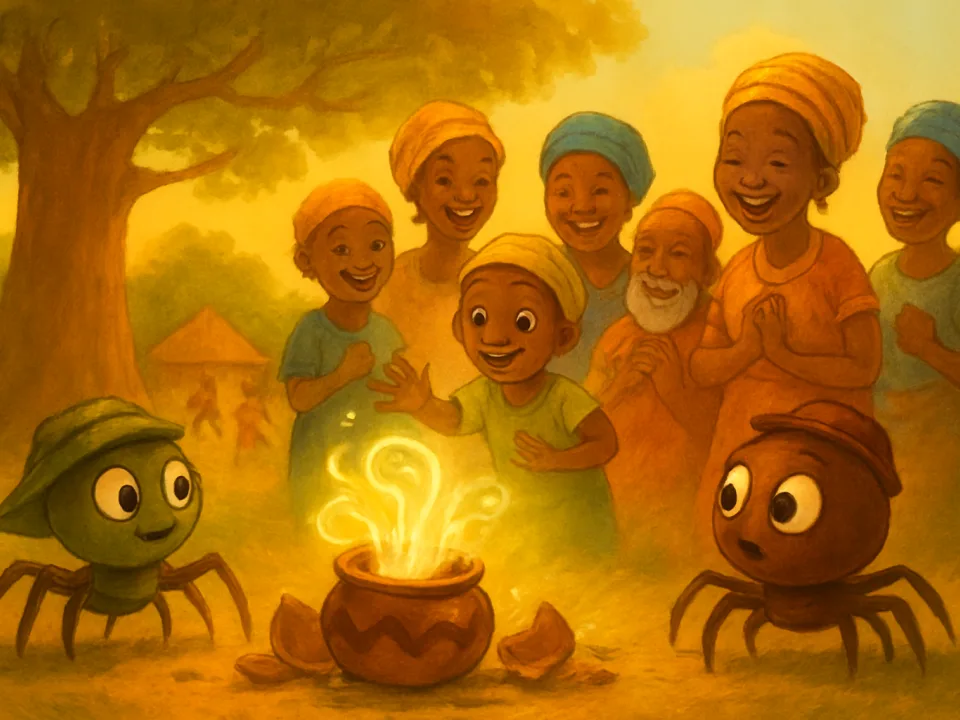
With an almighty crack, the pot shattered on the ground below, spilling its contents far and wide. Wisdom seeped into the grass, drifted on the breeze, and danced along the riverbank. The villagers woke to the sound and hurried over, curious about the commotion. They found bits of wisdom everywhere—new ways to fish, clever stories to tell, easy tricks for weaving, and fresh songs for soothing little ones. Children invented new games, mothers created tastier meals, and elders shared riddles that left everyone laughing.
Anansi scrambled down the baobab tree, his heart pounding with worry. He saw his precious wisdom scattered, picked up by everyone. He slumped at the base of the tree, feeling foolish and defeated. “All my cleverness, gone!” he moaned. “Now everyone will be as wise as me. What use is Anansi if he cannot be the cleverest of all?”
Kweku Tsin sat beside his father and gently patted his eight-legged back. “Father,” he said softly, “wisdom is not a treasure to hide. When we share what we know, we grow wiser together. The whole village is happier now. See how everyone laughs and helps one another?”
Anansi looked around. The village buzzed with excitement and joy. Friends taught friends, children shared secrets, and even the animals seemed to listen more closely. The world felt brighter and kinder—and Anansi realized that, for the first time, he felt truly happy, not just clever.
From that day on, whenever a new trick or riddle appeared in the village, people would smile and say, “That’s the wisdom of Anansi—the wisdom that grows by sharing!”
And as for Anansi, he learned to share his stories, listen to others, and, above all, to remember that true wisdom shines brightest when it is shared with all.

Related Stories

The Nightingale and the Jade Emperor: A Chinese Moral Tale About True Freedom
The Nightingale and the Jade Emperor [Long ago](/blog/traditional-oral-stories-from-grandparents/), beyond the…
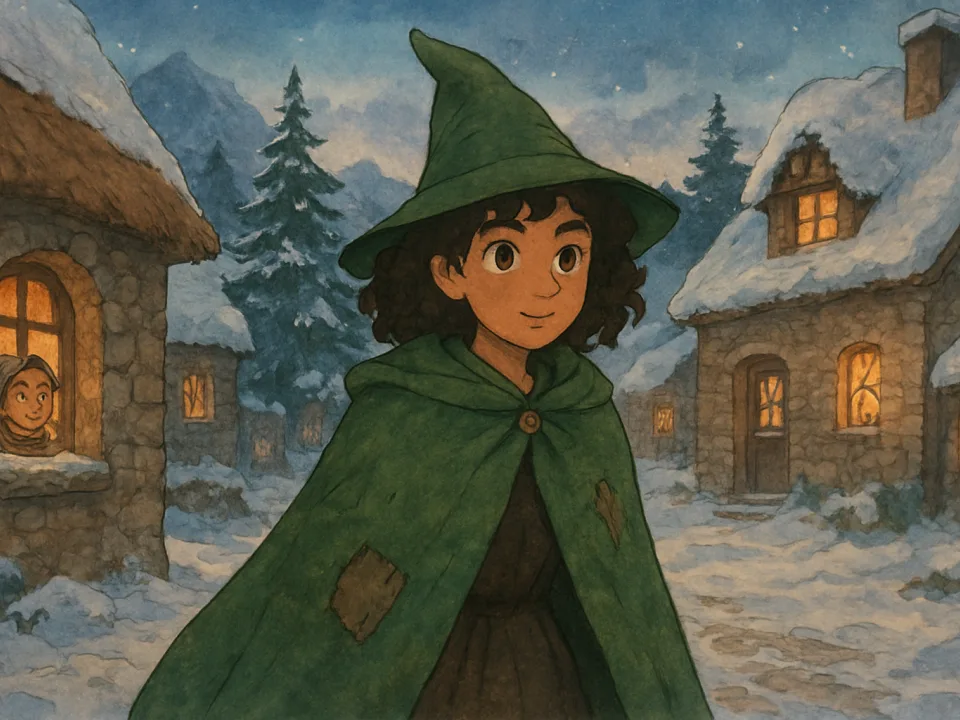
The Stone Soup of the Mountain Village: A European Folktale About Sharing
The Stone Soup of the Mountain Village On the windy slopes of the Silverpine Mountains lay a tiny village called Birch…

The Ugly Duckling | Moral Story About Belonging
The Ugly Duckling On a bright spring morning, the farmyard was full of noise. The hens scratched in the dust. The cows…

The Baobab Tree's Gift: An African Folk Story About Gratitude and Community
The Baobab Tree's Gift: An African Folk Story About Gratitude and Community [Long…
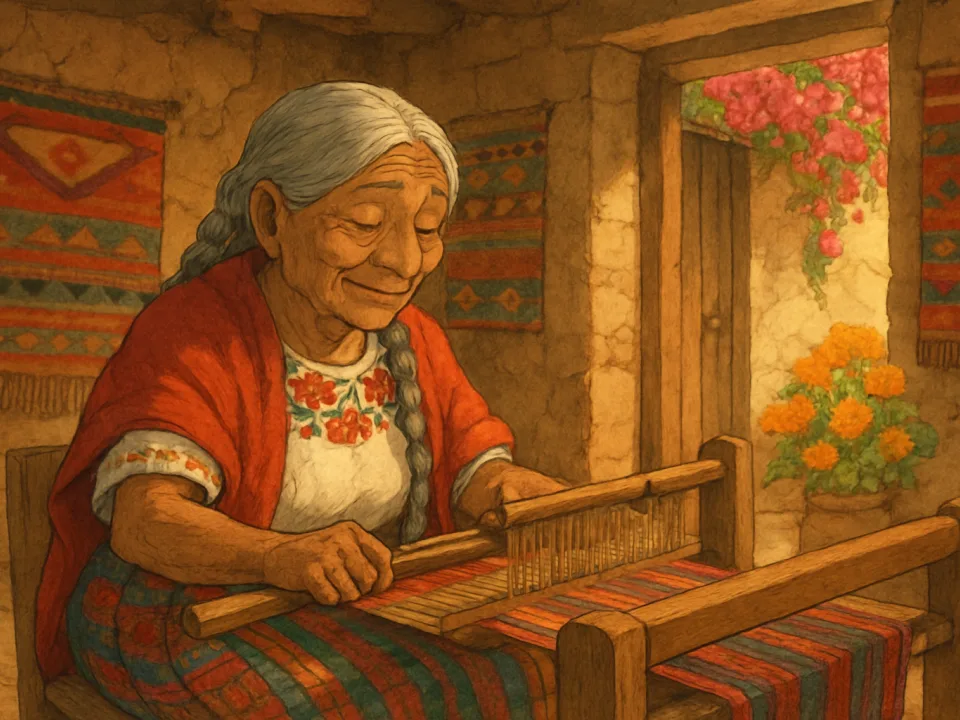
The Weaver of Oaxaca: A Latin American Folktale About Generosity and Craftsmanship
The Weaver of Oaxaca: A Latin American Folktale About Generosity and Craftsmanship In the heart of Oaxaca, where…
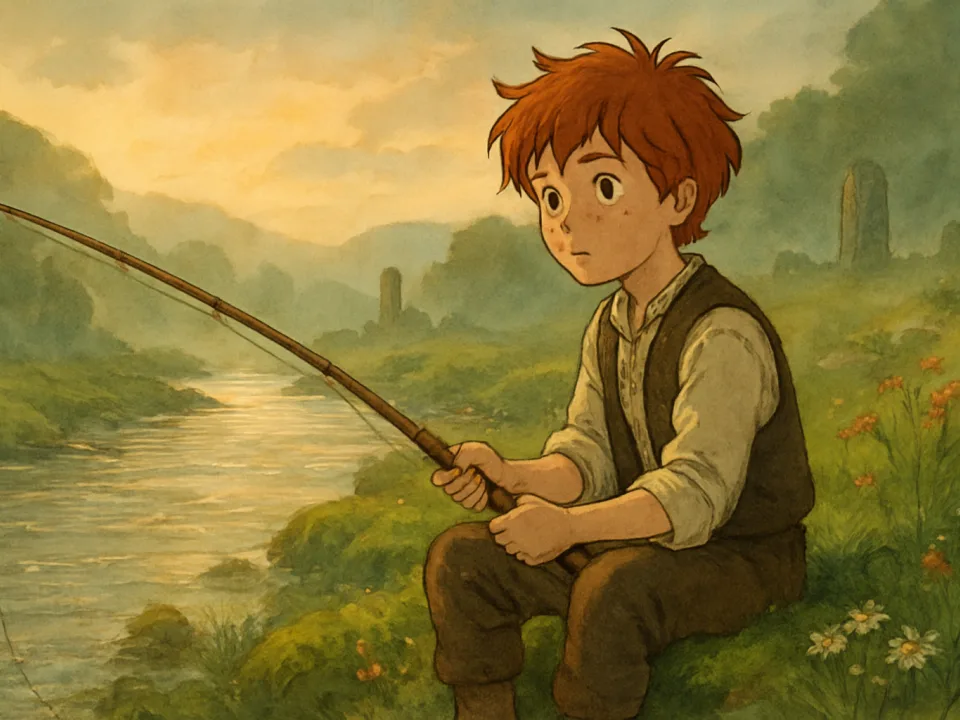
The Silver Salmon of the River: A Celtic Legend About Wisdom and Respecting Nature
The Silver Salmon of the River Once upon a time, in the heart of ancient Celtic lands, where the rolling green hills…