
The Weaver of Oaxaca: A Latin American Folktale About Generosity and Craftsmanship
The Weaver of Oaxaca: A Latin American Folktale About Generosity and Craftsmanship
In the heart of Oaxaca, where mountains rise like ancient sentinels and the clouds cast shifting shadows over emerald valleys, a tiny adobe house welcomed the golden sunlight each dawn. Here lived Abuela Lety, the village’s most beloved weaver, whose nimble fingers and generous heart had shaped countless stories into vibrant woolen tapestries. The edge of Teotitlán del Valle, her home, was a place where cobblestone streets wound between blooming jacaranda trees, and every breeze carried the scent of sweet bread, roasted corn, and the earthy tang of fresh wool.
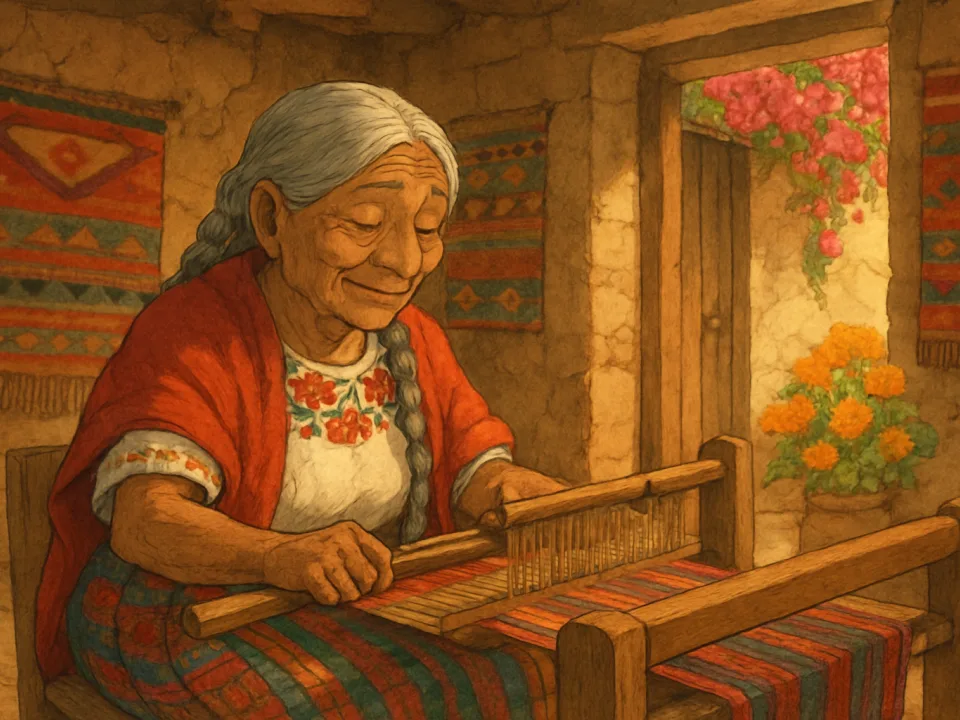
Abuela Lety was not a tall woman, nor a young one. Her hair was silver as the moon, always tied back in a neat braid, and her face, creased with laughter and years of sunlight, glowed with a warmth that drew the village children like moths to a flame. Despite living alone since her husband’s passing, Lety’s life overflowed with companionship. Each morning, her house filled with the rhythmic clack-clack of her wooden loom and the giggles of children who gathered to watch her work. Her stories—woven into every rug—became legends of their own.
Lety’s rugs were more than just beautiful. Each was a tapestry of the valley’s life: zigzag mountains, rivers of indigo blue, and fields of marigold gold. She spun stories into every thread—legends of coyotes and hummingbirds, storms and sunshine, family and friendship. Her artistry was admired throughout Oaxaca, but what truly set her apart was her generous spirit. She taught anyone willing to learn, shared food and laughter, and gave away her best rugs to those in need. Her home was a haven for the tired, the hungry, and the curious.
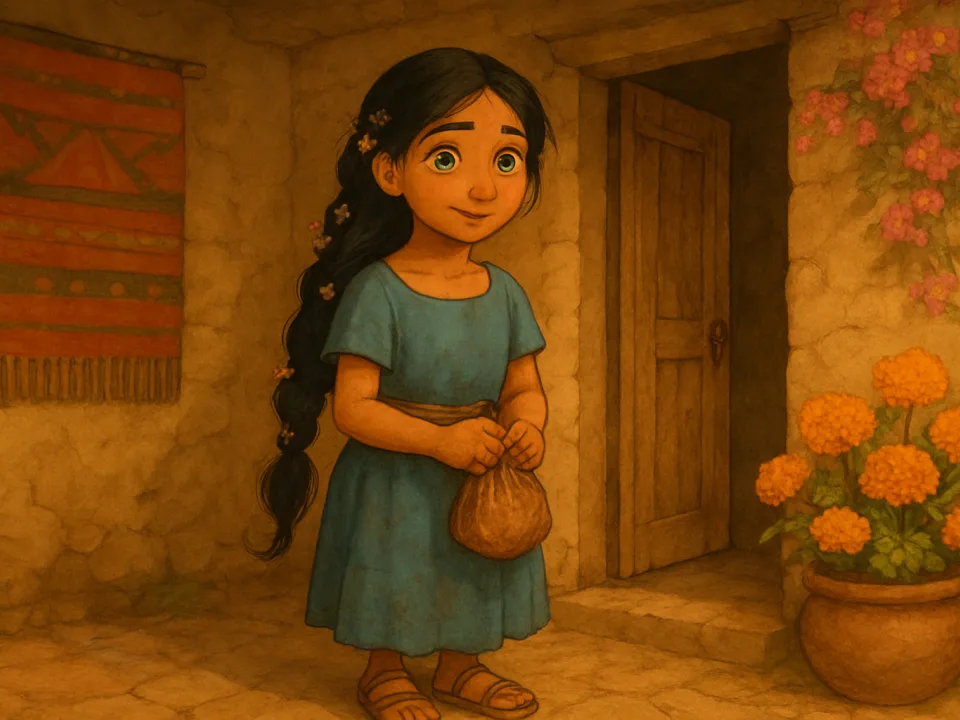
One morning, as silver rain drummed softly on the tiled roof, a stranger appeared at Lety’s door. The young woman’s hair was woven with wildflowers, her dress was patched but neat, and her eyes sparkled with curiosity despite her fatigue. She carried only a worn pouch tied at the waist.
“Buenos días, señora,” she greeted, her voice trembling between hope and weariness. “I am Marisol. I’ve come a long way, and I have little to give. Is there work or food I might earn?”
Abuela Lety smiled, her eyes shining with kindness. “Come in, hija. Rest your feet. In this house, there is always work for willing hands—and always enough to share.”
Marisol gratefully entered, warmth and the smell of cinnamon tea welcoming her. She swept the floor, fetched water from the well, and helped Lety spin raw wool into soft yarn. Lety taught her to separate the brilliant powders—cochineal for red, indigo for blue, marigold petals for yellow. Each color came with its own story: the red of the cochineal beetle, the blue secreted from ancient stones, the gold of the sunflowers that lined the fields.
As they worked, Marisol shared tales of her distant village—stories of mischievous foxes and clever owls, of family feasts and festival dances. Lety, in turn, recounted the legends of Teotitlán: the mountain that once sang, the river that never ran dry, the spirit of the hummingbird who brought hope. Laughter and friendship wove themselves into the space between them, and by sunset, the house felt fuller than it had in years.
That night, as rain pattered against the windows and candlelight danced on the walls, Marisol spoke softly. “You have been kinder to me than anyone I have met, Abuela. I must leave at sunrise, but I have nothing to repay you.”
Lety reached for Marisol’s hands, her own rough from years of weaving. “Ay, my child, the greatest payment is a new friend. If you wish, let us weave together tonight. Let’s make something beautiful—to remember this night, and to carry our stories onward.”
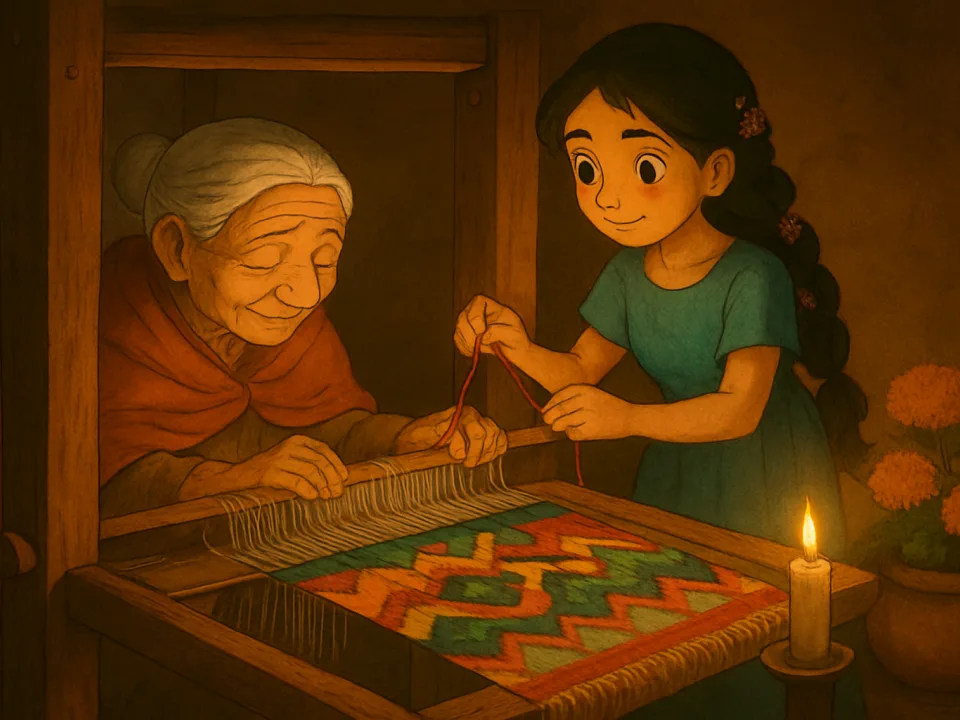
Under the waning moon, the two women worked side by side. Lety showed Marisol how to warp the loom, how to keep the tension true, how to let her heart guide the shuttle’s path. Marisol, quick to learn, added a motif from her childhood: a tiny hummingbird, hidden among the petals and zigzags. They chose bold colors—fiery reds, deep blues, and bright golds—each symbolizing the places and stories that shaped them.
By dawn, their creation was complete. The rug shimmered with the spirit of two villages, old and new, woven together in a tapestry of generosity and hope. Lety folded it with care and pressed it into Marisol’s arms.
“Take this with you,” she said. “Let it remind you that kindness and craft travel further than any journey.”
Marisol shook her head, tears brimming. “No, Abuela. This rug is both of ours. It should stay here, where our stories meet.”
But Lety insisted, and with a final embrace, Marisol wrapped herself in the rug and disappeared into the misty mountains, carrying a piece of Teotitlán’s heart with her.
The seasons changed. The rains faded, replaced by golden sunlight and the scent of ripe fruit in the orchards. Lety returned to her loom and the market, setting out her rugs on a worn blanket each market day. Times were difficult—many villagers could barely afford new sandals, let alone a handwoven rug. Yet Lety continued to teach, to give, and to welcome every child who wandered into her yard.
One bright afternoon, as the square bustled with traders and laughter, a grand carriage rolled into the market. Its polished wood gleamed, and its horses stamped impatiently. Out stepped a merchant in a fine hat and brocade vest, carrying a familiar bundle under his arm—the rug Lety and Marisol had woven.
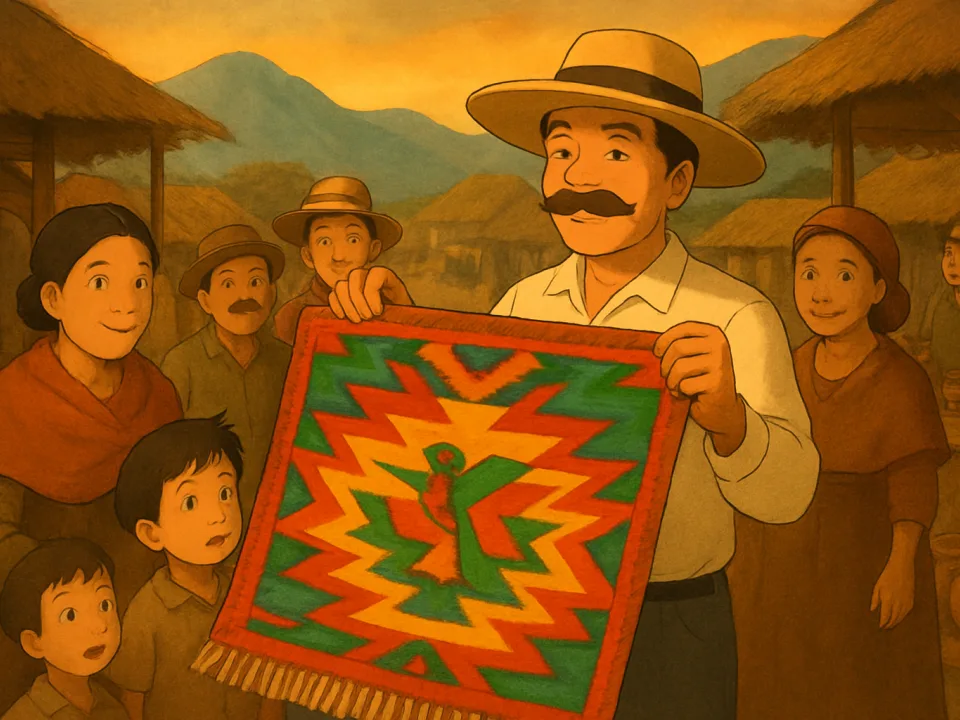
“Señora!” he called, bowing low. “My daughter discovered this rug in a distant town, and I have never seen such beauty. Who wove such wonder?”
Lety’s heart fluttered as she recognized the hummingbird motif. “It was woven here, with the help of a kind friend from far away.”
The merchant’s eyes widened. “Would you teach my artisans? I want my home filled with such artistry. I can pay you generously.”
Lety hesitated. She had never sought riches—her joy was in giving and teaching. But she remembered the children in thin sandals and neighbors whose roofs still leaked when it rained.
“I will teach,” she replied slowly, “but only if everyone may learn—not just your workers. The beauty of Oaxaca is for all who cherish it.”
The merchant agreed, and word spread like wildfire. Soon, Lety’s humble home became a school of weaving. Old men, young girls, mothers and sons all came to learn under her patient guidance. Marisol’s hummingbird became a symbol of hope and welcome, stitched into every new rug, blanket, and shawl across the valley.
As the years passed, the once-poor village blossomed. Families prospered, children laughed, and the spirit of generosity spread from house to house, market to market. Every tapestry from Teotitlán carried with it the story of Abuela Lety and Marisol—the weaver and the wanderer whose kindness had changed the fate of an entire village.
And whenever a new traveler arrived, weary and empty-handed, Abuela Lety would greet them with a smile, a bowl of warm mole, and a place by the loom. “Let’s make something beautiful together,” she would say. And so, the tapestry of Oaxaca grew, one generous thread at a time.

Related Stories

The Baobab Tree's Gift: An African Folk Story About Gratitude and Community
The Baobab Tree's Gift: An African Folk Story About Gratitude and Community [Long…

The Nightingale and the Jade Emperor: A Chinese Moral Tale About True Freedom
The Nightingale and the Jade Emperor [Long ago](/blog/traditional-oral-stories-from-grandparents/), beyond the…
The Stone Soup of the Mountain Village: A European Folktale About Sharing
The Stone Soup of the Mountain Village On the windy slopes of the Silverpine Mountains lay a tiny village called Birch…

The Bamboo Cutter's Honest Promise: A Traditional Japanese Moral Story for Kids
The Bamboo Cutter's Honest Promise Long ago, in a quiet village nestled at the foot of Japan’s misty green mountains,…
Anansi and the Pot of Shared Wisdom: A West African Folktale About Humility
Anansi and the Pot of Shared Wisdom [Long ago](/blog/traditional-oral-stories-from-grandparents/), beneath the cool…

Honest Woodcutter and the Magic Basket | Moral Story on Kindness
The Honest Woodcutter and the Magic Basket On the edge of Willow Creek, where the river flashed like silver ribbons and…