
The Stone Soup of the Mountain Village: A European Folktale About Sharing
The Stone Soup of the Mountain Village
On the windy slopes of the Silverpine Mountains lay a tiny village called Birch Hollow. The stone cottages huddled together as if to keep warm beneath their thatched roofs. Ancient pine trees stood guard all around, their green arms shaking snowflakes to the ground. Winters here were long and fierce, and the people of Birch Hollow worked hard to gather enough food for the cold months, storing potatoes in cellars, beans in sacks, and apples in attics. Yet even the most prepared families sometimes worried their stores wouldn’t last until the first crocus poked through the melting snow.
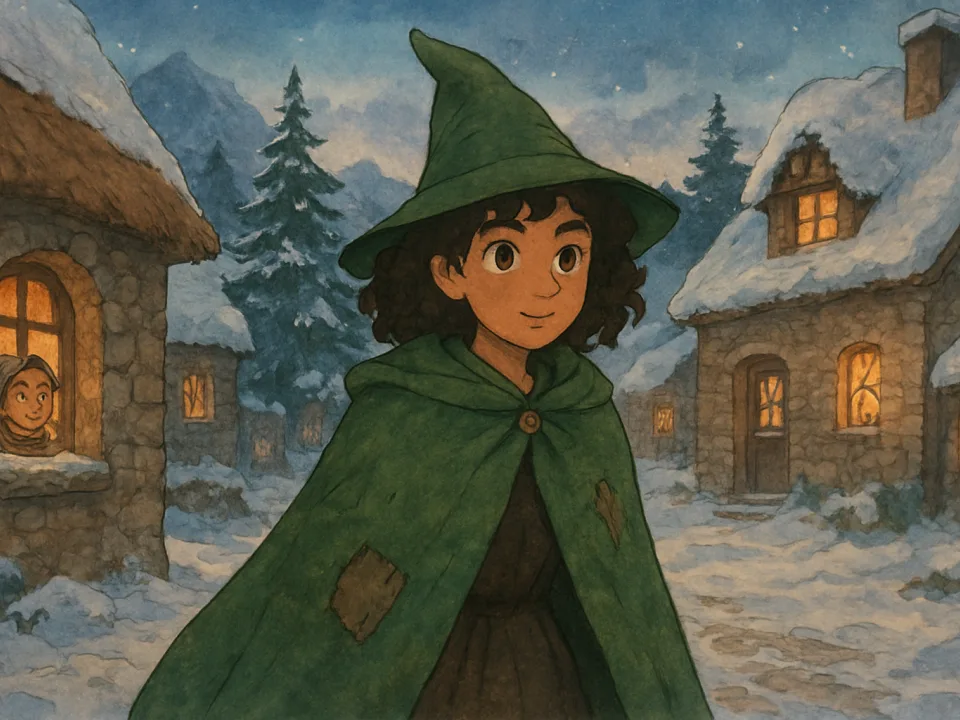
One blustery afternoon, as a snowstorm whispered through the tall pines, a wanderer came down the winding path into Birch Hollow. She was wrapped in a patched green cloak, with a pointed felt hat pulled low over her dark curls. Her eyes sparkled with kindness and cleverness, and her cheeks were rosy from the cold. Her name was Mira.
Mira carried nothing but a small satchel and a smooth, round stone. She stopped in the village square, where a stone well stood, and the bell tower cast a long shadow. Flakes of snow dusted her shoulders as she looked around. The villagers peeked out from behind curtains and half-open doors, wondering what a stranger could want during such a biting winter. Some watched from upstairs windows, while others pulled their scarves tighter, uncertain whether to greet the newcomer.
Old Mrs. Petrov, wrapped in layers of plaid shawls, was the first to step out. “Good day, traveler,” she called, lifting a wrinkled hand. “What brings you to Birch Hollow in this weather?”
Mira smiled warmly. “I’ve come a long way, and I’m hungry as a bear after hibernation. If you’ll allow me, I’d like to make some soup—stone soup, to be exact.”
The villagers muttered among themselves. Stone soup? How could a person make soup from a stone? But Mira’s eyes were bright and hopeful, and her tone was cheerful. The idea was so strange and unexpected that even the most skeptical villagers found their curiosity growing.
Curious, the villagers gathered around as Mira rolled up her sleeves and asked, “May I borrow a large pot and some water? I promise, you won’t be disappointed.”
Chef Ivan, the village cook, fetched his biggest iron cauldron, placing it over a crackling fire in the middle of the square. He filled it with icy well water while Mira gave her stone a quick polish with her sleeve for good luck.
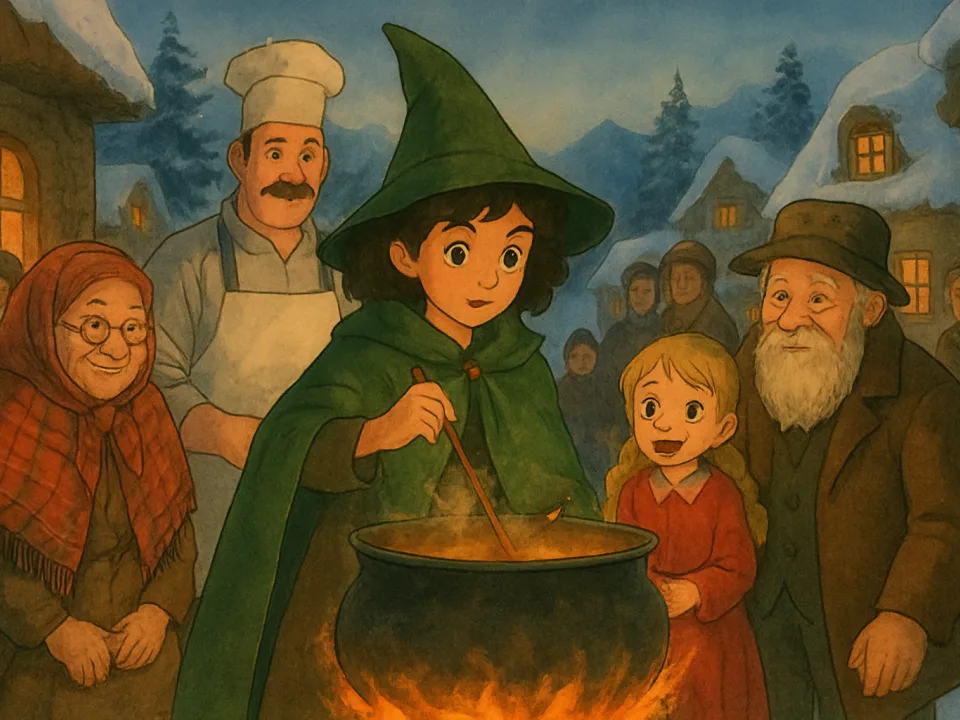
With a gentle plop, she dropped the stone into the bubbling water. The fire snapped and the steam curled into the frosty air.
Villagers watched as the water steamed and the stone tumbled at the bottom. Mira stirred slowly, then sniffed the air. “Ahh,” she said, “stone soup is delicious. But you know, it’s even better with a little salt and a carrot.”
Mrs. Petrov shrugged, then shuffled off and returned with a withered carrot and a pinch of salt. She liked the idea of a soup that could feed everyone, even in winter. Mira sliced the carrot and sprinkled in the salt. The smell grew richer, and a warm aroma began to drift through the square.
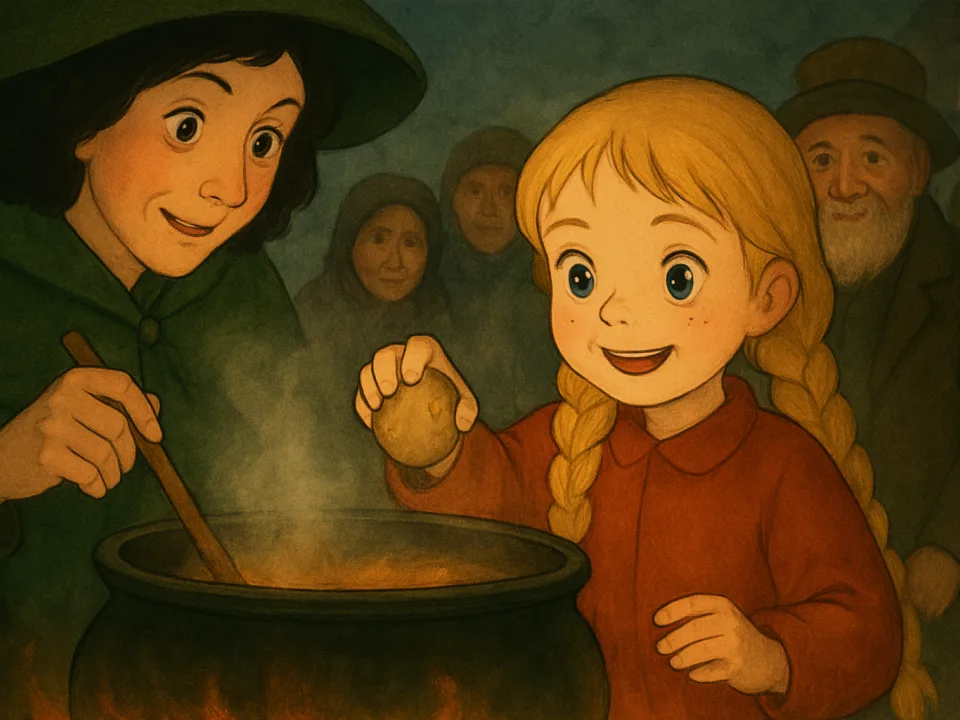
Little Anna, a girl with freckles and golden braids, bounced up. “Mama,” she pleaded, “can I add our potato?” Her mother nodded, so Anna dashed home and brought a round potato. Into the pot it went.
Soon others, feeling the warmth and excitement, went home and fetched what little they could spare—a handful of beans from the seamstress, a sprig of thyme from the schoolmaster’s wife, a slice of onion from the carpenter, a rind of cheese from the shepherd. Even the grumpy miller, Old Klaus, brought a crust of bread for dipping, though he grumbled about it at first. Each addition made the soup heartier, the scent more inviting.
Children skated on the edge of the square, while parents chatted and shared tales. One by one, more villagers emerged, drawn by the laughter and the promise of something special bubbling in the pot. A mother with a baby in her arms offered a turnip, and the blacksmith’s apprentice shyly brought a few dried mushrooms from his pocket. No one felt that their contribution was too small.
As the soup simmered, the villagers grew friendlier. They laughed and shared stories. Old Mrs. Petrov recounted the time she once outran a wild boar in her youth, and the children giggled. Ivan told how he learned to cook from his grandmother far away in the valleys. Mira listened and nodded, stirring the pot, her eyes sparkling with delight at the growing sense of togetherness.
Snow piled high around the square, but no one felt the cold. The fire’s heat and the warmth of newfound camaraderie kept the winter chill at bay. The villagers, who often kept to themselves during the harsh months, marveled at how a simple idea—and a simple stone—had brought them all together on this stormy day.
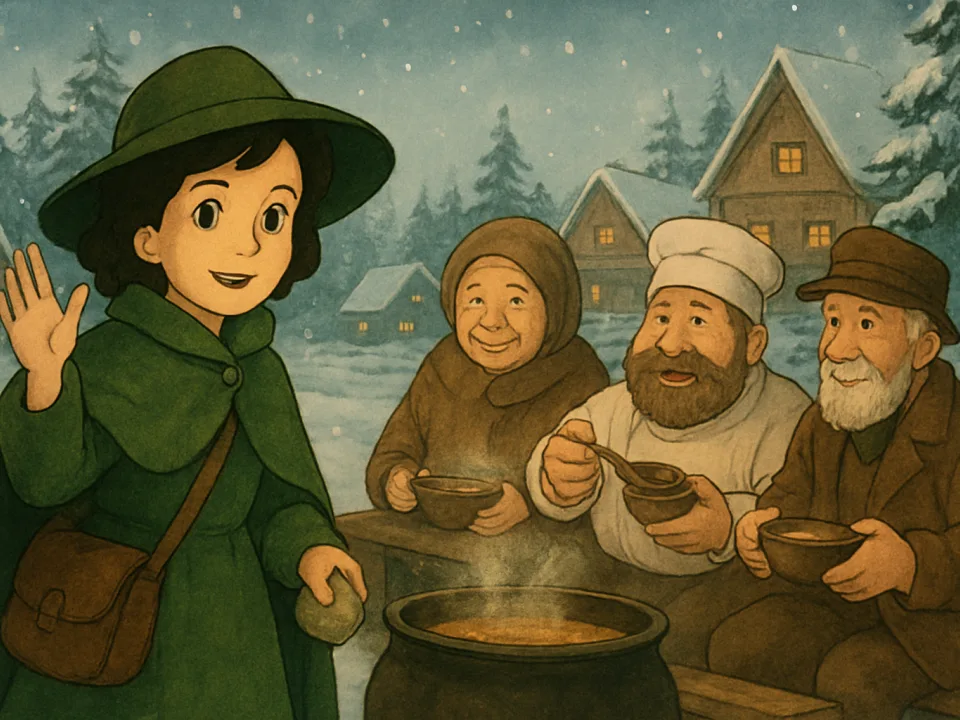
Finally, Mira ladled out steaming bowls for everyone. The soup was thick and hearty, full of flavor, and every bit as magical as she promised. The stone, of course, remained at the bottom of the pot—shiny and clean. Each spoonful tasted of winter herbs, root vegetables, and most of all, hope.
“That’s the best soup I’ve ever had!” declared Anna, licking her spoon. Her cheeks glowed, and her eyes sparkled as she looked around at the happy, satisfied faces.
“With a stone?” Mrs. Petrov chuckled, shaking her head. “Or with sharing, perhaps?”
Mira smiled, her eyes twinkling. “When everyone brings a little, there’s enough for all.”
The villagers nodded, realizing how much lighter their hearts—and their larders—felt when they came together.
As evening settled and the fire turned to coals, the villagers lingered, reluctant to let the magic of the day end. They sang songs and promised to gather again, no longer strangers passing in the snow but friends joined by kindness.
From that day on, whenever Birch Hollow needed to come together—whether for a festival, a problem to solve, or just a dreary winter’s day—they’d make stone soup, each adding something to the pot. The villagers learned that sharing not only filled their bellies, but also warmed their hearts and brought them closer as a community.
Mira packed her stone and waved goodbye, off to other villages that might need a little magic—and a reminder of just how wonderful sharing can be. As she disappeared into the snowy twilight, the villagers knew they would never forget her lesson: that together, even the smallest contributions can create something truly extraordinary.

Related Stories
The Weaver of Oaxaca: A Latin American Folktale About Generosity and Craftsmanship
The Weaver of Oaxaca: A Latin American Folktale About Generosity and Craftsmanship In the heart of Oaxaca, where…
The Eagle and the Hummingbird: A Native American Story About Courage and Cooperation
The Eagle and the Hummingbird: A Native American Story About Courage and Cooperation [Long…
The Proud Rose Story for Kids About Humility and Kindness
The Proud Rose: A Tale of Humility, Kindness, and True Beauty In the middle of a bright, cheerful garden, where…
The Ugly Duckling | Moral Story About Belonging
The Ugly Duckling On a bright spring morning, the farmyard was full of noise. The hens scratched in the dust. The cows…
The Nightingale and the Jade Emperor: A Chinese Moral Tale About True Freedom
The Nightingale and the Jade Emperor [Long ago](/blog/traditional-oral-stories-from-grandparents/), beyond the…
Anansi and the Pot of Shared Wisdom: A West African Folktale About Humility
Anansi and the Pot of Shared Wisdom [Long ago](/blog/traditional-oral-stories-from-grandparents/), beneath the cool…