
5 Mindfulness Stories for Kids: Staying Calm & Being Present

In today’s busy world, teaching children to be mindful helps them develop a sense of calm and awareness that lasts a lifetime. Mindfulness stories for kids are a wonderful way to introduce young minds to the practice of staying present and managing their emotions. These stories gently guide children to recognize their feelings, breathe through challenges, and appreciate the moment they are in. By sharing these tales, parents and educators can nurture mindfulness as a valuable life skill that boosts confidence, reduces stress, and encourages kindness.
Stories have a special way of inspiring children and teaching important morals. Through engaging narratives, children learn to pause, reflect, and respond thoughtfully. This article features five carefully selected mindfulness stories for kids that will help them discover the power of calmness and presence in everyday life. Whether read aloud at bedtime or used as part of a classroom activity, these stories are perfect tools to cultivate mindfulness from a young age.
Why Mindfulness Matters
Mindfulness is more than just a trendy word; it’s a vital skill that supports children’s emotional and mental well-being. When kids practice being present, they become better at managing their feelings, reducing anxiety, and improving focus. Mindful children tend to be more empathetic and patient, which influences their relationships positively. In a world filled with distractions, teaching children to pause and pay attention to their inner experiences helps them develop resilience and self-control.
Introducing mindfulness through stories makes these concepts accessible and fun. Children can identify with characters who face challenges and learn to stay calm and centered. As they internalize these lessons, they become more aware of themselves and their surroundings. This awareness fosters compassion, patience, and a sense of gratitude—traits that are essential for nurturing confident and emotionally intelligent individuals. For more ways to encourage positive character traits, explore 8 Patience Stories for Kids.
Bedtime Stories for Kids · 3 Greed Stories for Kids: Moral Lessons on Wanting Too Much · 8 Patience Stories for Kids: Short Tales That Teach Calm Waiting · 4 Pride Stories for Kids: The Danger & Downfall of Arrogance
Table of Contents
- The Calm Cloud: A story about finding peace inside
- The Little Leaf’s Stillness: Learning patience in nature
- The Gentle River: Staying present in everyday life
- The Mindful Mouse: A tale of focus and awareness
- The Quiet Star: Embracing calm during busy times
- Practical Takeaways
- Conclusion
Introduction
In our busy world, children and adults alike often feel overwhelmed by noise, distractions, and hurried schedules. Mindfulness — the practice of paying attention to the present moment without judgment — can help everyone find calm, clarity, and kindness. Teaching children mindfulness helps them develop emotional resilience, concentration, and empathy, making daily life more joyful and less stressful. For parents and teachers, cultivating mindfulness creates a peaceful environment where children can learn and grow with awareness and compassion. Through simple stories, children can learn the beauty of being present, noticing their feelings and surroundings, and practicing kindness toward themselves and others.
In a world full of constant noise, rushing, and distractions, mindfulness offers a peaceful pause—a moment to breathe, reflect, and be present. For children, developing mindfulness helps manage emotions, improve focus, and build resilience. For parents and teachers, fostering mindfulness creates calmer environments where everyone can connect more deeply and handle challenges with patience and clarity. Through stories and simple practices, children can learn that mindfulness is not just a skill but a gentle way of living that nurtures their well-being.
Story 1: The Little Leaf That Learned to Let Go
Once upon a time, in a big, bustling forest, there was a tiny leaf named Lila. She loved to flutter in the breeze, watching the world around her. But as autumn approached, Lila noticed her friends preparing to fall to the ground. She was nervous. "What if I let go and I can’t catch myself?" she wondered.
One sunny morning, Lila’s teacher — a wise old oak tree — noticed her worry. "Lila," he said gently, "sometimes, letting go is the best way to grow." But Lila was still unsure. She clung tightly to her branch, afraid of falling.
As days passed, the wind picked up, and the other leaves gracefully floated down onto the soft earth. Lila watched them and realized something important: each leaf had taken a deep breath, felt the wind, and then gracefully let go. She remembered what her teacher said about mindfulness — noticing how she felt, accepting it, and then choosing to act calmly.
Finally, with a deep breath, Lila loosened her grip. She watched her branch slowly sway away. With a gentle flutter, she let go of the branch... and she felt a strange, exciting sensation. She was falling — but she was not afraid. She was present in the moment: noticing the wind on her edges, the sun warming her skin, and the ground approaching softly.
When Lila landed, she looked up and smiled. She realized that letting go had helped her feel free and calm. From that day forward, she remembered that sometimes, the best way to grow is to accept change and trust that the present moment will carry her safely.
Moral: Mindfulness helps us accept change and let go of fear, opening the way to growth and new adventures.
Talk About It
- Have you ever felt nervous about trying something new? How did being mindful help you?
- Why do you think it’s important to notice how we’re feeling before making a decision?
- Can you think of a time when letting go made you feel better?
Story 2: The Mindful Mouse and the Busy Barnyard
In a bustling barnyard, there lived a tiny mouse named Mimi. Mimi was always in a hurry—scampering from one corner to another, nibbling cheese at lightning speed, and squeaking loudly to express herself. She was worried about missing out on anything fun, so she never took a moment to pause and breathe.
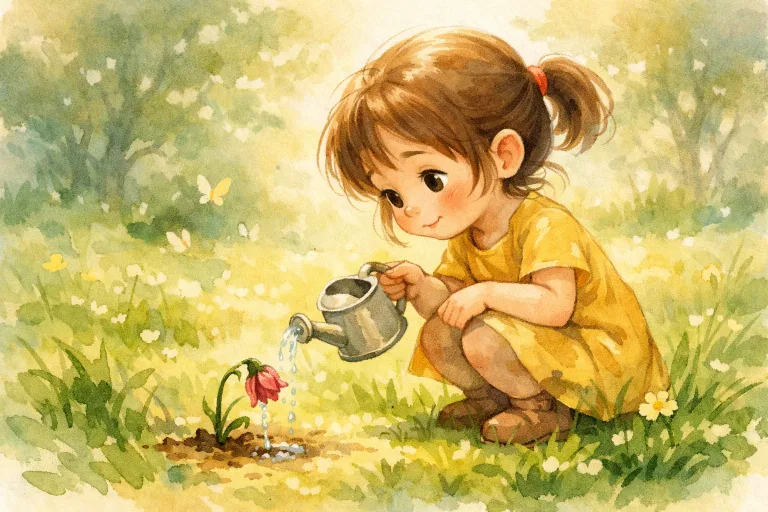
One bright morning, the farmer’s daughter visited the barn and decided to plant a small garden right beside the barn. Mimi watched her as she gently watered the tiny plants, carefully pulled weeds, and took deep breaths to stay calm. Curious, Mimi squeaked, “Why are you so calm, Miss Farmer? You’re working so hard!”
The farmer’s daughter smiled and said, “Sometimes, I stop and breathe deeply when I feel overwhelmed. It helps me think clearly and feel peaceful inside. Would you like to try?”
Mimi hesitated but decided to give it a shot. She sat down quietly, closing her tiny eyes. She took a slow, deep breath, filling her tiny lungs with fresh air. She listened carefully to the sounds around her—the chirping birds, the soft rustling of leaves, the gentle hum of the bees. For a moment, her busy mind slowed down.
As she opened her eyes, Mimi felt a gentle calmness inside her tiny heart. She realized that even in all the activity, she could find moments of peace just by pausing, listening, and breathing. From that day on, Mimi practiced her mindful breaths whenever she felt rushed or upset. She discovered that being present made her happier and more appreciative of the barnyard’s simple wonders.
Moral: Taking deep breaths and being present helps us find calm amidst busy days. Mindfulness isn’t about stopping activity but about balancing it with peaceful moments.
Talk About It
- Why do you think Mimi felt better after practicing mindfulness?
- How can taking a deep breath help you when you feel upset or hurried?
- What’s one way you can be more mindful in your daily routine?

Story 3: The Quiet Pond and the Busy Mind
Once upon a time, in a peaceful forest, there was a small, shimmering pond called Serenity Pond. It was known throughout the woods for its clear, still water and the gentle voice of the wind that often whispered across its surface. Near the pond lived a curious frog named Freddie, who loved to jump and explore every corner of the forest. But Freddie was always in a rush—hopping from one adventure to the next, never stopping to enjoy the moment.
One sunny morning, Freddie was leaping around, chasing bugs and telling stories to his friends. Suddenly, he saw a wise old turtle named Toby slowly making his way to the pond. Toby noticed Freddie's hurried movements and decided to speak kindly.
"Freddie," Toby said softly, "have you ever sat quietly by the pond and listened to what it has to say?"
Freddie blinked. "No, I don’t have time! I’m too busy exploring and having fun."
Toby smiled gently. "Sometimes, when your mind is full of lots of thoughts and worries, you miss the beauty around you. If you sit still and listen, you might hear the world whispering, 'Be still, be present.'"
Freddie frowned a little but decided to try. He hopped to a cozy spot by the pond and sat down, trying to be still. At first, his mind raced with all his plans—what he would do tomorrow, what he ate yesterday, and what his friends were doing now. But then, he took a deep breath and closed his eyes.
Gradually, Freddie began to notice the gentle ripple of the water, the soft rustle of the leaves, and the warm sunlight on his face. His thoughts slowed down, and he felt a calm he had never known before. He listened carefully to the quiet sounds of the pond, feeling the peace inside him grow.
When he opened his eyes, Freddie felt happy and relaxed. He realized that sometimes, just being still and paying attention could make everything clearer. From that day on, Freddie made a little habit of visiting Serenity Pond to enjoy a moment of quiet, helping his busy mind feel calm and happy.
Moral: Taking time to be still and pay attention helps us find peace and enjoy the present moment.
Talk About It
- Why do you think Freddie felt better after sitting quietly by the pond?
- How can you practice being still and paying attention in your day?
- What sounds or sights make you feel calm and happy?

Story 4: The Stillness of the Sunrise
One early morning, Lily the bunny woke up just as the sun was stretching its first golden rays across the field. She was excited to hop out and play, eager to see everything new again. But as she bounded outside, she noticed how bright the sun was and how calm everything looked. She remembered what her wise grandma had told her: "Before you rush into the day, take a moment to feel the stillness."
Lily sat down quietly on a soft patch of grass and closed her eyes. She took a deep breath, feeling her nose twitch at the fresh morning air. With each slow breath, she noticed the gentle rustling of leaves, the distant chirping of the birds, and the warmth of the sun on her fur. She realized that the world was full of tiny sounds and sensations, all happening right now, in this very moment.
As Lily stayed still, she felt her heart settle and her mind grow clearer. She thought about her plans for the day—hopping through the meadow, nibbling on sweet clover, playing with her friends. But she understood that rushing would miss all the wonderful details she was noticing now. With a deep breath, she decided to start her day by simply being present—feeling, listening, and observing without hurry or judgment.
Lily hopped happily into her morning, feeling peaceful and ready for whatever came next. She learned that taking just a few moments of stillness can help her see the world more clearly and enjoy every moment fully.
Moral: Sometimes, pausing and being still can help us see things more clearly and make us feel calmer. Mindfulness isn't just about doing; it's about being present in the moment.
Talk About It
- Have you ever taken a moment to be still and notice your surroundings? What did you see or hear?
- How can taking a deep breath help us feel calmer when we're upset or hurried?
- Why do you think it’s helpful to start the day with a moment of stillness?
Practical Takeaways:
- Practice taking a few deep breaths when you wake up or before starting a new activity.
- Spend a minute sitting quietly, noticing how you feel and what you see, hear, or smell.
- Teach children that being still and present can help them feel more peaceful and focused.
Conclusion:
Mindfulness is a simple yet powerful tool that helps us connect with the present moment. By taking time to pause, breathe, and observe, we can find calm in busy days and enjoy life more fully. Just like Lily the bunny, we can learn to start our days with stillness, opening our hearts and minds to the wonder around us.

Story 5: The Little Leaf That Learned to Let Go

Practical Takeaways
- Practice deep breathing to stay calm in challenging moments.
- Notice your feelings and surroundings without judging them.
- Accept change as part of life, and trust yourself to handle it mindfully.

Conclusion
Teaching mindfulness through stories helps children understand and practice presence, patience, and acceptance in a gentle, meaningful way. These stories serve as tools to nurture emotional resilience and kindness, creating a foundation for a more peaceful and aware life for children and the adults who guide them. Incorporating simple mindfulness moments throughout daily routines can transform stress into serenity and curiosity into compassion.
Continue Exploring Moral Stories
Discover animated moral stories, browse by category, or find age-appropriate reads for your family.
You May Also Like

8 Patience Stories for Kids: Short Tales That Teach Calm Waiting
Discover 8 charming patience stories for kids that teach the value of waiting calmly. Engaging tales that promote self-control and understanding.
4 Gratitude Stories for Kids: Teaching Appreciation & Thanks
Discover 4 heartfelt gratitude stories for kids that teach thankfulness, appreciation, and kindness. Perfect for parents and teachers to inspire grateful hearts.

4 Empathy Stories for Kids: Understanding Others' Feelings
Discover four heartwarming empathy stories for kids that teach understanding, kindness, and compassion. Perfect tales to nurture emotional intelligence in children.

The Best Calming Bedtime Stories to Help an Anxious Child Sleep
Ease bedtime worries with gentle, calming stories and practical routines. Discover soothing moral tales and tips to help anxious children feel safe and drift peacefully to sleep.