
4 Pride Stories for Kids: The Danger & Downfall of Arrogance

Pride is a complex emotion that can shape how children see themselves and the world around them. When pride turns into arrogance, it can lead to undesirable consequences, such as losing friendships, missing valuable lessons, or making poor decisions. Teaching kids about humility and the importance of staying grounded helps them develop a balanced sense of self-worth. Through engaging stories, children can learn that confidence is healthy, but arrogance can be harmful not only to others but also to themselves.
In this article, we will explore four captivating pride stories designed for children. These stories serve as valuable moral lessons, illustrating how pride can lead to downfall if not kept in check. By understanding these tales, kids will grasp the importance of humility, respect, and kindness—qualities that foster true strength and character. For further insights on related themes, visit our 5 Arrogance Stories for Kids: Why Humility Always Wins.
Why Pride Matters
Pride is an emotion that can motivate us to achieve great things, build confidence, and celebrate our accomplishments. However, when pride becomes excessive, it often turns into arrogance, which can cloud our judgment and hurt others. Understanding the balance between healthy pride and harmful arrogance is essential for children as they develop their moral compass. Teaching kids about the dangers of overconfidence and the importance of humility helps cultivate empathy, respect, and teamwork. These qualities are vital for building meaningful relationships and becoming responsible individuals.
By learning about pride through stories, children can see real-life examples of how arrogance can cause downfall and how humility fosters growth. These lessons encourage kids to recognize their strengths without boasting and to appreciate others’ contributions. For more stories that highlight the importance of humility and respectful behavior, check out our 3 Humility Stories for Kids: Short Tales on Modesty & Respect. Instilling these values early helps children understand that true confidence comes from kindness, self-awareness, and a willingness to learn from mistakes.
5 Arrogance Stories for Kids: Why Humility Always Wins · 3 Greed Stories for Kids: Moral Lessons on Wanting Too Much · 5 Overconfidence Stories for Kids: Respecting Every Challenge · 3 Humility Stories for Kids: Short Tales on Modesty & Respect
Table of Contents
- Story 1: The Proud Peacock
- Story 2: The Boastful Farmer
- Story 3: The Arrogant Prince
- Story 4: The Self-Important Scholar
Introduction
Pride is a feeling that can lift us up or hold us back. When we feel proud of ourselves, it can boost our confidence and help us do our best. But pride can also become too big, making us stubborn or unwilling to admit mistakes. Teaching children about healthy pride helps them see their strengths without losing humility. These stories are about understanding pride—celebrating successes while remembering to stay kind and humble.
Pride is a powerful feeling that can lift us up or sometimes make us stumble. When pride is balanced, it encourages confidence and self-respect. But when it becomes too much, it can lead to mistakes or hurt feelings. Teaching children about pride helps them grow into kind and humble individuals who value themselves and others. These stories explore different aspects of pride and offer lessons on keeping it in check.
Story 1: The Proud Peacock and the Lost Path
Once upon a time, in a lush jungle, there was a Peacock named Percy who was very proud of his brilliant feathers. He loved to strut around, showing off his colors to everyone he met. Percy believed no one could match his beauty, and that made him feel special. One sunny morning, Percy was wandering through the jungle when he decided to take a different path he had never explored before.
The path was narrow and winding. Percy was so confident that he didn’t need a map or help; he thought, “I am the most beautiful bird, I can find my way easily.” But soon, Percy realized he had ventured too far. The jungle was unfamiliar now, and he didn’t recognize any trees or sounds. He began to feel worried.
Just then, a wise old owl named Oliver saw Percy looking worried. “Are you lost, Percy?” asked Oliver.
Percy nodded shyly. “I didn’t think I needed help. I was so proud of myself for exploring, but now I don’t know how to get back.”
Oliver smiled kindly. “Pride is good, but it’s important to remember humility. No matter how beautiful or talented you are, asking for help can lead you back home safely.”
Percy listened and realized that pride had made him overconfident. With Oliver’s guidance, Percy found his way back, feeling grateful and a little wiser.
Moral: Pride is wonderful, but humility keeps us grounded and open to help.
Talk About It
- Have you ever been so proud of something that you forgot to ask for help?
- Why is it important to listen to others when we are lost or unsure?
- How can we celebrate our strengths without becoming boastful?
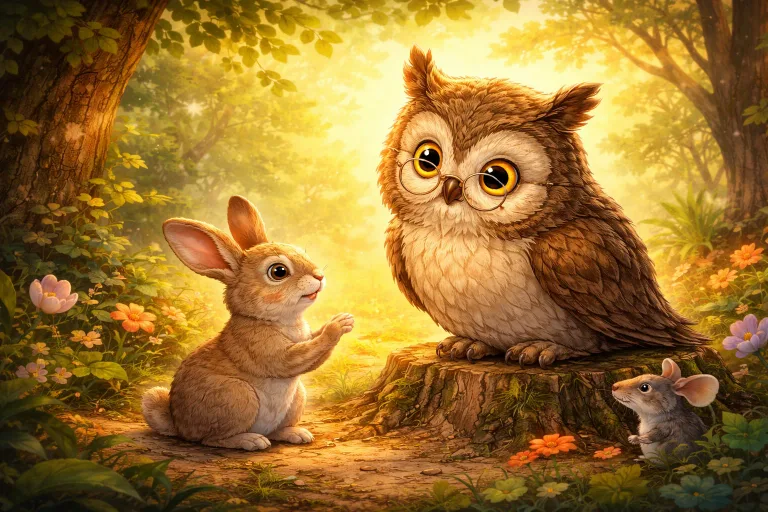
Story 2: The Owl Who Forgot to Listen
Once upon a time in a lush green forest, there lived a wise old owl named Oliver. Oliver loved to teach others about how clever he was. He would often hoot loudly, telling everyone about his many feathers, sharp eyes, and his ability to see perfectly in the dark. Oliver was very proud of his wisdom and wanted everyone to know it.
One evening, as the sun was setting and the sky turned a soft pink, Oliver saw a young rabbit named Rosie hopping close by. "Hello, Rosie," hooted Oliver. "Do you want to hear how smart I am?" he asked proudly.
Rosie nodded shyly. "Yes, Oliver. I’d like to learn from you."
But Oliver was so full of his own tales that he kept talking about himself without listening. He boasted about his sharp eyesight and his ability to spot mice from far away. Rosie listened patiently, but she didn’t get a chance to share her own stories. She wanted to tell Oliver how she learned to hop quickly and hide well from predators.
Suddenly, a rustling sound came from the bushes. It was a small mouse named Mickey, who looked worried. "Help! I lost my way home," Mickey squeaked.
Oliver puffed out his chest. "Don’t worry, I’ll find your way," he said confidently. But then, he realized he didn’t know the way to Mickey’s home. Instead of helping, Oliver began to boast even more, insisting he was the smartest owl around.
Rosie saw that Oliver was so proud he was ignoring others’ needs. She gently said, “Oliver, sometimes listening to others is the best way to help. You might know a lot, but everyone has something to teach you.”
Oliver looked at Rosie and Mickey and suddenly felt a little embarrassed. He realized that his pride had made him forget something very important: listening is just as valuable as knowing. From that day on, Oliver still loved to share his wisdom, but he also made sure to listen to others, too.
Moral: Pride can make us forget the importance of listening. True wisdom comes from knowing when to share and when to listen.
Talk About It
- Why do you think Oliver was so proud of himself? How did that affect his friends?
- What can you do when someone is sharing something important with you?
- Have you ever learned something from a friend by listening carefully? What was it?
Story 3: The Tiny Turtle and the Big Splash
Once upon a time, in a quiet pond nestled between green hills, there lived a tiny turtle named Toby. Toby loved to watch the other animals — the frogs splashing in the water, the ducks gliding gracefully, and the fish darting swiftly beneath the surface. Toby often wondered if he could do something just as impressive.
One day, as he was practicing swimming, Toby saw a group of bigger turtles beneath the water. “Hey, Toby! Come join us!” they called out. Toby puffed out his chest and believed he was ready. “Watch this!” he declared.
With all his might, Toby pushed off from the muddy bottom, trying to make a big splash. But instead of a grand splash, he only created a tiny ripple and sank back down. The bigger turtles chuckled softly. “That was a good try, Toby,” one said kindly. “It’s not about how big the splash is, but how much you enjoy swimming.”
Toby felt a little embarrassed but also a little proud for trying. That day, he learned an important lesson: being proud of oneself is good, but it’s better to be proud of the effort and to remember that everyone has their own strengths.
From then on, Toby kept practicing, not to make the biggest splash, but to enjoy swimming and exploring the pond at his own pace. Sometimes he’d try new tricks, and sometimes he’d just float and watch the sky. Each day, he grew more confident—not because he made the biggest splash, but because he appreciated his own progress.
The moral of Toby’s story is that pride should come from feeling good about what you do and who you are, not from comparing yourself to others or trying to be the biggest or the best. True pride is about loving yourself and celebrating your own journey.
Talk About It
- Why do you think Toby was proud of trying, even if he didn’t make a big splash?
- How can being proud of ourselves help us feel happier?
- Why is it important to enjoy what we do, instead of just trying to be the best?

Story 4: The Brave Flower’s Cactus Pride
Once there was a small, delicate flower named Daisy. She grew in a beautiful garden filled with colorful blossoms. Daisy was proud of her vibrant petals, her sweet scent, and how she stood tall among the other flowers. She often told herself, "I am special because I am so pretty."
One day, a strong wind blew through the garden. Many of the tall, fragile flowers bent or fell over. But Daisy held her ground, her roots deep in the soil. From her high position, she watched as the wind buffeted the garden. She felt proud to be strong and resilient, and she thought, "Nothing can shake me because I am the bravest flower here."
However, Daisy's pride made her overlook an important lesson. She was so confident in her strength that she ignored the signs of trouble. When the wind grew even stronger, Daisy's roots loosened slightly. She didn’t notice because she was too busy boasting about her bravery. Suddenly, a particularly fierce gust lifted her from her stem. Luckily, the gardener saw her wobbling and gently caught her before she fell.
Afterward, Daisy felt shaken but grateful. She realized that pride had made her think she was invincible. The gardener gently told her, "Being proud of who you are is good, but never forget to stay humble and listen to others' advice." Daisy understood she needed both confidence and humility. She promised to value her strengths but also stay cautious and open to learning from others.
From then on, Daisy never let her pride blind her. She continued to grow tall and proud but also listened carefully during storms and to her friends' advice. Her courage and humility made her a true leader among the flowers.
Moral: Pride in your strengths is wonderful, but true courage comes from balancing pride with humility and listening to others.
Talk About It
- Why do you think Daisy’s pride almost caused her to fall?
- How can being proud of yourself help you, and how can it sometimes be a problem?
- What does it mean to stay humble while being proud of what you can do?

Practical Takeaways
- Celebrate your achievements but remember to stay humble.
- When you’re unsure, seek help without feeling embarrassed.
- Balance pride with kindness and respect for others.
- Celebrate your talents, but remember to listen and learn from others.
- Pride can motivate you, but humility keeps you safe and wise.
- Apologize when you make mistakes, and accept help from friends and family.
- Balance confidence with humility to grow into a kind, strong person.
- Teach children that pride can be a double-edged sword; it’s important to recognize achievements without arrogance.
- Use stories to highlight the dangers of overconfidence and how humility fosters respect and growth.
- Encourage kids to appreciate their unique qualities while remaining modest about their successes.
- Reinforce the idea that true confidence comes from acknowledging one’s limits and learning from mistakes.
- Promote the value of empathy by helping children understand how pride can sometimes distance them from others.
- Incorporate lessons on humility and pride into daily conversations to nurture a balanced sense of self-worth.

Conclusion
Understanding pride helps children develop confidence while remaining kind and humble. These stories remind us that pride, when kept in harmony with humility, can be a great strength. Encouraging children to appreciate themselves and others fosters a caring, confident community.
Pride is a powerful feeling that can help us shine, but it’s important to stay humble and open. Just like Daisy the flower, we can be proud of our strengths while listening to others and staying cautious. By finding this balance, we can grow happily and help others blossom too.
Continue Exploring Moral Stories
Discover animated moral stories, browse by category, or find age-appropriate reads for your family.
You May Also Like

3 Humility Stories for Kids: Short Tales on Modesty & Respect
Discover three inspiring humility stories for kids that teach the importance of modesty, respect, and staying grounded. Perfect for parents and teachers!
3 Respect Stories for Kids: Manners, Politeness & Dignity
Discover three inspiring respect stories for kids that teach manners, politeness, and dignity. Simple tales to foster respectful behavior and thoughtful conversations.
5 Honesty Stories for Kids: Classic Tales That Teach Truthfulness
Discover 5 timeless honesty stories that teach children the importance of truthfulness. Engaging tales like The Boy Who Cried Wolf and The Honest Woodcutter help instill moral values.

8 Materialism Stories for Kids: True Joy Beyond Money
Teaching children that true happiness comes from kindness, sharing, and inner virtues helps them develop resilience against materialism's pitfalls.