
Story of The Retiring CARPENTER
The Retiring Carpenter
In a quiet village where morning mist curled over the fields and sparrows nested in old apple trees, there stood a little workshop with blue shutters and a crooked weather vane shaped like a hammer. If you walked past it, you would hear the steady tap-tap-tap of tools, the whisper of sandpaper, and sometimes a cheerful humming voice.
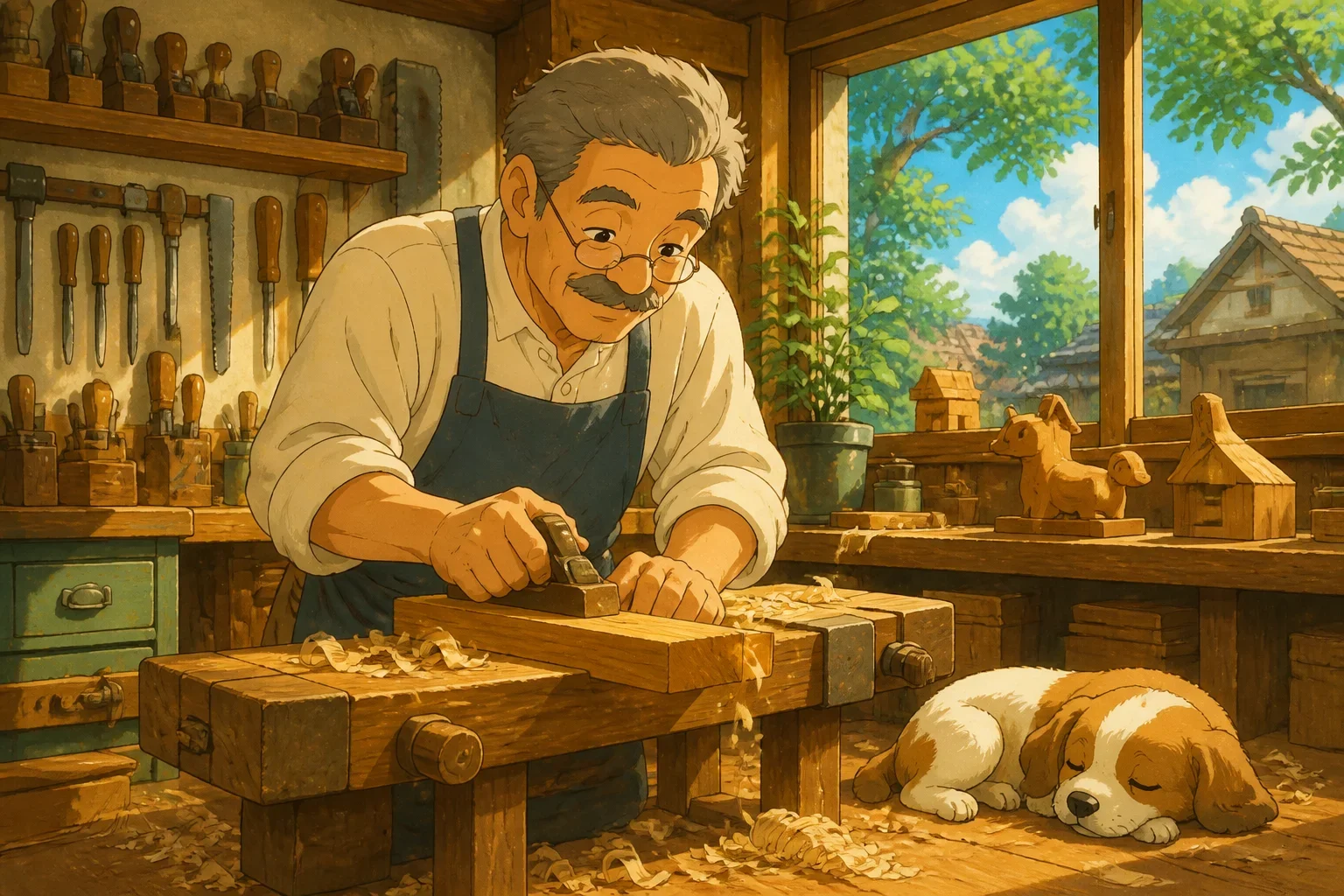
That workshop belonged to Elias, the village carpenter.
Elias was known for making things that lasted. He built strong tables where families shared meals, sturdy chairs that never wobbled, and wooden toy boats that sailed proudly across the pond. People often said, “If Elias made it, it will hold.”
And Elias liked hearing that.
He had worked with wood for many long years. His hands were rough, his back was bent, and his hair had turned the color of winter clouds. Still, his eyes shone whenever he ran his fingers across a smooth piece of polished oak.
But lately, Elias had been thinking of something else.
Retirement.
“No more early mornings,” he would say to himself with a tired smile. “No more heavy beams. No more long days in the sawdust. I’ll sit by the river, fish in the sunshine, and tell stories to my grandchildren.”
The thought made him feel light and happy.
Then one afternoon, his employer, Mr. Harrow, came to the workshop.
“Elias,” he said kindly, “I hear you are ready to retire.”
Elias set down his plane and nodded. “I am. I’ve given my whole life to this work. I think it’s time.”
Mr. Harrow smiled. “You have earned your rest. But before you go, I have one last favor to ask. Will you build one final house?”
Elias’s smile faded just a little.
“One more?” he asked.
“Just one,” said Mr. Harrow. “A small family home at the edge of the village.”
Elias looked out the window. Beyond the workshop, the sky was glowing gold. He had imagined that this very week he would be free.
Still, he sighed and said, “All right. One last house.”
A House Built in a Hurry
The next morning, Elias walked to the building site. It was a lovely place, with wildflowers near the fence and a hill behind it where children liked to roll in the grass. It should have been the sort of place that filled him with pride.
But instead of excitement, Elias felt impatience.
“I just want to be finished,” he muttered.
At first, he worked as he always had. He measured carefully. He checked each board. He chose good wood.
But after a few days, his old habits began to slip.
“This board is good enough,” he said, even when it was slightly warped.
“No one will notice,” he whispered, using nails that were cheaper and weaker.
“I don’t need to sand this again,” he decided, though the edge still felt rough.
The house went up quickly—too quickly.
The windows did not fit as neatly as they should have. A door stuck when opened. The floorboards were laid in haste, and some were not fastened as firmly as Elias knew they ought to be.
One afternoon, a neighbor named Mrs. Wren passed by with a basket of bread.
“You’re nearly done already?” she asked.
Elias wiped his brow. “Yes. I want to finish and be on my way.”
Mrs. Wren looked at him for a moment. “That doesn’t sound like the Elias we know.”
He forced a laugh. “A man gets tired.”
But her words stayed with him.
That evening, as the sun sank low, Elias stood inside the half-finished house. The room smelled of pine and dust. He pressed his palm against a wall and knew, deep down, that he had not built this house with his whole heart.
For a moment he considered starting over on the parts he had rushed.
But then he looked toward the road home and thought, Just finish it. It’s only one house.
So he kept going.
The Surprise
At last, the house was complete.
From the outside, it looked charming enough. It had a neat porch, a red roof, and white-framed windows. Anyone passing by might have admired it.
Elias called Mr. Harrow to come see the finished work.
Mr. Harrow arrived in his wagon, climbed down slowly, and walked all around the house. He opened the front door, stepped inside, and said very little.
Elias shifted uncomfortably.
“Well,” he asked, “is it done to your liking?”
Mr. Harrow turned to him with a strange expression—part sadness, part gentleness.
“Yes,” he said quietly. Then he reached into his coat pocket and pulled out a small brass key tied with a blue ribbon.
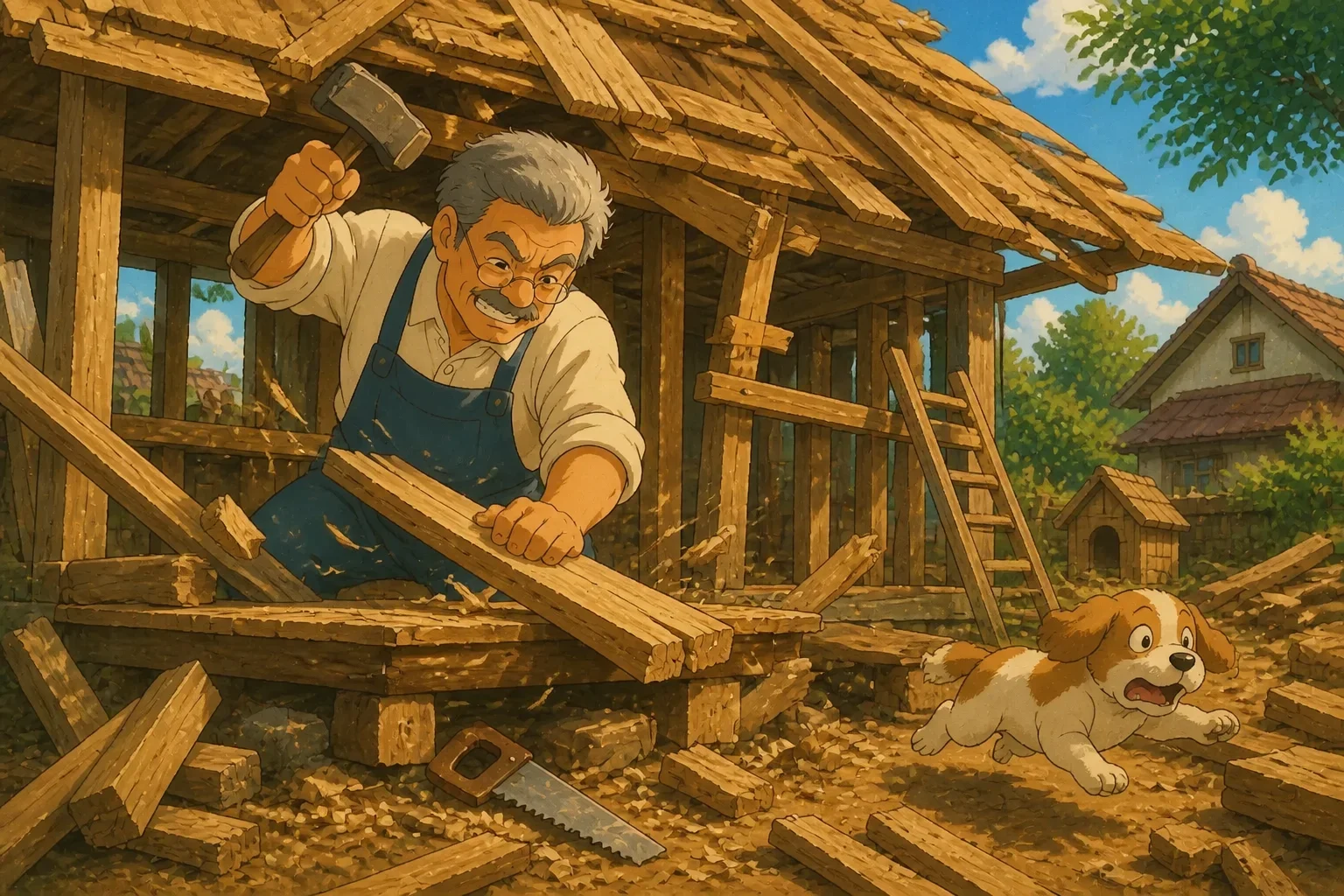
He placed it in Elias’s hand.
“This house,” said Mr. Harrow, “is my gift to you.”
Elias blinked. “My gift?”
“You have worked faithfully for many years,” Mr. Harrow said. “I wanted to thank you. I asked you to build this final house because I hoped you would live in it with pride and peace.”
For a long moment, Elias could not speak.
The key lay cold and heavy in his palm.
He slowly looked around the room again—the uneven frame, the poorly fitted door, the rough corners he had meant to fix later and never did.
This was not a stranger’s house.
It was his.
And he had built it carelessly.
His throat tightened.
“Oh no,” he whispered.
Mr. Harrow said nothing.
Elias sat down on a wooden crate, staring at the floorboards. They gave a small creak beneath his weight. Every rushed choice he had made came back to him like an echo.
If only he had measured better.
If only he had slowed down.
If only he had done what he had always taught others to do.
At last he said, in a voice full of regret, “If I had known this house was for me, I would have built it very differently.”
Mr. Harrow nodded. “That is true. But perhaps there is a lesson in that.”
The Lesson Elias Could Not Forget
Elias did not celebrate that evening.
He walked back to his workshop slowly, listening to the wind rattle the shutters. The familiar room felt different now. The chisels, the saws, the planes—every tool seemed to ask him the same question:
Why did you stop caring before the work was done?
He sat alone on his old stool until the moon rose high.
At last he spoke into the quiet room.
“A person builds more than houses,” he said softly. “He builds his habits. His name. His life.”
The next morning, Elias returned to the little house with fresh wood, proper nails, and a determined heart.
Though he was near retirement, he worked harder than he had in months.
He lifted the crooked door and rehung it carefully.
He pulled up the loose floorboards and set them straight.
He replaced weak timber with strong beams.
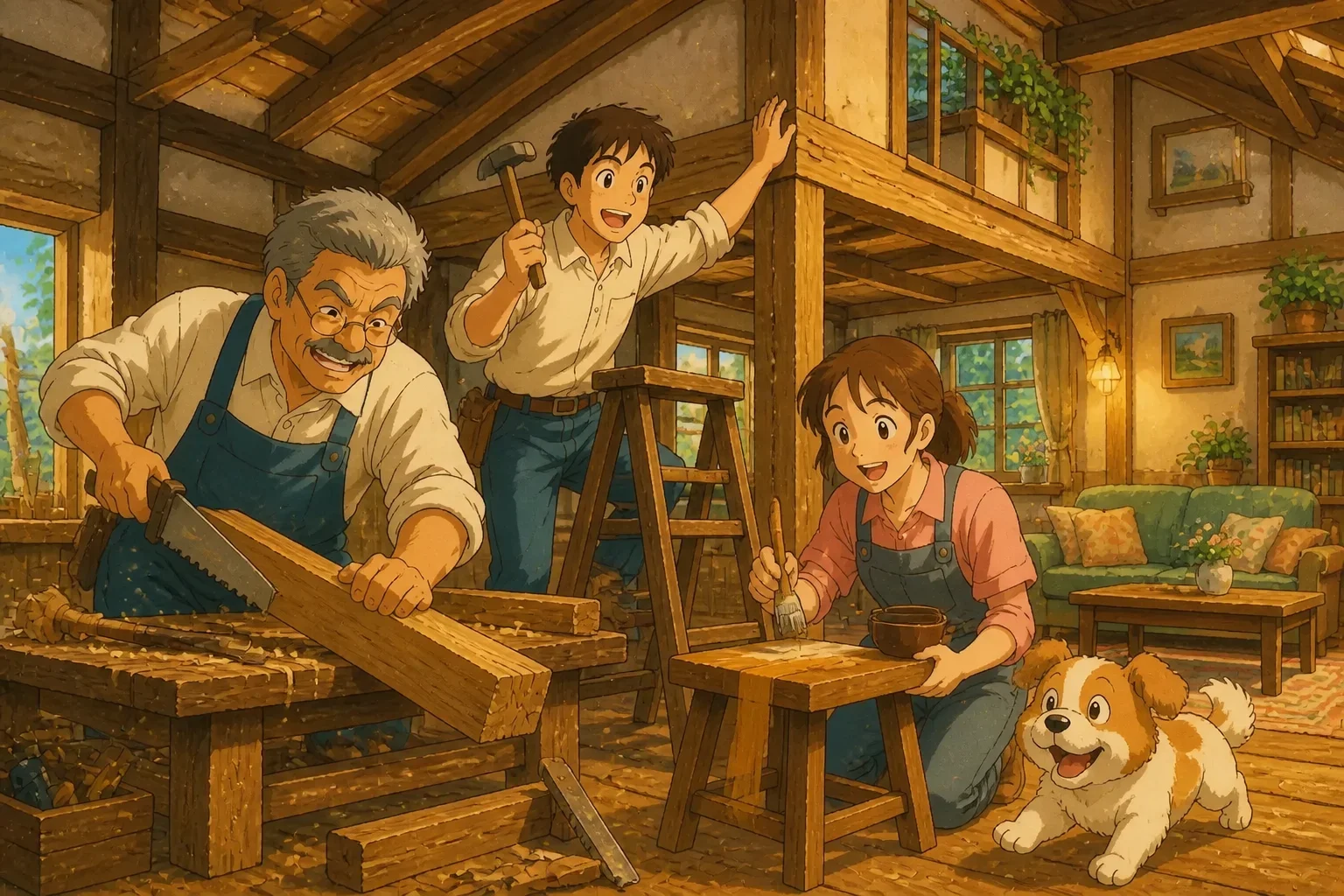
He sanded every rough edge until it felt smooth as river stone.
Children passing by noticed the change.
“Didn’t you already finish?” one boy asked.
Elias smiled faintly. “I thought I had. But some things must be done right.”
Day after day, he repaired what he had rushed.
This time, he did not mutter about being tired. He did not glance at the road and dream only of rest. Instead, he paid attention to every detail, just as he had in his younger days. Slowly, the house became what it should have been from the beginning: strong, warm, and worthy of care.
When it was truly finished, Elias stood in the doorway and breathed in the scent of clean wood and fresh paint. Sunlight spilled across the floor in bright golden squares.
Now, at last, he felt peace.
A New Beginning
When Mr. Harrow returned, Elias handed him the key.
“It is ready now,” Elias said.
Mr. Harrow opened the door, stepped inside, and smiled. “Yes,” he said. “Now it is.”
Elias looked around the house and gave a small nod. “I nearly ended my life’s work with carelessness. I forgot that even the last thing we do becomes part of who we are.”
Mr. Harrow placed a hand on his shoulder. “And now you will remember.”
Elias moved into the house not long after. In the mornings, he sat on the porch with tea and watched the village wake up. In the afternoons, he sometimes welcomed children into his old workshop and showed them how to hold a hammer, how to smooth a board, and how to begin a task with patience.
Whenever one of them grew frustrated and said, “This is good enough,” Elias would smile gently and tell them the story of his final house.
And he always ended the same way:
“We are all building something—our work, our choices, our character, our lives. Build carefully.”
Key Takeaways for Kids
- Always try to do your best, even when you feel tired or eager to finish.
- Rushing through a job can lead to mistakes and regret.
- The way you do small things helps shape your character.
- Good work brings pride, peace, and trust.
- It is never too late to fix a mistake and make things right.
Why This Moral Story Stays With Children
This classic-style children's moral story is memorable because the lesson is simple and surprising: the carpenter ends up living in the very house he rushed to build. Kids quickly understand the meaning—our choices come back to us, and the effort we put into our work matters.
It also reminds children that homework, chores, art projects, friendships, and promises all deserve care. Doing your best is not just about impressing others. It is about becoming the kind of person you can be proud of.
Moral of the Story
Whatever you do, do it with care and honesty, because you are building your future one choice at a time.

Watch the Animated Story
Watch on YouTube
Related Stories
Lazy Donkey Who Finally Helped: A Moral Story on Hard Work
The Lazy Donkey Who Finally Helped In a sunny little village tucked between green hills and golden fields, there lived…
The Two Wolves Story: A Powerful Moral Tale About Choosing Kindness
The Story of Two Wolves On the edge of a quiet mountain village, where prayer flags fluttered in the wind and…

Emily the Celebrity| Inspiring Moral Story for Kids
Emily the Celebrity and the Girl With the Sketchbook In the city of Starville, everything seemed to sparkle. Billboards…
The Story of Socrates for Kids: A Moral Tale About Asking Questions
The Story of Socrates Under the Olive Tree Long ago, in the busy city of Athens, there lived a man who did not wear a…

Bees and the Beetles: A Moral Story About Hard Work
The Bees and the Beetles On the edge of a bright summer garden stood a tall old hive, golden in the afternoon sun. From…
Isabella the Young Fashion Designer: A Moral Story
Isabella the Young Fashion Designer In the bright little town of Artistry, windows were painted with rainbows, flower…
The Pencil Maker | Moral Tale About Growth and Purpose
The Pencil Maker's Story On the edge of a quiet village, where the morning mist curled around little rooftops and…
Thomas the Advocate | Moral Story About Truth and Justice
Thomas the Brave Advocate In a cheerful town filled with bicycle bells, market chatter, and rows of little houses with…

The Dalai Lama Story: 5 Struggles, 5 Moral Values, and a
The Story of Tenzin Gyatso: A Child Who Grew Into a Voice for Peace Far above the busy roads and crowded cities, where…

Blind Man Who Taught a Village to Notice Life | Moral Story
The Blind Man Who Taught a Village to Notice Life In a little village between green hills and windy fields, there lived…