
A Story of Blind Man
The Blind Man Who Taught a Village to Notice Life
In a little village between green hills and windy fields, there lived a man named Oliver.
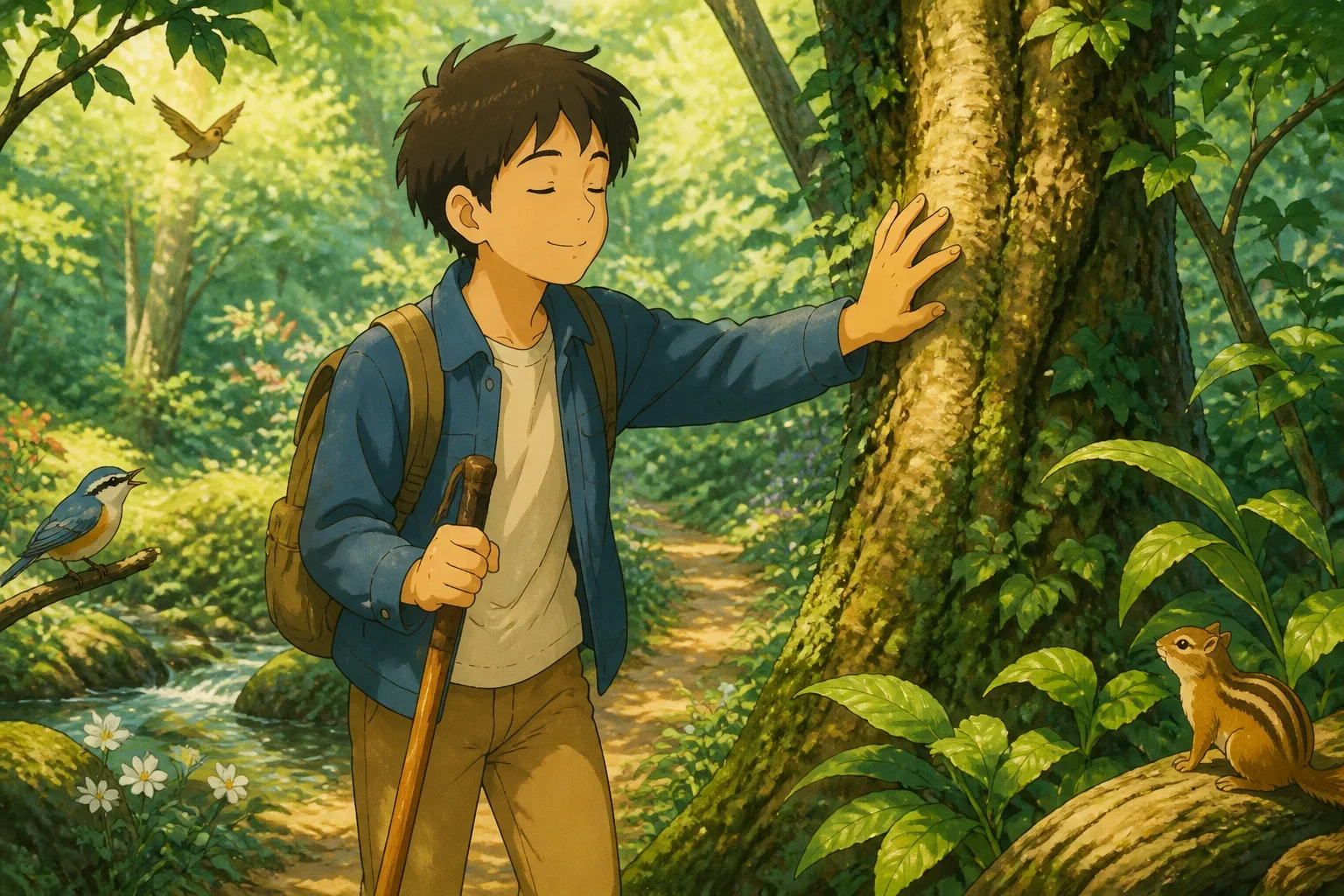
Everyone knew Oliver.
They knew the steady tap of his walking stick on the stone path. They knew the way he smiled before anyone had even said hello, as if he could hear happiness arriving. They knew that although Oliver was blind and could not see the world with his eyes, he somehow noticed things many others missed.
“Good morning, Mrs. Fern,” he would say as a neighbor passed.
Mrs. Fern would blink in surprise. “How did you know it was me?”
Oliver would laugh softly. “Your basket smells like mint and fresh bread every Tuesday.”
And he was right.
To the children, Oliver was the most interesting person in the village. When they ran past his cottage, he could tell who was who just by their footsteps.
“Lena, you’re skipping again.”
“Sam, one of your shoelaces is loose.”
“Ben, you’ve been climbing trees. I can smell bark on your hands.”
The children would burst into giggles. To them, it felt almost like magic.
But Oliver always said the same thing.
“It isn’t magic,” he told them. “It’s noticing.”
A Rumor in the Village
One bright afternoon, excitement rushed through the village faster than the river after rain.
A traveler had arrived with a wild story.
Deep in the woods, he said, there was a hidden spring. Its water shimmered like glass in sunlight, and anyone who drank from it would be given sight.
The villagers gasped.
“A magical spring?” “Could it be true?” “Oliver must go!”
By evening, everyone was talking about it.
Some spoke with hope. Some with pity. Some with great certainty, as though they had already decided what Oliver’s happiness should look like.
The next morning, three children hurried to Oliver’s porch, where he sat listening to sparrows chatter in the ivy.
“Oliver!” Lena said breathlessly. “Did you hear? There’s a spring in the woods that can make you see!”
Ben added, “If it’s real, you have to drink from it.”
Oliver tilted his head, listening not only to their words but to the worry behind them.
“Have to?” he asked gently.
The children fell quiet.
Sam shuffled his feet. “Well... wouldn’t you want to?”
Oliver rested his hands on his knees. A breeze carried the smell of warm grass and distant rain.
“I have wondered what colors look like,” he admitted. “I have wondered what the moon looks like, and the faces of my friends. But wanting to know something is not the same as believing your life cannot be full without it.”
The children sat down beside him on the porch steps.
Oliver smiled. “Tell me what you notice right now.”
Lena looked around. “The sky is very blue.”
“Good,” said Oliver. “What else?”
Ben frowned, thinking harder this time. “The wind is making the sunflower heads bob.”
Sam sniffed the air. “I smell soup from someone’s window.”
Oliver’s smile widened. “And there it is. The world is always speaking in more ways than one.”
Into the Woods
Even so, Oliver decided to visit the spring.
Not because he was certain he would drink from it. Not because he believed he was incomplete. But because he was curious.
The children begged to go too, and soon a small group set out along the forest path.
The woods were cool and alive.
Leaves whispered overhead. Twigs cracked underfoot. Somewhere far away, a woodpecker tapped like a tiny hammer. The air smelled of moss, damp earth, and pine needles warming in the sun.
The children, who usually raced ahead, found themselves slowing down to walk beside Oliver.
“How do you know where the path bends?” Ben asked.
“The ground changes,” Oliver said. “Here, feel it.”
They stopped. The children pressed their shoes against the earth.
“It’s softer,” Lena said.
“And the air is cooler,” Sam noticed.
Oliver nodded. “There are tall trees close together here. Their shade tells me as much as my stick does.”
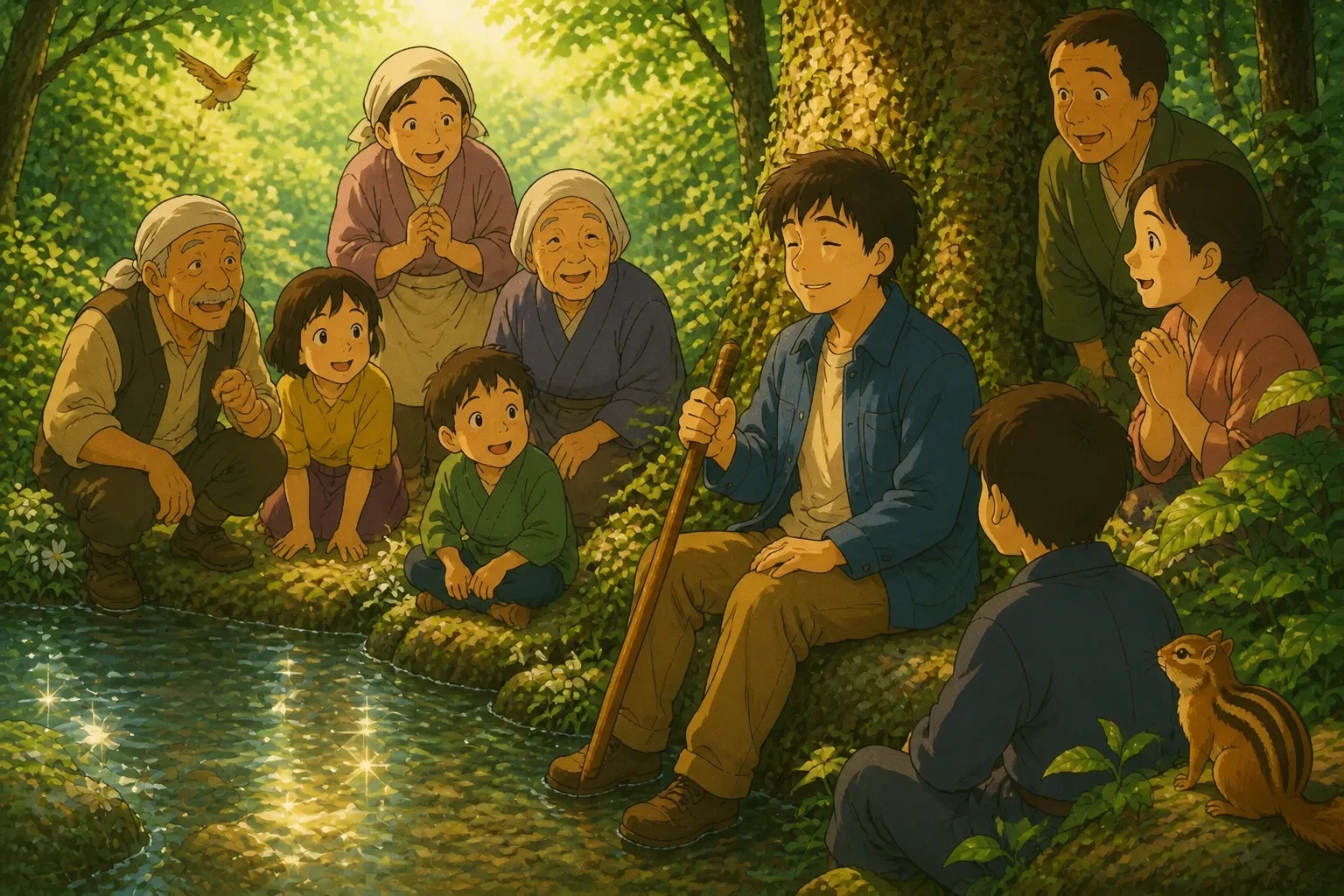
As they walked deeper into the woods, the children began to play Oliver’s game.
“What do you notice?” they whispered to one another.
“A bee near the clover.” “A squirrel jumping overhead.” “Water somewhere ahead!”
At last they heard it clearly: the bright bubbling song of a spring.
The Shimmering Water
In a clearing ringed with wildflowers, the villagers had already gathered.
The spring spilled from a cluster of silver-gray stones into a pool so still that people spoke in hushed voices around it. Sunlight danced on the surface. Dragonflies skimmed past like tiny jewels.
When Oliver arrived, the crowd parted.
“He made it.” “Oliver is here.” “Now he can finally see.”
Finally.
The word hung in the air.
Oliver stood quietly, listening to the spring’s clear music.
A villager took his arm. “Come,” she said kindly. “This is your chance.”
Oliver knelt near the water and dipped in his fingers. It was cold and clean. He lifted his wet hand and felt the droplets slide across his skin.
For a moment, no one spoke.
Then Oliver asked, “What do you see?”
The villagers looked at one another, puzzled.
An old farmer cleared his throat. “I see sunlight flashing on the water.”
A little girl said, “Purple flowers with yellow middles.”
Mrs. Fern smiled. “I see your reflection, Oliver, and all of us standing around you.”
Oliver listened carefully, as if collecting each description like a treasure.
Then he said, “And I hear water laughing over stone. I feel cool mist on my face. I smell wet earth and flowers opening in the sun. I know I am surrounded by wonder.”
The clearing grew very still.
One of the villagers said softly, “But don’t you want to see it for yourself?”
Oliver turned toward the voice.
“I do see it for myself,” he answered. “Only not in the way you mean.”
Oliver’s Choice
Everyone waited.
Oliver remained beside the spring, his hand resting on the smooth rock.
“When people heard of this place,” he said, “many thought, ‘Now Oliver can be fixed.’ But I am not broken.”
The children looked up at him.
“I have sorrow sometimes,” Oliver continued honestly. “There are things I will never know through sight, and that is true. But my life is still rich. I know my friends by their voices. I know the seasons by their scents. I know joy by the warmth it leaves in a room after laughter. If I spend my whole life wishing only for what I do not have, I may forget the gifts already in my hands.”
No one interrupted.
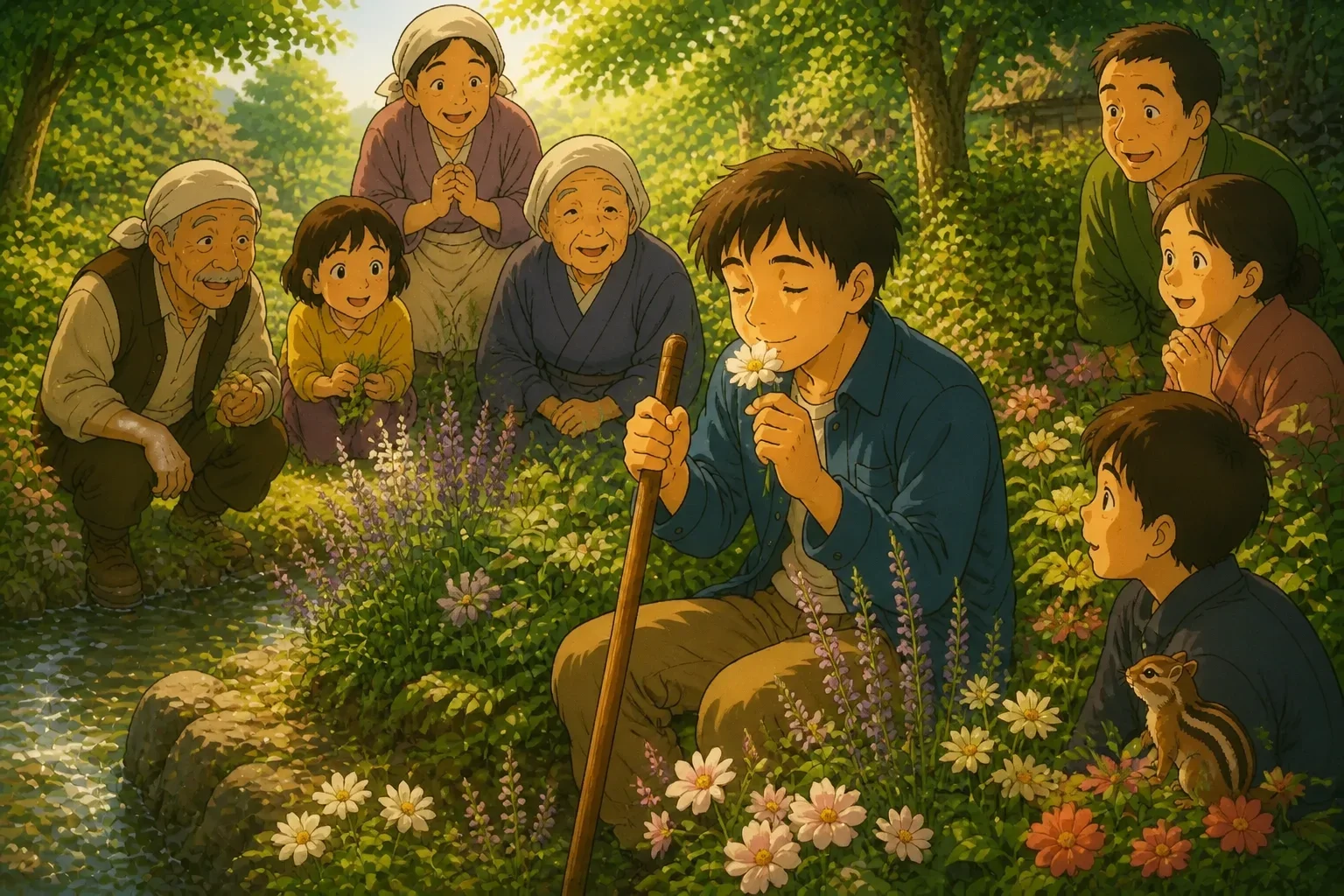
Even the children were quiet.
At last Oliver smiled and stood.
“So no,” he said gently. “I will not drink from the spring. I came to listen, to wonder, and to be grateful.”
The villagers stared at him—not with pity now, but with something deeper.
Respect.
And perhaps a little surprise at themselves.
The Village Learns to Notice
On the walk home, nobody hurried.
The children pointed out things they would once have passed without a thought.
“The stream sounds different over the flat rocks,” said Sam.
“The fern leaves feel cool underneath,” said Lena.
Ben broke open a pinecone and breathed in. “It smells like rain and trees.”
Oliver laughed. “Now you’re becoming experts.”
In the days that followed, something changed in the village.
People still admired sunsets and bright gardens, but they began noticing more than what could be seen.
The baker paused to enjoy the crackle of fresh bread. The blacksmith listened to the rhythm of his hammer. Children walked to school feeling morning dew on their ankles. Neighbors described clouds to Oliver, and Oliver reminded them to notice the wind, the shade, the scent of apples, the comfort of a friendly hand.
Before long, the village felt kinder. People interrupted one another less. They listened more carefully. They were slower to judge what another person needed.
And whenever someone asked Oliver how he stayed so cheerful, he gave the same answer he had always given:
“It isn’t magic,” he said. “It’s noticing.”
Key Takeaways for Kids
- People can experience the world in different ways.
- A person should not be treated as if they are broken because they are different.
- Gratitude helps us enjoy what we have instead of only thinking about what we lack.
- When we slow down and notice life, ordinary moments can feel special.
- Listening carefully can help us understand others with more kindness and respect.
Moral of the Story
True happiness comes from appreciating life with gratitude and noticing the beauty around us, even when it appears in unexpected ways.
Why This Moral Story Matters
This children’s moral story reminds kids and parents that beauty is not found only in what we can see. Oliver’s choice teaches acceptance, empathy, and the importance of valuing every person’s unique way of experiencing the world. It is a thoughtful bedtime story about gratitude, perspective, and inner joy.

Watch the Animated Story
Watch on YouTube
Related Stories
Emily the Celebrity| Inspiring Moral Story for Kids
Emily the Celebrity and the Girl With the Sketchbook In the city of Starville, everything seemed to sparkle. Billboards…
Lazy Donkey Who Finally Helped: A Moral Story on Hard Work
The Lazy Donkey Who Finally Helped In a sunny little village tucked between green hills and golden fields, there lived…
The Retiring Carpenter Story: A Powerful Moral About Doing Your Best
The Retiring Carpenter In a quiet village where morning mist curled over the fields and sparrows nested in old apple…
Thomas the Advocate | Moral Story About Truth and Justice
Thomas the Brave Advocate In a cheerful town filled with bicycle bells, market chatter, and rows of little houses with…
The Pencil Maker | Moral Tale About Growth and Purpose
The Pencil Maker's Story On the edge of a quiet village, where the morning mist curled around little rooftops and…
The Two Wolves Story: A Powerful Moral Tale About Choosing Kindness
The Story of Two Wolves On the edge of a quiet mountain village, where prayer flags fluttered in the wind and…
The Story of Socrates for Kids: A Moral Tale About Asking Questions
The Story of Socrates Under the Olive Tree Long ago, in the busy city of Athens, there lived a man who did not wear a…
Isabella the Young Fashion Designer: A Moral Story
Isabella the Young Fashion Designer In the bright little town of Artistry, windows were painted with rainbows, flower…