
The Story Of Two Wolves
The Story of Two Wolves
On the edge of a quiet mountain village, where prayer flags fluttered in the wind and children’s laughter bounced between the hills, lived an old storyteller named Chief Waya. His hair was silver, his voice was gentle, and when he spoke, even the birds in the trees seemed to listen.
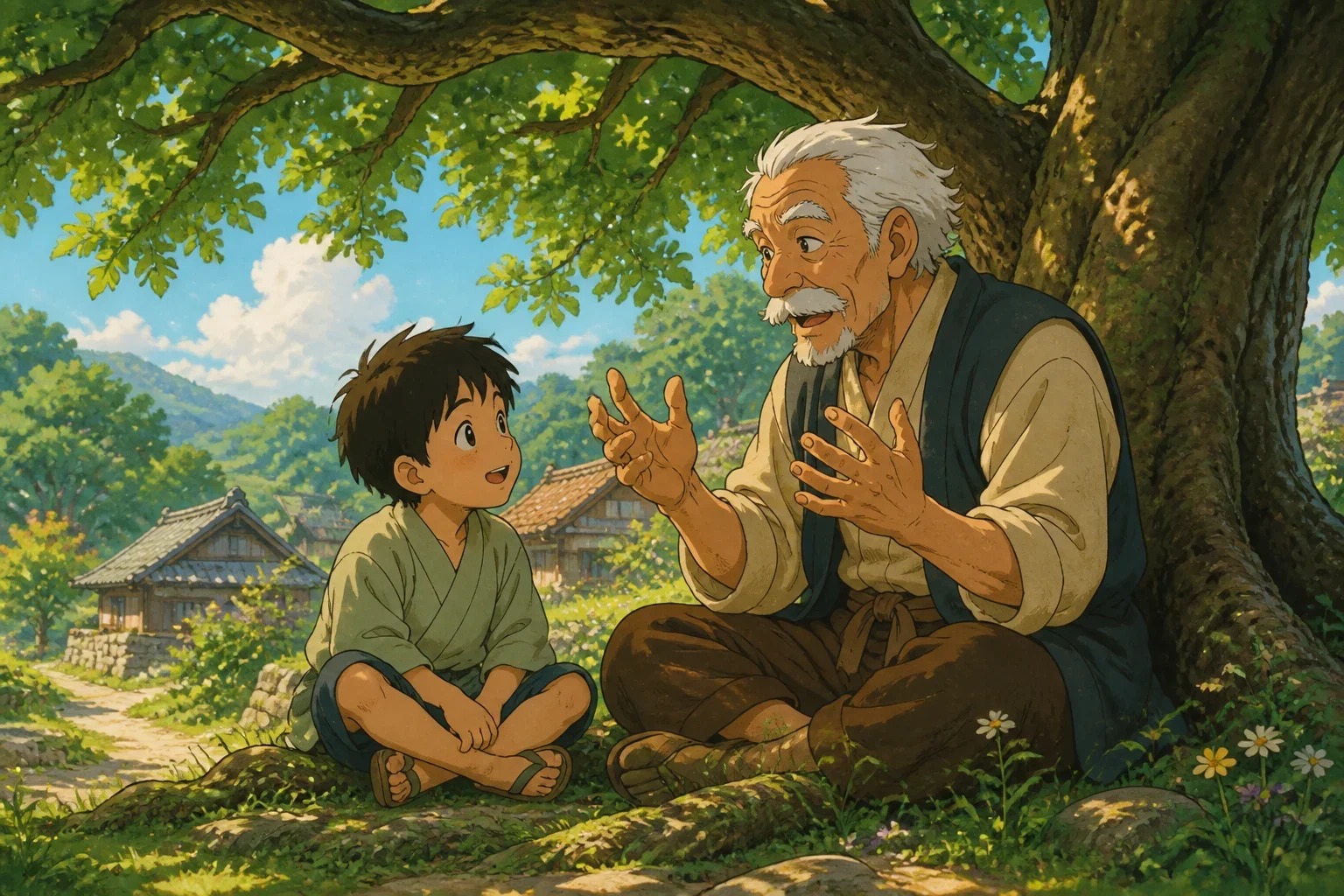
Children loved gathering around him beneath the great oak tree in the center of the village. They came with scraped knees, curious eyes, and pockets full of pebbles, always hoping for one of his stories.
One golden afternoon, as the sun stretched long beams of light across the grass, Chief Waya looked at the children and said, very softly:
“Inside every person, there are two wolves.”
The children leaned closer at once.
“Two wolves?” asked little Meera, widening her eyes.
Chief Waya nodded. “Yes. One wolf is gentle. It is filled with love, peace, kindness, courage, hope, and joy. The other wolf is fierce. It is filled with anger, jealousy, greed, fear, and bitterness.”
The children grew very still. They could almost imagine the wolves pacing inside their own hearts.
“Do they fight all the time?” asked Arun.
“They do,” said Chief Waya.
A breeze rustled through the oak leaves overhead.
Then Tenzin, a boy with quick feet and a quicker temper, blurted out the question everyone was thinking.
“Which wolf wins?”
Chief Waya looked at him for a long moment and replied,
“The one you feed.”
Tenzin frowned. He did not fully understand, but the words stayed with him.
Tenzin and the Angry Wolf
Tenzin was a good-hearted boy, but he often felt as if a storm lived inside him.
When he won a game, he laughed the loudest. When he lost, his face grew hot and his hands curled into fists. If someone cut ahead of him in line, he glared. If a friend forgot to share, he snapped. Later, he always felt sorry—but in the moment, his anger leaped out before he could stop it.
The very next day, Tenzin was playing a running game with the other children in the schoolyard. He was sure he had reached the tree first.
“I won!” he shouted.
“No, I did!” said Dorje, breathless and smiling.
“You’re lying!” Tenzin yelled.
The yard fell silent.
Dorje’s smile disappeared. “I’m not lying.”
But Tenzin was too upset to listen. He kicked dust into the air and stormed away, his chest tight and his eyes burning.
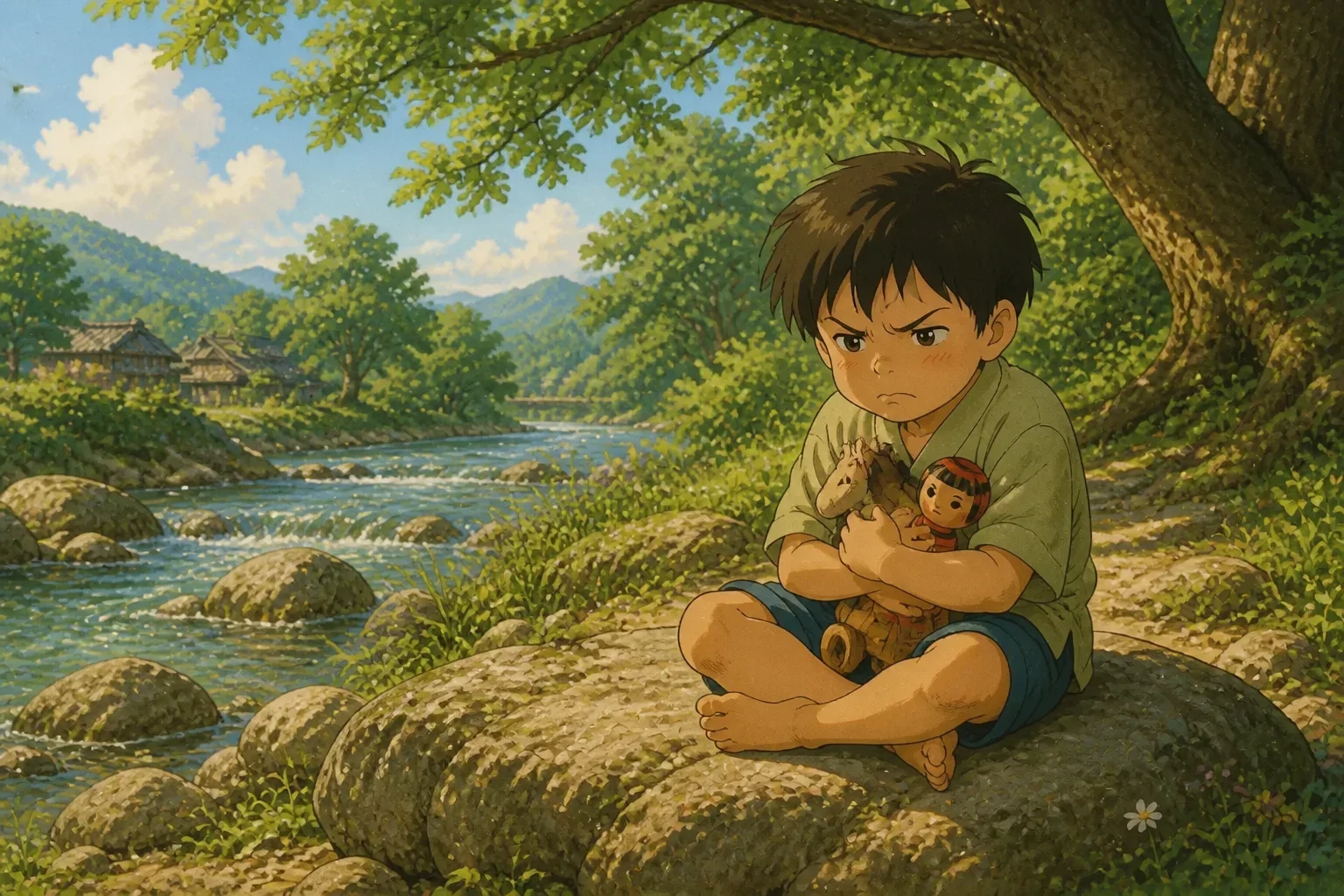
He ran all the way to the river beyond the village, where the water hurried over smooth gray stones. There he sat on the bank, hugging his knees and scowling at the ripples.
After a while, he heard the soft crunch of footsteps.
It was Chief Waya.
The old man sat beside him without speaking. For a moment, they simply listened to the river.
At last, Chief Waya asked, “Is one of your wolves very loud today?”
Tenzin looked down. “I think the angry one is shouting.”
Chief Waya smiled gently. “What happened?”
Tenzin picked up a pebble and tossed it into the water. “Dorje said he won the race. I got so mad. I didn’t even want to hear him talk.”
“Ah,” said Chief Waya. “Anger can make a lot of noise. It wants to be fed quickly.”
Tenzin turned to him. “But how do I stop it? Sometimes it feels stronger than me.”
How to Feed the Good Wolf
Chief Waya picked up two small sticks from the ground.
“Imagine this stick is the angry wolf,” he said, placing one on his left. “Every time you shout, blame, grab, or let your temper lead you, you feed it.”
Then he placed the second stick on his right.
“And this is the good wolf. Every time you pause, tell the truth, share, forgive, help, or speak kindly—even when it is hard—you feed this one.”
Tenzin stared at the sticks.
“But what if I feel angry anyway?” he asked.
“You will,” said Chief Waya. “Everyone does. Being angry is not the same as being cruel. The question is: what do you do next?”
Tenzin was quiet.
Chief Waya continued, “When anger comes, take a breath before you act. Ask yourself, ‘Which wolf am I feeding right now?’ That one question can change everything.”
Tenzin repeated the words in a whisper. “Which wolf am I feeding?”
The river rushed on, bright and steady.
A Small Choice That Changed Everything
The next morning, Tenzin carried his books to school, still thinking about the two wolves.
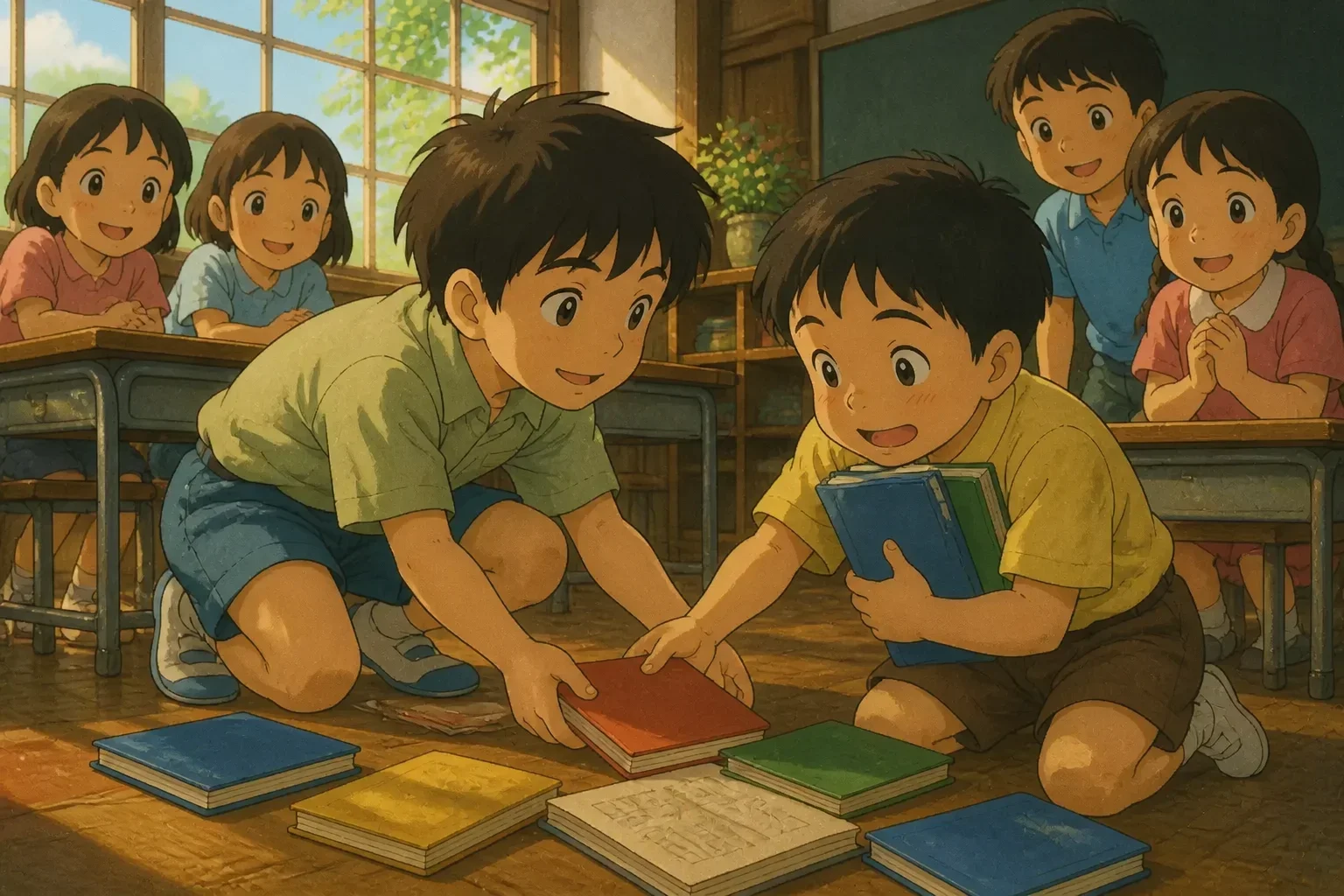
As he stepped through the classroom door, another boy turned too quickly and bumped into him. Tenzin’s books slipped from his arms and fell to the floor with a slap.
For one sharp second, the angry wolf sprang up inside him.
He felt it in his clenched jaw. He felt it in the hot rush to his face. He felt the words rising—loud, hard, ready.
Then he remembered the river. He remembered the two sticks. He remembered Chief Waya’s question.
Which wolf am I feeding right now?
Tenzin took one deep breath. Then another.
The other boy looked frightened. “I’m sorry, Tenzin. It was an accident.”
Tenzin swallowed. His anger had not vanished, but it had softened just enough for him to choose.
“It’s all right,” he said at last. “Please help me pick them up.”
The boy’s shoulders relaxed. “Of course.”
Together they gathered the books. When they were done, the boy smiled.
“Thank you,” he said.
And to Tenzin’s surprise, something warm spread through his chest. It felt better than winning.
The Good Wolf Grows Stronger
That day was not magic. Tenzin did not become perfectly patient all at once.
Sometimes he still got upset. Sometimes he still wanted to shout. Sometimes the angry wolf still scratched at the door of his heart.
But now he noticed it. And noticing gave him a choice.
When his sister borrowed his colored pencils without asking, he almost snapped—but instead he said, “Please ask me next time.”
When a younger child dropped a basket of apples in the market, Tenzin knelt to help gather them.
When Dorje tripped during a game, Tenzin reached out a hand and pulled him up.
Little by little, his friends stopped expecting his temper. Little by little, they trusted him more. Little by little, Tenzin began to feel different inside—lighter, calmer, stronger.
He realized something important: feeding the good wolf did not make him weak. It made him brave.
Because sometimes the bravest thing of all is to choose kindness when anger would be easier.
The Festival Night
A few weeks later, the village held its autumn festival. Lanterns glowed like tiny moons. Music drifted through the square. Tables were covered with sweet cakes, warm bread, and bright garlands of marigolds.
The children were helping decorate the great oak tree with ribbons and paper stars. Tenzin climbed a stool to tie a string of bells to a low branch.
Just then, one of the younger children tugged too hard on a ribbon. A basket of decorations tipped over, spilling flowers and colored paper into the dust.
The child’s lip trembled. “I’m sorry,” she whispered.
Several children turned to look at Tenzin.
Once, he might have shouted. Once, he might have blamed.
Instead, Tenzin jumped down from the stool and grinned.
“It’s all right,” he said. “Let’s fix it together.”
Soon everyone was laughing as they gathered the fallen decorations. The little girl smiled again. Dorje tossed Tenzin a ribbon, and Tenzin caught it with a laugh.
From across the square, Chief Waya watched quietly, his eyes full of pride.
Later that evening, when the lanterns flickered in the dark and the villagers danced in a ring of golden light, Tenzin sat beside the old storyteller.
“I think I understand now,” Tenzin said.
Chief Waya turned to him. “Do you?”
Tenzin nodded. “The wolves are always there. But every choice matters. Even small ones.”
Chief Waya smiled. “Yes. We become what we feed.”
Tenzin looked around at his friends, the music, the glowing lanterns, and the happy faces in the square. He felt peaceful in a way he had never noticed before.
And deep inside, the good wolf lifted its head and rested, strong and well-fed.
Key Takeaways for Kids
- Everyone feels both kind feelings and angry feelings sometimes.
- Feeling angry is normal, but we can choose what to do with that anger.
- Small choices—like taking a breath, helping someone, or speaking kindly—make a big difference.
- The more we practice kindness, patience, and honesty, the stronger those qualities grow.
- Real strength is not hurting others; it is learning to guide your own heart.
Moral of the Story
The wolf that wins is the one you feed—so choose kindness, love, and self-control whenever you can.
Why This Moral Story Stays With Children
The Two Wolves story is memorable because it turns feelings into something children can picture clearly. Instead of simply saying “be good,” it shows that every choice feeds either anger or kindness. That simple image helps kids remember that they have power over their actions, even in difficult moments.
If you are looking for children's moral stories, bedtime stories with life lessons, or short moral stories for kids about kindness and self-control, this timeless tale remains one of the most meaningful.

Watch the Animated Story
Watch on YouTube
Related Stories
Lazy Donkey Who Finally Helped: A Moral Story on Hard Work
The Lazy Donkey Who Finally Helped In a sunny little village tucked between green hills and golden fields, there lived…
The Retiring Carpenter Story: A Powerful Moral About Doing Your Best
The Retiring Carpenter In a quiet village where morning mist curled over the fields and sparrows nested in old apple…
Emily the Celebrity| Inspiring Moral Story for Kids
Emily the Celebrity and the Girl With the Sketchbook In the city of Starville, everything seemed to sparkle. Billboards…
The Story of Socrates for Kids: A Moral Tale About Asking Questions
The Story of Socrates Under the Olive Tree Long ago, in the busy city of Athens, there lived a man who did not wear a…
Bees and the Beetles: A Moral Story About Hard Work
The Bees and the Beetles On the edge of a bright summer garden stood a tall old hive, golden in the afternoon sun. From…
Isabella the Young Fashion Designer: A Moral Story
Isabella the Young Fashion Designer In the bright little town of Artistry, windows were painted with rainbows, flower…
The Pencil Maker | Moral Tale About Growth and Purpose
The Pencil Maker's Story On the edge of a quiet village, where the morning mist curled around little rooftops and…
Thomas the Advocate | Moral Story About Truth and Justice
Thomas the Brave Advocate In a cheerful town filled with bicycle bells, market chatter, and rows of little houses with…