
The Moral Lesson of SOCRATES' Life Story
The Story of Socrates Under the Olive Tree
Long ago, in the busy city of Athens, there lived a man who did not wear a crown, command an army, or own a palace. Yet people still remembered his name.
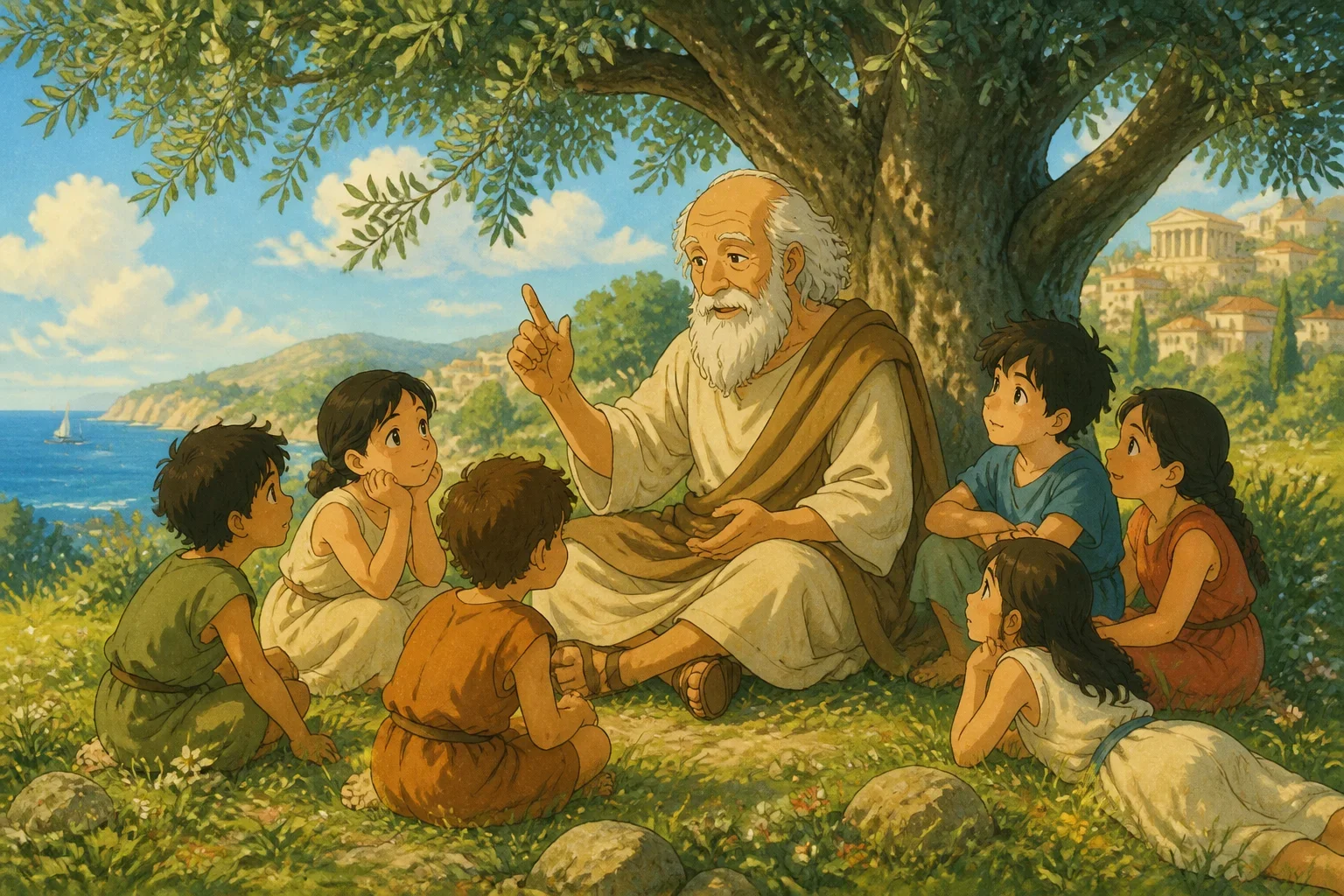
His name was Socrates.
He had a plain robe, dusty sandals, and a face that looked ordinary at first glance. But his eyes were bright and alive, as if they were always asking the world a question. He could often be found in the marketplace, near the bread sellers, potters, and fruit carts, talking to anyone who would stop long enough to listen.
Children liked him because he never shooed them away. Grown-ups were not always sure what to think of him.
That was because Socrates had a strange habit.
He asked questions.
Not silly questions. Not rude questions. Questions that made people stop, blink, and think.
One warm evening, as the golden sun slipped behind the rooftops and the olive leaves whispered in the breeze, a group of children gathered around him.
“Tell us something important,” said a boy named Alex.
Socrates smiled. “Very well. Let us talk about truth. But truth is shy. It does not always come when called. Sometimes, we must go looking for it with careful questions.”
The children leaned closer.
Why Socrates Asked So Many Questions
Socrates did not believe that being loud made a person wise. He did not believe that being powerful made a person right. He believed that if people wanted to live good and honest lives, they must learn to think clearly.
So he would ask simple questions that opened big doors.
One day he spoke to a farmer.
“Why do you plant your crops in straight rows?” Socrates asked.
The farmer shrugged. “Because my father did, and his father before him.”
Socrates nodded kindly. “That may be a good reason. But tell me—have you ever asked whether there is a better way?”
The farmer rubbed his chin. “No. I suppose I have not.”
A nearby child laughed softly. “He never thought about it!”
Socrates turned to the child. “Then today he has begun.”
Another day, he spoke to a merchant.
“What does it mean to be fair?” Socrates asked.
“To charge a proper price,” the merchant answered quickly.
“And what is proper?” Socrates asked.
The merchant opened his mouth, then closed it again.
People nearby chuckled, but Socrates did not. He was not trying to embarrass anyone. He wanted them to discover whether they truly understood the words they used every day.
That was his gift: he helped people think more deeply.
A Boy Who Learned from Socrates
Among those who listened was a thoughtful boy named Alex. He was curious about everything—the shape of leaves, the patterns of rain, the reasons behind rules.
After spending time with Socrates, Alex began asking respectful questions too.
When the baker said, “This is how bread must always be made,” Alex asked, “Why must it always be this way?”
When the fishermen argued over whose turn came first, Alex asked, “What would be fair for everyone?”
When older boys laughed at a smaller child, Alex asked, “Does strength mean being unkind?”
Sometimes people answered him. Sometimes they frowned. Sometimes they walked away muttering.
But little by little, the village around him changed.
People began to pause before speaking. They listened more carefully. They explained their reasons instead of saying, “Because I said so.”
Questions, Alex discovered, were not little sparks of trouble.
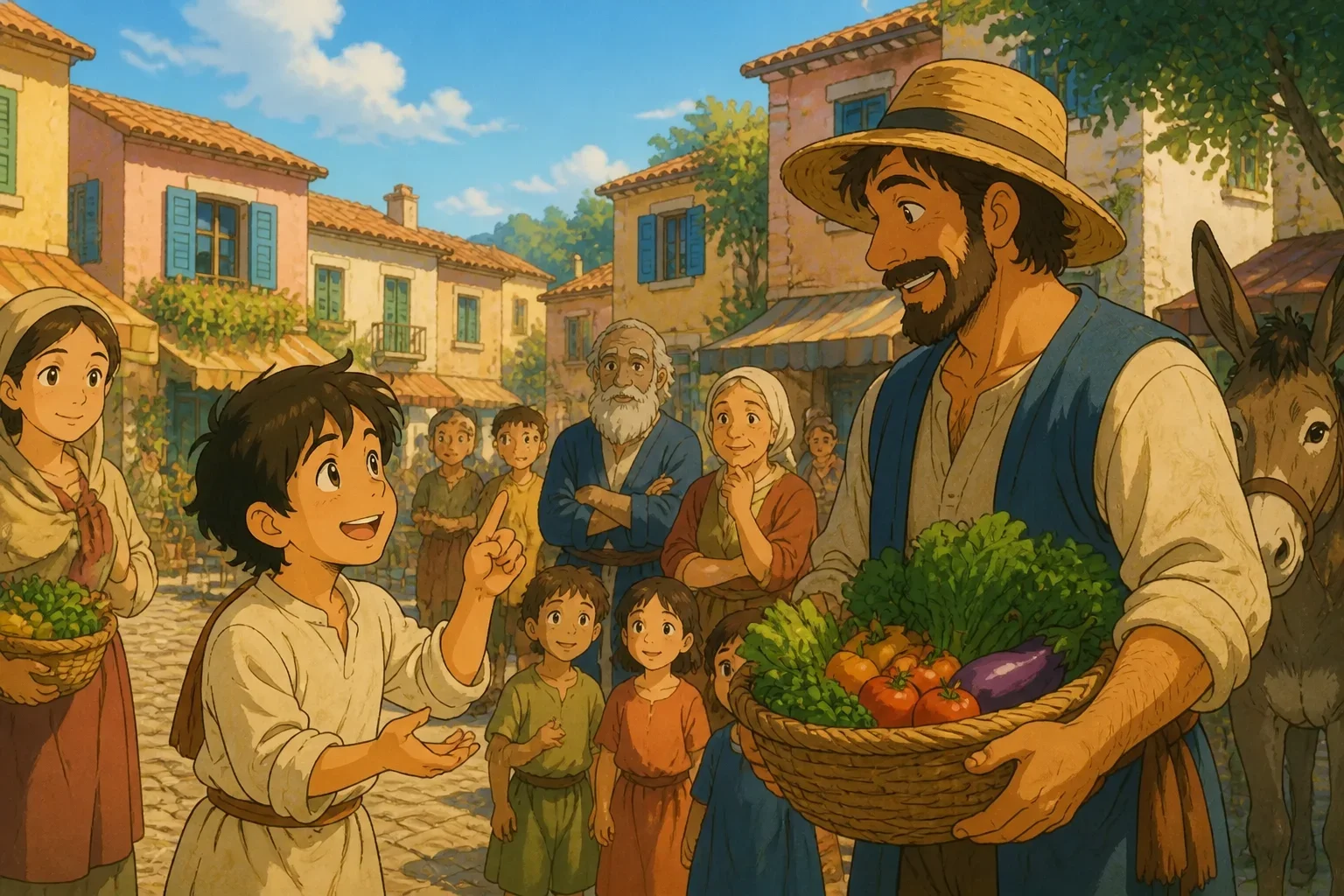
They were little lamps.
When Questions Made People Uncomfortable
Not everyone liked this.
An elder named Mr. Grumble grew annoyed whenever Socrates or Alex spoke. He liked things done the old way, whether they were wise or not.
One afternoon he pointed a finger at Alex and snapped, “You ask too much! Children should listen, not question.”
The square fell silent.
Alex’s cheeks burned, but he remembered Socrates' calm voice.
So he answered politely, “I do listen, sir. That is why I ask. I want to understand.”
Mr. Grumble huffed. “Questions lead to disobedience.”
From nearby, Socrates stepped forward.
“Only careless questions do that,” he said gently. “Honest questions lead to learning.”
Mr. Grumble frowned. “And what if your questions challenge tradition?”
Socrates folded his hands. “Then perhaps tradition will grow stronger by proving itself wise. And if it cannot, perhaps it needs improving.”
Some villagers gasped. Others nodded slowly.
Mr. Grumble had no quick answer for that.
The Trial of Words
As time passed, more people came to hear Socrates speak. Some admired him. Some felt uneasy. A few grew angry, because his questions made them realize they did not know as much as they pretended.
At last, the leaders called him to stand before the people.
The day of the gathering was tense and windy. Dust swirled through the square. Adults whispered. Children clung to their parents' sleeves.
Mr. Grumble spoke first. “Socrates stirs up trouble. He teaches young people to challenge everything.”
A murmur passed through the crowd.
Then Socrates stood.
He did not shout. He did not beg. He simply spoke the truth as he understood it.
“If a person never asks what is right,” he said, “how will he learn to do right? If a person never asks what is true, how will she avoid falsehood? I do not ask questions to cause harm. I ask them so that we may become wiser, kinder, and more honest.”
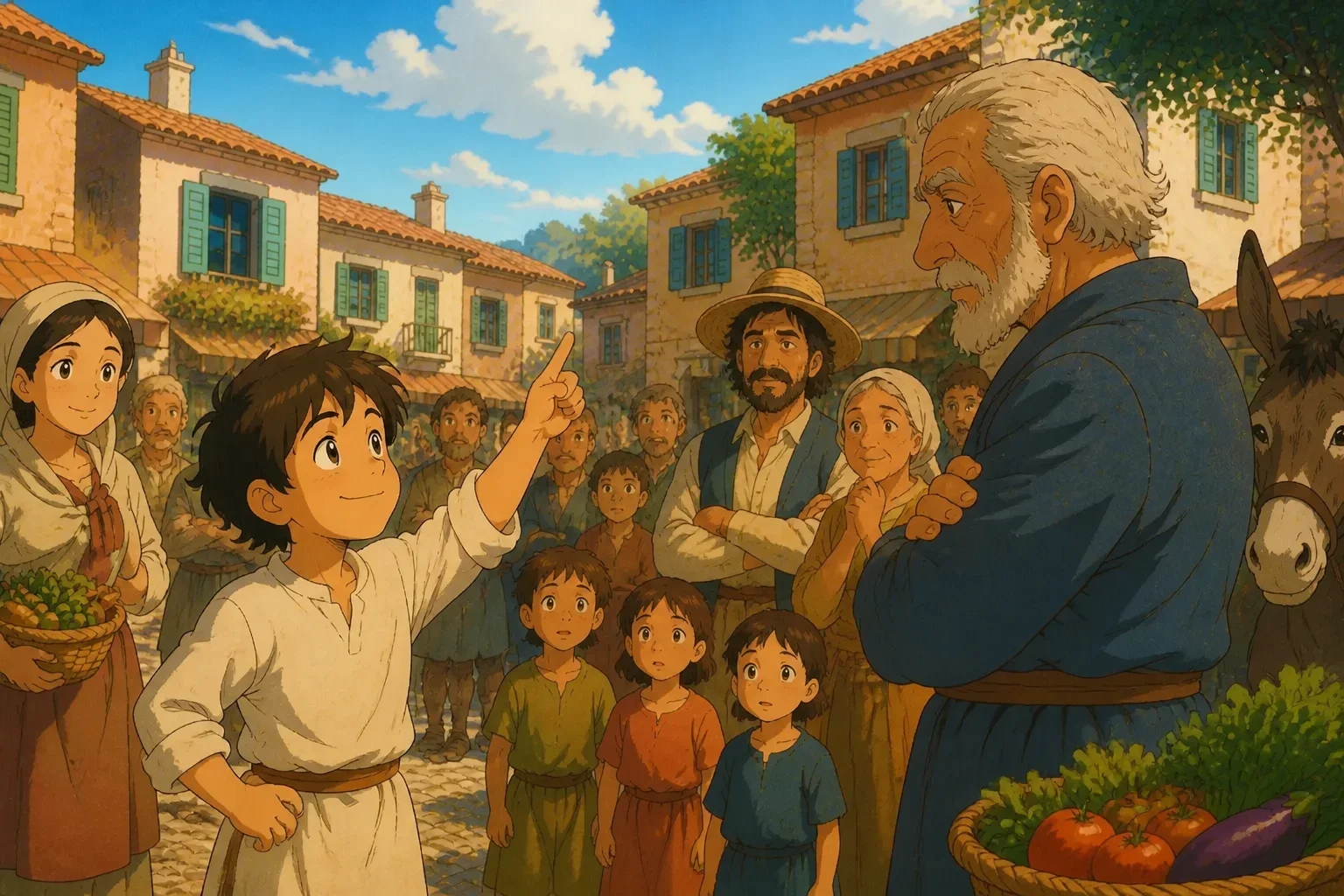
His voice was steady, and for a moment the whole square seemed to hold its breath.
Alex watched from the crowd, his heart pounding.
Socrates went on. “It is easy to repeat words. It is harder to understand them. But understanding matters. A good life is not lived by habit alone. It is lived by thought, honesty, and courage.”
The villagers listened carefully.
Even those who disagreed could see that Socrates was not cruel. He was brave enough to seek truth, even when truth was uncomfortable.
What the Children Remembered
The years passed, but the children who had sat beneath the olive tree never forgot him.
They remembered that Socrates did not teach with treasure or trophies. He taught with conversations.
He showed them that wisdom does not begin with pretending to know everything.
It begins with saying:
“Let me think.”
“Help me understand.”
“Is this really true?”
And because of him, Alex grew into someone who listened carefully, spoke honestly, and asked questions with kindness. He learned that courage is not only found on battlefields.
Sometimes courage is simply raising your hand and asking, “Why?”
Key Takeaways for Kids
- Ask questions kindly: Curiosity helps you learn and understand the world.
- Think before you follow: Just because something has always been done a certain way does not always mean it is best.
- Be respectful when you disagree: Truth is easier to find when people speak calmly and listen well.
- Be brave enough to learn: It takes courage to admit when you do not know something.
- Use words to build wisdom: Good conversations can help people become fairer and kinder.
Moral of the Story
The life of Socrates teaches us that asking thoughtful questions is the first step toward wisdom, and seeking truth with courage and respect helps us grow into better people.
Why This Moral Story Matters for Children
Many children's moral stories teach kindness, honesty, or bravery. This story adds something special: it teaches children that thinking deeply is also a kind of courage. Socrates reminds kids that they do not have to accept every idea without understanding it. They can ask, listen, learn, and grow wiser every day.
That is one reason stories about Socrates remain meaningful for kids, families, and bedtime reading even after so many years.

Watch the Animated Story
Watch on YouTube
Related Stories
Lazy Donkey Who Finally Helped: A Moral Story on Hard Work
The Lazy Donkey Who Finally Helped In a sunny little village tucked between green hills and golden fields, there lived…
The Retiring Carpenter Story: A Powerful Moral About Doing Your Best
The Retiring Carpenter In a quiet village where morning mist curled over the fields and sparrows nested in old apple…

Bees and the Beetles: A Moral Story About Hard Work
The Bees and the Beetles On the edge of a bright summer garden stood a tall old hive, golden in the afternoon sun. From…
Storm Over Sunridge | Moral Story About Community
The Storm Over Sunridge On the evening before the storm, Sunridge looked as if nothing bad could ever happen there.…

Boasting Traveler: A Moral Story About Honesty and Humility
The Boasting Traveler Marco always arrived before his stories did. Children would spot his bright blue backpack…
The Two Wolves Story: A Powerful Moral Tale About Choosing Kindness
The Story of Two Wolves On the edge of a quiet mountain village, where prayer flags fluttered in the wind and…