
The Boasting Traveler: A Moral Story on Honesty and Humility
The Boasting Traveler
Marco always arrived before his stories did.
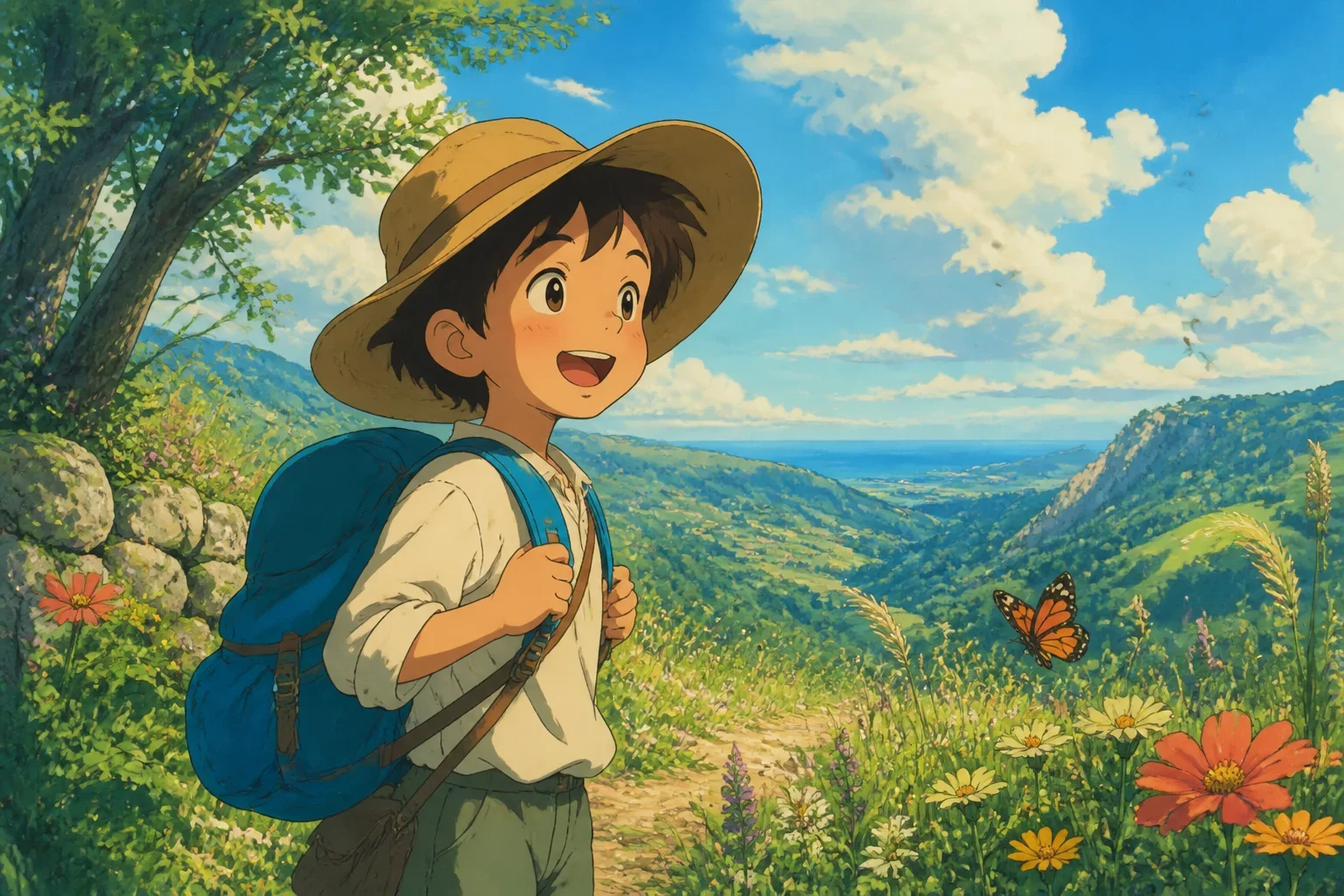
Children would spot his bright blue backpack bouncing down the village road, and before he even reached the square, they would begin to whisper.
“Marco’s back!”
“I bet he crossed a desert!”
“Maybe he fought bandits this time!”
Marco loved that moment—the wide eyes, the eager faces, the little circle that formed around him as if he were a campfire and everyone else was cold.
He would tip his floppy hat, clear his throat, and begin.
“I once climbed a mountain so tall that the clouds got stuck on my boots.”
The children gasped.
“And on the other side,” Marco would continue, lowering his voice, “I met a lion with golden eyes. It roared so loudly the trees shook—but I stared it down.”
The children gasped again.
Marco smiled every time.
He was a good traveler. He really had seen rushing rivers, windy cliffs, strange birds, and moonlit roads. But his real adventures never felt exciting enough once he saw how much people loved the grander versions. So each time he told a story, he added a little more. A steep hill became a dangerous mountain. A barking dog became a wolf. A rainy night became a storm so wild it nearly swallowed him whole.
At first, the boasting felt harmless.
But after the laughter faded and the crowd drifted away, Marco often felt a small, uncomfortable pebble of guilt in his chest.
One golden morning, he packed apples, nuts, and two honey pastries into his bag and set off again. “This time,” he told himself, “I’ll have a real adventure worth telling.”
He walked through meadows where buttercups nodded in the breeze. He crossed a narrow wooden bridge over a stream that chuckled over smooth stones. By noon, he had reached the edge of a quiet forest where sunlight fell in bright patches on the ground.
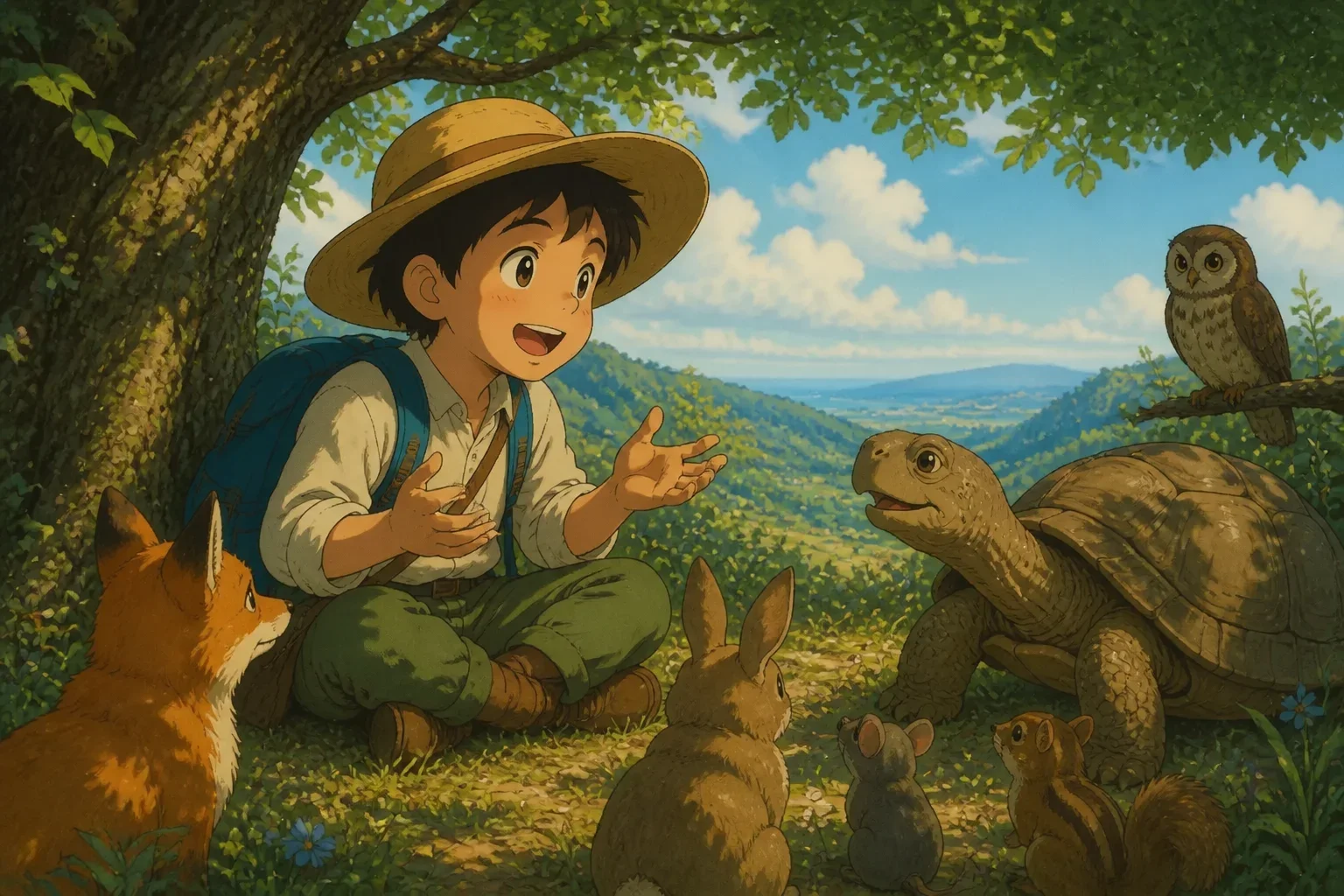
There, beside a mossy stump, sat Elder Turtley.
Everyone in the region knew Elder Turtley—the old tortoise with the calm eyes and the patient voice. He never hurried, never interrupted, and somehow always seemed to know when someone was pretending to be bigger than they felt.
“Good afternoon, Marco,” said Elder Turtley.
“Good afternoon!” Marco replied, straightening proudly.
The tortoise blinked slowly. “And what tale travels with you today?”
Marco felt the familiar spark. Here was his chance.
“Oh, an incredible one,” he said. “You won’t believe it. Just last week, I climbed a black mountain and fought a dragon that was terrifying an entire village.”
Elder Turtley did not laugh or gasp. He simply tilted his head.
“A dragon?” he asked gently. “That is extraordinary. Tell me, how did you defeat it?”
Marco swallowed, but he kept going.
“With my walking stick,” he said. “And my courage. The dragon blew fire, but I leaped over the flames, climbed onto its back, and—well—sent it fleeing into the sky.”
Elder Turtley was quiet for a moment. A breeze stirred the leaves overhead.
Then he said, “That is a very large story for such a small walking stick.”
Marco’s cheeks warmed.
The tortoise’s voice remained kind. “Marco, do you know why people listen to stories?”
“Because they’re exciting?” Marco guessed.
“Sometimes,” said Elder Turtley. “But mostly because stories help us feel close to one another. A true story, even a simple one, can be like a bridge. A boast, however, is only smoke. It looks big for a moment, then disappears.”
Marco looked down at his shoes.
Elder Turtley continued, “If you fill the air with stories that are not true, people may clap today. But one day, they may stop trusting you tomorrow. Honesty is slower than boasting—but it travels much farther.”
Marco did not answer right away.
He thought of the children in the village, their shining eyes, their laughter. He thought of the pebble of guilt he carried after every tale. He thought of how tired he felt trying to make himself sound grander than he really was.
At last he whispered, “What if my real stories aren’t special enough?”
Elder Turtley smiled. “Helping someone cross a stream is special. Sharing your lunch is special. Admitting the truth is very special indeed. You do not need to become larger. You only need to become honest.”
Marco thanked him and walked on, more slowly than before.
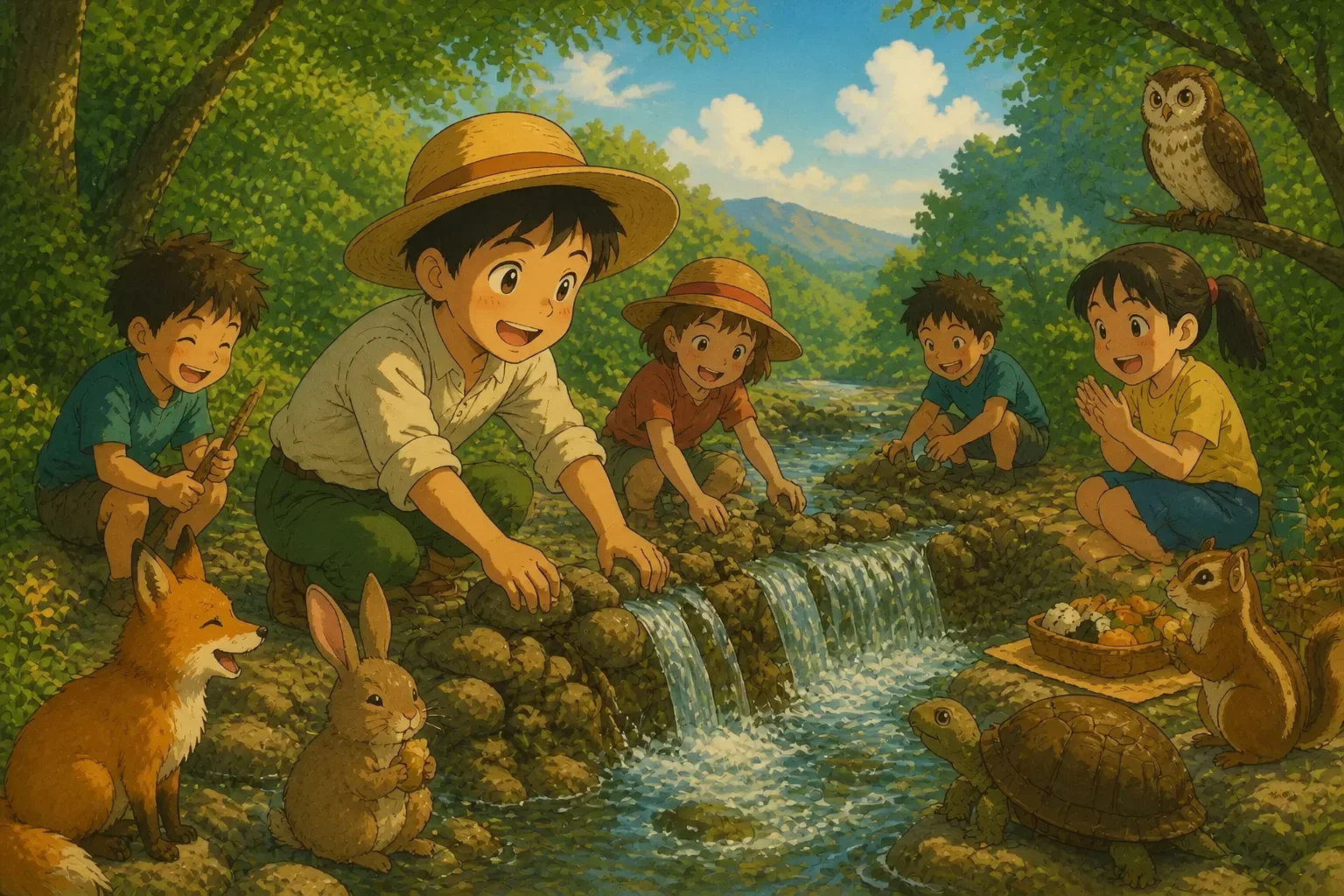
By afternoon, he came to a clear stream where a group of children were working hard with sticks, pebbles, and muddy hands.
“We’re building a little dam!” one girl announced.
“But the water keeps sneaking through,” said a boy with rolled-up sleeves.
Marco opened his mouth. The old habit jumped up at once.
He nearly said, I once built a wall across a raging river in the middle of a thunderstorm.
The words sat right at the tip of his tongue.
Then he remembered Elder Turtley.
Instead, Marco took a breath and said, “I’ve never built a dam before. But if you want, I can help.”
The children looked at him, surprised.
“You mean you don’t already know how?” one asked.
Marco gave a sheepish smile. “Not really.”
For one terribly long second, he worried they might laugh.
But the girl grinned. “That’s all right. We’re figuring it out too.”
So Marco rolled up his sleeves and stepped into the cool, splashing water.
He carried flat stones from the bank. Another child wedged sticks between them. Someone packed mud into the gaps. When the water slipped through one side, they adjusted the other. When a pile collapsed, everyone groaned, then burst into laughter.
Marco laughed too—real laughter, not the proud kind he used after telling one of his grand stories.
After a while, he shared his apples and pastries. The children shared berries and jokes. A small frog landed on a rock in the middle of their dam as if inspecting their work, and everyone cheered.
By sunset, the dam was not perfect. Water still trickled through in silver threads.
But it held.
“It works!” shouted one boy.
“We did it together!” said the girl.
Marco looked at the crooked little dam, the muddy hands, the smiling faces, and felt something surprising.
This day—this ordinary, splashy, muddy, happy day—felt better than any dragon story he had ever invented.
That evening, Marco returned to the village square. As usual, children ran to meet him.
“Marco!” they cried. “What happened this time?”
“Did you cross a jungle?”
“Did you fight a giant?”
Marco paused.
The old version of himself would have lifted his chin and begun spinning another impossible tale.
But now he smiled and sat down on the stone well in the center of the square.
“Today,” he said, “I met a wise tortoise who told me something important. Then I helped build a dam in a stream. I wasn’t very good at it at first, and I almost said I was. But I told the truth instead.”
The children blinked.
Marco went on. “We used sticks and stones and mud. A frog supervised us. I shared my lunch. And for once, I think I had an adventure exactly as it was.”
There was a quiet moment.
Then one little boy asked, “Did the dam really work?”
“Mostly,” Marco said with a laugh. “Though I wouldn’t trust it in a rainstorm.”
The children laughed.
“Tell us more about the frog,” said another.
“And the tortoise!”
“And how the water kept getting through!”
So Marco told them everything—plainly, honestly, warmly. And to his surprise, they listened just as closely as before.
Maybe even more closely.
Because this time, he was not trying to sound impressive.
This time, he sounded real.
From then on, Marco still traveled. He still returned with stories. But now his stories were filled with true things: a baker who gave him warm bread on a rainy morning, a bird that stole his hat ribbon, a long walk under stars, a bridge that creaked, a mistake he made, a kindness he received.
And little by little, something changed.
People no longer gathered around Marco because they expected impossible tales.
They gathered because they trusted him.
And Marco discovered that trust feels far better than applause.
Key Takeaways for Kids
- Telling the truth helps others trust you.
- You do not need to exaggerate to be interesting or loved.
- Honest friendships are stronger than attention won by boasting.
- Real adventures can be simple, joyful, and meaningful.
Moral of the Story
True happiness comes from honesty and humility, not from boasting about things that are not true.

Watch the Animated Story
Watch on YouTube
Related Stories
The Story of Socrates for Kids: A Moral Tale About Asking Questions
The Story of Socrates Under the Olive Tree Long ago, in the busy city of Athens, there lived a man who did not wear a…
Bees and the Beetles: A Moral Story About Hard Work
The Bees and the Beetles On the edge of a bright summer garden stood a tall old hive, golden in the afternoon sun. From…
Lazy Donkey Who Finally Helped: A Moral Story on Hard Work
The Lazy Donkey Who Finally Helped In a sunny little village tucked between green hills and golden fields, there lived…
The Retiring Carpenter Story: A Powerful Moral About Doing Your Best
The Retiring Carpenter In a quiet village where morning mist curled over the fields and sparrows nested in old apple…
Storm Over Sunridge | Moral Story About Community
The Storm Over Sunridge On the evening before the storm, Sunridge looked as if nothing bad could ever happen there.…
Ass and His Masters: A Classic Aesop Story for Kids
The Ass and His Masters In a dusty little village at the edge of wide brown fields, there lived an ass who was never…
Corrupt Politician: A Moral Story About Honesty and Courage
The Tale of the Corrupt Politician Every Saturday morning, the bell in Willowbrook’s clock tower rang nine bright…
Emily the Celebrity| Inspiring Moral Story for Kids
Emily the Celebrity and the Girl With the Sketchbook In the city of Starville, everything seemed to sparkle. Billboards…