5 Moral Values From Ancient Chinese Philosopher: "CONFUCIUS"@shortmoraltales
A Lantern-Lit Evening in Ancient China
When the evening bell rang across the village, children came running from every direction—past the rice fields, over the little stone bridge, and along the narrow path lined with bamboo. They were not racing to a feast or a festival.
They were racing to hear Master Li tell a story.
Master Li was old, but his eyes were bright as morning dew. He sat each evening beneath a wide mulberry tree with a woven mat, a clay teapot, and a lantern that glowed like a tiny moon. The children loved the way he paused before important words, as if he were placing pebbles carefully across a stream.
That night, the air smelled of rain and jasmine. Fireflies flickered in the grass. The children settled in a half-circle, whispering and nudging one another until Master Li lifted his hand.
"Tonight," he said, "I will tell you about a wise teacher from long ago—Confucius. He did not carry a sword or wear a crown. Yet his words traveled farther than many kings. He taught people how to live with goodness in their hearts."
Little Bo leaned forward. "Did he know magic?"
Master Li smiled. "A kind of magic, perhaps. The kind that changes how people treat one another."
The children grew still.
"Confucius taught many things," Master Li said, "but tonight we will remember five: respect, kindness, learning, courage, and love for family."
1. Respect: The Boy and the Jade Pendant
"First," said Master Li, "Confucius taught that respect is the root of good character."
A breeze stirred the leaves overhead as he began.
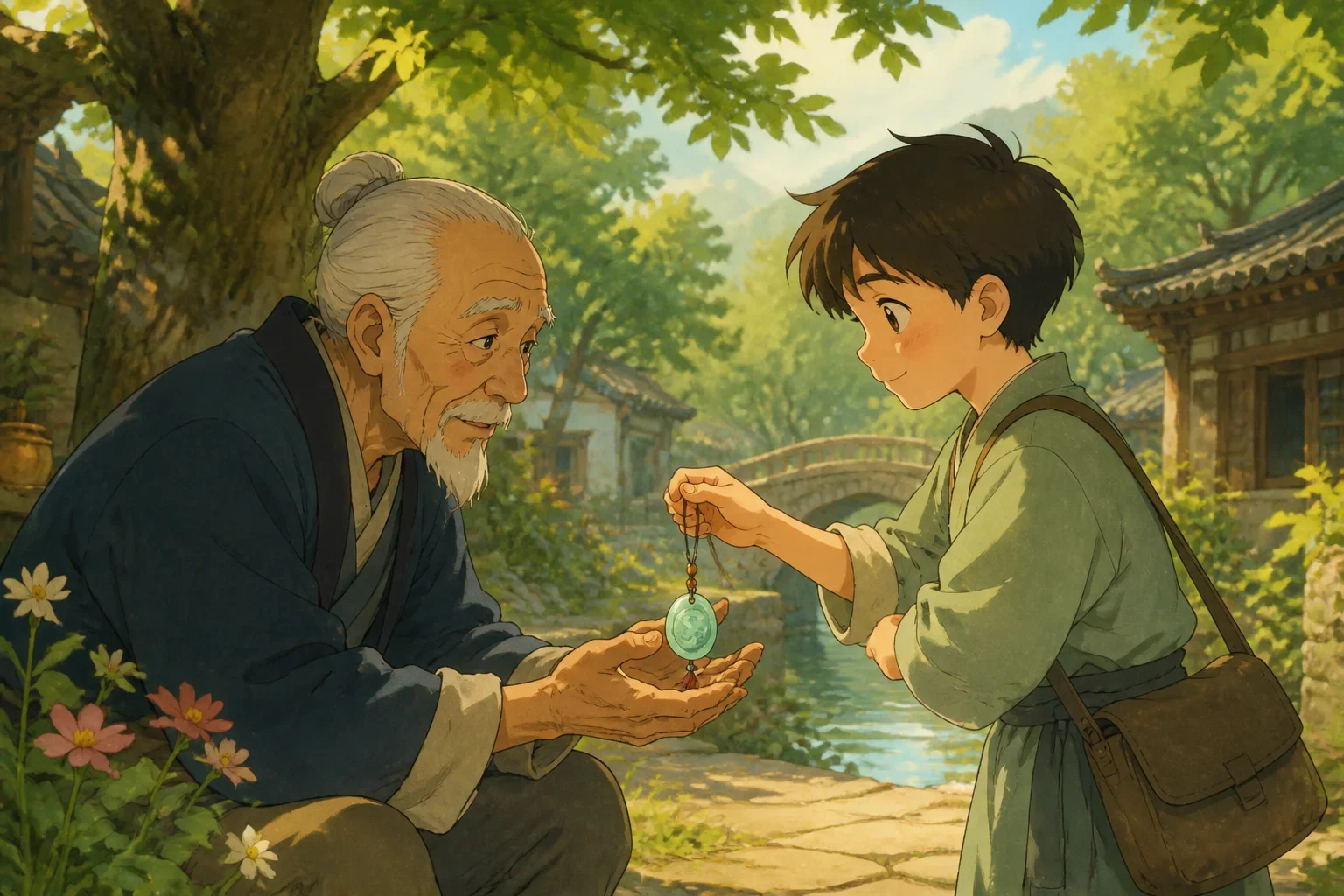
In a busy village market, where baskets of oranges glowed like little suns and merchants called out cheerful prices, a boy named Jian noticed something sparkling near a tea stall.
He bent down and picked it up.
It was a jade pendant—smooth, green, and carved with a tiny crane.
"Oh!" gasped one of the children listening.
Jian turned the pendant over in his hands. It was beautiful. He had never owned anything so fine. For one long moment, he imagined tying it around his neck and showing it to his friends.
Then he heard a worried voice.
"My pendant," an elderly village elder murmured, patting his robe. "Where has it gone? It belonged to my father."
Jian looked at the jade again. He could have hidden it. No one had seen him pick it up.
Instead, he stepped forward.
"Sir," Jian said, holding out both hands, "is this yours?"
The elder's face softened with relief. "Yes," he said quietly. "Yes, it is."
He did not snatch it back. He bowed to Jian first.
"You have returned more than jade," the elder said. "You have returned peace to an old man's heart."
Master Li looked around at the children. "Do you see? Respect is not only in bows and polite words. It is in honest choices, especially when no one is watching."
Little Yan nodded slowly. "So respect means doing what is right?"
"Exactly," said Master Li.
2. Kindness: The Farmer and the Lost Traveler
"The second lesson," Master Li continued, pouring tea into a tiny cup, "is kindness. Confucius believed goodness should move from one person to another, like light passed from lantern to lantern."
Far beyond the village, a traveler once lost his way in a forest at dusk. The path had vanished under fallen leaves. His shoes were torn. His stomach growled. Every tree looked like the last.
At last, he saw a dim light in the distance.
It came from the cottage of a farmer named Mei, who was carrying water from the well. When she saw the stranger, she did not turn away.
"You look tired," she said.
"I am," the traveler admitted. "I have walked all day and cannot find the road home."
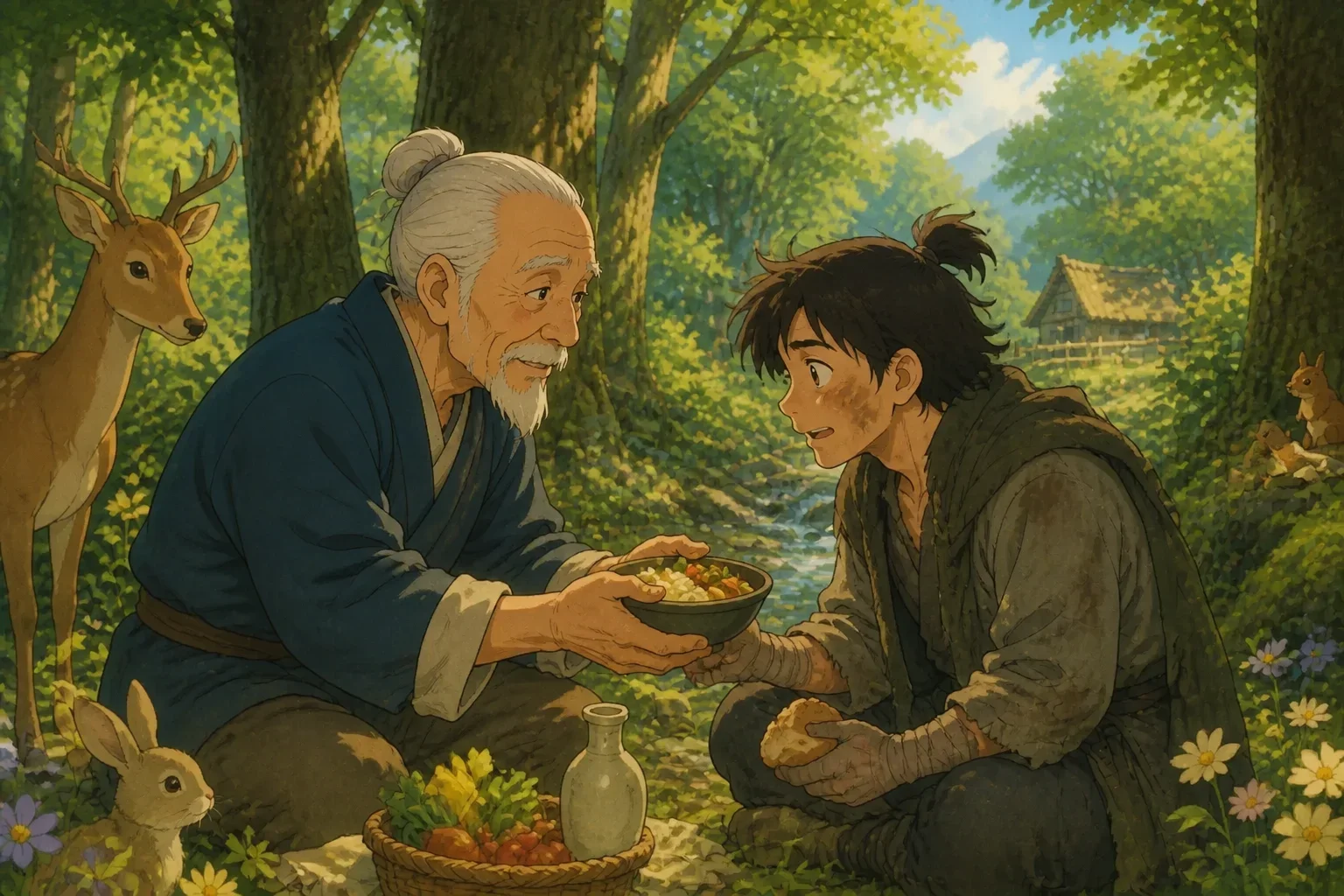
Mei brought him inside. She gave him warm rice, a bowl of soup, and a dry place by the stove. Her own home was simple, and she had little to spare, but she shared what she had without complaint.
The traveler held the hot bowl with both hands. "Why are you helping me?" he asked.
Mei answered, "Because one day, I may be the one who is lost."
The children around Master Li exchanged thoughtful glances.
"In the morning," he continued, "the traveler left with a full heart. Before he went, he bowed and said, 'Your kindness will not be forgotten.'"
Master Li tapped the ground gently with his fan. "Kindness does not make our homes smaller when shared. It makes the world feel larger and safer."
3. Learning: The Girl Who Read in the Square
The lantern flame fluttered, and the children huddled a little closer.
"The third lesson," said Master Li, "is the love of learning. Confucius believed that learning helps us grow wiser, humbler, and stronger."
There once lived a girl named Lin who wanted more than anything to learn to read. But books were scarce, and lessons were hard to come by. While others rested after chores, Lin traced characters in the dust with a twig.
Again and again, she made mistakes.
Again and again, she tried once more.
Sometimes the strokes leaned crooked. Sometimes she forgot the order. Sometimes she grew so frustrated that tears pricked her eyes.
"Maybe I am too slow," she whispered one evening.
But her friends did not laugh at her. One brought a scrap of old paper. Another repeated words she had heard from a teacher in a nearby town. An elderly neighbor showed Lin how to hold the brush more steadily.
Little by little, the characters began to make sense.
Then came market day.
People filled the village square with baskets, bundles, and chatter. Lin stood near the well, clutching a page with trembling fingers.
"I can't do it," she whispered.
"You can," her friends said.
So Lin took a breath and began to read aloud.
At first, her voice shook like a leaf in the wind. But then it grew steadier. Word by word, line by line, she finished the story.
When she looked up, the square was silent.
Then everyone burst into applause.
Master Li's smile was soft and proud. "Learning is not about being perfect at once. It is about returning, trying, asking, and growing. That is true strength."
4. Courage: Standing Up to What Is Wrong
A cloud drifted across the moon as Master Li's voice grew deeper.
"The fourth lesson is courage. But listen carefully—Confucius did not teach that courage means showing off or seeking fights. Real courage means standing up for what is right."
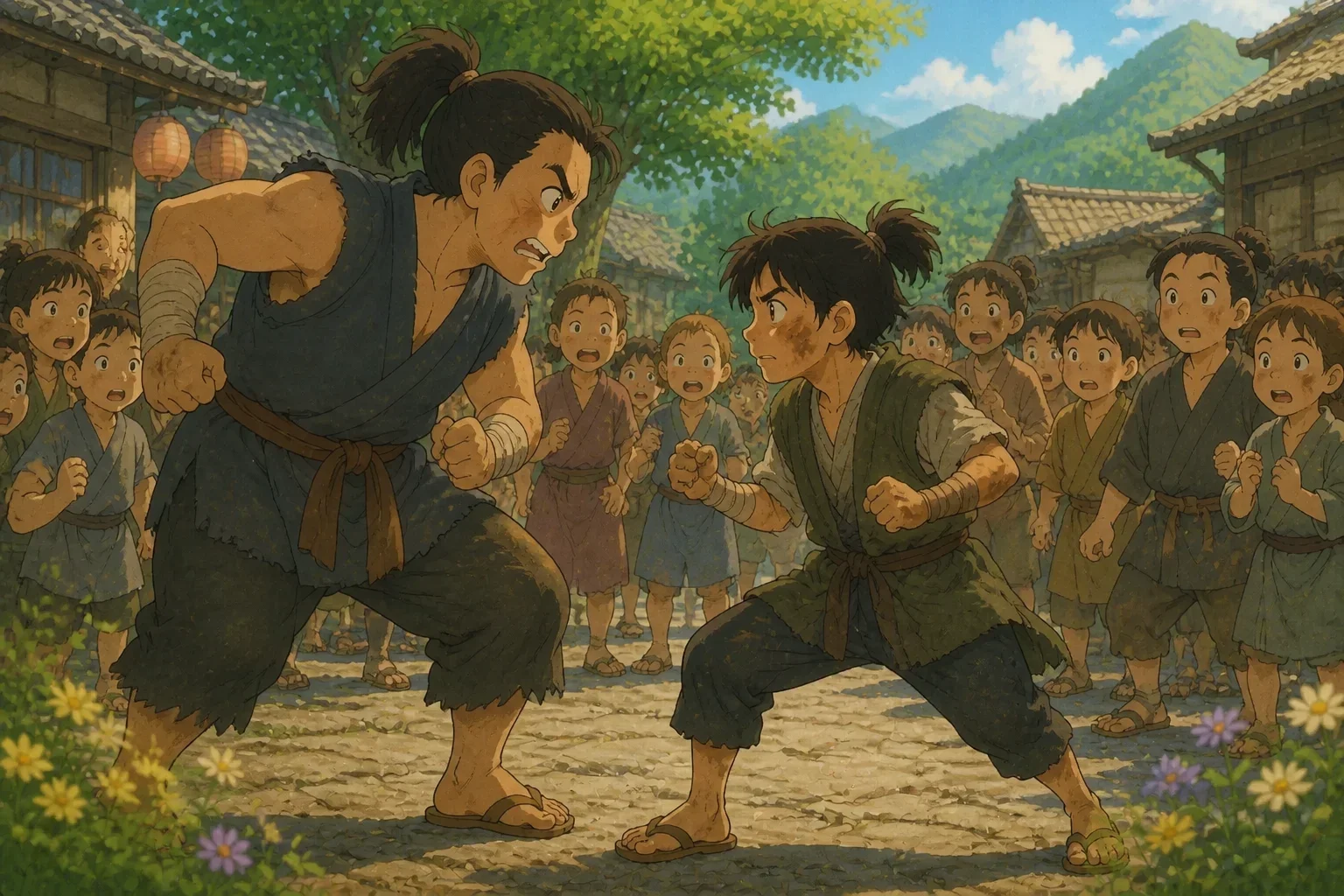
In a village near the river lived a strong warrior named Feng. One afternoon, he saw a bully shoving a fruit seller and scattering her pears into the mud.
No one moved.
Some were frightened. Others looked away.
Feng stepped forward.
"Enough," he said.
The bully sneered. "And who will stop me?"
"I will," Feng replied.
His voice was calm, not angry. That made it even stronger.
The bully raised his shoulders as if ready to strike, but Feng did not reach for a weapon. He simply stood firm between the bully and the frightened villagers.
One by one, others found their courage too. The potter came forward. Then the baker. Then the fruit seller's son.
Soon the bully was no longer facing one brave man, but a whole village united.
And then something unexpected happened.
Instead of punishing him cruelly, the villagers chose compassion. They learned the bully had lived with anger for a long time and had forgotten how to ask for help without hurting others.
They made him repair what he had damaged and apologize for his actions. It was not easy for him. His face burned with shame.
But it changed him.
"Courage," Master Li said, "can stop harm. Compassion can help heal it. Both are needed in a good heart."
5. Family: The Richness of a Simple Meal
By now, the stars were bright above the mulberry tree, and even the youngest children were listening without a fidget.
"The fifth lesson," Master Li said more quietly, "is to cherish family. Confucius taught that love and care begin at home."
One winter evening, a family sat down to a very simple meal: a small pot of rice, steamed greens, and turnip soup. The wind rattled the shutters, and the room was plain.
There were no silk cushions, no golden dishes, no musicians.
But there was laughter.
The grandmother told a story about when she was young and once chased a runaway chicken through a neighbor's garden. The father laughed so hard he nearly dropped his bowl. The mother sang a song she had learned as a child. The youngest boy tried to sing along and missed every third word.
Soon everyone was smiling.
When the meal was over, the eldest daughter looked around the little table and thought, We do not have much, but this feels full.
Master Li folded his hands. "Family love is not measured by how much money a person has. It is measured by care, patience, sharing, and time spent together."
The Children's Question
For a moment, no one spoke. The night seemed to hold the story gently in its hands.
Then little Mei, who always asked the bravest questions, raised her hand.
"Master Li," she said, "how can we remember all five lessons tomorrow morning, when we are busy again?"
Master Li chuckled. "Ah, that is the real challenge, isn't it?"
He pointed to the children one by one.
"When you return something that is not yours, you practice respect. When you help someone who is lonely or tired, you practice kindness. When you keep trying to learn, even when it is difficult, you practice wisdom. When you speak up for what is right, you practice courage. When you listen, share, and care at home, you honor your family."
Bo frowned thoughtfully. "So the lessons are small?"
"Small," said Master Li, "and very great. A good life is built from many small good choices."
The children looked up at the lantern, glowing steadily in the dark.
And somehow, each of them felt as if a little lantern had been lit inside their own heart too.
Key Takeaways for Kids
- Respect means doing the right thing, even when no one is watching.
- Kindness matters, especially when someone is tired, sad, lost, or in need.
- Learning takes patience. Mistakes are part of getting better.
- True courage means standing up for what is right, not trying to scare others.
- Family is precious because love, care, and time together bring real happiness.
Moral of the Story
The teachings of Confucius remind us that respect, kindness, learning, courage, and love for family help us grow into wise and good-hearted people.
Why This Confucius Story Connects With Kids
Children remember lessons best when they can picture them in everyday life. In this moral story for kids, each value is shown through a simple moment: returning a lost pendant, helping a stranger, practicing reading, standing up to a bully, and sharing a family meal. These moments make ancient wisdom feel warm, clear, and easy to understand.
If you're looking for children's moral stories, bedtime stories with values, or life lessons for kids, this gentle tale offers both comfort and meaning.
Watch the Animated Story
Watch on YouTube
Related Stories
Marcus Aurelius Moral Values| A Wise Emperor Story
5 Key Moral Values From Marcus Aurelius' Life Long ago in ancient Rome, before cars, clocks, or electric lights, the…
Storm Over Sunridge: A Moral Story About Community and
The Storm Over Sunridge On the evening before the storm, Sunridge looked as if nothing bad could ever happen there.…
The Story of Socrates for Kids: A Moral Tale About Asking
The Story of Socrates Under the Olive Tree Long ago, in the busy city of Athens, there lived a man who did not wear a…
Timmy and the Snack Cart: A Moral Story About Junk Food and
Timmy and the Snack Cart Surprise In the little village of Wholesome Foods, mornings smelled like warm bread, ripe…

Boasting Traveler: A Moral Story About Honesty and Humility
The Boasting Traveler Marco always arrived before his stories did. Children would spot his bright blue backpack…

Bees and the Beetles: A Moral Story About Hard Work
The Bees and the Beetles On the edge of a bright summer garden stood a tall old hive, golden in the afternoon sun. From…
The Pencil Maker Story: A Moral Tale About Growth and
The Pencil Maker's Story On the edge of a quiet village, where the morning mist curled around little rooftops and…
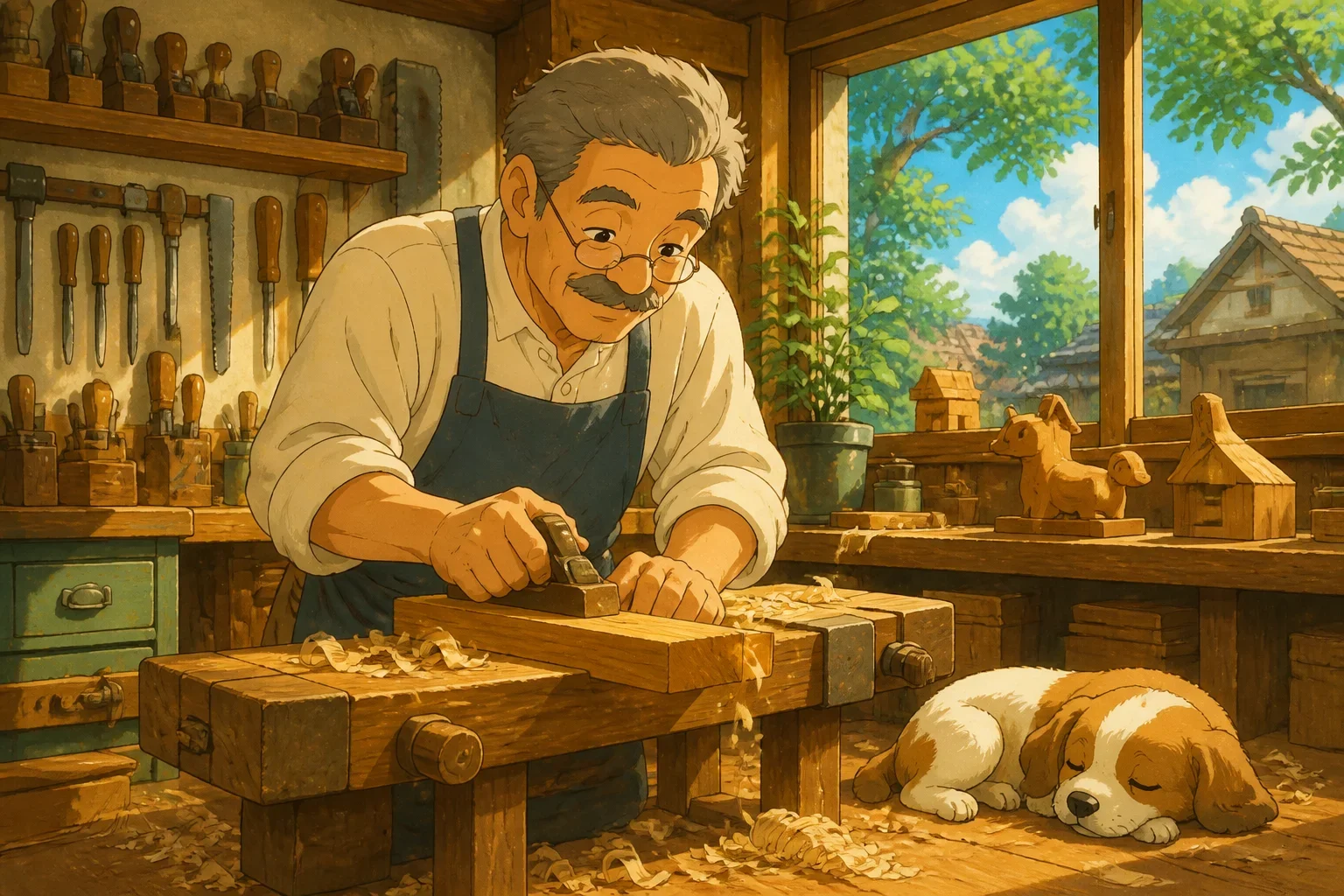
The Retiring Carpenter Story: A Powerful Moral About Doing
The Retiring Carpenter In a quiet village where morning mist curled over the fields and sparrows nested in old apple…
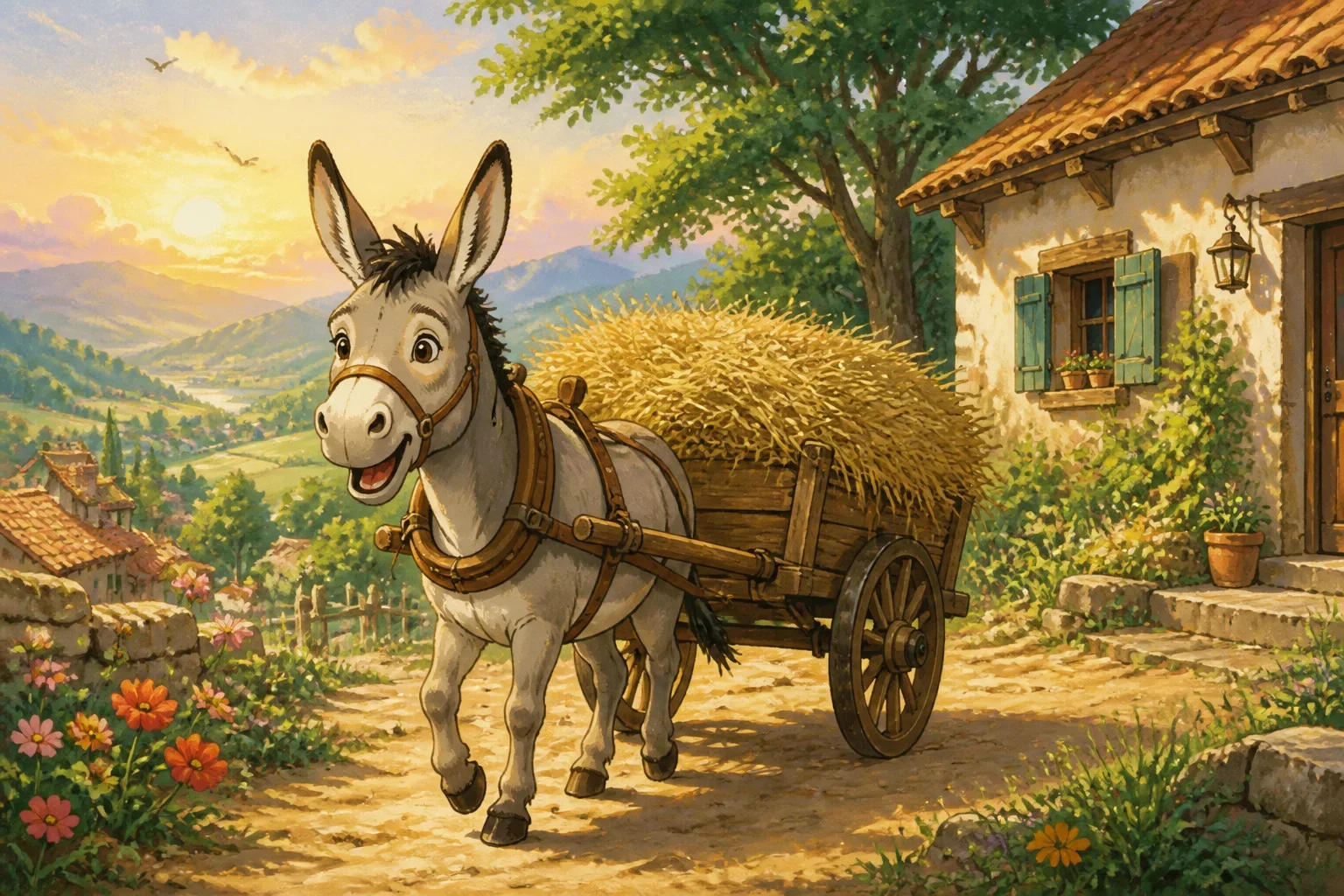
Ass and His Masters: A Classic Aesop Story for Kids
The Ass and His Masters In a dusty little village at the edge of wide brown fields, there lived an ass who was never…
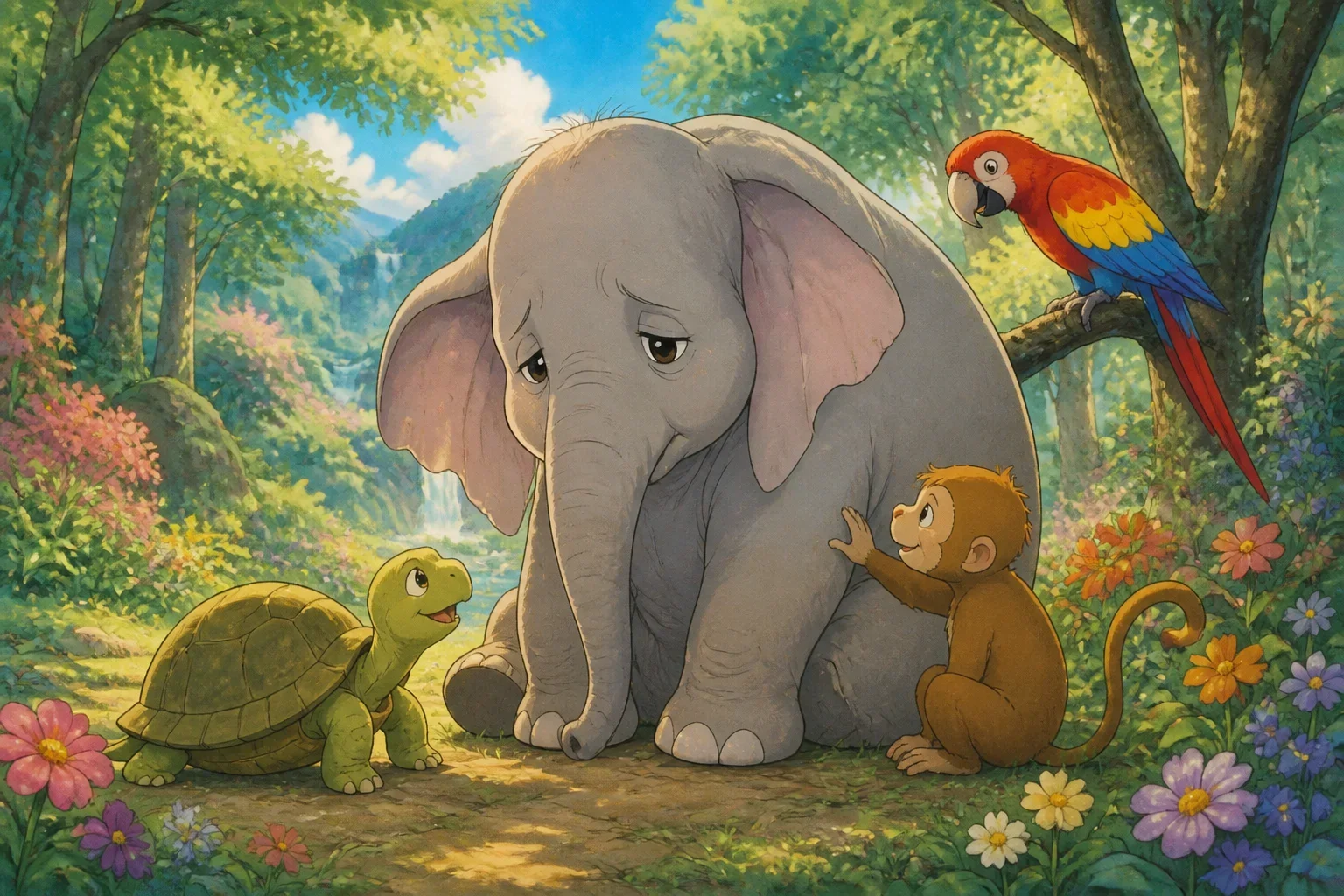
The Elephant and the Rope Story for Kids About Self-Belief
The Elephant and the Rope On the edge of a wide green forest, where fireflies blinked at dusk and birds filled the…
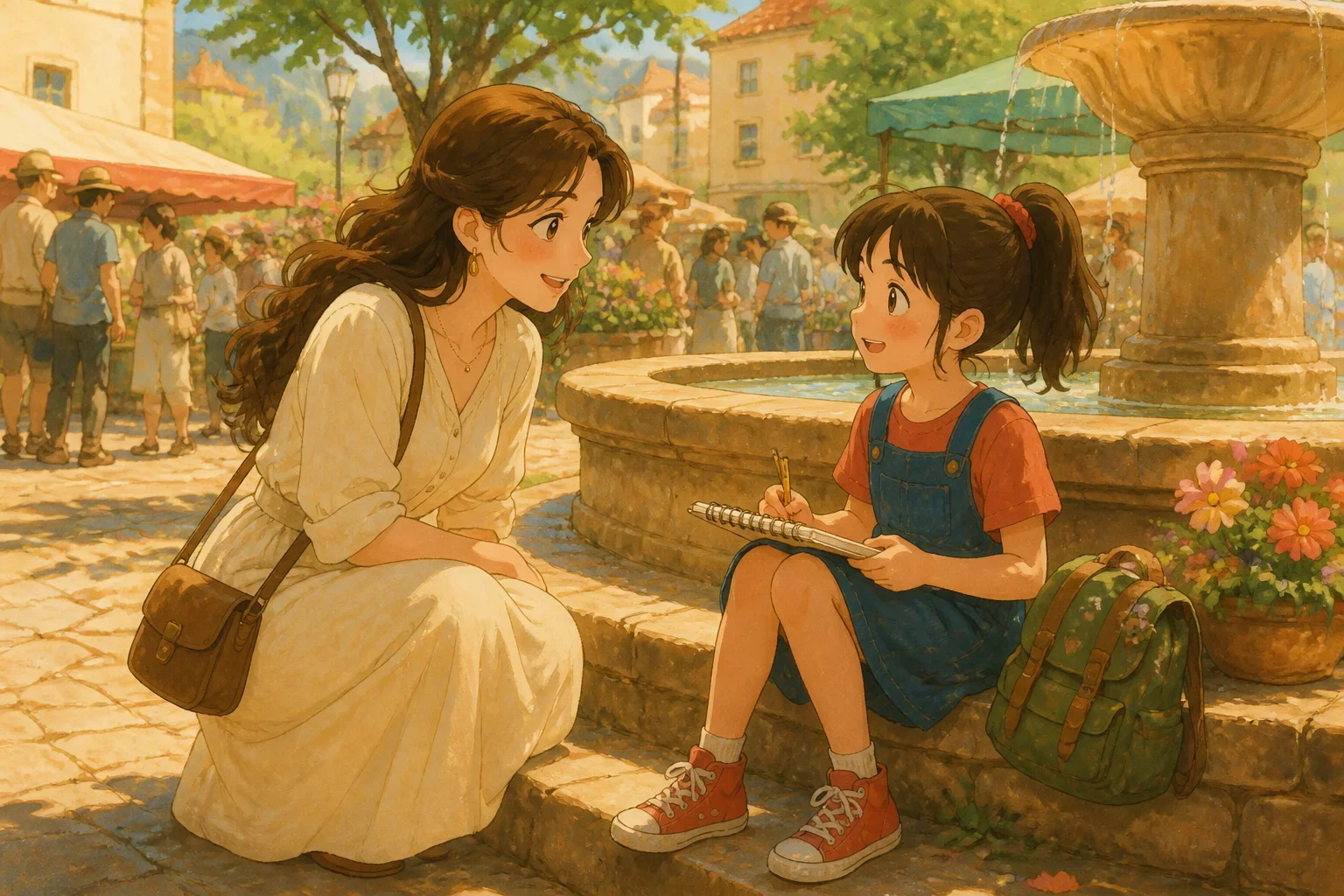
Emily the Celebrity| Inspiring Moral Story for Kids
Emily the Celebrity and the Girl With the Sketchbook In the city of Starville, everything seemed to sparkle. Billboards…

Thomas the Advocate: A Moral Story About Truth, Justice, and
Thomas the Brave Advocate In a cheerful town filled with bicycle bells, market chatter, and rows of little houses with…