5 Key Moral Values From MARCUS AURELIUS Life @shortmoraltales
5 Key Moral Values From Marcus Aurelius' Life
Long ago in ancient Rome, before cars, clocks, or electric lights, the city woke each morning to the clatter of sandals on stone roads, the calls of market sellers, and the warm smell of bread rising from clay ovens.
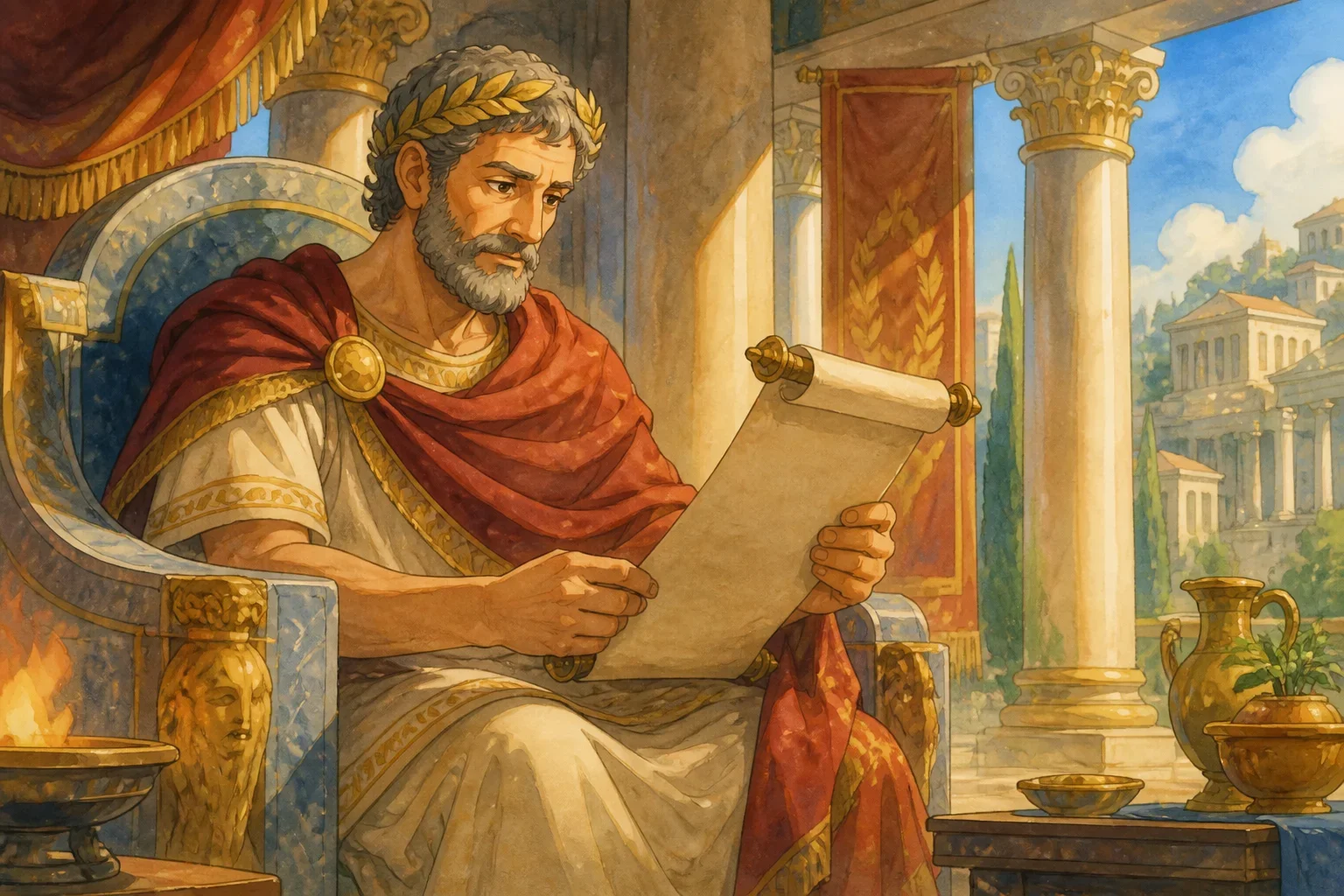
In a great palace near the heart of the city lived Marcus Aurelius, the emperor of Rome.
Now, many people imagine emperors as proud men in jeweled robes who give orders all day long. But Marcus was different. He wore simple clothes when he could. He listened more than he spoke. And at night, when the palace grew quiet and the torches flickered low, he wrote down his thoughts so he could become a better person.
Marcus believed something unusual for a ruler: being powerful did not make someone great. Being good did.
That is why his life still offers wonderful moral stories for kids today.
1. Honesty Matters, Even When It Is Hard
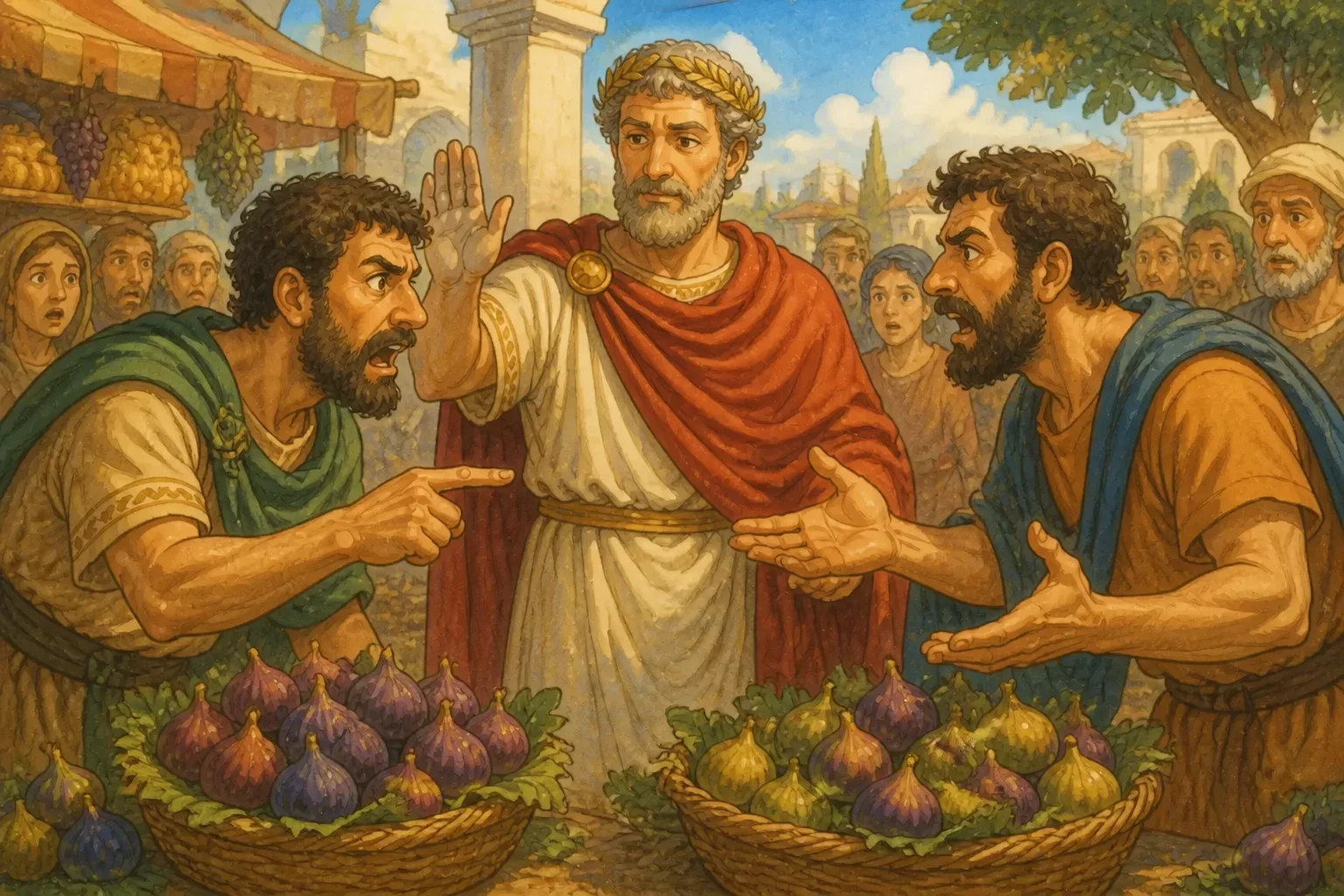
One bright morning, Marcus walked through the busy marketplace with only a few guards behind him. He liked to hear the real voices of the people—the fruit sellers calling out prices, the cobblers tapping leather sandals, the children laughing as they chased one another between baskets of olives.
Suddenly, a loud argument broke through the cheerful noise.
“Your weights are false!” shouted a merchant selling figs.
“And your temper is worse than the summer heat!” snapped another.
A crowd began to gather.
Marcus stepped closer. “What has happened here?” he asked.
The first merchant bowed quickly. “Caesar, he sold me less grain than he promised.”
The second man frowned and looked away. “It was a mistake.”
Marcus did not shout. He did not threaten. Instead, he asked for the measuring weights to be brought forward. After they were checked, it became clear that one of them had indeed been altered.
The merchant’s face turned red. For a moment, he said nothing. Then his shoulders drooped.
“I was wrong,” he admitted quietly. “I wanted to earn more money. I told myself it was a small trick, but it was still dishonest.”
The marketplace fell silent.
Marcus nodded. “Telling the truth after doing wrong does not erase the mistake,” he said gently, “but it is the first step toward making it right.”
The merchant returned what he owed and apologized.
As Marcus walked on, a little boy who had watched the whole scene tugged at his mother’s sleeve and whispered, “He told the truth even though it was embarrassing.”
His mother smiled. “Yes. And that is brave.”
What kids can learn
Honesty is not only about never doing wrong. It is also about admitting the truth, fixing mistakes, and choosing fairness over greed.
2. Real Strength Means Self-Control
Marcus had an important job, and every day brought problems to solve. Some people complained. Some argued. Some blamed others for things that had gone wrong.
One afternoon, a messenger rushed into the palace courtyard with upsetting news: a group of workers had failed to finish an important project on time. Several advisors immediately began speaking over one another.
“They were lazy!” one said.
“They should be punished!” cried another.
Marcus could feel irritation rise inside him like heat from a fire. He was tired. The day had been long. It would have been easy to let his anger burst out.
But he paused.
He took a slow breath.
Then another.
At last he said, “If I cannot rule my own temper, how can I help rule anything else?”
The courtyard grew still.
Instead of shouting, Marcus asked questions. Why had the work been delayed? Were the tools broken? Had supplies arrived late? Had someone fallen ill?
Soon the truth came out: the workers had not been lazy at all. Heavy rains had damaged the materials, and they had been trying their best to repair the problem.
Marcus gave orders for more supplies and extra help.
An older servant watching nearby later told a young palace helper, “Anyone can slam a door or raise a voice. It takes real strength to stay calm.”
What kids can learn
Self-control helps us make wiser choices. When we stop, breathe, and think, we can solve problems better than when we act in anger.
3. Helping Others Is a Duty, Not Just a Choice
Far beyond Rome, in the dry countryside, a season of drought had left fields cracked and dusty. Wells were shrinking. Farmers worried as their crops bent weakly under the hot sun.
When Marcus heard this news, he did not shrug and say, “That is far away.”
Instead, he spread maps across a long wooden table and called his advisors together.
“Families are hungry,” he said. “Then we must act quickly.”
He ordered grain to be sent, taxes to be eased, and support to be given to the villages in need.
One advisor looked surprised. “This will cost the treasury a great deal.”
Marcus answered, “What is wealth for, if not to help people when they suffer?”
Days later, wagons rolled out of Rome carrying sacks of grain and jars of oil. In one village, a tired mother held her child close as supplies arrived. An old farmer removed his cap and looked up with tears in his eyes.
“We have not been forgotten,” he said.
That evening, Marcus wrote by lamplight in his journal. He believed that each person should try to do good for others, especially when they had the power to help.
What kids can learn
Kindness is more than a nice feeling. It becomes meaningful when we turn it into action and help people who need us.
4. Courage Means Meeting Hard Times Steadily
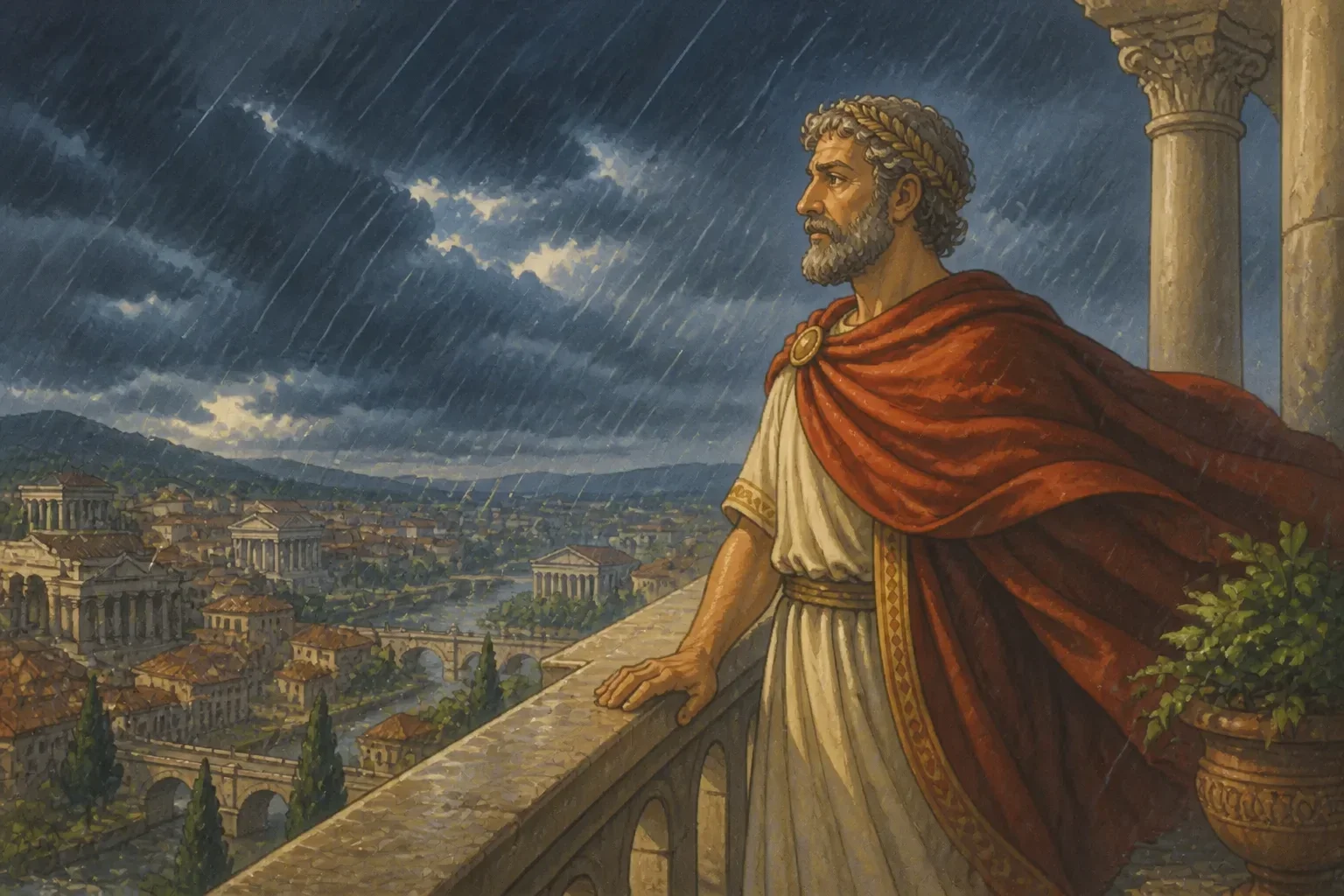
One night, dark clouds rolled across the Roman sky. Wind rattled shutters. Rain lashed rooftops. By morning, branches had snapped, gardens were ruined, and part of a neighborhood wall had collapsed.
People gathered in the streets, worried and upset.
Some cried. Some complained. Some stood frozen, not knowing where to begin.
Marcus arrived on horseback, his cloak damp from the rain. He looked at the damage carefully. He did not pretend the storm was small.
“This is hard,” he told the crowd honestly. “We cannot undo what happened.”
The people listened.
“But,” he continued, “we can choose what we do next. We can help one another. We can rebuild. We can be stronger than the storm.”
A mason picked up his tools. A baker shared bread with families whose ovens had been damaged. Neighbors cleared branches from the roads together. Step by step, the city began to recover.
Children carried small baskets of loose stones to help the workers. Even they wanted to be part of the healing.
Marcus knew something important: courage does not always look like charging into battle. Sometimes courage looks like facing a difficult day and doing the next helpful thing.
What kids can learn
We cannot control every problem, but we can control our response. Courage grows when we stay steady and keep going.
5. A Good Life Is Built on Kindness and Fairness
Marcus was emperor, yet he tried to remember that every person mattered—the rich and the poor, the soldier and the shopkeeper, the teacher and the child.
One afternoon, while returning from a public meeting, he noticed an elderly man sitting alone near the steps of a fountain. The man’s basket of pottery had tipped over, and several cups had cracked on the stones.
People hurried past. Some glanced at him but did not stop.
Marcus did.
He knelt to help gather the broken pieces.
The old man looked startled. “My lord, you need not do this.”
Marcus handed him the unbroken cups. “Need has little to do with it,” he replied. “It is right to help.”
A young girl nearby watched with wide eyes. She had seen grand speeches before, but this small act stayed with her most of all.
Because kindness, especially quiet kindness, is often what people remember longest.
What kids can learn
Being important is not the same as being good. True goodness shows in how we treat people every day.
Why This Marcus Aurelius Story Still Matters for Kids
Marcus Aurelius lived a very long time ago, but his lessons still fit the world children live in now.
Kids may not rule an empire, but they do face choices every day:
- whether to tell the truth
- whether to stay calm when upset
- whether to help someone who is struggling
- whether to keep going when life feels difficult
- whether to treat others with fairness and respect
That is why stories about wise leaders and strong values remain such meaningful moral stories for kids and bedtime stories with life lessons.
Key Takeaways for Kids
- Be honest even when telling the truth feels hard.
- Control your temper so you can make wise choices.
- Help others when they are in trouble or need support.
- Face challenges bravely and focus on what you can do next.
- Treat everyone kindly and fairly no matter who they are.
Moral of the Story
True greatness comes from honesty, self-control, kindness, duty, and courage in difficult times.
Marcus Aurelius was remembered as a powerful emperor, but the best part of his story is not his crown. It is the way he tried, day after day, to be wise, fair, and good.
And that is a kind of greatness any child can practice.
Watch the Animated Story
Watch on YouTube
Related Stories

Confucius Moral Lessons: A Gentle Story About Respect
A Lantern-Lit Evening in Ancient China When the evening bell rang across the village, children came running from every…
Storm Over Sunridge: A Moral Story About Community and
The Storm Over Sunridge On the evening before the storm, Sunridge looked as if nothing bad could ever happen there.…
The Story of Socrates for Kids: A Moral Tale About Asking
The Story of Socrates Under the Olive Tree Long ago, in the busy city of Athens, there lived a man who did not wear a…
Timmy and the Snack Cart: A Moral Story About Junk Food and
Timmy and the Snack Cart Surprise In the little village of Wholesome Foods, mornings smelled like warm bread, ripe…

Boasting Traveler: A Moral Story About Honesty and Humility
The Boasting Traveler Marco always arrived before his stories did. Children would spot his bright blue backpack…

Bees and the Beetles: A Moral Story About Hard Work
The Bees and the Beetles On the edge of a bright summer garden stood a tall old hive, golden in the afternoon sun. From…
Ass and His Masters: A Classic Aesop Story for Kids
The Ass and His Masters In a dusty little village at the edge of wide brown fields, there lived an ass who was never…

Emily the Celebrity| Inspiring Moral Story for Kids
Emily the Celebrity and the Girl With the Sketchbook In the city of Starville, everything seemed to sparkle. Billboards…