
Piggy Bank Lessons: 5 Stories That Teach Kids Money Management
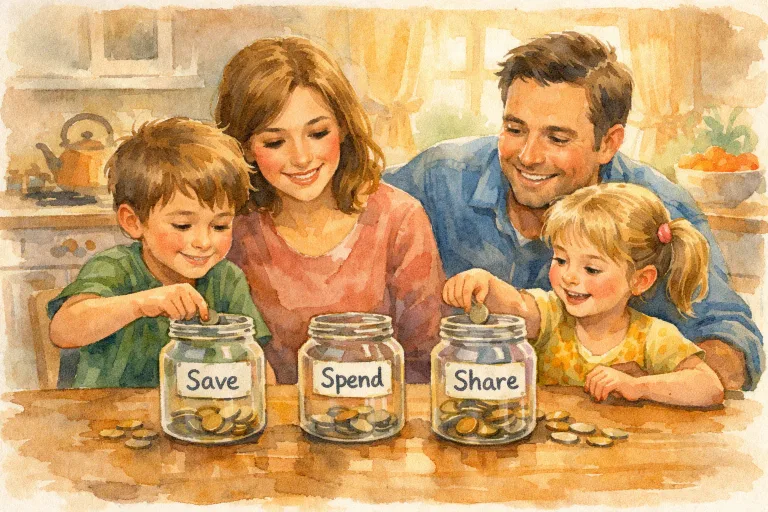
Money habits start early. For many families, the piggy bank is a child’s first teacher about saving, spending, and sharing. Yet, numbers and coins can feel abstract to young children. That’s where stories come in: they make financial lessons come alive! In this article, we’ll explore five carefully chosen stories that teach kids money management, from saving for a dream to resisting greed and learning to share. Along the way, you’ll find conversation starters, family activities, and links to more age-appropriate stories about gratitude, greed, and sharing.
Table of Contents
- Why Stories Help Kids Understand Money
- Story 1: The Three Jars (Saving, Spending, and Sharing)
- Story 2: The Ant and the Grasshopper (Traditional Aesop)
- Story 3: Mia’s Lemonade Stand (Delayed Gratification)
- Story 4: The Miser and His Gold (Classic Story About Greed)
- Story 5: The Gift of the Piggy Bank (Generosity and Sharing)
- Family Discussion Starters and Activities
- Further Reading: Stories About Greed, Gratitude, and Sharing
Why Stories Help Kids Understand Money
Money can seem mysterious to kids. Where does it come from? Why can’t we just buy everything we want? Why do we have to save? Telling stories – whether traditional fables or relatable tales from everyday life – grounds these big concepts in situations children recognize. In fact:
- Stories introduce consequences. Instead of abstract rules, children see what happens when a character spends all their money or chooses to share.
- Stories build empathy. Kids can imagine themselves in the shoes of an ant, a grasshopper, or a friend saving for something special.
- Stories spark questions. After a story, children are more likely to ask about their own money habits and choices.
Let’s dive into five stories that teach smart money habits and values to children ages 4–10.
Story 1: The Three Jars (Saving, Spending, and Sharing)
Original story for families
The Story
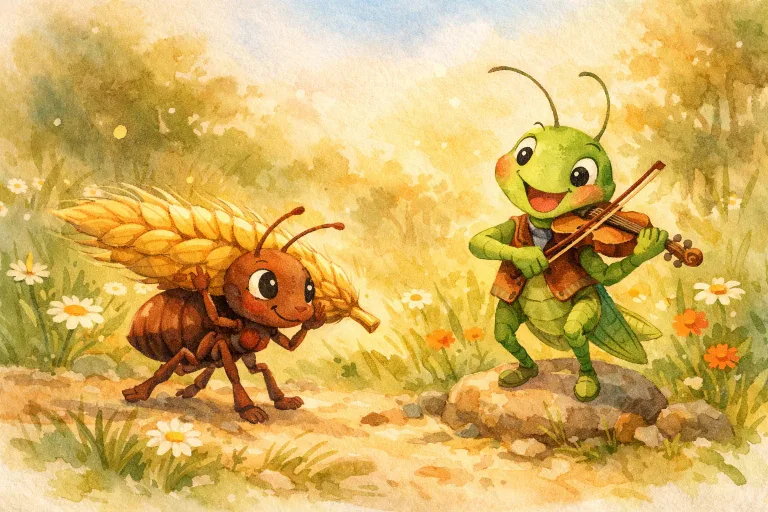
Once upon a time, twins Sam and Lily received their first weekly allowance. Their grandmother gave them three empty jars each, labeled Save, Spend, and Share.
“Each jar is important,” Grandma explained. “Saving helps you prepare for dreams. Spending lets you enjoy today. Sharing lets you help others.”
Sam wanted a red racing car toy, while Lily dreamed of a big art set. Each week, they split their allowance: one coin in Save, one in Spend, one in Share.
Some Saturdays, Sam used his Spend jar for candy, while Lily bought small stickers. Slowly, their Save jars filled. Soon, Sam had enough to buy his racing car. Lily bought her art set, too. With their Share jars, they decided to donate to the animal shelter and buy coloring books for the local library.
Their jars were never empty for long, and the joy of saving, spending, and sharing made each week special.
Money Lesson
This story introduces the three-jars method—a simple, visual way for young kids to learn the difference between saving, spending, and sharing. By physically dividing money, children see how small, regular habits add up to big goals.
Family Conversation Starters
- How would you divide money between the jars?
- What is something you’d like to save for?
- Who would you want to help with your Share jar?
Try at Home
Set up three jars (or envelopes) for your child and label them together. Let your child decorate each jar and talk about their first “goal” for each one.
Story 2: The Ant and the Grasshopper (Traditional Aesop)
Traditional/adapted retelling
The Story
All summer, the busy ant worked hard, collecting food and storing it away for winter. The grasshopper, meanwhile, sang and danced in the sun, enjoying every moment but saving nothing.
When winter came, the ant was warm and well-fed. The grasshopper, cold and hungry, knocked on the ant’s door. The ant shared a little, but reminded the grasshopper, “It’s good to enjoy today, but you must also think of tomorrow.”
Money Lesson
This classic fable is a gentle introduction to delayed gratification and planning ahead. Kids learn that enjoying today is important, but saving prepares us for times when we might need extra help.
Family Conversation Starters
- Are you more like the ant or the grasshopper?
- What does it feel like to wait for something you want?
- How can we balance having fun now and saving for later?
Explore More
Looking for more classic tales with a lesson? Try 10 Short Moral Stories for Kids Every Kindergarten Teacher Needs and Wise Lessons: 5 Famous Panchatantra Stories Every Modern Child Must Read.
Story 3: Mia’s Lemonade Stand (Delayed Gratification)
Original story for families
The Story
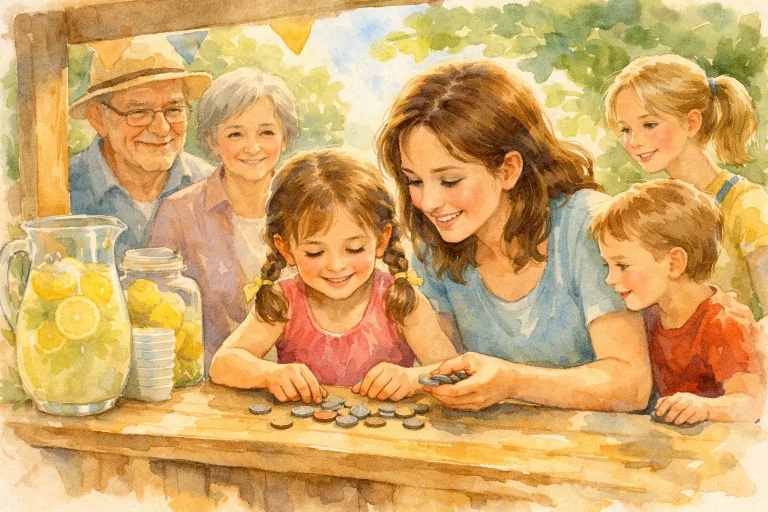
Mia wanted a new soccer ball. Her mom suggested she start a lemonade stand to earn money. Mia was excited! She made a sign, set up her table, and greeted neighbors with a big smile.
After her first day, she counted her coins. “Can I buy my soccer ball now?” she asked.
Her mom showed her the price tag. “Almost there. You’re halfway. If you save for two more days, you’ll have enough.”
It was hard to wait. Mia wanted to spend her money right away. But she stuck with it. On day three, she finally had enough! She felt proud—not just for buying the ball, but for reaching her goal all by herself.
Money Lesson
Mia learns patience and the value of working toward a goal. Delayed gratification is a key money skill—it helps kids resist impulse buys and appreciate the reward of saving.
Family Conversation Starters
- Have you ever waited for something you wanted?
- How did it feel when you finally got it?
- What could you save for this month?
Try at Home
Set a family savings goal—maybe a picnic or a board game. Make a chart to track your progress together.
Story 4: The Miser and His Gold (Classic Story About Greed)
Traditional/adapted retelling
For a detailed retelling, visit Miser and His Gold: A Classic Story for Kids About Greed.
The Story
A miser buried his gold in his garden. Every day, he visited the spot to count his coins, but he never spent a single one. One day, a thief stole the gold. The miser wailed, but his neighbor said, “You never used the gold anyway. You might as well have buried a stone.”
Money Lesson
This story teaches that hoarding money without purpose brings no happiness. Saving is important—but money should be used for meaningful things: helping, enjoying, and sharing.
Family Conversation Starters
- What’s the difference between saving and hoarding?
- How can we use money to make good things happen?
- Why is it important to share, not just save?
Explore More
Find more stories about the dangers of greed and the value of contentment in Stories About Greed and Life Lessons Stories.
Story 5: The Gift of the Piggy Bank (Generosity and Sharing)
Original story for families
The Story
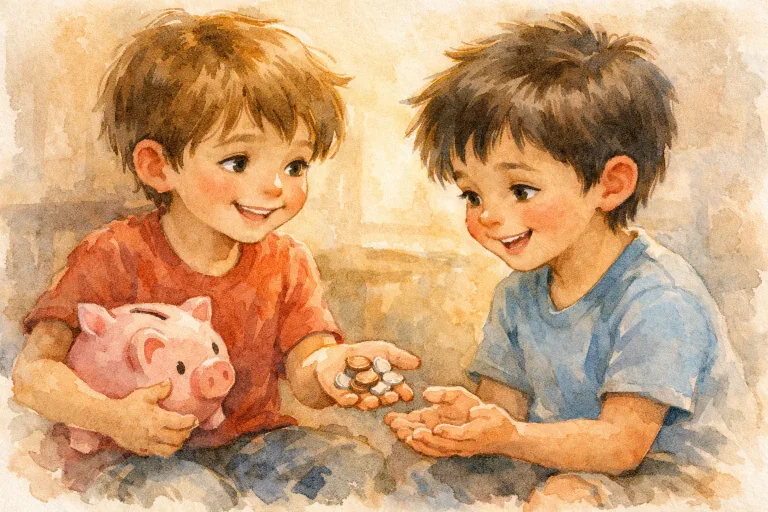
Jasper loved his shiny blue piggy bank. He saved every coin he found: birthday gifts, spare change, even coins he spotted on the sidewalk. His piggy bank grew heavy.
One day, Jasper’s friend, Ben, looked sad. His family couldn’t afford the art supplies Ben needed for school. Jasper thought about his full piggy bank. After a long moment, he decided to give Ben the coins he’d saved for months.
Ben’s eyes sparkled with gratitude. Jasper discovered that sharing brought a happiness even greater than saving.
Money Lesson
Jasper’s story highlights the joy of generosity—using what we have to help others. Money is most meaningful when it connects us with people and makes the world a little kinder.
Family Conversation Starters
- Has someone ever shared with you?
- How did it feel to give something to someone else?
- What could you do with your Share jar this month?
Try at Home
Start a “kindness fund”—save coins together, then choose a charity or a friend to help at the end of the month.
Family Discussion Starters and Activities
Money stories are just the beginning. Here are practical ways to build on these lessons at home:
1. Create a Storytime Savings Ritual
- Read a money story before allowance day.
- Let your child retell the story using their own toys or puppets.
2. Use Real Jars or Envelopes
- Make saving visual and hands-on.
- Count coins together and talk about what each jar means.
3. Set Family Goals
- Choose something to save for as a family (movie night, pizza party).
- Celebrate together when you reach your goal.
4. Practice Generosity
- Let your child pick a cause to donate to.
- Volunteer together or deliver a small gift to a neighbor.
5. Reflect and Celebrate
- Ask, “What did we learn from this week’s story?”
- Celebrate not just reaching money goals, but acts of kindness and sharing.
Further Reading: Stories About Greed, Gratitude, and Sharing
Stories about money management connect naturally with broader life values: gratitude, contentment, and kindness. Here are some handpicked stories and articles from Short Moral Tales to deepen your family’s conversation:
- Explore Stories About Greed for classic fables and modern parables about the dangers of selfishness.
- Read How to Say Thank You: 7 Beautiful Stories That Teach Kids Gratitude for tales about appreciating what we have.
- See 7 Simple Stories About Sharing to Teach Your Toddler Kindness for more on generosity.
- Discover Life Lessons Stories for a wide range of stories about honesty, compassion, and growing up.
Printable Story: The Three Jars
Share this story and use the guided questions below for family or classroom discussion.
The Three Jars
Once upon a time, twins Sam and Lily received three jars each: Save, Spend, and Share. Each week, they placed some of their allowance in each jar. Sam saved for a toy car, Lily for an art set. When their Save jars were full, they bought their dream toys. With their Share jars, they donated to charity. The three jars helped them enjoy today, plan for tomorrow, and help others too.
Comprehension Questions
- What did the three jars represent?
- Why did Sam and Lily put money in their Save jars?
- What did they do with the money in their Share jars?
- How did the three jars help Sam and Lily make good choices?
- What could you save for with your own jar?
Final Thoughts
Stories are the “secret ingredient” for teaching money skills that last a lifetime. By reading and discussing stories that teach kids money management, families can nurture not just smart savers, but generous, thoughtful, and contented children. Start with a jar, a story, and a little imagination—and watch your child’s financial wisdom grow.
Continue Exploring Moral Stories
Discover animated moral stories, browse by category, or find age-appropriate reads for your family.
You May Also Like

How to Say Thank You: 7 Beautiful Stories That Teach Kids Gratitude
Discover seven heartwarming moral stories that teach children the beauty of gratitude and thankfulness, along with simple family habits to nurture appreciation every day.

The Hard Work Secret: 5 Inspiring Perseverance Stories for Students
Discover five perseverance stories that encourage students to keep trying, embrace hard work, and never give up—perfect for classrooms and home reading.
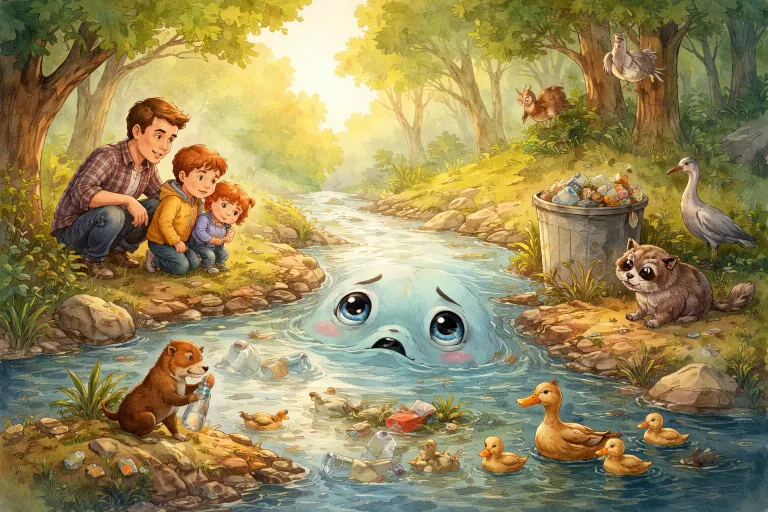
5 Environmental Stories for Kids: Respecting Nature & Planet
Ripple the river and her friends teach kids that small actions like picking up trash and recycling help protect water, animals, and our planet’s health.
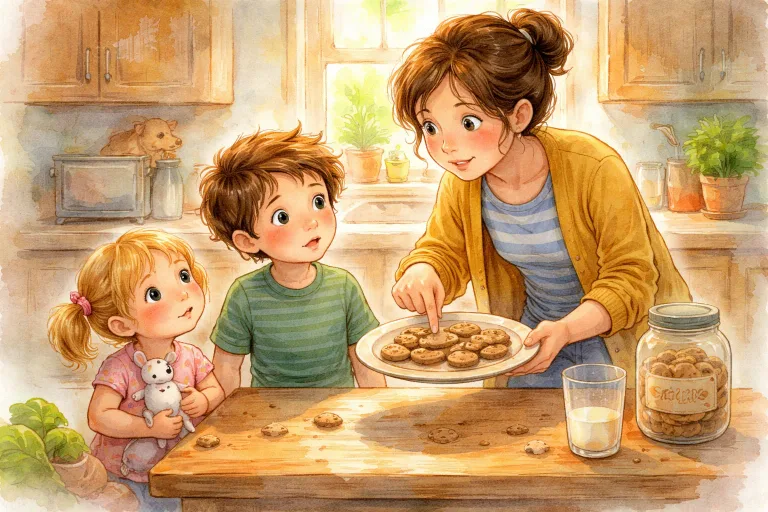
7 Cause and Effect Stories for Kids: Actions Have Consequences
Lilly took a cookie without asking, realizing her actions affected trust. Honesty helps keep relationships strong and teaches responsibility.