
Wise Lessons: 5 Famous Panchatantra Stories Every Modern Child Must Read
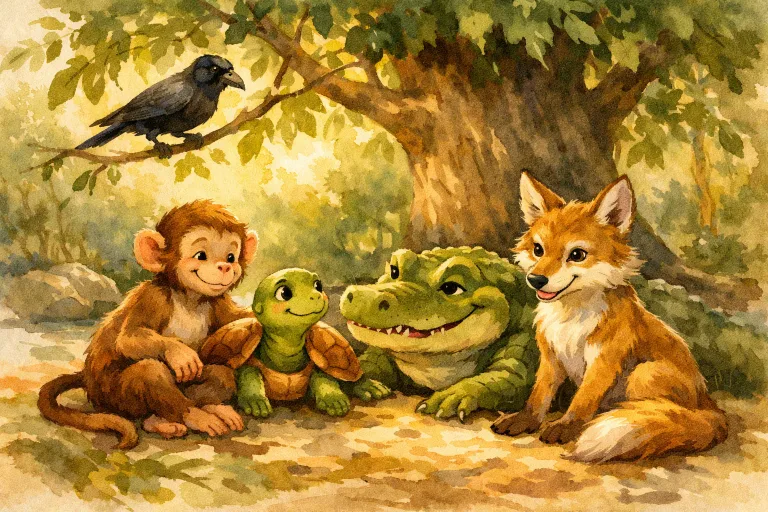
Throughout the centuries, the Panchatantra has enchanted children and adults across the world. Passed down from ancient India—traditionally attributed to the sage Vishnu Sharma—these animal fables have shaped the values of countless generations, teaching lessons on cleverness, friendship, and wisdom through simple yet profound tales.
In today’s world, Panchatantra stories for children hold even greater relevance. Their clever animal heroes and wise morals are just as necessary for navigating the modern jungle as they were in ancient times. Whether you are a parent, grandparent, teacher, or young reader, these tales offer a joyful way to nurture thoughtful, resilient children.
In this article, you’ll find five of the most beloved Panchatantra stories retold for modern families, each with a clear moral and gentle guidance for discussion. Before diving in, let’s explore why these Indian moral stories for kids are so enduring and how to share them meaningfully with your children.
Table of Contents
- Why Share Panchatantra Stories With Your Children?
- About the Panchatantra: Ancient Indian Tradition
- How to Read Panchatantra Tales Today
- 5 Famous Panchatantra Stories With Morals
- Tips for Discussing Panchatantra Stories With Children
- More Animal Stories and Classic Fables
Why Share Panchatantra Stories With Your Children?
Panchatantra stories have a unique ability to capture young minds. Their animal characters face challenges and choices that children recognize in their own lives: making friends, solving problems, dealing with trickery, and learning to be brave or wise. Through memorable plots and gentle humor, these tales encourage reflection and spark important family conversations.
Benefits of reading Panchatantra tales:
- They nurture empathy and social skills.
- They inspire creative thinking and clever problem-solving.
- They model virtues like honesty, loyalty, and kindness.
- They connect children to global storytelling traditions.
Modern children, surrounded by screens and fast-paced distractions, can especially benefit from these slow, thoughtful stories. As you read together, you’ll find that the morals of these tales are always relevant—reminding us all that wisdom and heart matter most.
About the Panchatantra: Ancient Indian Tradition
The Panchatantra is a collection of interwoven fables, most featuring talking animals, that originated in India over 2,000 years ago. While many stories have been adapted and retold across cultures, the oldest known Sanskrit manuscript dates back to around the 3rd century CE. Traditionally, these tales are attributed to Vishnu Sharma, who is said to have composed them to teach wisdom and leadership to young princes.
The word “Panchatantra” comes from Sanskrit, meaning “Five Principles.” The original work is divided into five sections, each focused on a different aspect of wise living—such as making friends, losing or keeping what you have, and understanding human nature.
Note: While the Panchatantra’s stories are regarded as ancient Indian tradition, precise historical facts about their authorship and transmission remain part of folklore rather than documented history.
For families seeking more ancient wisdom, you might enjoy our collection of Jataka tales with strong morals or explore other Clever & Wise Short Stories from around the world.
How to Read Panchatantra Tales Today
Modern adaptations of Panchatantra stories for children often feature simpler language and age-appropriate lessons. Here are a few tips for making the most of your read-aloud sessions:
- Pause to ask questions: Invite your child to guess what might happen next or how a character feels.
- Focus on the moral: After reading, discuss the lesson and how it could apply to real life.
- Encourage retelling: Let children reimagine the story in their own words or act it out.
- Compare with other tales: Notice similarities and differences with classic fables from other cultures, like Aesop’s or Jataka tales.
Find more inspiration for sharing animal stories in our Ultimate List of Animal Moral Stories, or discover Bedtime Stories for Kids for gentle nighttime reading.
5 Famous Panchatantra Stories With Morals
Each of these retellings is adapted from the ancient Indian tradition, presented in language ideal for modern children. Enjoy reading, reflecting, and sharing these timeless classics!
1. The Monkey and the Crocodile (Traditional Retelling)
Moral: Cleverness and quick thinking can save you from danger.
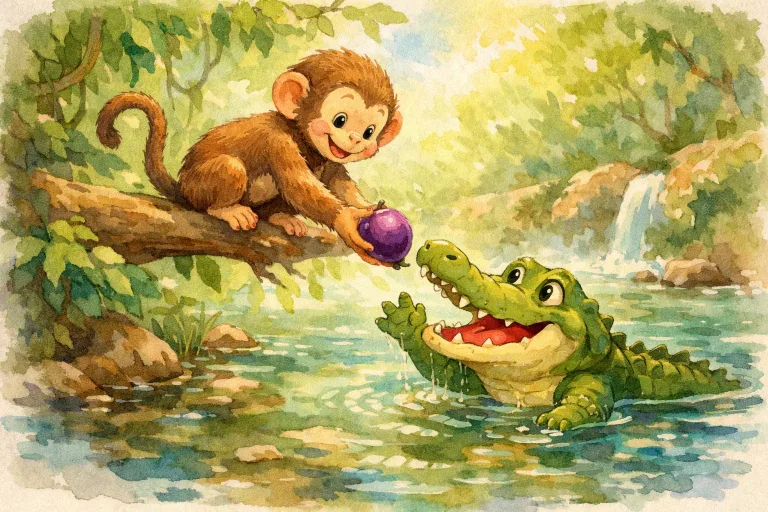
Once upon a time, there was a clever monkey who lived on a jamun tree by the river. Every day, he ate sweet fruits and chatted with a crocodile who often visited the riverbank. The monkey, being kind and generous, shared his jamuns with the crocodile, and soon they became friends.
One day, the crocodile’s wife became jealous of their friendship. She wanted to eat the monkey’s heart, believing it would make her clever. The crocodile, torn between friendship and duty, invited the monkey for a ride across the river on his back. Halfway across, the crocodile revealed his true intention.
Thinking quickly, the monkey said, “Oh, dear friend! You should have told me before. I left my heart hanging on the tree. Let’s go back to fetch it!”
The crocodile turned around, and as soon as they reached the shore, the monkey leaped onto his tree and scolded the crocodile gently for betraying his trust. The crocodile realized the monkey’s wisdom and ashamedly apologized.
2. The Loyal Mice and the Wise Crow (Traditional Retelling)
Moral: True friendship and teamwork can overcome even the toughest problems.
In a lush forest, there lived a flock of doves. One day, a hunter laid a net and trapped them. The doves panicked, but their leader remained calm. “Let’s all flap our wings together and fly away with the net,” he urged.
Together, the doves soared high, carrying the net with them until they reached a safe spot where their friend, the clever mouse, lived. The mouse hurried over and nibbled through the netting, freeing every dove.
The doves thanked their friend, and the mouse reminded them, “It is always wise to work together and to help friends in need.”
3. The Blue Jackal (Traditional Retelling)
Moral: Pretending to be what you are not will eventually be discovered.
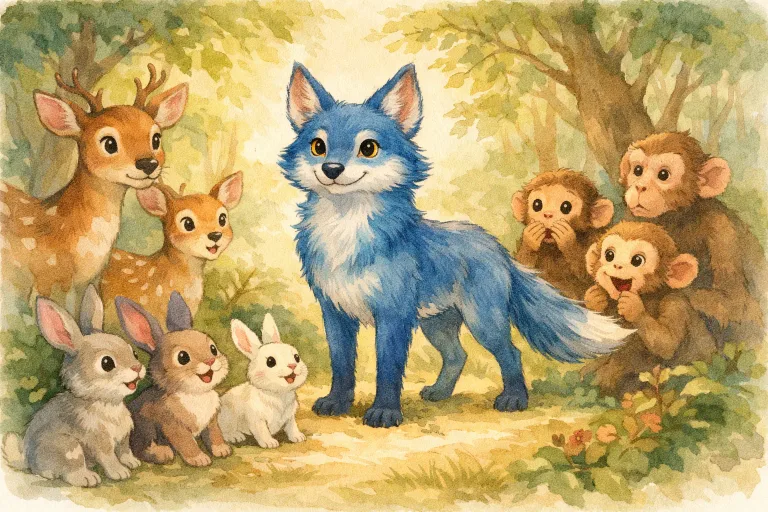
A hungry jackal once wandered into a village searching for food. Chased by dogs, he leapt into a vat of blue dye and emerged with his fur turned a brilliant blue! None of the other animals in the forest recognized him. Seizing his chance, the jackal declared himself the king, “sent by the gods.”
The animals, awed by his unusual color, obeyed him. But one day, a group of jackals nearby began to howl. Forgetting himself, the blue jackal joined in. Instantly, his disguise was revealed, and the animals realized they had been fooled. The blue jackal was chased away, having learned that pretending to be something you’re not can only last so long.
4. The Turtle Who Couldn’t Keep Quiet (Traditional Retelling)
Moral: Speaking without thinking can lead to trouble.
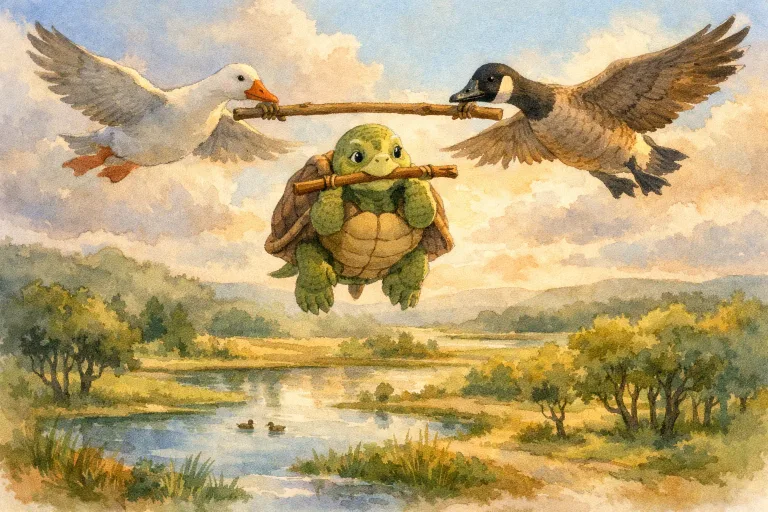
Once, in a small pond, lived a chatty turtle and two geese. As the pond dried up in the hot season, the geese offered to help the turtle fly to a bigger lake. “Hold this stick in your mouth, and we’ll carry you together,” they said, “but you must not speak, or you will fall.”
As they soared through the sky, some people below pointed and laughed. Forgetting the geese’s warning, the turtle opened his mouth to protest—and tumbled down. Luckily, he was not badly hurt, but he learned that sometimes, it’s wiser to remain silent.
5. The Stork and the Crab (Traditional Retelling)
Moral: Never trust someone blindly; use your own judgment.
A clever stork, growing old and unable to fish, pretended to be sad by the pond. The worried fish and crabs asked what troubled him. The stork lied, saying the pond would soon dry up and offered to carry the fish to a safer lake. One by one, he carried them off and ate them.
When it was the crab’s turn, he grew suspicious and insisted on riding on the stork’s neck. As they flew, the crab noticed a pile of fish bones below and realized the stork’s trickery. Acting quickly, the crab gripped the stork’s neck with his pincers and forced him to take him safely to a real lake.
The crab saved himself—and warned others not to trust blindly.
Tips for Discussing Panchatantra Stories With Children
- Ask open-ended questions: “What would you have done in the monkey’s place?”
- Explore feelings: Discuss how the characters might have felt and why they acted a certain way.
- Connect to real life: Do your children recognize similar situations at school or home?
- Encourage storytelling: Have children draw their favorite animal or invent a new Panchatantra fable.
Building this habit nurtures empathy, resilience, and creativity—the true gifts of moral storytelling.
For even more short stories that spark conversation, visit our 10 Short Moral Stories for Kids Every Kindergarten Teacher Needs or explore thought-provoking moral stories for adults and older children.
More Animal Stories and Classic Fables
If your family enjoyed these Panchatantra stories with morals, you’ll love our Animal Stories for Kids and Clever & Wise Short Stories. Compare the lessons in the Panchatantra with those in Aesop’s classic fables or dive into more Indian traditions with Jataka tales for families.
Storytelling is a joyful bridge between generations. In the Panchatantra, wisdom is always alive, waiting to be discovered anew. Share these tales often, and let your children’s curiosity lead the way!
Continue Exploring Moral Stories
Discover animated moral stories, browse by category, or find age-appropriate reads for your family.
You May Also Like
10 Classic Aesop's Fables With Modern Morals for Today's Generation
Discover ten classic Aesop's fables retold for today's kids, each with a modern moral that sparks discussion at home and in the classroom.
Ancient Wisdom: 7 Jataka Tales with Strong Morals for Family Reading
Discover seven timeless Jataka tales retold for families, each offering gentle Buddhist wisdom about kindness, compassion, and selflessness.
The Dark Truth: 5 Famous Fairy Tales with Surprising Hidden Morals
Explore the surprising hidden morals behind five famous fairy tales. Discover deeper lessons in classic stories perfect for curious families and thoughtful readers.