
The Noise-Canceling Headphones: A Classroom Story About Autism, Empathy, and Kindness
The Noise-Canceling Headphones
Lucas Miller loved the quiet. At home, he could read on his bed for hours, his window cracked open to let in just a whisper of wind. But school was different. Every day at North Pine Elementary, the classroom buzzed—pencils scratching, chairs scraping, laughter bouncing off the walls. For Lucas, who had autism, it felt like being trapped in a beehive that never slept.
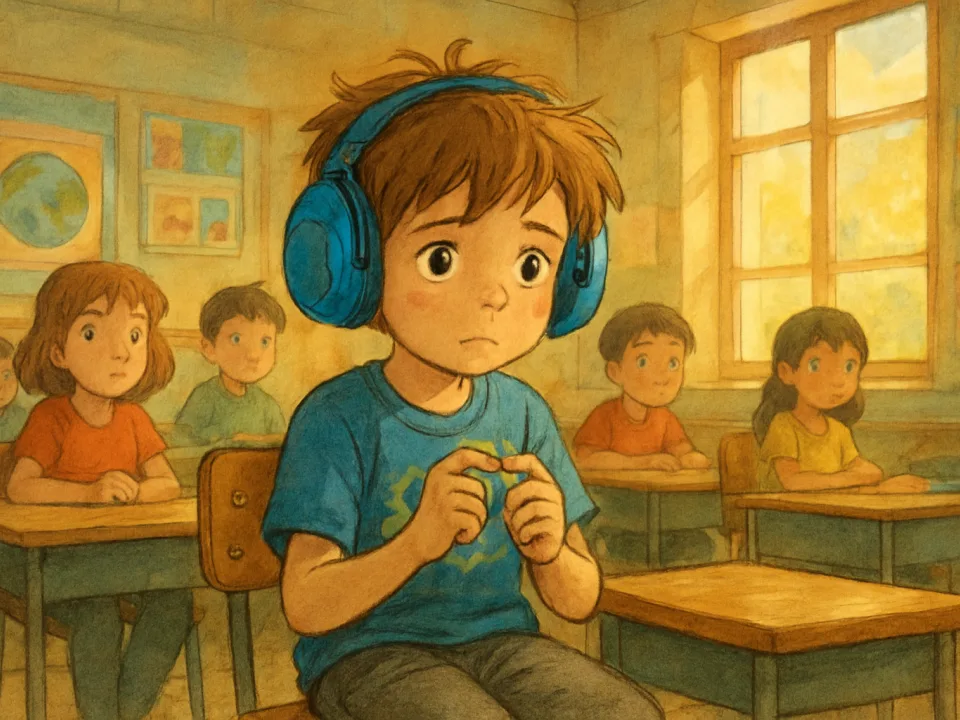
One Monday morning, Lucas walked into Miss Carter’s third-grade classroom wearing something new: a pair of big, bright blue noise-canceling headphones. He looked a little nervous, fingers fiddling with the padded ear cups as he made his way to his seat at the end of Table Three.
At first, his classmates just stared, not sure what to say. Lucas always seemed nice—he smiled at everyone, even if he was quiet. But the headphones were different. And in third grade, different could be confusing.
The Curious Classroom
It didn’t take long for questions to bubble up. During morning group time, as Miss Carter shared the daily schedule, Maya leaned over to her friend Josh and whispered, “Why is Lucas wearing headphones in class?”
Josh shrugged. “Maybe he’s listening to music?”
“He’s not supposed to listen to music during math,” Maya replied, glancing at the teacher to see if she noticed.
Miss Carter did notice. In fact, she’d been waiting for the right moment. As soon as it was time for the morning meeting, she smiled and said, “Class, I see we’re all curious about Lucas’s new headphones. Would you like to learn more about them?”
Lucas’s cheeks turned pink, but he nodded. He trusted Miss Carter. She always made him feel safe.
Understanding Differences
Miss Carter pulled up a chair next to Lucas and spoke gently. “Sometimes, people’s brains are sensitive to noise. For Lucas, the sounds in our classroom can feel extra loud or distracting. These headphones help him focus and feel comfortable.”
Maya raised her hand. “Is it because of autism?”
Lucas nodded. His voice was soft but clear. “Noises bother me a lot. The headphones help block them out.”
Some kids looked surprised. Josh frowned. “I didn’t know that. I thought you just didn’t want to talk to us.”
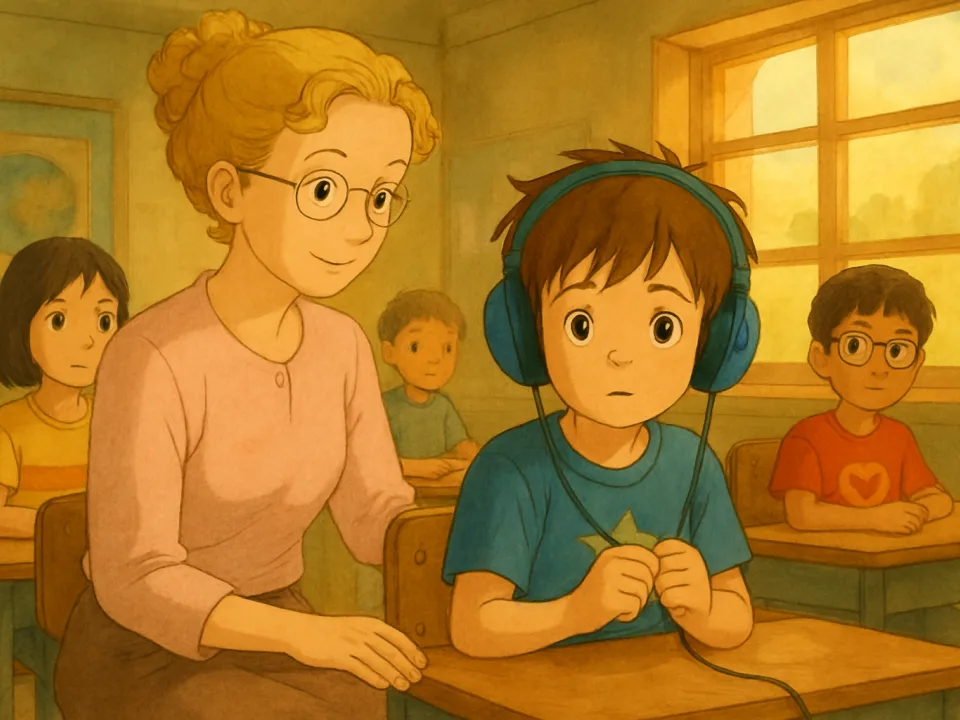
Lucas shook his head. “I like talking. But too much noise makes it hard.”
Miss Carter smiled. “It’s okay to be different. When we understand each other, we can help everyone feel included.”
New Ways to Connect
After that talk, everything started to change. During group activities, Maya made sure to face Lucas if she was talking to him, since sometimes headphones made it harder to hear. Josh invited Lucas to join his table for a science project, making sure their area was as quiet as possible.
Even when Lucas needed to wear his headphones, he felt more included than ever before. He and his friends invented a system: if Lucas wanted to talk, he’d tap his headphones and smile. If he needed quiet, he’d just keep them on and give a thumbs up.
At recess, Lucas noticed something new. The other kids went out of their way to make sure he was included. They invited him to quieter games and even tried wearing earplugs one day to see what it was like.
“Wow, it really is quieter with these!” Maya exclaimed, looking thoughtful. “I can see why you like your headphones, Lucas.”
They all laughed. It was a small moment, but Lucas felt a warmth in his chest. For once, he didn’t feel like he was hiding behind something—he felt like he belonged.
An Unexpected Challenge
One Thursday afternoon, a fire drill startled everyone. The alarm’s shrill wail made Lucas jump. Panic flared in his chest. He clamped his hands over his headphones, but the noise still leaked in. Tears prickled at his eyes as everyone lined up to leave the classroom.

Miss Carter noticed right away. She crouched beside Lucas, speaking calmly. “You’re safe, Lucas. I’ll walk with you.”
Maya saw Lucas struggling and reached out. “Hold my hand, Lucas. We’ll go together, nice and slow.”
Lucas took a deep breath, squeezed Maya’s hand, and followed Miss Carter outside. The noise faded as they reached the playground. Josh patted Lucas’s shoulder, and the whole class gathered around. Nobody teased him. Instead, they waited quietly until he felt better.
After the drill, Miss Carter found time for a quick class meeting. “When someone is having a hard time, a little kindness goes a long way. I’m proud of how you all helped Lucas today.”
Lucas smiled shyly. “Thank you for understanding.”
The Talent Show Surprise
A few weeks later, North Pine Elementary held its annual talent show. Lucas was nervous. He wanted to read a poem he’d written, but the thought of standing on stage in front of a noisy audience made his stomach churn.
Maya had an idea. “You can wear your headphones on stage. That way, it won’t be too loud.”
Josh added, “We’ll sit in the front row and wave if you need us.”
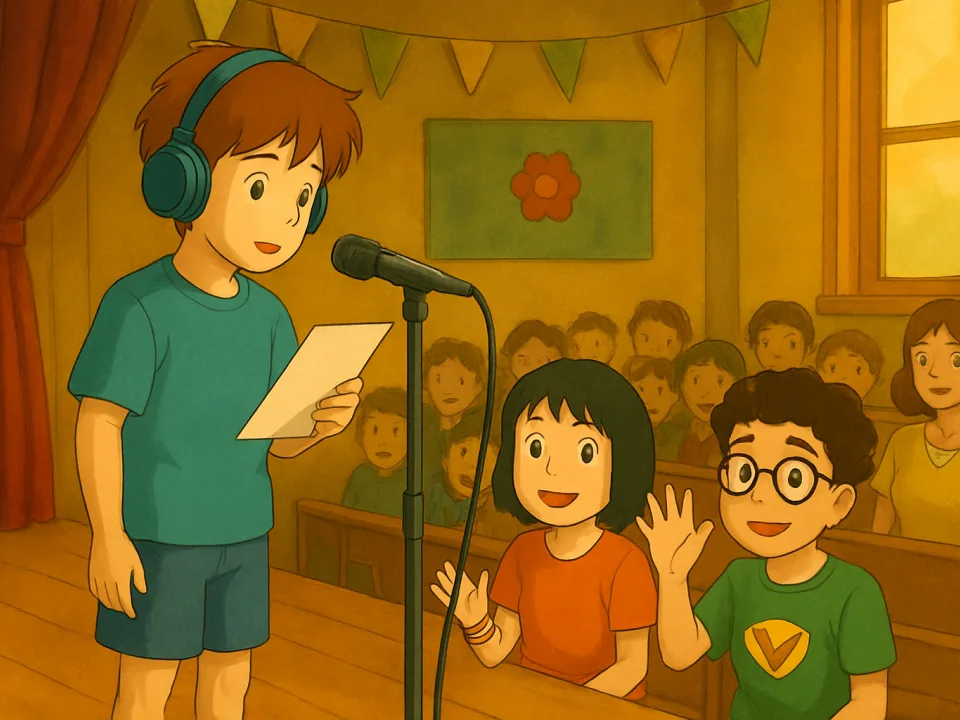
Miss Carter asked the principal if Lucas could use a microphone while wearing his headphones. The principal agreed, and even explained to the audience why Lucas needed them.
When it was his turn, Lucas walked on stage, headphones and all. His hands trembled as he held the paper, but he glanced at his friends in the front row and saw their bright, encouraging smiles.
He read his poem—about the quiet magic of falling snow, about how sometimes the world felt too loud, and about the friends who helped him find his place. When he finished, the room erupted in applause. Lucas couldn’t hear every clap, but he could see the joy on his classmates’ faces. That was enough.
Growing in Kindness
After the talent show, something amazing happened. More students started talking about the things that made them different. Ana talked about her food allergies and how it helped when friends listened. Liam shared how he used a special pencil grip for his handwriting. The classroom became a place where everyone’s needs were okay to talk about—and where kindness was the rule, not the exception.
Lucas still wore his noise-canceling headphones every day. But now, when classmates saw those big blue ear cups, they didn’t see someone who was different. They saw a friend who taught them what empathy and kindness could look like in real life.
And Lucas, for the first time at school, felt fully seen—not just for what made him different, but for everything that made him, him.
Moral of the Story
True kindness means understanding and supporting one another’s needs, even when they are different from our own. When we show empathy, we help everyone feel like they belong.
Key Takeaways for Kids
- Everyone has different needs, and that’s okay
- Empathy means listening and trying to understand others
- Little acts of kindness make a big difference
- It’s brave to share what helps you feel comfortable
- Including others creates a happier, stronger classroom
Why This Story Matters
Many children experience the world in unique ways. By learning about autism and the power of empathy, kids can become allies for their peers, making classrooms more welcoming for everyone. This story reminds us that being kind and inclusive isn’t just the right thing—it makes school better for all.
Related Stories

The Empty Chair at Harvest Dinner: A Thanksgiving Story About Gratitude and Inclusion
The Empty Chair at Harvest Dinner The golden leaves rustled outside the windows of the Peterson home, swirling across…
The Quiet Seat at Lunch: A Moral Story About Including the New Kid at School
The Quiet Seat at Lunch On the first Monday of May, the cafeteria at Maple Lane Elementary buzzed like a beehive.…

The Different Lunchbox: A Short Story Celebrating Cultural Differences and Respect
The Different Lunchbox Mia Chen always loved her lunchbox. It was bright red with swirling golden dragons painted on…
The Group Chat Trap: A Short Story About Cyberbullying and Online Kindness
The Group Chat Trap Maya's phone buzzed on the kitchen counter, lighting up with a new notification. She glanced at the…
Oliver's Fast Brain: A Heartwarming Story About Friendship and Understanding ADHD
Oliver's Fast Brain Oliver Bennett liked to say his brain was a racing car. On the outside, he was just an ordinary…

One Mean Comment: A Short Story About Digital Empathy and Thinking Before Posting
One Mean Comment: A Short Story About Digital Empathy and Thinking Before Posting Maya Alvarez sat at the corner desk…