
Wheels on the Playground: A Story About Accessibility, Inclusion, and True Friendship
Wheels on the Playground
The sun shone brightly over Maplewood Elementary, glinting off the newly painted monkey bars and casting playful shadows across the wide, open playground. The air was alive with the sound of laughter and the squeak of sneakers as kids raced, swung, and tumbled in every corner. Among them was Leo, a boy with a wild shock of curly hair and big, friendly eyes, who ran faster than anyone in his third-grade class.
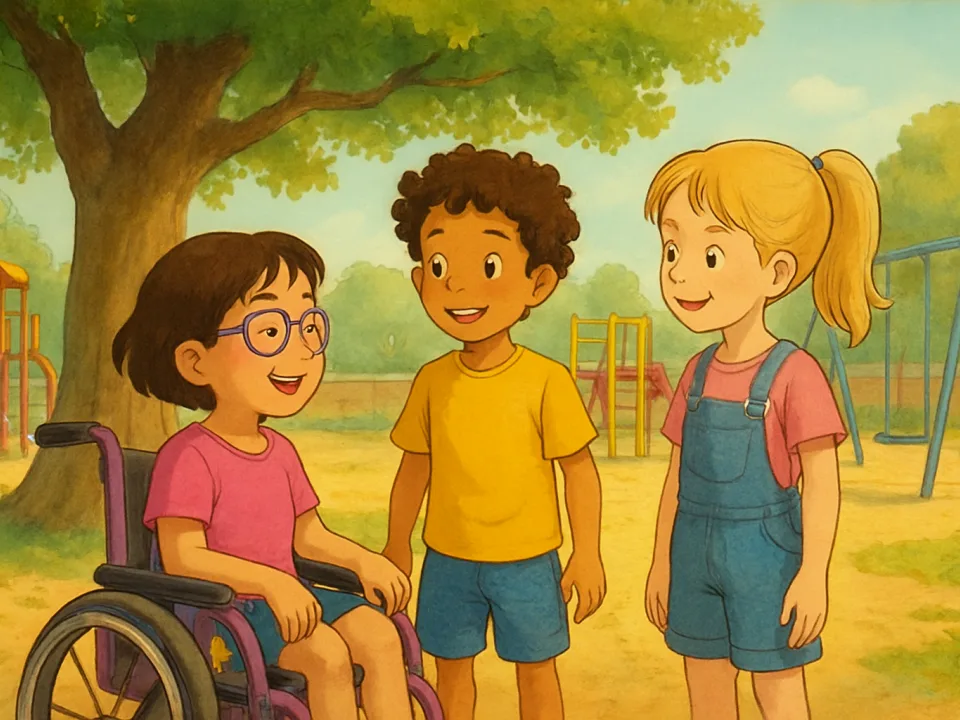
But today wasn’t just any school day. Today, a new student was joining their class. Their teacher, Ms. Rivera, gathered everyone on the grassy patch by the sandbox. She smiled, gesturing to the girl beside her.
“This is Ella,” Ms. Rivera announced. Ella offered a shy wave. She had short, dark hair, a pair of round glasses, and a bright purple wheelchair that shimmered in the sunlight. Leo noticed the tiny stickers of turtles, stars, and lightning bolts stuck all along the metal spokes. The students greeted Ella with a chorus of hellos.
“Ella, why don’t you join the group?” Ms. Rivera encouraged.
Leo grinned and scooted over, leaving plenty of space for Ella to roll in. “Hey, I like your stickers,” he said.
Ella smiled, her nerves easing just a little. “Thanks. My brother and I put them on.”
Just then, the bell rang for recess. The class exploded with excitement, scattering to the swings, slides, and their favorite tag spots. Leo dashed toward the monkey bars, his best friend Mara close behind. But when he looked back, he noticed Ella lingering by the sandbox, her wheelchair still.
Leo jogged over. “Want to come see the playground?”
Ella glanced down, chewing her lip. “I’d like to…but the woodchips are really hard for my wheels. I can’t get very far.”
He looked at the playground with new eyes. The woodchip ground, bumpy and loose, made little hills that even his sneakers sometimes slipped on. He’d never thought about how that might feel for wheels instead of feet.
Mara ran over, her ponytail bouncing. “What’s up?”
Leo explained, and Mara’s face changed from excitement to concern. “That’s not fair,” she said. “Maybe we could help?”
Ella smiled a little, but shook her head. “Thanks, but it’s not your job. I just wish I could go everywhere you guys go. It’s okay, though.”
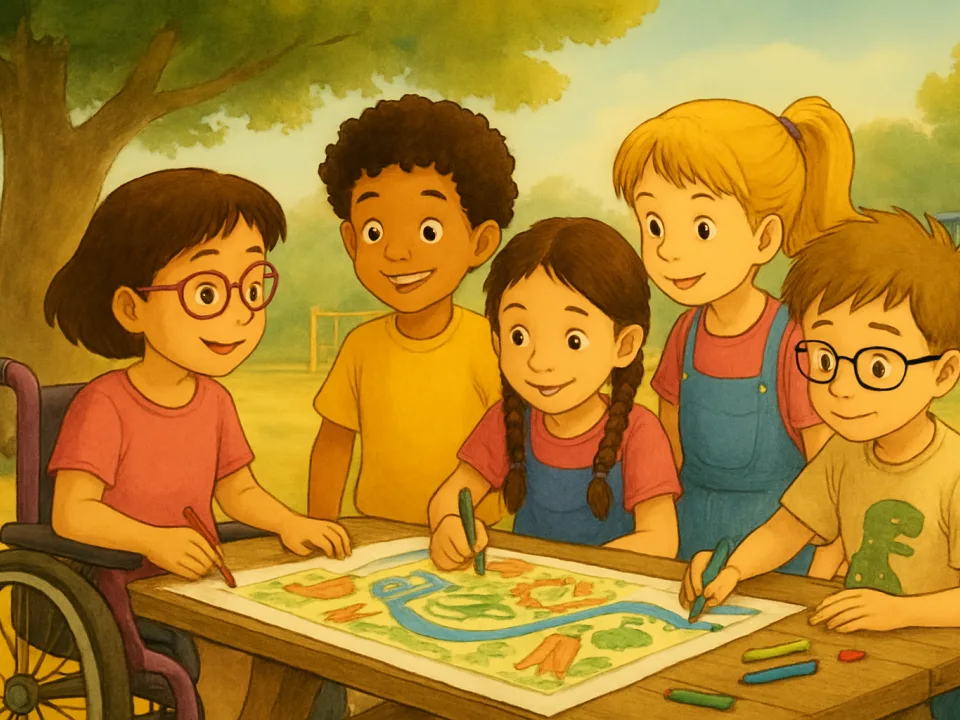
But Leo didn’t think it was okay. He turned to Mara. They exchanged determined nods, and together, they hatched a plan.
The Plan
During lunch, Leo and Mara gathered their classmates under the big oak tree. They explained how Ella couldn’t reach the slide or swings because of the woodchips and steps. Some of the kids looked uncomfortable, others shrugged, but a few—like Jasmine, who loved to draw, and Ethan, who was always building things out of sticks—began to brainstorm.
“What if we made a path?” Jasmine suggested. “Like, a smooth one, just for wheels!”
“Or ramps!” Ethan piped up. “I saw one at my cousin’s library.”
Ms. Rivera overheard their excited chatter and joined in. “Those are smart ideas. Maybe you could write to the principal and the school board. Real change comes when people work together.”
That afternoon, the class wrote a letter explaining how their playground didn’t work for everyone, and what changes could help. Leo drew a map with a path and ramps, Mara added ideas for sensory panels, and even Ella helped by explaining what would make the playground fun for her and other kids with wheelchairs.
Wheels in Motion
A week passed, and then another. Finally, Principal Greene called the class into the gym. He held up their letter. “Your voices matter. We can’t fix everything right away, but we can start. Our maintenance crew will build a smooth path from the blacktop to the swings and sandbox. And next month, we’ll get a new ramp for the slide.”
The class cheered. Ella’s face glowed with excitement. “Thank you,” she whispered to Leo and Mara.
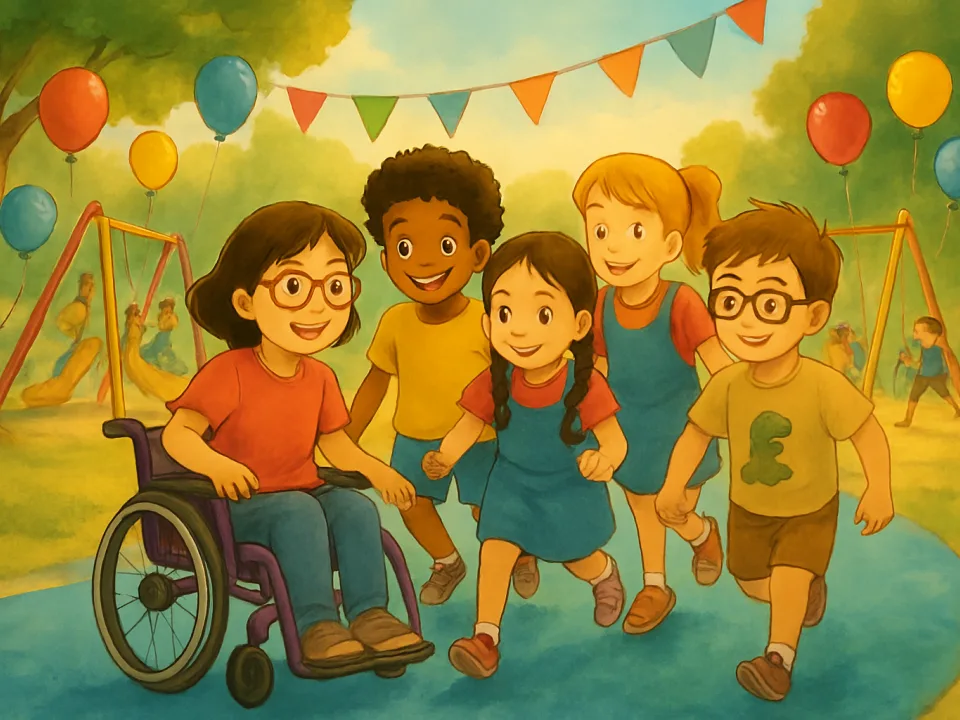
Soon, the workers arrived. They laid a winding path of smooth rubber over the woodchips, bright blue and wide enough for two wheelchairs to race side by side. The whole school watched as the new path took shape. When it was done, the teachers held a “Path Parade” to celebrate.
That day, Leo ran at Ella’s side as she zoomed down the new path, her wheels spinning gleefully. Mara and Jasmine rolled along too, taking turns on borrowed wheelchairs to see the world from Ella’s view.
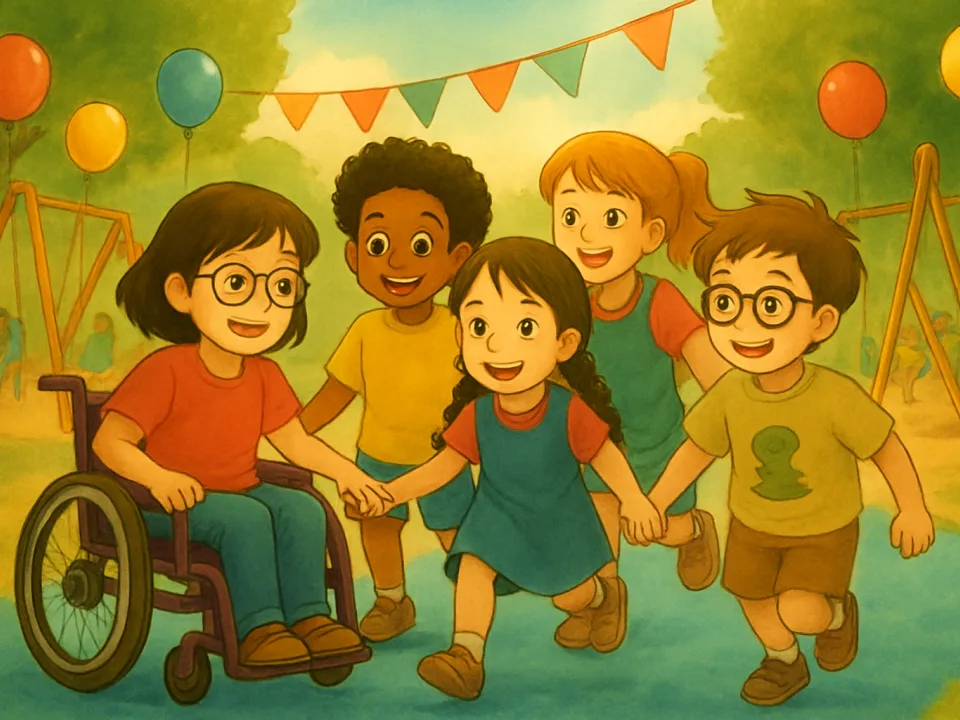
At the swings, a new adaptive swing hung beside the regular ones. Ella tried it first. She squealed as she soared, with Leo and Mara pushing gently. For the first time, Ella’s laughter joined the playground chorus, loud and bright.
True Friendship
Over the next weeks, Ella became a regular at every playground game. She and her friends invented a tag game called “Wheel Rush,” where everyone—on foot, on wheels, or even hopping—raced to creative checkpoints around the playground. Leo noticed that the playground felt bigger and more exciting now that they could all play together.
One windy afternoon, the class was playing soccer. The ball rolled across the new path. Ella zipped after it, expertly steering her chair. She passed to Leo, who scored the winning goal. The whole team cheered.
After the game, Leo caught his breath beside Ella. “You’re really fast,” he said.
Ella grinned. “My wheels help. And so do my friends.”
The playground, once full of barriers, now buzzed with more games, laughter, and new friendships than ever before. Kids from other classes joined in, some curious about the path and ramp, others just happy to have new games to play. The grownups watched from nearby, their hearts warmed by the change they saw.
Small Changes, Big Difference
One afternoon, as Leo and Mara packed up for the day, Ella rolled up beside them. “Thank you—for making space for me, and for helping make things better.”
Mara smiled. “You’re our friend. We wanted you with us.”
Leo nodded. “It’s more fun when everyone’s included.”
Ella looked over the playground, seeing kids of all kinds playing together. “I used to feel nervous about starting a new school,” she said quietly. “But now I’m glad I did.”
Together, the three friends watched the sun dip behind the slide. On the playground, the wheels, feet, and laughter all moved forward—side by side.
Moral of the Story
When we notice what makes life hard for a friend, we can all work together to create solutions. True friendship means making sure everyone has the chance to join in, and sometimes, small changes can open up the world for someone else.
Key Takeaways for Kids
- Including everyone makes games and life better for all.
- Noticing challenges for others is the first step toward kindness and real friendship.
- Working together can solve big problems—your voice matters!
- Accessibility helps everyone feel welcome.
Why This Story Matters
This story reminds us that inclusion is more than just inviting someone to play—it means making sure they truly can. By caring about accessibility and working together, kids can create spaces where everyone belongs and new friendships can bloom.
Related Stories
The Sign Language Secret: A Story About Deaf Culture and Finding Ways to Connect
The Sign Language Secret Maya Carter loved the [first day of…
Everyone Belongs on the Team: A Sportsmanship Story About Inclusion for Kids
Everyone Belongs on the Team It was a crisp Monday afternoon at Maplewood Elementary, and the playground was alive with…
Oliver's Fast Brain: A Heartwarming Story About Friendship and Understanding ADHD
Oliver's Fast Brain Oliver Bennett liked to say his brain was a racing car. On the outside, he was just an ordinary…
The Boy Who Took His Time to Speak: A Moral Story About Patience and Stuttering
The Boy Who Took His Time to Speak Lucas Moreno had always known that words came slowly to him. In the busy, chattering…
The Group Project Ghost: A Realistic Story About Accountability and Teamwork
The Group Project Ghost Eighth grade at Northside Middle School was supposed to be the year of independence. Or so…
Twenty-Four Paper Hearts: A Valentine's Day Story About Everyday Friendship
Twenty-Four Paper Hearts: A Valentine's Day Story About Everyday Friendship Ruby Lane admired the neat stack of pink…