
The Boy Who Took His Time to Speak: A Moral Story About Patience and Stuttering
The Boy Who Took His Time to Speak
Lucas Moreno had always known that words came slowly to him. In the busy, chattering halls of Springdale Elementary, where jokes flew faster than soccer balls on the playground, Lucas’ voice often waited quietly, hidden behind the wave of other kids’ laughter. He stuttered, sometimes on the very first sound of a word, sometimes halfway through a sentence—like the traffic jams on his street every Monday morning—only in his mouth, not on the road.
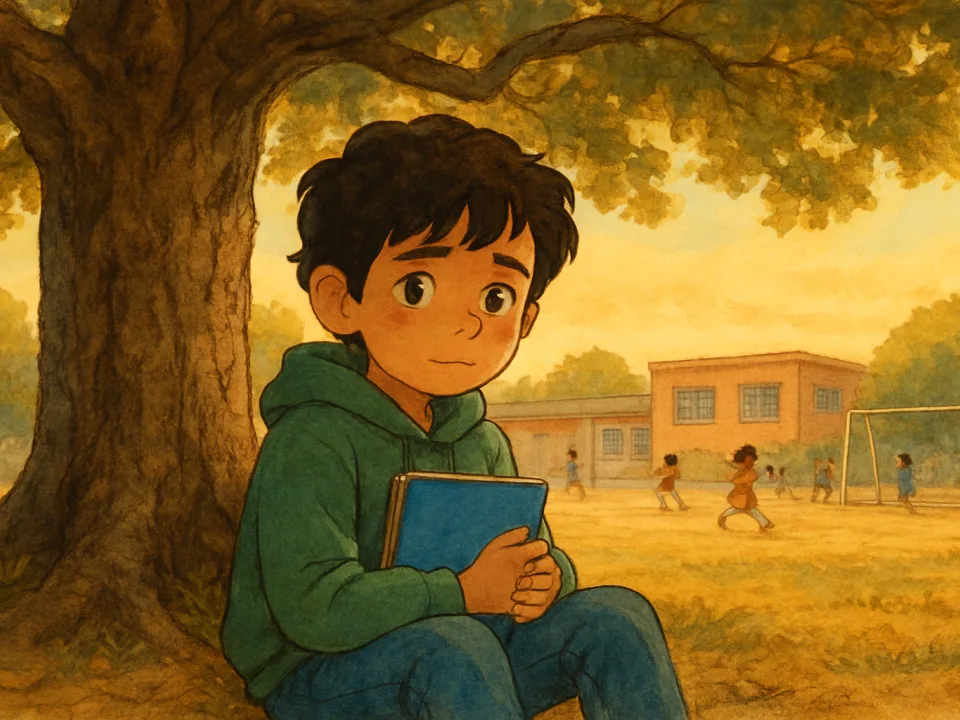
It wasn’t that Lucas didn’t have things to say. He loved rocket ships, facts about octopuses, and drawing pictures of places he’d like to visit. But when it came to sharing his thoughts out loud, he felt like he was racing with shoes tied together: always behind, always awkward.
Lucas usually kept to himself during recess, sitting with his sketchbook by the old oak tree at the far end of the playground. Sometimes, a teacher would wave, or a kind classmate would say hi, but then they’d hurry off before Lucas could reply. He wondered if anyone else ever felt lost in the bustle, waiting for their turn to speak.
Each morning, Lucas would stand in the hallway, listening to the hum of chatter. He watched groups of kids sharing stories, swapping snacks, and laughing at something silly. Lucas would sometimes try to step in, opening his mouth to join the laughter, but the words caught on his tongue like a zipper stuck on a jacket. A few times, he tried to join a game of tag, but by the time he called out, the others had already dashed away, forgetting he was there.
At home, Lucas’ mom always encouraged him. "Take your time, mi amor," she'd say, kneeling beside him as he practiced his spelling homework. "Your words are special. They just like to dance a little before they come out."
Lucas would grin, but deep down, he wished his words could march straight out, like other kids’ did. Sometimes, at dinner, his little sister Sofía would finish his sentences for him, but their parents always gently reminded her, "Let Lucas finish, Sofía. We want to hear his voice."
Everything changed on a Tuesday in March, when Mr. Patel, their friendly science teacher, announced the big news. “Class, you’ll be working in pairs for our ‘Invent Something New’ project!” he beamed. “This time, I’ve chosen your partners for you.”
Lucas’ heart thudded as he drew Maya’s name.
Maya Kwon was new this year, but everyone liked her. She always wore bright barrettes in her hair and smiled with her whole face. Most importantly, she listened. She really listened, in that way grown-ups sometimes forgot to do.
After school, Maya found Lucas by the oak tree. “Hi,” she said, sitting down beside him and tucking her knees to her chest. “I think this will be fun. I like your drawings.”
Lucas blinked, startled. No one usually noticed his sketchbook. He tried to say thank you, but the words tangled. “Th-th-th—”
Maya waited. She didn’t look away or rush him. She just smiled, her brown eyes patient and warm.
“Th-thank you,” Lucas finished, his face hot.
“Let’s make something together,” Maya said, and that’s how it began.
They met every day after school to plan their invention. Lucas sketched, and Maya wrote lists. When Lucas wanted to explain an idea, he paused, letting his voice catch up to his thoughts. Maya sat quietly, never finishing his sentences unless he asked. She nodded and doodled beside him, making waiting feel ordinary, like breathing.
One afternoon, while they sat in the library, surrounded by paper scraps and colored pencils, Lucas tried to explain his idea. “I w-w-want our invention to help people talk to each other.”
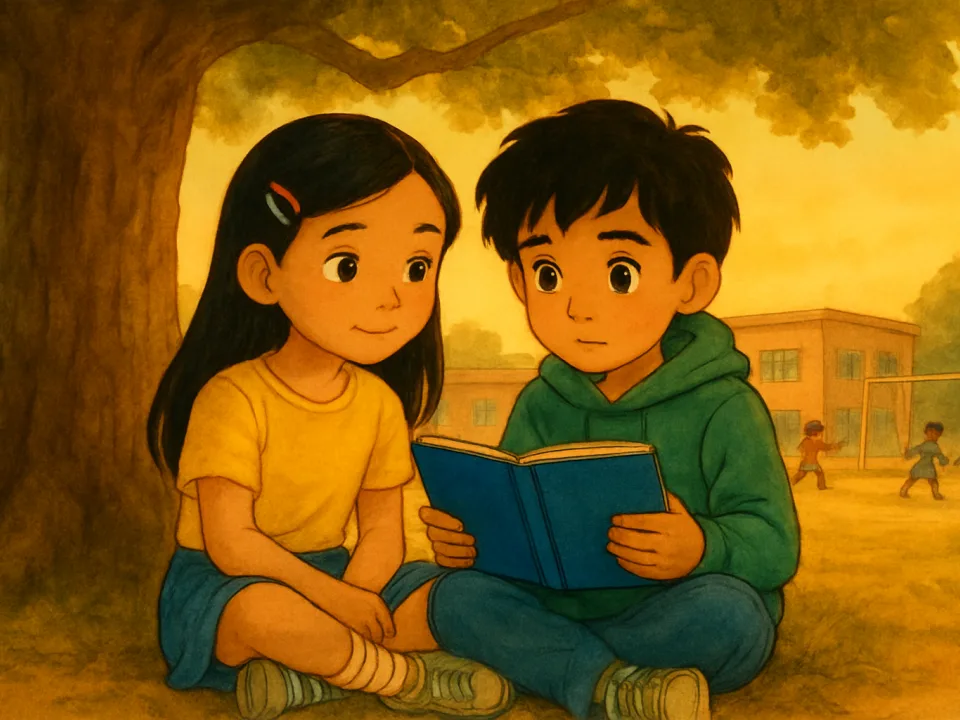
Maya grinned, her barrettes sparkling in the sunlight. “How about a message box? People can drop little notes inside for anyone who’s shy or can’t speak up.”
Lucas’ smile grew so wide it felt like a sunrise. They spent days gluing, painting, and decorating a bright blue box with rockets and octopuses and speech bubbles. The front flap read: ‘Your Words Matter.’
During their work, Maya always encouraged Lucas. “What do you think about this color?” she’d ask, holding up a paintbrush. Lucas would think, sometimes pausing, and Maya would wait, patient as ever.
One afternoon, as they sat under the oak tree, Maya confided, “I used to be shy, too. At my old school, I barely spoke at all.”
Lucas looked at her with surprise. “Really?”
She nodded. “Sometimes, people just need a little time. Or a friend.”
Lucas felt a warm bubble of happiness in his chest.
The day of the Science Fair, the gym buzzed with chatter—robot arms, paper volcanoes, a model rollercoaster. Lucas stood with Maya at their table, fidgeting. He wanted to tell people about the box, how it might help kids who felt left out or nervous, but as parents and students stopped by, Lucas felt his words getting stuck.
Maya gave him a thumbs-up. "It's okay, Lucas. Take your time. I'll tell the first part, and you can finish."
When it was his turn, Lucas took a deep breath. “W-w-we… m-m-made…” he started. He saw a few kids glance at each other, but Maya stood beside him, nodding encouragingly.
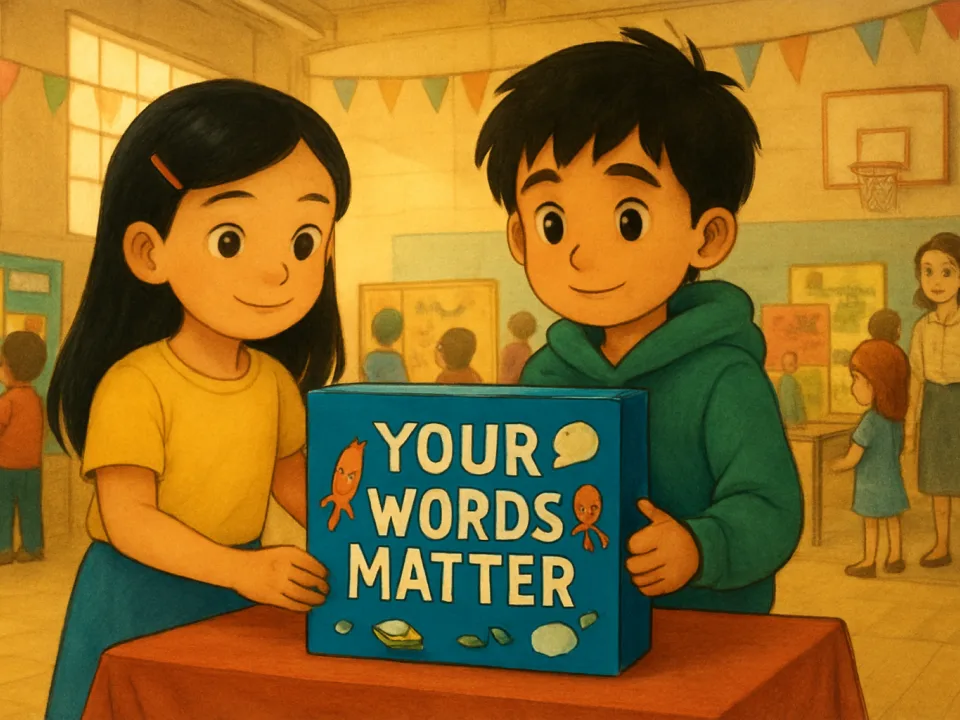
Lucas fixed his gaze on the octopus he’d painted. “We made this box… for anyone who n-n-needs h-h-help… to feel heard.”
Some of the students listened. A few parents smiled. One kid, Alex, asked if he could put a joke inside the box for his friend who was having a rough week.
By the end of the day, the Message Box was full of folded notes: jokes, kind words, even a poem. Lucas and Maya didn’t win first prize for the fanciest invention, but they got a special ribbon for ‘Fostering Friendship’—and, even better, a line of classmates wanting to talk to them, to listen and be listened to.
That week, things changed for Lucas. Maya always waved him over at lunch, and sometimes Alex or others joined too. When Lucas spoke, even if his words took time, people waited. They asked him to tell them about his favorite rockets or what he’d draw next. At recess, a few kids tried writing notes for the box, giving Lucas and Maya ideas for improvements.
One day, after school, Lucas, Maya, and Alex sat together under the old oak tree. Alex pulled out a note and handed it to Maya. “This is for you, Lucas,” Alex said shyly. “I wrote a rocket joke.”
Lucas smiled. “C-can I hear it?”
Alex grinned. “What do you call a rocket that doesn’t stop talking?”
“I d-d-don’t know,” Lucas said, anticipation making him giggle.
“A chatter-rocket!”
They all burst out laughing. Lucas felt lighter than he had in months.
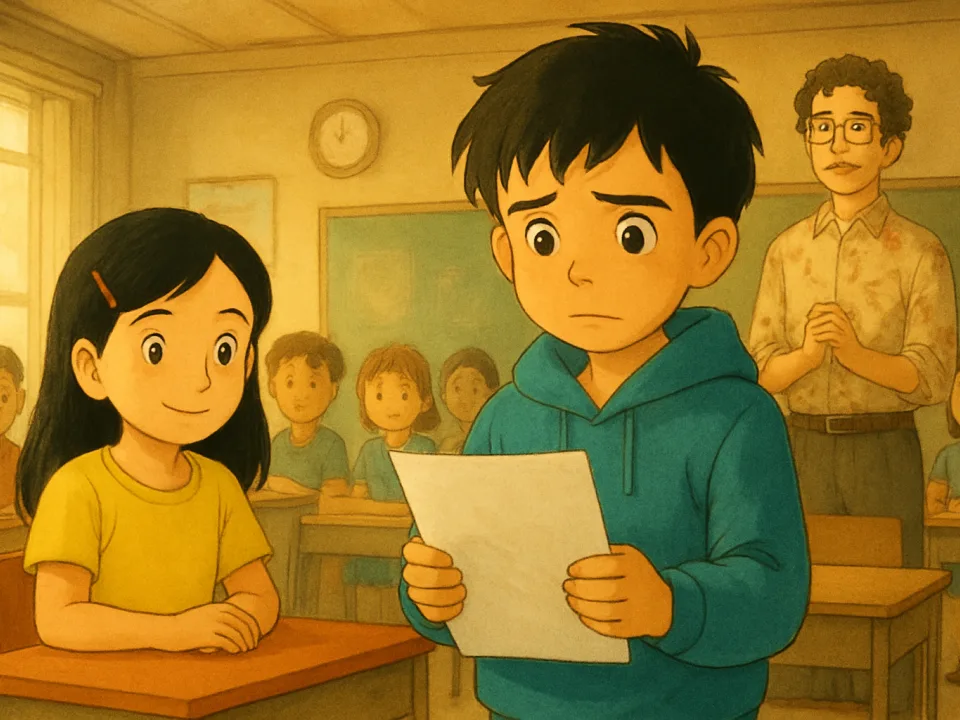
One Friday, Mr. Patel asked Lucas if he’d like to share his thoughts about the project in front of the whole class. Lucas felt nervous—his heart did that jittery thing again. But Maya smiled from her desk, and a few classmates gave little nods.
Lucas stood up, gripping his paper. “W-w-when someone waits for me to speak, I f-f-feel like I m-m-matter,” he said. “Thank you for b-b-being p-patient.”
The class clapped. Mr. Patel gave Lucas a proud wink. For the first time, Lucas felt like he belonged inside the noise, not just watching from the quiet edges.
That spring, Lucas still stuttered. Words still took time. But he learned that patience—his own and others’—could turn waiting into something wonderful, something that built real friendships. Maya stayed his friend, and so did others. Sometimes, when someone new joined their group and fumbled through their words, Lucas waited, listening, knowing how much it meant.
On the last day of school, Lucas sat under the oak tree, his sketchbook full of new drawings. Maya and Alex joined him, each bringing colored pencils. Together, they drew a huge picture on a long sheet of paper: rockets, octopuses, the blue message box, and a group of kids gathered around, laughing and listening.
"We should hang this in the hallway," Maya said. "So everyone remembers: Your words matter."
Lucas nodded, his heart full. For the first time, he looked forward to the next year—new teachers, new projects, new friends. He knew his words would still take time. But now, he also knew there would always be someone willing to wait, to listen, and to understand.
And under the old oak tree, Lucas’ sketchbook filled with drawings—not just rockets and octopuses, but people connecting in their own ways, showing that every voice, no matter how slow or soft, could change the world, one patient friend at a time.
Related Stories
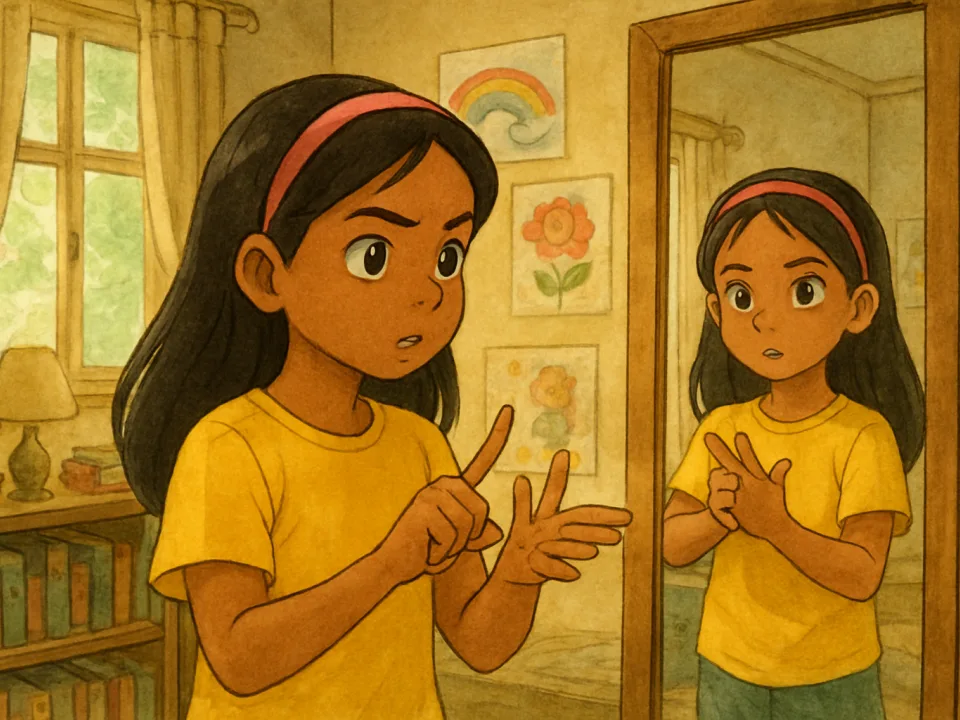
The Sign Language Secret: A Story About Deaf Culture and Finding Ways to Connect
The Sign Language Secret Maya Carter loved the [first day of…
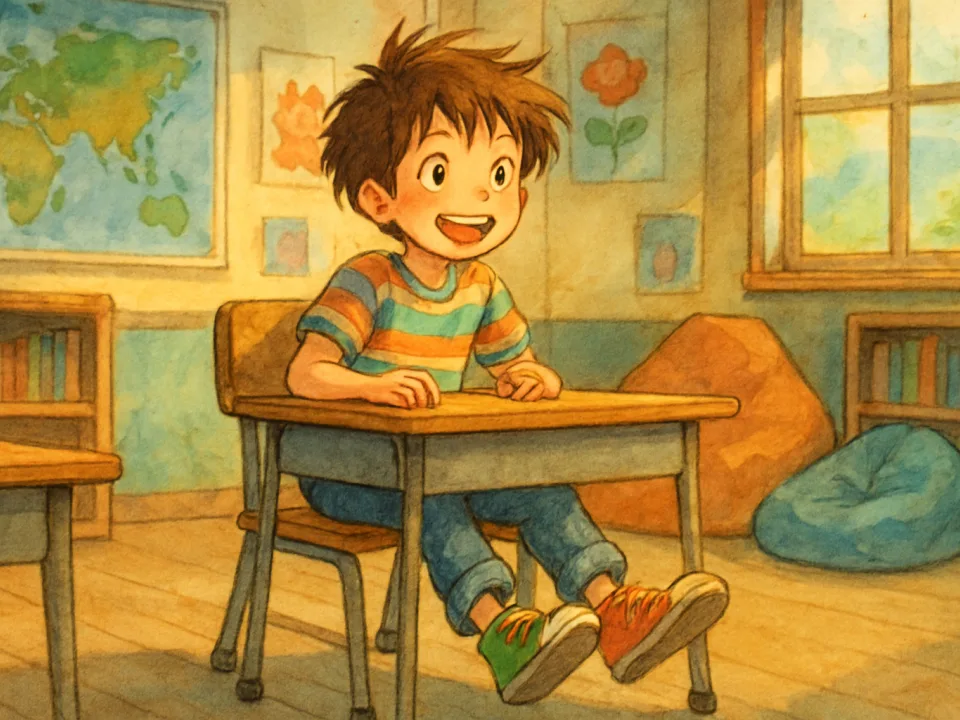
Oliver's Fast Brain: A Heartwarming Story About Friendship and Understanding ADHD
Oliver's Fast Brain Oliver Bennett liked to say his brain was a racing car. On the outside, he was just an ordinary…
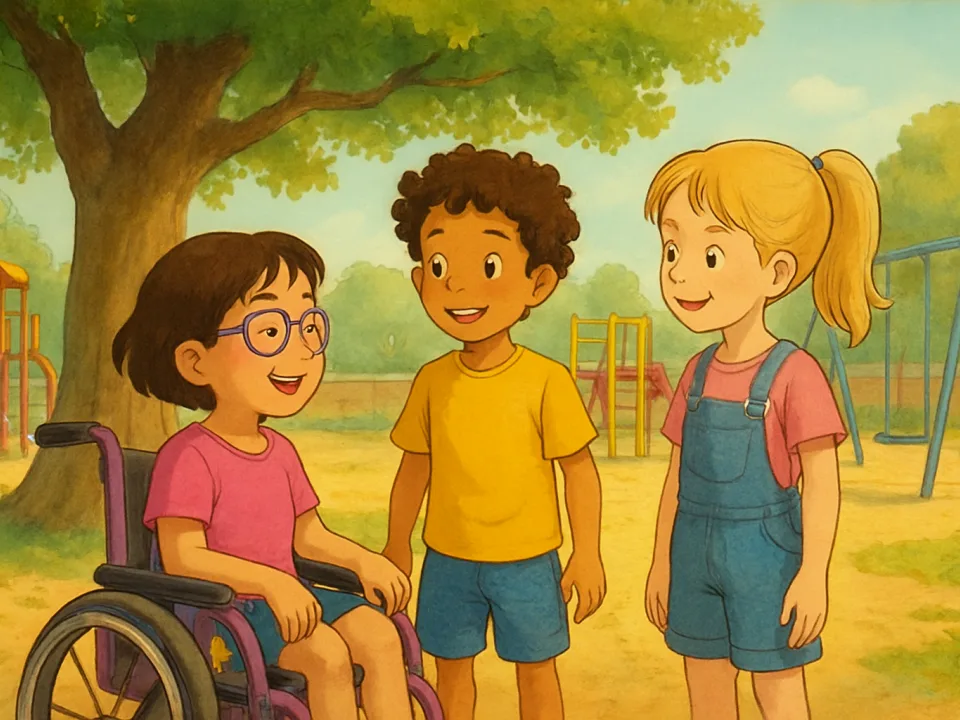
Wheels on the Playground: A Story About Accessibility, Inclusion, and True Friendship
Wheels on the Playground The sun shone brightly over Maplewood Elementary, glinting off the newly painted monkey bars…
Everyone Belongs on the Team: A Sportsmanship Story About Inclusion for Kids
Everyone Belongs on the Team It was a crisp Monday afternoon at Maplewood Elementary, and the playground was alive with…

The Strength of Friendship | Moral Adventure for Kids
The Strength of Friendship On the edge of Willowdale, where wildflowers nodded in the breeze and the river flashed like…
Unfinished Portrait | Friendship Moral Story for Kids
The Unfinished Portrait On the edge of a quiet little town, where the hills rolled like green blankets and the trees…
Twenty-Four Paper Hearts: A Valentine's Day Story About Everyday Friendship
Twenty-Four Paper Hearts: A Valentine's Day Story About Everyday Friendship Ruby Lane admired the neat stack of pink…

True Friends: A Moving Friendship Moral Story for Kids
The Story of True Friends Everyone in the village said Jack and Tom were never far apart. If Jack was skipping stones…