Truth Prevails Over Injustice - A Short Moral Tale Inspired by Novel: To Kill a Mockingbird
Truth Prevails Over Injustice
In the sleepy town of Maycomb, summer seemed to stretch like warm honey. Porch swings creaked in the evening breeze, cicadas sang from the trees, and children raced along dusty roads until the sky turned pink.
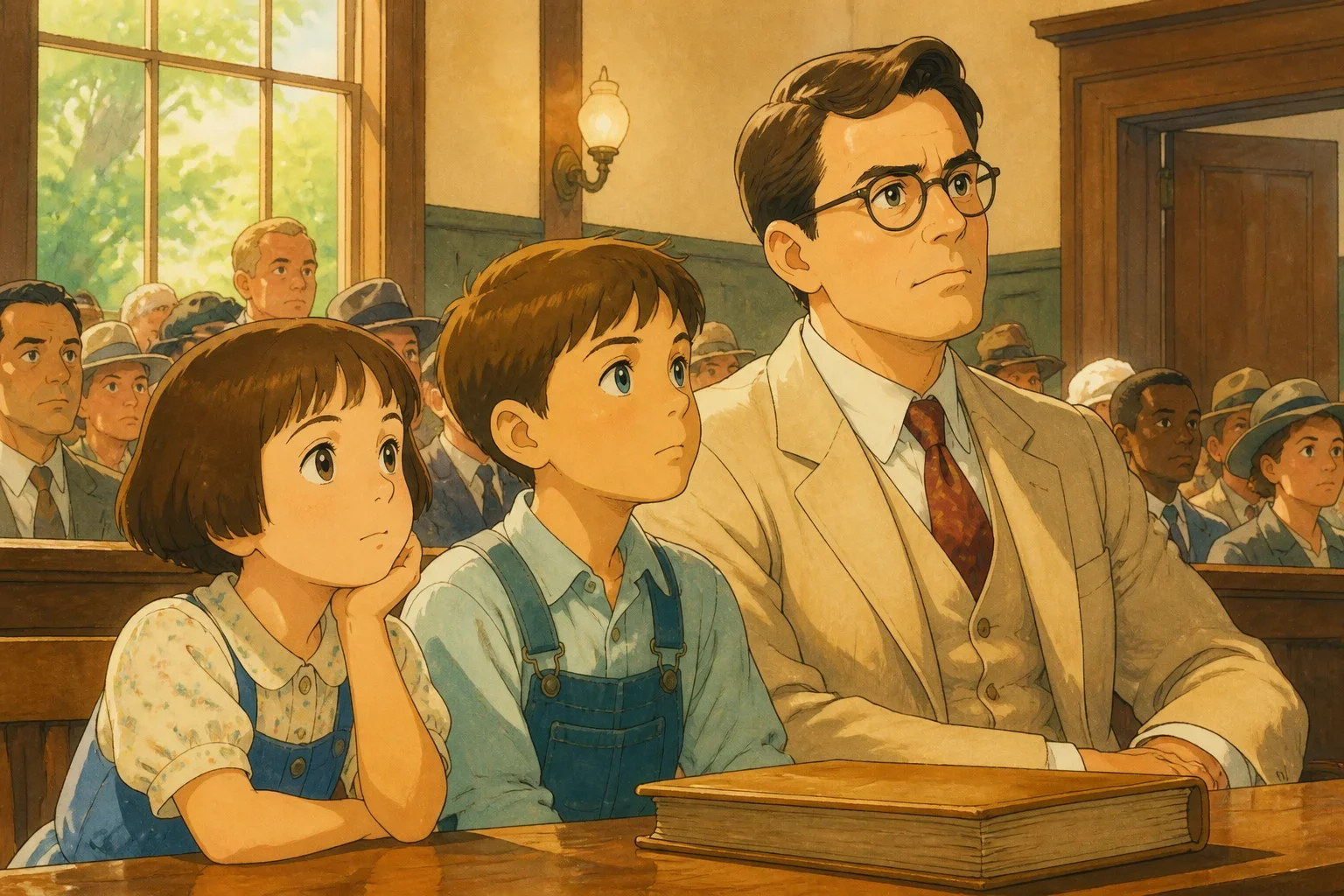
Scout Finch loved days like that. She liked climbing fences, asking difficult questions, and running faster than anyone expected. Her older brother, Jem, was always nearby—sometimes bossy, often brave, and almost always ready for adventure.
But one summer, something changed in Maycomb.
The town still looked the same on the outside. The white courthouse still stood in the center square. Neighbors still watered flowers and traded gossip over front gates. Yet beneath the ordinary days, a hard feeling had settled over the town, like a storm cloud that would not move.
Scout first noticed it in the whispers.
People stopped talking when she and Jem walked by. Grown-ups leaned close together and spoke in low voices. At the grocery store, at church, and even on quiet porches at dusk, one name kept returning.
Tom Robinson.
Tom was known as a gentle, hardworking man. He helped others when he could and spoke kindly to everyone. But now he had been accused of doing something terrible, and many people had already decided he must be guilty.
Scout did not understand.
One evening, as fireflies blinked over the yard, she sat on the porch steps beside Jem and listened to their father, Atticus Finch, speaking softly as he gathered his papers.
"Are you really going to defend Tom Robinson?" Scout asked.
Atticus looked at her with steady, thoughtful eyes. "Yes," he said.
"Even if people get angry?"
"Especially then," Atticus replied.
Jem frowned. "But what if they won’t listen to the truth?"
Atticus placed a hand on Jem’s shoulder. "We still tell it. Doing what is right does not depend on whether doing it is easy."
Those words stayed with Scout.
When the Town Chose Rumors
As the trial grew closer, Maycomb’s whispers became sharper.
One hot afternoon, Scout and Jem passed Mrs. Dubose’s house. She sat stiffly on her porch, her voice as prickly as thorns.
"Your father is wasting his time," she said. "Some people don’t deserve defending."
Scout’s face burned. "That’s not fair," she snapped. "You don’t even know the truth."
Mrs. Dubose sniffed and turned away.
Jem gently tugged Scout’s sleeve. "Come on," he muttered.
They walked on in silence until they reached the shade of an oak tree.
"Why do people say cruel things when they don’t know the whole story?" Scout asked.
Jem kicked at a pebble in the road. "Maybe because it’s easier than thinking."
Scout looked back toward the town square. For the first time, Maycomb did not feel small and friendly. It felt divided.
That night, Scout asked Atticus, "Why do people believe a lie just because everyone else does?"
Atticus was quiet for a moment.
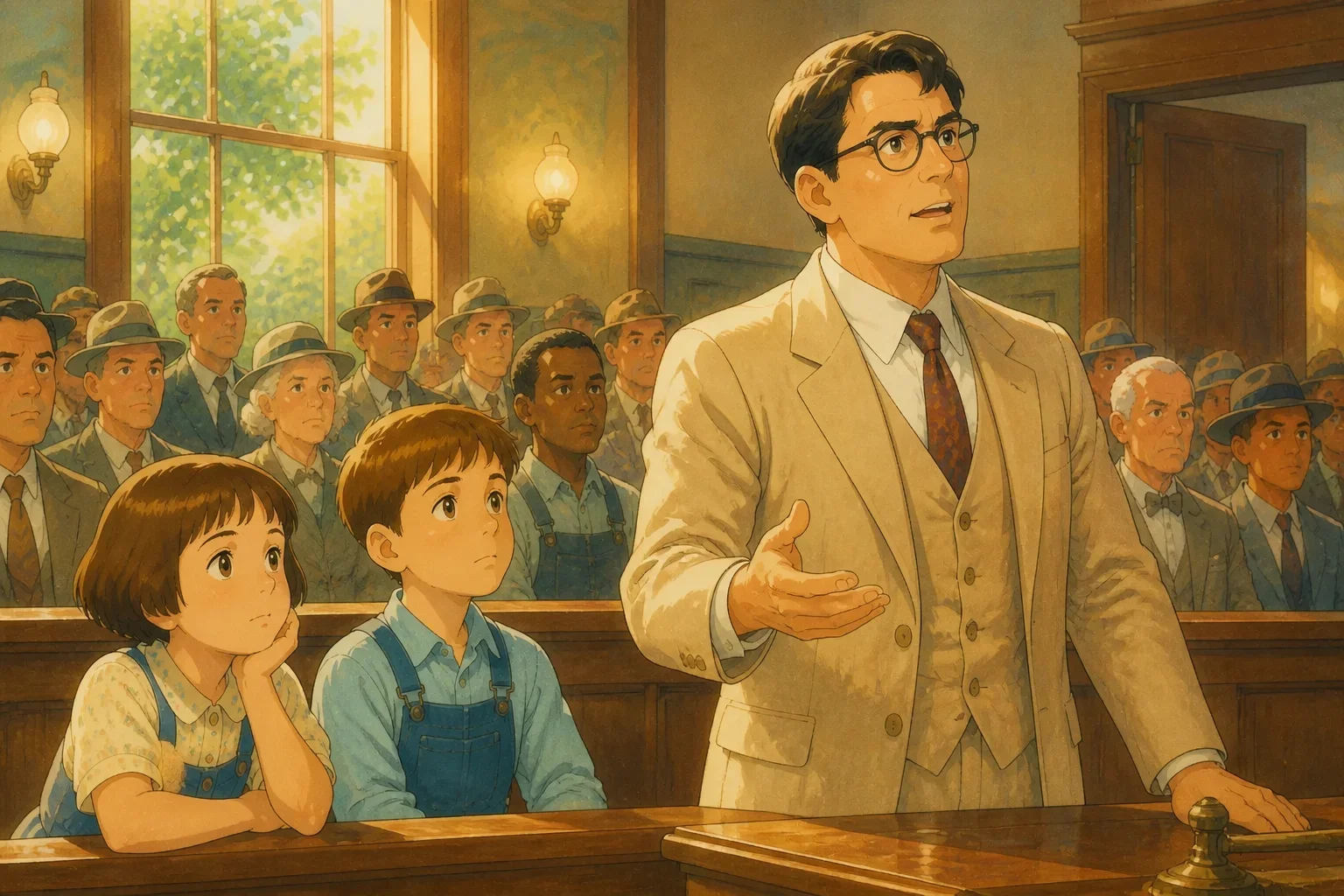
"Sometimes," he said, "people let fear or prejudice speak louder than truth. That is why courage matters so much."
The Day of the Trial
On the morning of the trial, the courthouse was crowded long before the doors opened. Men in hats stood in clusters. Women whispered behind gloved hands. The summer air felt thick and heavy.
Scout held Jem’s hand tighter than usual as they climbed the steps.
Inside, the courtroom buzzed with voices, but when Atticus stood to speak, a hush slowly spread across the room.
Scout watched her father carefully. He did not shout. He did not thunder. He simply spoke clearly, calmly, and truthfully. He pointed to the evidence. He asked people to look at facts instead of rumors. He reminded them that fairness should belong to everyone.
Scout’s heart pounded.
This was what courage looked like, she realized.
Not fists. Not anger. Not winning applause.
Courage was standing in a room full of people who disagreed with you and still speaking the truth.
She glanced at Jem. His jaw was set, and his eyes never left Atticus.
"He’s trying so hard," Scout whispered.
Jem nodded. "Because it matters."
When the trial ended, the room seemed to hold its breath. Scout felt hope rise inside her like a small, bright flame.
And then came the verdict.
Tom Robinson was declared not guilty.
For one stunned moment, no one moved.
Then a murmur swept through the courtroom.
Scout looked around at the faces in the room—some surprised, some unhappy, some relieved. She did not fully understand everything that had happened, but she understood this: truth had been spoken bravely, and this time, it had been heard.
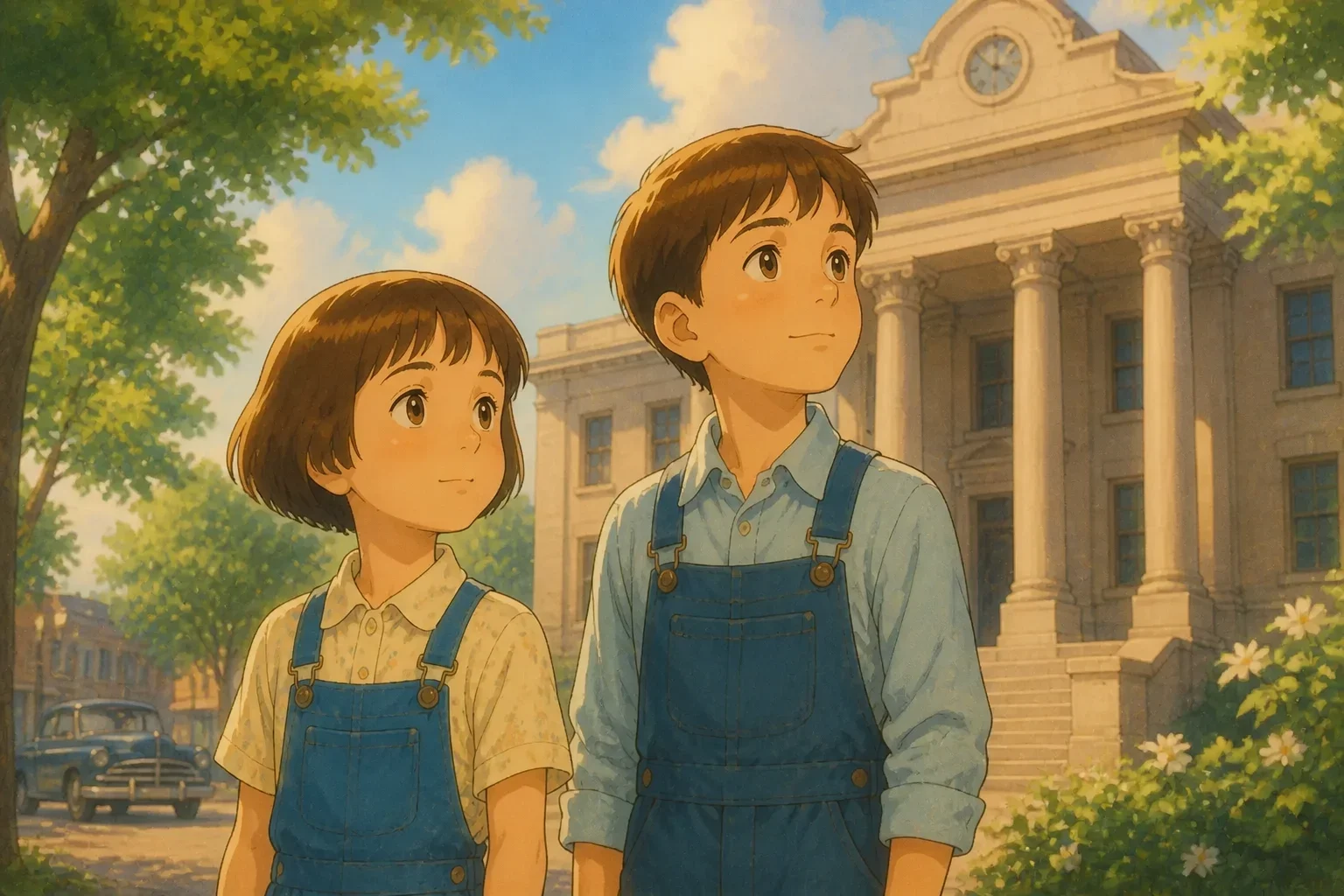
Outside the courthouse, the sun was bright, and the square seemed different somehow, as if the town had taken one deep breath after being afraid for too long.
A Lesson Scout Would Never Forget
That evening, Scout, Jem, and Atticus sat together on the porch. The sky turned lavender, and mockingbirds sang from the trees.
Scout leaned against her father’s arm. "Does this mean everything is better now?"
Atticus smiled sadly. "Not all at once. One fair decision cannot fix every unfair heart. But every time truth is defended, it pushes back the darkness."
Jem looked out at the road. "So even when injustice feels big, telling the truth still matters?"
"It always matters," Atticus said. "Truth may have to struggle, but it is never wasted."
Scout listened to the evening sounds—the chirp of crickets, the rustle of leaves, the quiet strength in her father’s voice.
She thought about the whispers, the anger, the courtroom, and the brave calm way Atticus had stood up for someone others were ready to judge unfairly.
That night, she learned something she would carry for the rest of her life:
When people are treated unfairly, staying silent helps injustice grow. But honesty, courage, and fairness can light the way forward.
And even in a town full of noise, truth still has a voice.
Key Takeaways for Kids
- Tell the truth, even when it is difficult.
- Stand up for fairness when someone is being treated unjustly.
- Do not judge people based on rumors or prejudice.
- Real courage means doing what is right, even when others disagree.
- One brave voice can make a difference.
Why This Moral Story Matters
Children often see unfairness in small everyday ways—someone being blamed too quickly, left out, or judged before others know the facts. This story helps kids understand that fairness begins with listening, thinking carefully, and treating people with respect.
It also shows that courage is not always loud. Sometimes courage is calm, steady, and truthful.
Moral of the Story
Truth prevails over injustice when brave people choose fairness, honesty, and courage over fear and prejudice.
Watch the Animated Story
Watch on YouTube
Related Stories
The Story of Socrates for Kids: A Moral Tale About Asking
The Story of Socrates Under the Olive Tree Long ago, in the busy city of Athens, there lived a man who did not wear a…
The Pencil Maker Story: A Moral Tale About Growth and
The Pencil Maker's Story On the edge of a quiet village, where the morning mist curled around little rooftops and…
The Retiring Carpenter Story: A Powerful Moral About Doing
The Retiring Carpenter In a quiet village where morning mist curled over the fields and sparrows nested in old apple…

Bees and the Beetles: A Moral Story About Hard Work
The Bees and the Beetles On the edge of a bright summer garden stood a tall old hive, golden in the afternoon sun. From…
Thomas the Advocate: A Moral Story About Truth, Justice, and
Thomas the Brave Advocate In a cheerful town filled with bicycle bells, market chatter, and rows of little houses with…
Storm Over Sunridge: A Moral Story About Community and
The Storm Over Sunridge On the evening before the storm, Sunridge looked as if nothing bad could ever happen there.…