The Little Engine Within: A Life-Changing Story of Belief and Perseverance
The Little Engine Within: Maya’s Journey of Belief and Perseverance
Maya spent her days behind a grocery-store counter, pressing buttons, counting coins, and handing out paper bags with a polite smile.
“Thank you. Have a nice day,” she said again and again.
But inside, her heart was somewhere else entirely.
It was in the swirl of blue paint that could become a stormy sky. It was in the bright orange of marigolds in the market. It was in the way sunset turned the windows of the town gold for just a few minutes every evening.
Maya wanted to be an artist more than anything.
Not the kind of wish that comes and goes like wanting an extra sweet after dinner. This was the kind of dream that sat quietly inside her all day long and glowed brighter at night.
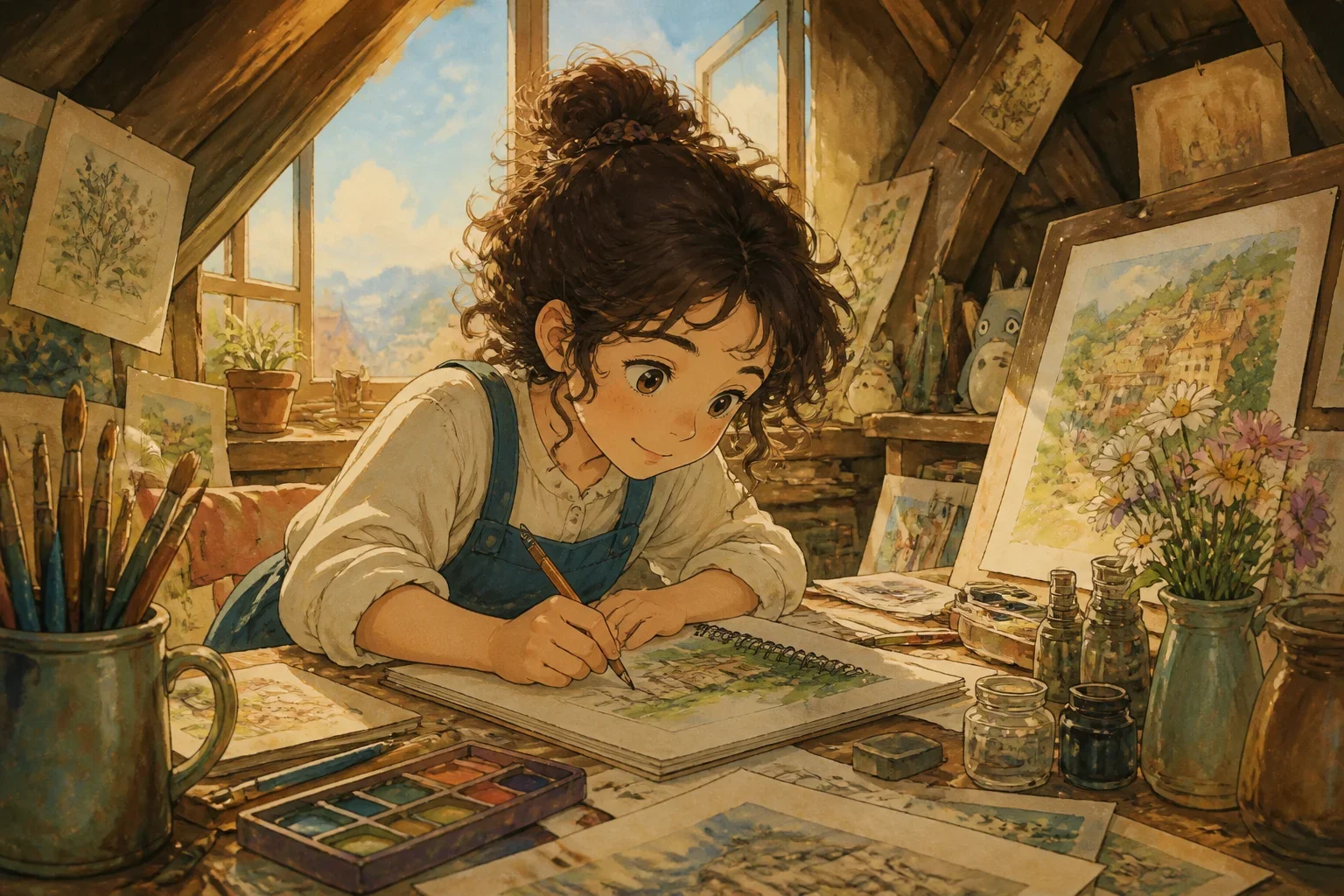
In her tiny attic room, under a slanted roof and beside a squeaky little window, she kept her true world: jars of brushes, stubby pencils, sheets of paper, and paint-stained sketches pinned to the wall. There were drawings of sleepy cats on rooftops, children flying kites, rain puddles reflecting streetlamps, and forests full of imagined creatures with lantern eyes.
Yet every time she finished a picture, the same thought crept in.
It isn’t good enough.
Then another.
Maybe I’m not good enough.
So Maya painted in secret. She hid her best work in a cardboard box beneath her bed, as if her dreams were too fragile to be seen in daylight.
The Rainy Evening
One evening, rain tapped on the town like a thousand tiny fingers. Shopkeepers pulled in signs. People hurried under umbrellas. The streetlights blinked on, turning the wet roads shiny as mirrors.
Maya was walking home with her coat pulled tight when she passed the park she loved most. Usually, it was noisy with children and pigeons and dogs chasing leaves. But that evening it was nearly empty.
Nearly.
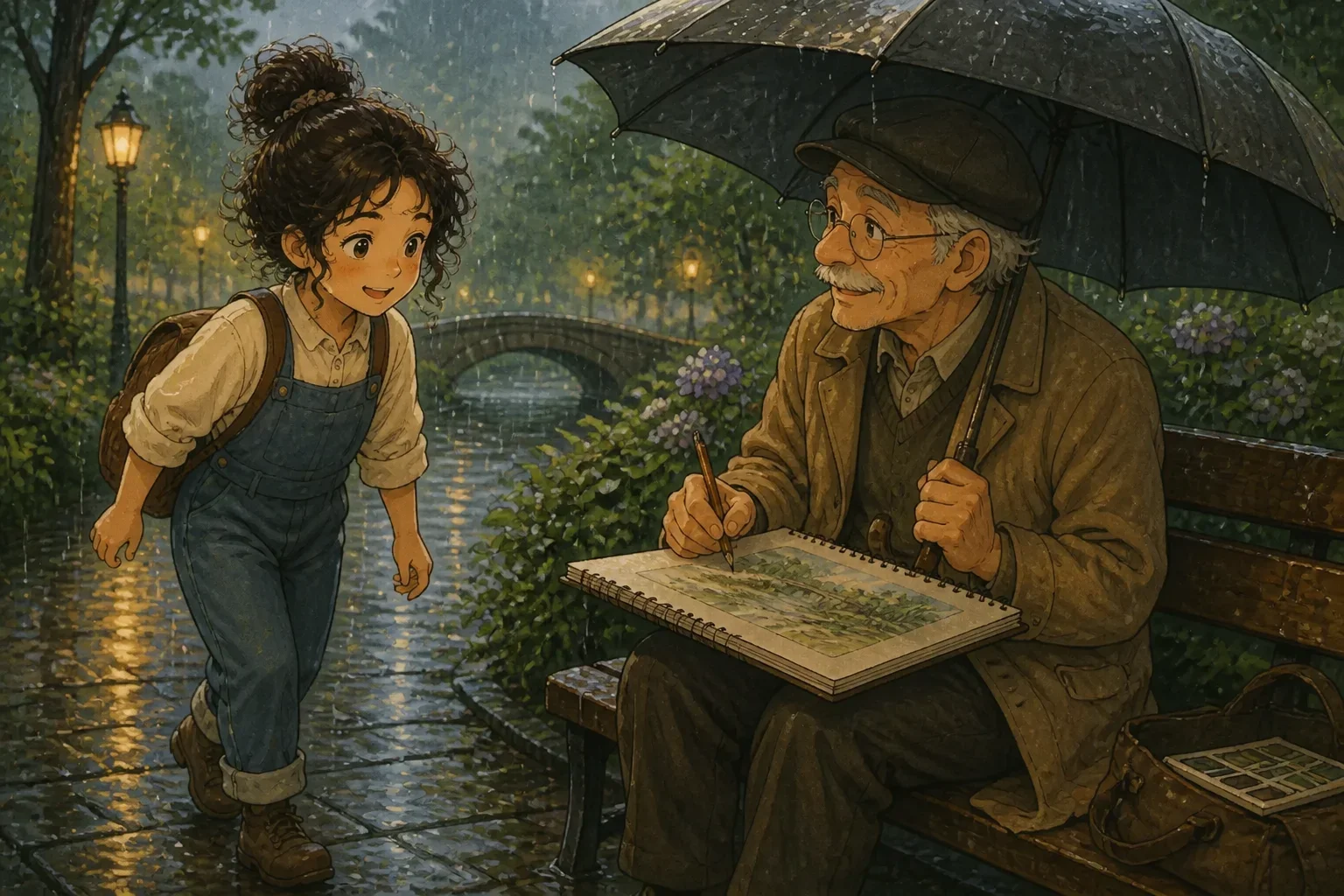
On a bench beneath a dripping chestnut tree sat an elderly man in a long brown coat. He wasn’t hiding from the rain. He was sketching it.
Maya slowed down.
His pencil moved quickly, lightly, almost playfully. On the page, the gray park seemed to wake up. The puddles shimmered. The tree branches leaned. Even the rain looked alive.
She forgot she was cold.
The man glanced up. “Would you like to see?” he asked.
Maya stepped closer. “It looks… real,” she said.
He chuckled. “That’s kind of you. I was trying to catch the way the rain bends the world.”
Maya stared at the sketchbook. “I’ve never heard anyone say it like that.”
“Ah,” he said, closing the book halfway. “Then perhaps you are someone who notices things too.”
Maya hesitated. “I like to draw.”
“Like to draw,” he repeated gently. “Or love to draw?”
The question landed right in the middle of her chest.
She looked down at her shoes. “Love it.”
“Then why did you say like?”
Maya let out a small, embarrassed laugh. “Because loving something and being good at it aren’t always the same.”
The old man nodded as if she had said something wise. “That is true. But being good at something and beginning are not the same either.”
She blinked.
Words she had kept tucked away for months suddenly spilled out.
“I work at the grocery store,” Maya said. “I paint at night. I want to be an artist, but I don’t think I’m talented enough. What if people laugh? What if I try very hard and nothing happens?”
The man listened without interrupting.
Then he smiled, not the sort of smile that says don’t worry too quickly, but the kind that says I understand.
“When a train climbs a steep hill,” he said, “it doesn’t shout, ‘I have already reached the top!’ It keeps moving and says, ‘I think I can. I think I can.’ Small words. Strong engine.”
Maya looked at him.
“Say it,” he encouraged.
She almost laughed. “Here?”
“Especially here. Rain is excellent for brave beginnings.”
Maya took a breath. “I think I can.”
“Again.”
“I think I can.”
A little stronger this time.
The old man tapped his sketchbook. “That is how many dreams begin—not with certainty, but with willingness.”
A New Habit
That night, Maya climbed the narrow stairs to her attic room, lit her lamp, and stood in front of a blank sheet of paper.
Usually, a blank page made her nervous.
What if she ruined it? What if the picture in her mind never made it to the page? What if this painting proved, once and for all, that she wasn’t really an artist?
But this time she whispered, “I think I can.”
Then she dipped her brush into paint.
The first strokes were clumsy. The window in her painting leaned too far to one side. The cat she added looked more like a loaf of bread with whiskers. Maya groaned, then laughed at herself.
“I think I can,” she said again.
So she kept going.
The next evening she painted again. And the next. And the next.
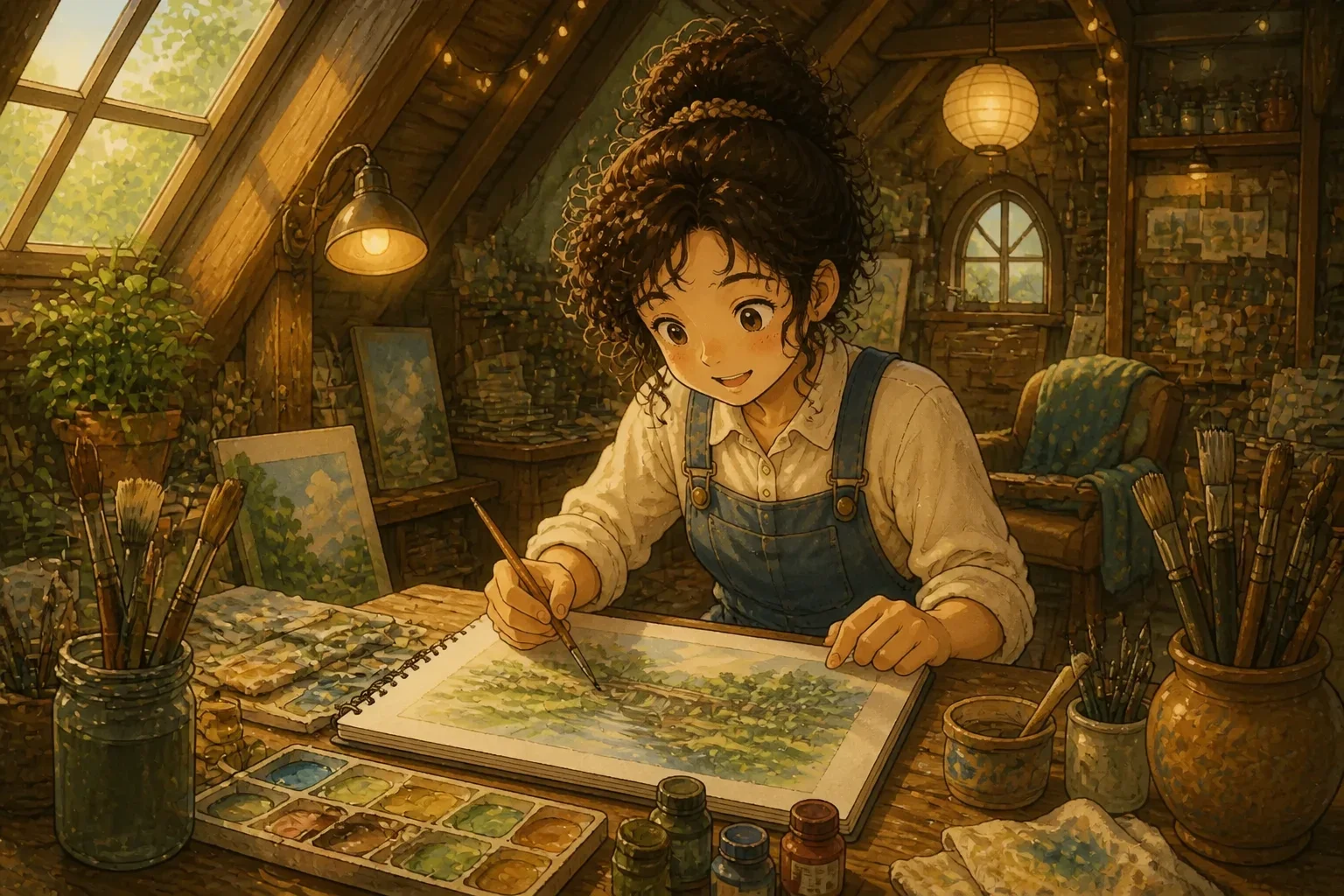
Soon her attic room changed. It no longer felt like a place where she hid. It felt like a place where she grew.
She painted before breakfast on some mornings, just for ten minutes. She filled pages with hands, teacups, clouds, bicycles, faces in the market, and rows of crooked houses. She studied shadows. She practiced mixing colors until she found the exact green of summer leaves after rain.
When a painting didn’t work, she no longer tossed it aside in despair.
Instead she asked, “What can I learn from this one?”
That question changed everything.
The Setbacks
Of course, believing in herself did not make every day easy.
Sometimes she was tired after work and wanted to sleep instead of paint. Sometimes a picture that looked wonderful in her imagination turned muddy and stiff on paper. Sometimes doubt returned, louder than ever.
One afternoon, Maya saw a notice pinned outside the library:
LOCAL GALLERY SEEKING NEW ARTISTS FOR SPRING EXHIBITION
Her heart jumped. Then sank.
She copied down the details anyway.
For three days, the application sat on her table.
She walked past it each morning. She looked at it each night.
“What if they say no?” she whispered.
At last she remembered the old man in the rain.
Not I know I can. Not I’m sure I can. Just:
“I think I can.”
So she chose her best paintings—hands trembling the whole time—and sent them in.
Then she waited.
Waiting, she discovered, was its own kind of mountain.
Every time footsteps climbed the stairs, she looked toward the door. Every time her phone buzzed, her stomach fluttered. A week passed. Then another.
At last, one evening after work, she opened her email and saw a message from the gallery.
For a moment she couldn’t breathe.
She clicked it open.
Her eyes raced over the words once. Then twice. Then a third time, just to be sure.
She had been accepted.
Maya covered her mouth with both hands.
Then she laughed. Then she cried a little. Then she laughed again.
In her tiny attic room, with paint on the desk and socks on the floor and moonlight on the window, Maya spun in a circle all by herself.
“I think I can,” she whispered.
And then, with a shining smile: “I did.”
The Exhibition Night
The gallery smelled faintly of fresh paint and polished wood. Soft lights glowed above the framed pictures. People moved from wall to wall, tilting their heads, leaning in, stepping back.
Maya stood near her paintings with her hands clasped so tightly they almost hurt.
What if no one stopped? What if they looked for one second and moved on?
Then a little boy tugged on his mother’s sleeve and pointed to Maya’s painting of a windy rooftop filled with kites.
“That one feels like it’s moving,” he said.
A woman in a red scarf paused in front of Maya’s market scene. “These colors are so cheerful,” she murmured.
An older man studied her rainy-street painting for a long time and said, “This reminds me of home.”
Each comment was small. But to Maya, each one felt enormous.
Her work was no longer hidden in a box under her bed. It was out in the world, making people feel something.
And that, she realized, was one of the most magical things art could do.
Across the room, she suddenly noticed a familiar brown coat.
The elderly man from the park stood quietly near the back, smiling.
Maya hurried over. “You came!”
“I was curious,” he said. “Did the little engine help?”
She laughed, eyes bright. “Yes. Very much.”
He looked around at the paintings on the walls. “You see? The hill was steep. But you kept going.”
Maya glanced at her artwork, then back at him. “I used to think artists were people who were never afraid.”
“And now?”
“Now I think they are people who create even when they are afraid.”
The old man’s smile deepened. “A fine lesson.”
What Maya Learned
That night, walking home beneath a clear sky full of stars, Maya felt different.
She was still the same Maya with curly hair, paint-smudged fingers, and a tiny attic room. She still had much to learn. She still had days when doubt might knock at the door.
But now she knew something important:
Dreams do not grow because we wait until we feel fearless. They grow because we begin, practice, stumble, learn, and keep going.
Inside Maya was a small, steady engine of hope. And every time she said, “I think I can,” it carried her a little farther.
Key Takeaways for Kids
- Believe in yourself, even a little at first. You do not need to feel completely sure to begin.
- Practice matters. Skills grow stronger when you keep working at them.
- Mistakes can teach you. A bad try is not the end—it can be part of learning.
- Courage is continuing even when you feel nervous.
- Your dream matters. If something fills your heart with joy, it is worth making time for.
Moral of the Story
Believing in yourself and persevering through challenges can help turn your dreams into reality.
If Maya’s story stays with you, remember this simple sentence the next time something feels hard:
“I think I can.”
Sometimes that is exactly where success begins.
Watch the Animated Story
Watch on YouTube
Related Stories
Pig Who Dreamed of Flying| Inspiring Moral Story for Kids
The Pig Who Dreamed of Flying Every morning on Clover Valley Farm began the same way. The rooster crowed before the sun…
Homeless to Harvard: Sarah Coleman’s Inspiring Moral Story
From Homeless to Harvard: Sarah Coleman’s Inspiring Journey On some nights, Sarah Coleman did her homework under a…

Unstoppable Alex: An Inspiring Kids’ Story About Courage
The Unstoppable Alex On summer evenings, when the sky turned peach and gold, the park at the edge of town came alive.…
The Story of Rose the Painter: Following Your Dreams
The Inspiring Story of Rose: The Girl Who Chose Her Dream Every morning, before the village was fully awake, Rose…
Soul Never Dies: A Gentle Bedtime Story for Kids About Love
The Soul Never Dies On the edge of a quiet village, where the hills rolled like green blankets and a silver brook…

Humble Beginnings: A Heartwarming Bedtime Story for Kids
From Humble Beginnings Before the shopkeepers lifted their shutters and before the market began its noisy song, a small…
सकारात्मक सोच की ताकत: सीता और सुखपुर गाँव की प्रेरणादायक
सकारात्मक सोच की ताकत ❤️ रात तक सब कुछ ठीक था। सुखपुर गाँव की झील चाँदनी में चाँदी जैसी चमक रही थी, कहीं से बांसुरी की…
The Three Little Pigs Bedtime Story About Hard Work
The Three Little Pigs On the edge of a sunny meadow, where daisies nodded in the breeze and crickets sang at dusk,…
The Beggar’s Blessing: A Moral Story About Kindness for Kids
The Beggar’s Blessing In a lively little town where market bells rang each morning and the smell of fresh bread drifted…
The Story of Socrates for Kids: A Moral Tale About Asking
The Story of Socrates Under the Olive Tree Long ago, in the busy city of Athens, there lived a man who did not wear a…