
The Soul Never Dies
The Soul Never Dies
On the edge of a quiet village, where the hills rolled like green blankets and a silver brook hummed over smooth stones, stood an enormous old tree.
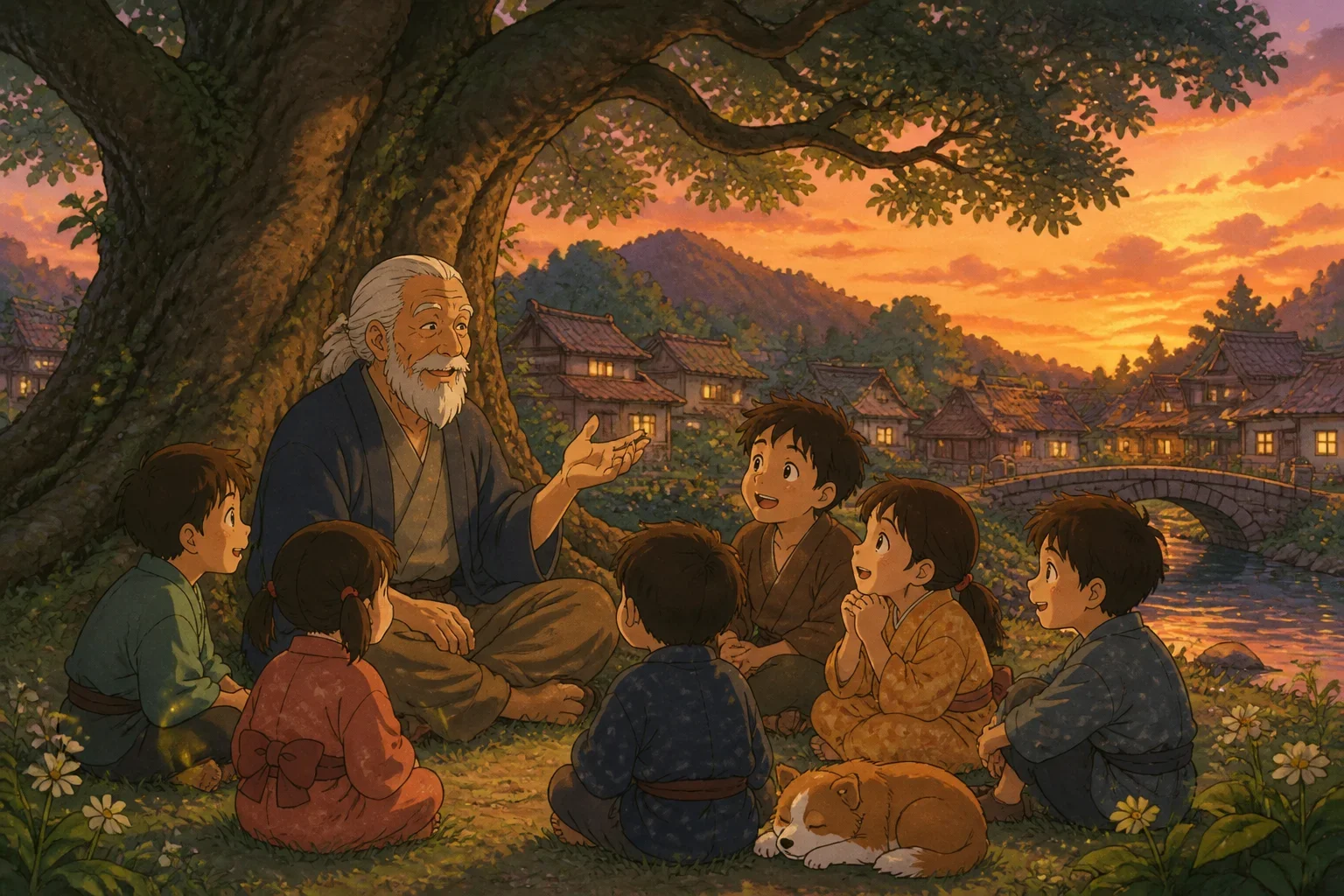
Its trunk was wide enough that four children holding hands could not reach around it. Its roots rose from the earth like sleeping serpents, and its leaves whispered even when the wind was still. The villagers called it The Remembering Tree.
Some said the tree was as old as the village itself. Some said it had listened to every laugh, every lullaby, every goodbye. And when people were troubled, they often found themselves drawn to its shade.
Every evening, as cooking fires glowed and the sky turned honey-gold and purple, the villagers gathered nearby to hear Baba Jahan speak. He was old, but his eyes were bright and kind, as if they had stored sunlight for many years. He never hurried his words. He told stories the way a lantern gives light—gently, steadily, just enough to help people see.
One evening, a boy named Amir came to the gathering later than usual.
He did not run with the other children. He did not smile when the goats trotted by wearing little bells. He walked slowly, with his hands curled into fists and his head bent low.
Baba Jahan noticed at once.
"Come sit beside me, Amir," he said softly.
Amir sat down near the fire, but he kept his eyes on the ground. The flames crackled. Sparks floated upward and disappeared into the darkening sky.
For a while, he said nothing. Then, in a voice so small it nearly vanished into the evening air, he asked, "Baba Jahan... where do people go when they die?"
The circle grew quiet.
Amir swallowed hard. "My grandmother is gone," he whispered. "Everyone says to be brave. But I do not want to be brave. I want her to come back. I want to hear her singing while she kneads bread. I want her warm hands. I want her stories."
His voice trembled. "Will her soul ever come back? Or is she gone forever?"
Baba Jahan did not answer quickly. He placed another piece of wood on the fire and watched it catch. Then he rested a gentle hand on Amir's shoulder.
"Listen carefully," he said. "Tonight I will tell you something the heart understands before the mind does.
The soul never dies."
Amir looked up for the first time.
Baba Jahan's Story
"Many years ago," Baba Jahan began, "there lived in this very village a woman named Layla. She was not rich. She did not wear jewels. She did not live in a grand house. But she possessed something rarer than gold.
She made people feel loved."
The children leaned closer.
"Layla had a laugh like bells," he said, smiling at the memory. "When someone was hungry, she shared her bread. When someone was lonely, she sat beside them. In winter she stitched quilts from scraps of old cloth, and somehow every blanket she made felt warmer than the others.
If a child scraped a knee, Layla knew how to soothe the tears. If a widow sat alone, Layla knocked on her door. If neighbors quarreled, Layla found a way to bring peace.
She was the sort of person who left goodness behind her the way flowers leave fragrance in the air."
Amir listened without blinking.
Baba Jahan continued, "Then one year, Layla became very ill. The villagers brought soup, herbs, and prayers. They sat with her. They hoped. But one quiet morning, as dawn spread pale light across the village, Layla took her last breath."
The fire popped softly.
"The whole village grieved," Baba Jahan said. "The market seemed too quiet. The lanes felt empty. Even the children played more softly. Everyone asked the same question you are asking now: 'How can someone so full of life simply be gone?'"
Amir's fingers tightened around the edge of his shawl.
"But then," Baba Jahan said, and his voice warmed, "something beautiful happened.
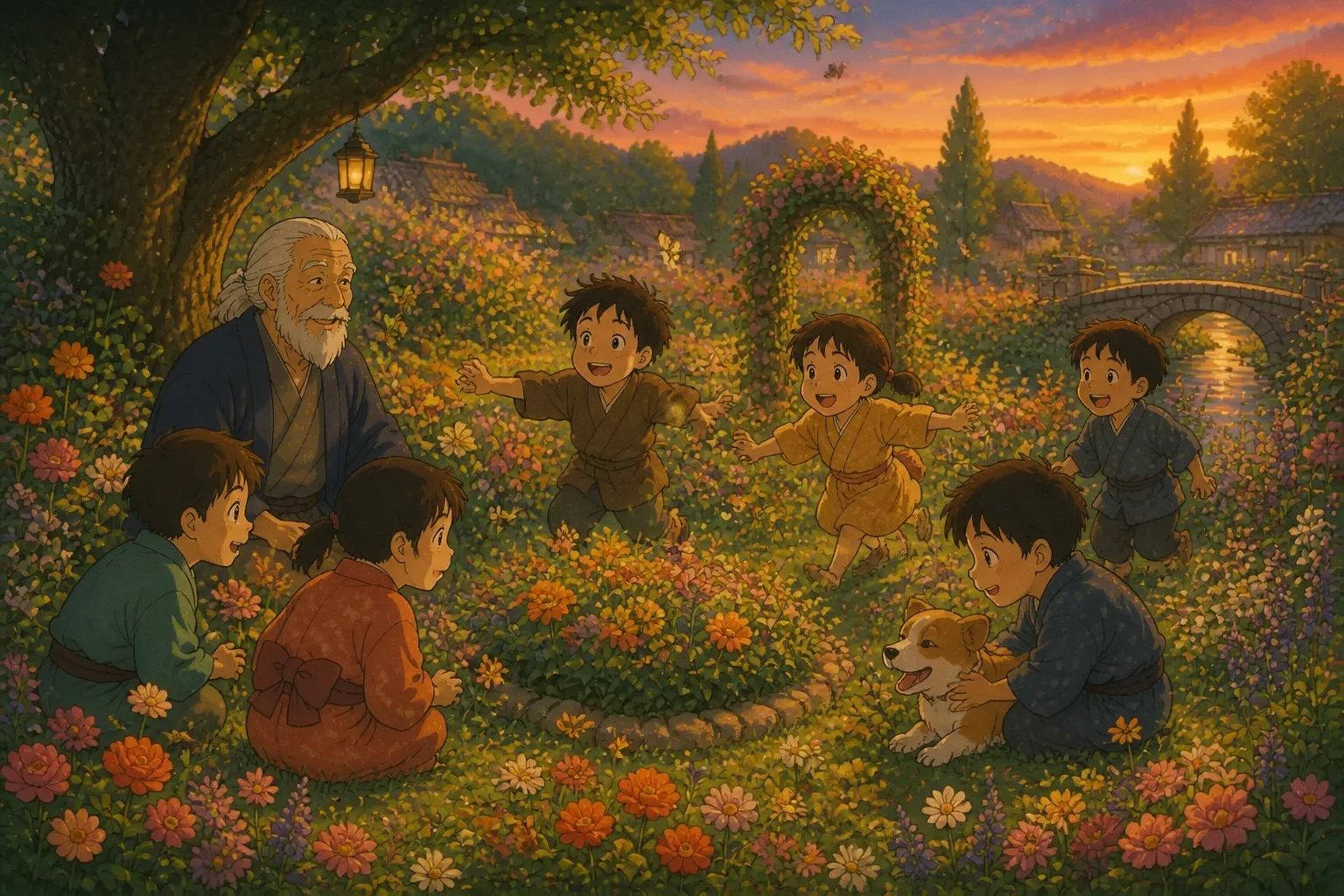
When spring arrived, tiny green shoots began to rise beside Layla's old house. At first no one noticed. Then buds appeared. Then blossoms. Red, yellow, white, and purple flowers opened in such abundance that the whole yard became a garden. Butterflies hovered there. Bees danced there. Children laughed there.
No one had planted those flowers. Yet there they were, bright as joy after sorrow."
Amir whispered, "Was it magic?"
Baba Jahan smiled. "Perhaps. But not the kind of magic that comes from spells. The truest magic comes from love.
The villagers began to remember Layla whenever they passed that garden. One woman said, 'Layla once helped me when I was sick.' So she began helping others. A tailor remembered how Layla had mended clothes for poor children, so he started sewing coats for them each winter. A boy remembered how she always shared fruit from her basket, and he grew into a man who never let a hungry traveler leave his door unfed.
Do you see, Amir? Layla's hands were gone, but her kindness kept moving from one person to another—like a lamp lighting a hundred more lamps."
Amir was very still.
Baba Jahan pointed up at the great tree above them. The leaves shimmered in the firelight and moonlight together.
"A soul is not just a body," he said. "A soul is love given, goodness shared, wisdom taught, comfort offered, songs sung, stories told. When a person leaves this world, those things do not vanish. They live on in the hearts they touched.
That is why the soul never truly dies. It changes its way of being near us."
Amir Remembers
For a moment, Amir said nothing. Then, very quietly, he asked, "If I make the sweet rice my grandmother taught me to cook... is she with me then?"
"Yes," said Baba Jahan.
"If I tell my little sister the moon story she used to tell me?"
"Yes," Baba Jahan said again.
"If I help someone the way she helped people?"
Baba Jahan squeezed his shoulder. "Then her soul shines through you."
A tear slipped down Amir's cheek, but this time he did not hide it.
He remembered his grandmother's soft wool shawl smelling of cardamom and soap. He remembered the way she tapped his nose when he looked too serious. He remembered how she never let a beggar leave empty-handed. He remembered her saying, 'Kindness is something you can always afford to give.'
And suddenly, the empty place inside him did not feel quite so empty.
It still hurt. But now the hurt sat beside something warm. Something living.
"I thought losing her meant losing everything," Amir said.
Baba Jahan nodded. "Grief often feels that way. But love is stubborn. It stays. It grows roots. It blooms in unexpected places."
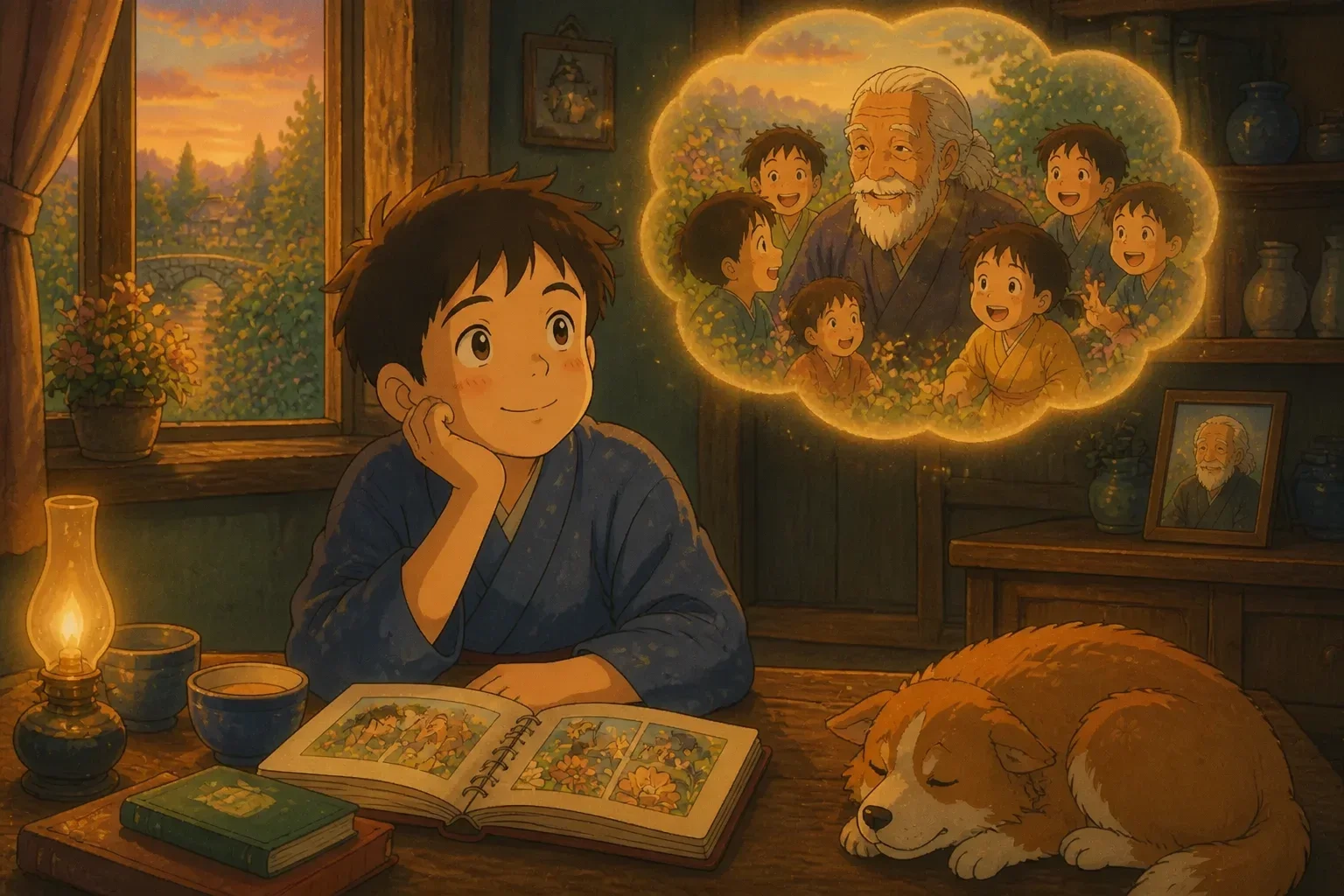
At that, a breeze moved through the branches of The Remembering Tree. Its leaves rustled like a thousand quiet voices.
Amir looked up into the dark canopy and imagined that every leaf held a memory, every branch carried a story, and every root kept safe the love of those who had gone before.
For the first time since his grandmother had died, he placed his hand over his heart and did not feel only sadness. He felt gratitude.
The Next Morning
At sunrise, Amir went to his grandmother's little garden behind the house.
Some of the plants had drooped. The path was untidy. A clay watering pot lay on its side.
He picked it up. He watered the soil. He pulled weeds one by one. Then he planted marigold seeds because they had been her favorite.
As he worked, he spoke aloud, though no one was there.
"I remember, Grandmother," he said. "I remember your songs. I remember your stories. I remember how you told me to be gentle with small things and patient with old people and generous with bread."
A bird landed on the fence and sang. The morning light touched the damp earth. And Amir smiled—a small smile, but real.
Days passed. Whenever he missed her, he did one of the things she had taught him. He shared his lunch. He visited a lonely neighbor. He helped his sister with her reading. He learned her old recipes. He repeated her wise sayings.
Little by little, people began to say, "Amir has his grandmother's kindness."
And when they said it, Amir no longer felt only sorrow. He felt proud. Because he understood now: her soul was not lost. It was alive in love, memory, and every good thing she had planted in others.
Key Takeaways for Kids
- When someone we love dies, the love they gave us does not disappear.
- Memories, stories, and kind actions help keep loved ones close in our hearts.
- Grief is natural, and it can exist alongside love and gratitude.
- We honor those we miss by living the good lessons they taught us.
Moral of the Story
The soul never truly dies; it lives on through love, kindness, memories, and the goodness we pass on to others.
Why This Story Comforts Children
Children often wonder what happens after death and how to stay connected to someone they miss. This gentle moral story for kids offers a comforting idea: even when a person is no longer physically present, their love, lessons, and kindness can keep shining in the lives of others.
That makes this a meaningful bedtime story for families talking about love, loss, remembrance, and hope.

Watch the Animated Story
Watch on YouTube
Related Stories
Homeless to Harvard: Sarah Coleman’s Inspiring Moral Story
From Homeless to Harvard: Sarah Coleman’s Inspiring Journey On some nights, Sarah Coleman did her homework under a…
Pig Who Dreamed of Flying| Inspiring Moral Story for Kids
The Pig Who Dreamed of Flying Every morning on Clover Valley Farm began the same way. The rooster crowed before the sun…
Unstoppable Alex: An Inspiring Kids’ Story About Courage
The Unstoppable Alex On summer evenings, when the sky turned peach and gold, the park at the edge of town came alive.…
Power of Love: A Moral Story for Kids About Kindness
The Power of Love In the little town of Harmonyville, people said you could tell how the whole town was feeling just by…
The Ass in the Lion’s Skin: A Moral Story About Being Yourself
The Ass in the Lion’s Skin On the edge of a golden field, where tall grass swayed like waves and crickets sang in the…
Bees and the Beetles: A Moral Story About Hard Work
The Bees and the Beetles On the edge of a bright summer garden stood a tall old hive, golden in the afternoon sun. From…
The Story of Rose the Painter: Following Your Dreams
The Inspiring Story of Rose: The Girl Who Chose Her Dream Every morning, before the village was fully awake, Rose…

Mermaid’s True Love | Magical Moral Tale for Kids
The Mermaid’s True Love Story Far beneath the silver-blue sea, where seaweed swayed like ribbons and tiny fish flashed…