
The Boy Who Listened to the Wind: An Indigenous Story About Patience and Observation
The Boy Who Listened to the Wind
Long ago, in a lush, emerald valley carved by a silver river, there was a small village that pulsed with song, laughter, and the rhythm of endless seasons. This village belonged to the Willow People, a gentle, wise community known for their woven baskets, bright blankets, and deep reverence for the land. Their homes, shaped from willow branches and earth, nestled among tall grasses and wildflowers that nodded in the breeze, and every day the people honored the sun, the rain, and the spirits of their ancestors.
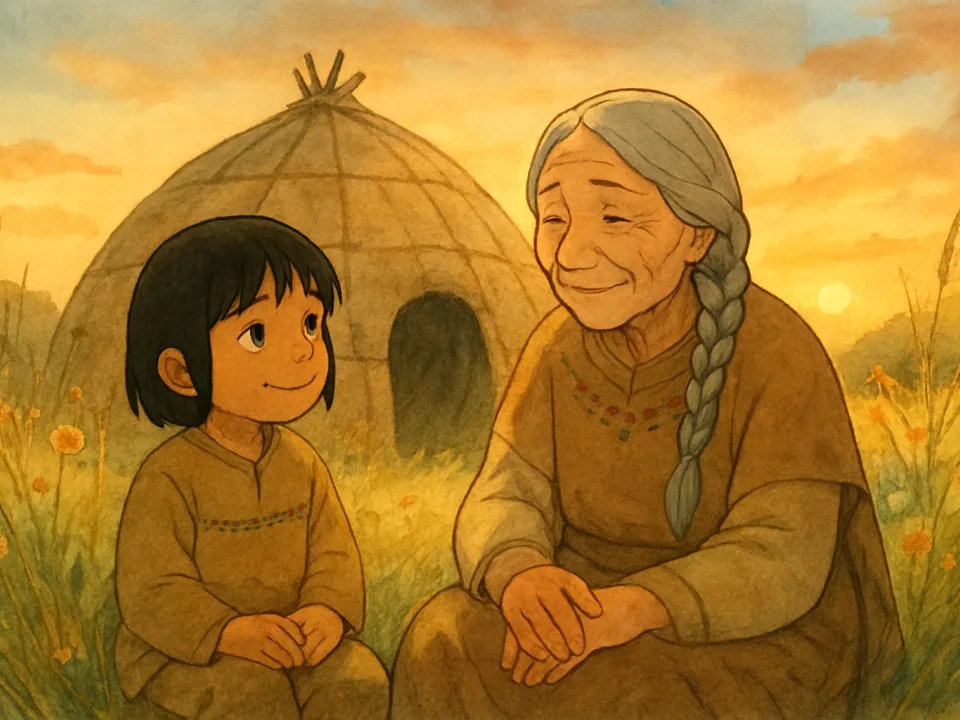
In this village lived a boy named Mato. Mato was small for his age, with quick, dark eyes that sparkled like river pebbles and hair as black as a raven’s wing. He ran faster than the wind and climbed higher than any other child, and his mind was always alive with questions. "Why does the eagle fly so high?" he would ask. "Where does the river begin? What secret does the wind whisper when it dances through the grass?" His voice was as persistent as the rain, and his curiosity as restless as the wind itself.
Mato’s grandmother, Nokomis, was the oldest in the village. Her face was a map of laughter and life, each wrinkle a story, and her long gray braid was thick with memories. Nokomis was known for her wisdom and her patience. She moved and spoke slowly, as if she had all the time in the world, and when others hurried through their tasks, she would sit quietly, watching every detail of the world around her.
Mato admired his grandmother, but he could not understand her patience. He wanted answers—now, not later. He wanted to know everything about the world, and waiting made his feet and his mind itch. One morning, as the first pale light slipped through the lodge door, Mato sat with Nokomis outside, feeling the cool, sweet air of early spring. Birds sang in the branches, and a gentle wind played with the grass at their feet.
“Grandmother, why won’t you tell me the secrets of the wind?” Mato pleaded, his voice eager. “What does it say when it rushes through the treetops or sighs across the stones?”
Nokomis smiled, her eyes crinkling at the corners. “The wind does not give up its secrets to those who are impatient, Mato. You must listen—truly listen.”
Mato frowned, frustrated. “I do listen, but I hear nothing but noise. How can I learn if the wind won’t speak to me?”
Nokomis shook her head softly. “You are not yet listening with your whole being. Sometimes, answers hide in the quiet between sounds. I have a task for you.” She reached into her woven basket and handed him a small, smooth stone, the color of river water. “Take this stone to the Hill of Whispers at sunrise. Sit quietly, as long as you need, until you hear the wind’s voice. Return to me and share what you’ve learned.”
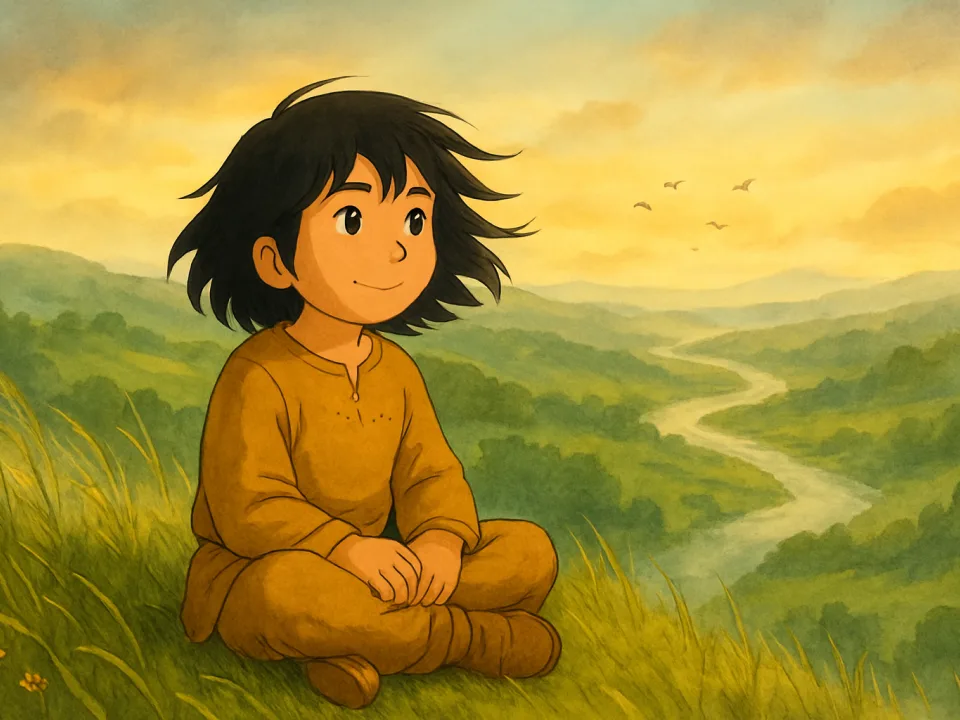
Mato was doubtful. He thought this might be a waste of time, but he loved his grandmother and wanted to please her. That night, he could hardly sleep, thinking of all the things he would rather do. But before the sun rose, he woke, slipped from the warmth of his bed, and quietly climbed the winding path to the Hill of Whispers.
The hill overlooked the valley, the river, and the wide, endless sky. Mato sat cross-legged at its crest, the stone in his palm, and waited. At first, he was restless. He fidgeted, watching clouds race by and birds dart above the trees. His mind ran with questions and complaints. The wind rustled the grass, but it sounded ordinary, no different from any other day.
He tried to listen, but impatience nipped at him like a hungry squirrel. He heard only his own heartbeat and the far-off cries of waking birds. The sun climbed higher, and Mato’s legs grew numb. He closed his eyes, hoping to rest, and in the darkness behind his eyelids, something shifted. Without his sight, his ears noticed more: the way the wind sighed against the stones, whispered through the leaves, and carried the distant splash of the river below. Every sound became a thread in the woven blanket of life around him.
Time slowed. Mato lost track of how long he sat. He listened as the wind changed: sometimes gentle, sometimes fierce. He noticed how its direction brought different scents—damp earth, sweet blossoms, even the smoky hints from village fires. He felt the wind cool on his cheeks, then warm as the sun climbed higher. He realized the wind was never the same, always moving, always changing, always carrying stories from every corner of the valley.
Gradually, Mato’s mind became quiet. He stopped searching for answers and simply listened. He noticed the way the grasses bent and straightened, the fluttering of a butterfly’s wings, the hush of the world when the wind paused. The song of the valley unfolded around him—not just the wind, but everything it touched.
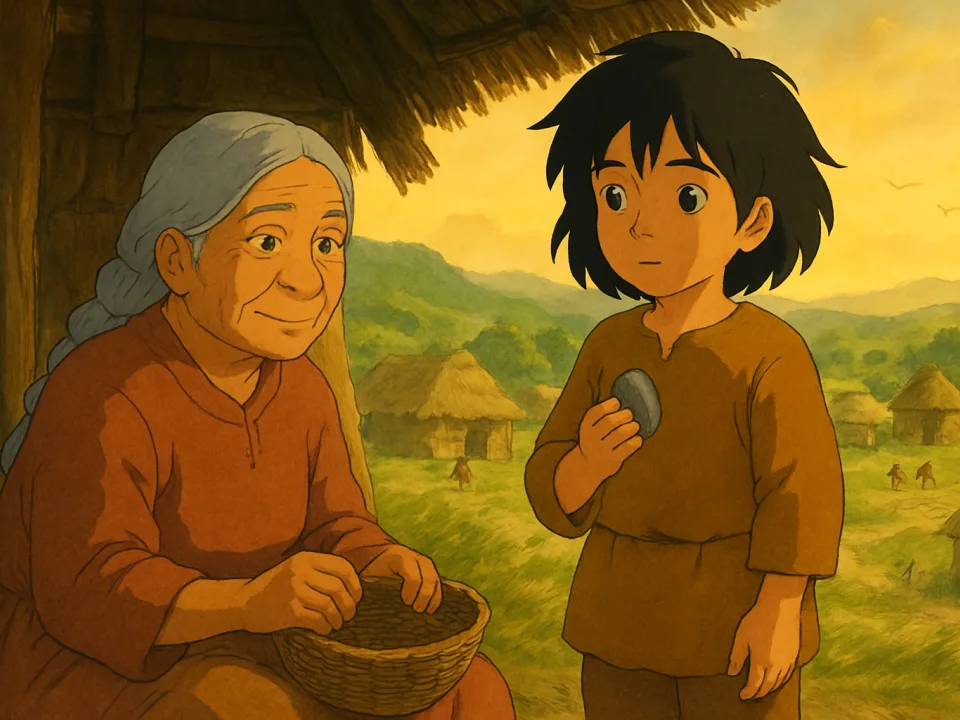
When the sun was high and his stomach rumbled, Mato rose and walked home, feeling changed in some quiet, important way. He carried the stone, now warm from his hand, and wondered how he could ever explain what he had felt.
Nokomis waited by her lodge, weaving a new basket from willow twigs. She did not look up as Mato approached, but he could tell she was listening. “What did you hear, Mato?” she asked gently.
“At first, I heard nothing,” Mato confessed, sitting beside her. “But after a long time, I realized the wind carries many voices. I heard the river, the leaves, the birds, the people of the village, the scent of flowers and smoke. It’s like a song with many instruments, all playing together.”
Nokomis smiled, her hands never pausing. “And what did the wind teach you?”
Mato thought for a long moment. “That everything moves together. If I rush, I miss the song. If I wait and listen, I understand much more.”
Nokomis nodded, her eyes bright with pride. “You have learned what many never do: Nature reveals her secrets to those who wait, who observe, who listen—not just with their ears, but with their heart.”
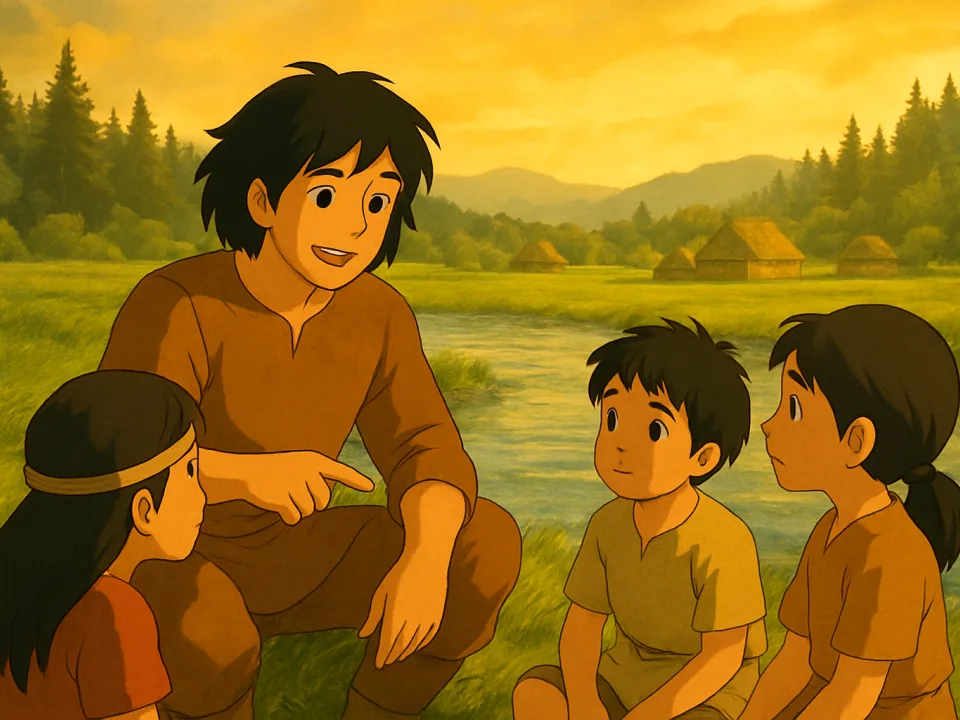
Word of Mato’s experience spread through the village. The elders invited him to their gatherings, where he listened carefully to their stories, noticing the deeper meanings beneath their words. Younger children watched as Mato would pause by the river or under the trees, seeing things others hurried past—a beetle’s shining back, the pattern of a hawk in flight, the way wind curled over water and made the reeds sing.
As the seasons passed, Mato’s patience and careful observation made him a storyteller too. He could recount not only the tales of his people, but also the stories whispered by the wind, the river, the grass, and the sky. He taught children to sit quietly and watch the world, to notice the way the clouds told the weather, how the birds signaled the coming of rain, and how even the wind spoke to those who would listen.
Years later, Mato became a leader in the village. He was known not just for his wisdom, but for the way he listened—to people, to the land, and to the quiet voice of the wind. He never forgot the lesson of the Hill of Whispers, and he taught new generations to listen deeply, to observe with care, and to understand that sometimes the greatest wisdom is found in quiet patience.
And so, the story of the boy who listened to the wind was told and retold, blowing softly through the valley like a song that never ends. The Willow People never forgot Mato’s lesson, and the valley remained a place where patience, observation, and the wisdom of the wind were treasured above all else.

Related Stories
The Baobab Tree's Gift: An African Folk Story About Gratitude and Community
The Baobab Tree's Gift: An African Folk Story About Gratitude and Community [Long…
The Silver Salmon of the River: A Celtic Legend About Wisdom and Respecting Nature
The Silver Salmon of the River Once upon a time, in the heart of ancient Celtic lands, where the rolling green hills…
The Garden That Waited for Spring: An Easter Story About Hope, Renewal, and Patience
The Garden That Waited for Spring The last bits of winter clung stubbornly to the small town of Willowbrook, like a…
The Golden Condor of the Andes: A South American Moral Story About Keeping Your Word
The Golden Condor of the Andes High above the lush valleys and patchwork fields of the Andes, the air sparkled with…
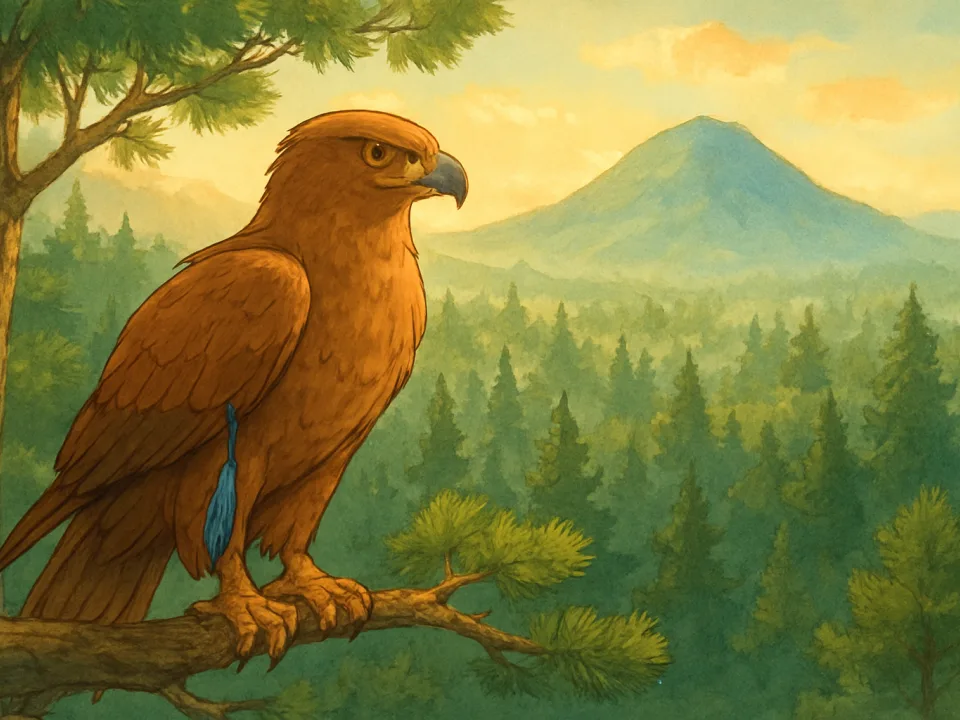
The Eagle and the Hummingbird: A Native American Story About Courage and Cooperation
The Eagle and the Hummingbird: A Native American Story About Courage and Cooperation [Long…
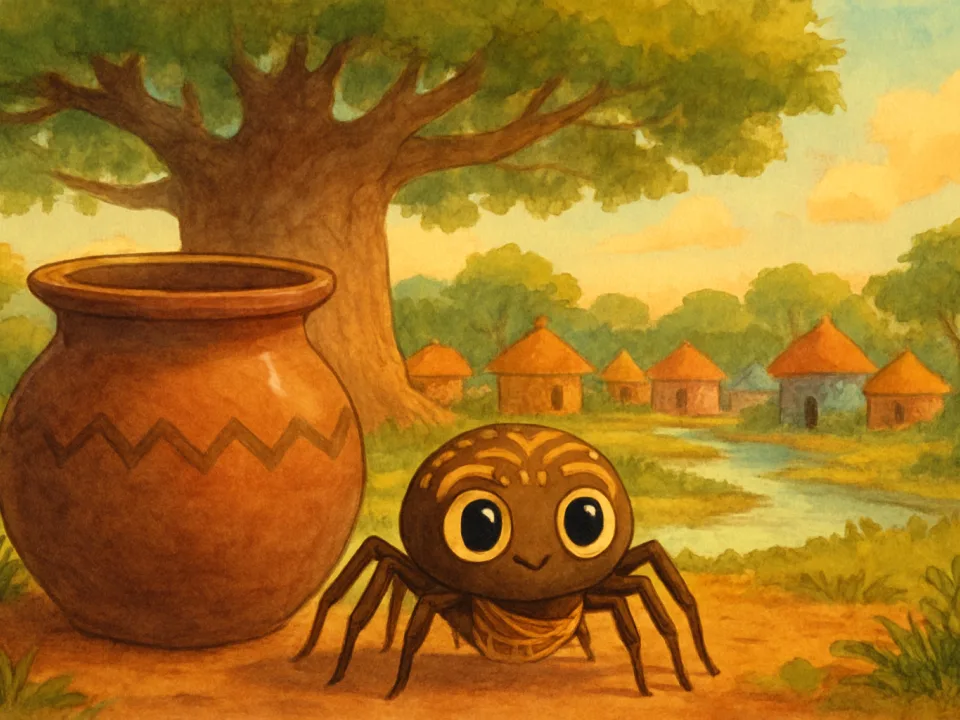
Anansi and the Pot of Shared Wisdom: A West African Folktale About Humility
Anansi and the Pot of Shared Wisdom [Long ago](/blog/traditional-oral-stories-from-grandparents/), beneath the cool…
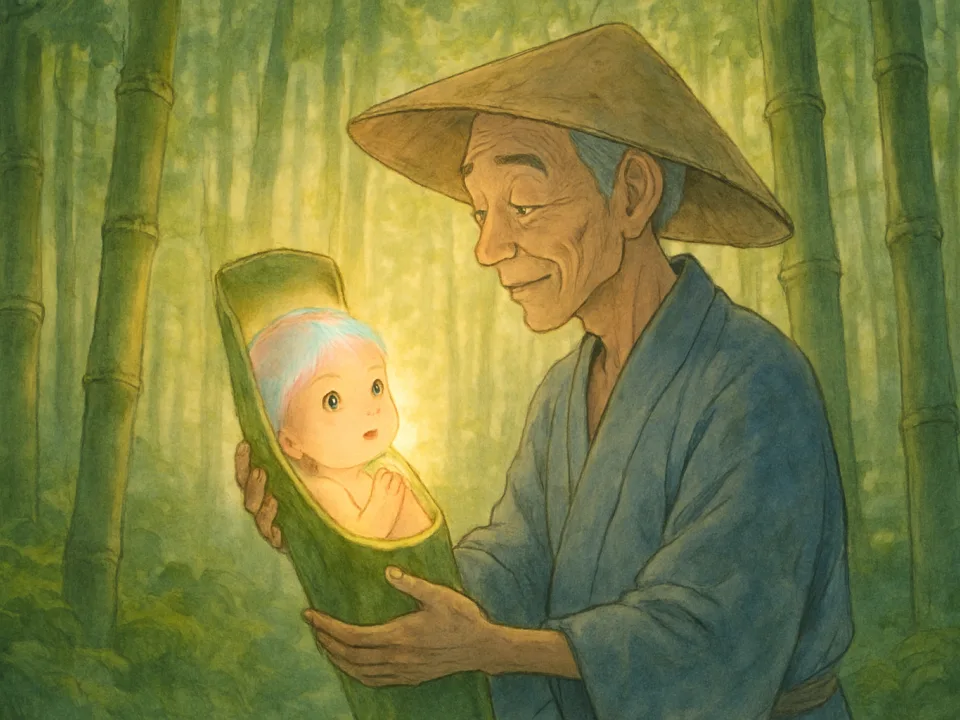
The Bamboo Cutter's Honest Promise: A Traditional Japanese Moral Story for Kids
The Bamboo Cutter's Honest Promise Long ago, in a quiet village nestled at the foot of Japan’s misty green mountains,…

The Enchanted Book Story: A Magical Tale About Wishes
The Story of The Enchanted Book In the little village of Eldergrove, where ivy curled around stone cottages and the…