
Story of Compassionate TEACHER
The Compassionate Teacher
On the first Monday of the school year, Maplewood Middle School buzzed like a beehive.

Lockers slammed. Sneakers squeaked across shiny hallways. Backpacks bumped into knees. Everyone seemed to know where to go and what to do—everyone except Jack.
Jack stood near Room 7B, clutching his books so tightly that the corners bent. He was a quiet boy with thoughtful eyes and a head full of dreams. At night, he imagined himself floating through space, steering a silver rocket past bright stars and silent planets. But in real life, even walking into a classroom felt harder than flying to the moon.
Math confused him. Science made him nervous. Speaking in front of others made his stomach twist into knots.
Worst of all, Jack had begun to believe a painful thing:
Maybe I’m just not good enough.
That morning, he took a slow breath and stepped into class.
At the front of the room stood a new teacher.
He had kind eyes, a neat blue shirt, and the sort of smile that made a room feel less frightening.
"Good morning, everyone," he said. "I’m Mr. Williams, and in this class, we are going to learn, ask questions, make mistakes, and try again. That last part is very important."
A few students laughed softly.
Then Mr. Williams began greeting each student by name. When he came to Jack, he didn’t rush past him. He bent down slightly so they were eye to eye.
"Good morning, Jack," he said warmly. "I’m glad you’re here."
No one had said it quite like that before.
Not You’re late. Not Sit down quickly. Not Try to keep up.
Just: I’m glad you’re here.
Something small and bright flickered inside Jack, like the first light of a lantern.
The Boy Who Stayed Quiet
The first few weeks were not easy.
When Mr. Williams wrote fractions on the board, Jack stared until the numbers blurred. During science lessons, other students raised their hands quickly while Jack kept his own folded in his lap. At lunch, he often sat quietly, pretending to be busy with his sandwich while groups around him chatted and laughed.
One rainy afternoon, the class was solving a set of math problems. Pencils scratched. Pages turned.
Jack looked at question three, then question four, then back to question three again.
His cheeks grew hot.
He had no idea what to do.
When Mr. Williams walked by, Jack quickly dropped his gaze, hoping the teacher would move on.
But Mr. Williams paused.
"Would you stay for a few minutes after class, Jack?" he asked gently.
Jack’s heart sank.
He nodded, already imagining disappointment in the teacher’s voice.
When the final bell rang and the room emptied, rain tapped softly against the windows. Jack stood beside his desk, waiting.
Mr. Williams pulled up a chair.
"Sit with me," he said.
Jack sat down slowly.
For a moment, neither of them spoke.
Then Mr. Williams said, "I noticed today was hard for you."
Jack stared at his hands. "I’m just bad at this."
"At math?" Mr. Williams asked.
Jack shrugged. "At... school, I guess."
The words were quiet, but once they were out, they felt heavy in the room.
Mr. Williams did not correct him sharply. He did not sigh. He did not say, That’s nonsense.
Instead, he said, "That sounds like a lonely feeling."
Jack looked up, surprised.
No one had ever understood it so quickly.
"I try," Jack whispered. "But when everyone else gets it, I feel like I’m standing still."
Mr. Williams nodded. "Thank you for telling me the truth. That takes courage."
He turned the worksheet around and tapped the first problem.
"Let’s not climb the whole mountain today," he said. "Let’s just take one step."
One Step at a Time
That became Mr. Williams’ way.
He never made Jack feel foolish for not knowing. He broke big problems into small ones. He explained things twice if needed, and sometimes three times, always patiently. He showed Jack how to circle the important part of a question, how to slow down, how to check his work without panicking.
Some afternoons, they stayed after class while the hallway outside filled with footsteps and voices.
"What do you see first?" Mr. Williams would ask.
"The denominator," Jack would say carefully.
"Good. And what does it tell us?"
"How many equal parts there are."
"Exactly. See? You do know more than you think."
Little by little, Jack stopped saying, "I can’t."
He began saying, "Can you show me again?"
That was progress.
One afternoon, while they worked on a science project about the solar system, Mr. Williams noticed Jack’s drawing in the margin of his notebook—a rocket ship gliding past Saturn’s rings.
Mr. Williams smiled. "Did you draw that?"
Jack looked embarrassed. "Just for fun."
"It’s excellent," said Mr. Williams. "You love space, don’t you?"
For the first time that week, Jack’s face brightened. "A lot. I know the names of all the planets. And some moons too."
"Then maybe," said Mr. Williams, "space can help us with science instead of scaring us away from it."
From then on, he found ways to connect lessons to Jack’s interests. Fractions became slices of moon pies for astronauts. Writing assignments became mission logs. Science facts turned into discoveries waiting to be explored.
Learning no longer felt like a locked door.
It felt like a window opening.
A Teacher Who Noticed More Than Grades
Mr. Williams noticed other things too.
He noticed when Jack looked nervous before being called on. He noticed when he erased holes through his paper trying to make every answer perfect. He noticed when other children spoke over him.
And because he noticed, he helped.
During class discussions, Mr. Williams sometimes gave Jack a question ahead of time so he could prepare. When Jack answered, even quietly, Mr. Williams listened as if the whole room should listen too.
"That’s an interesting idea," he would say. "Tell us more."
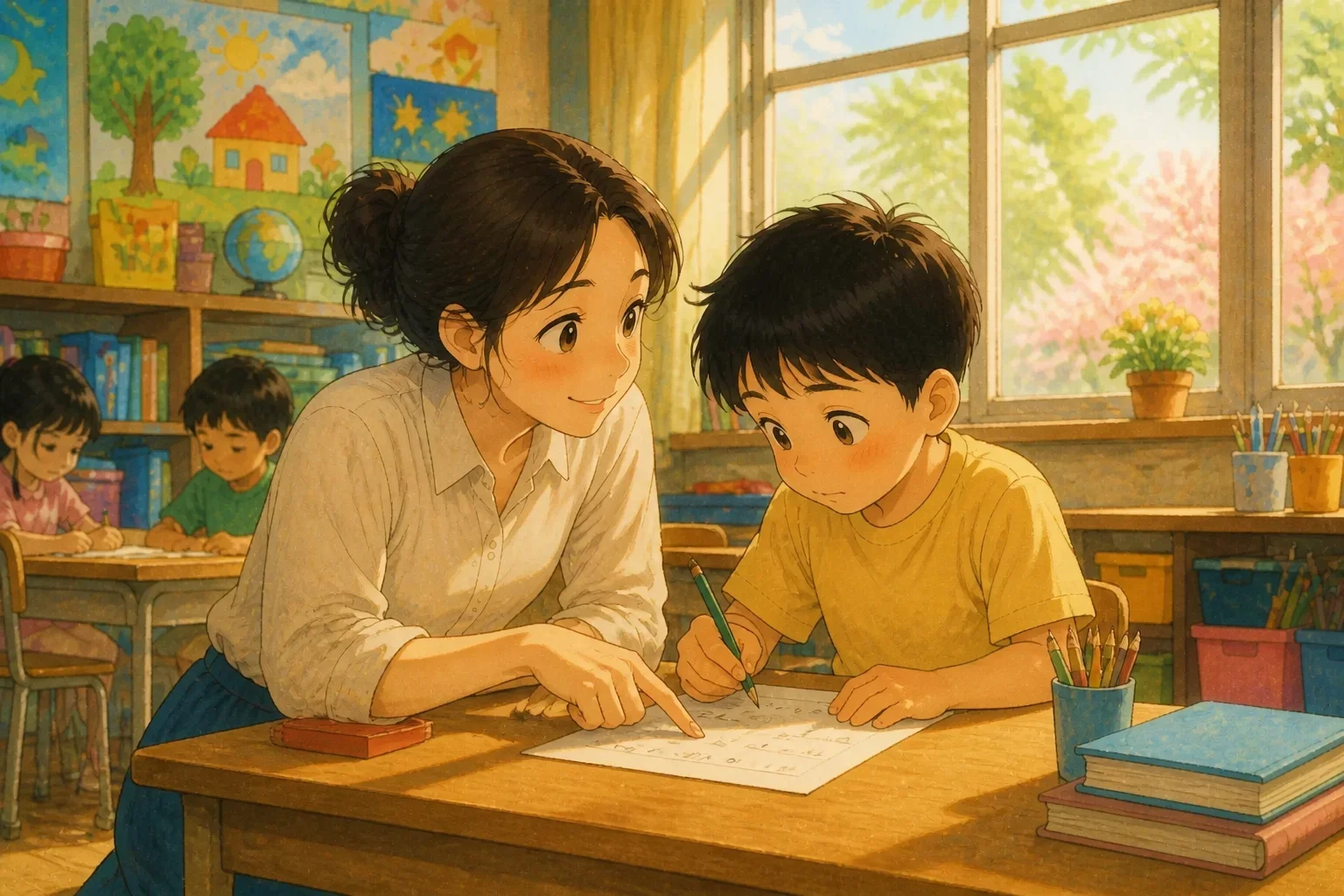
At first, Jack’s voice trembled. Then it steadied. Then, one day, it carried all the way to the back of the room.
The class was discussing whether people would one day live on Mars.
Jack raised his hand.
Actually raised it.
Mr. Williams smiled but did not make a big show of it. "Yes, Jack?"
Jack swallowed. "I think they could, but they’d need to solve problems first. Like food, air, and how to protect people from the environment."
A few heads turned.
Someone whispered, "That’s smart."
Jack blinked.
Mr. Williams nodded. "Excellent thinking. You’re not just giving an answer—you’re thinking like a scientist."
For the rest of the day, Jack felt as if he were walking a little taller.
The Story Mr. Williams Shared
One windy afternoon, Jack and Mr. Williams stayed after school again. Leaves skittered across the playground outside like tiny orange boats.
Jack frowned at a page of work. "Were you always good at school?"
Mr. Williams laughed softly. "No. Not at all."
Jack looked up. "Really?"
"Really," said Mr. Williams. "When I was your age, I was afraid of reading out loud. My hands used to shake so much that I could barely hold the book still."
Jack stared. It was hard to imagine calm, kind Mr. Williams being frightened of anything.
"What changed?" Jack asked.
"A teacher helped me," Mr. Williams said. "She was patient. She saw that I was scared, not lazy. She gave me time. She believed I could improve before I believed it myself."
Jack was quiet for a moment.
Then he asked, "Is that why you became a teacher?"
Mr. Williams smiled. "It’s one of the reasons. Kindness can change the direction of a person’s life. I never forgot that."
Jack looked down at his worksheet again, but this time his expression was different.
Hopeful.
The Small Wins That Matter Most
Change did not happen all at once.
Jack still had hard days. He still mixed up numbers sometimes. He still felt nervous before tests.
But now, one bad moment did not convince him he was a failure.
He had learned something powerful:
Struggling was not the same as being incapable.
When he got two science answers right in a row, Mr. Williams quietly tapped the desk and said, "There it is." When Jack finished a math page without giving up, Mr. Williams said, "You stayed with the problem. That matters." When Jack spoke clearly during a group activity, Mr. Williams told him, "Your ideas deserve space in this room."
Those words stayed with Jack.
Soon, he began helping others too.
One day, a classmate named Eli got stuck on a worksheet and groaned, "I don’t get any of this."
Jack hesitated, then leaned over.
"Let’s do the first one together," he said.
The words sounded familiar.
They were Mr. Williams’ words.
And they worked.
The Day Everything Felt Different
By spring, Maplewood Middle School no longer seemed enormous and cold to Jack. It felt known. Friendly, even.
The hallways were still noisy. The lockers still slammed. But Jack no longer wanted to disappear into the walls.
One bright morning, the class gave short presentations about a topic they loved.
Months earlier, Jack would have dreaded this day.
Now he stood at the front of the room with a poster of the solar system, hands trembling only a little.
"My topic is Europa," he began, his voice soft but clear, "which is one of Jupiter’s moons. Scientists think there may be an ocean under its icy surface."
As he spoke, his confidence grew. He explained facts, answered questions, and even smiled once when someone asked whether he would want to visit space.
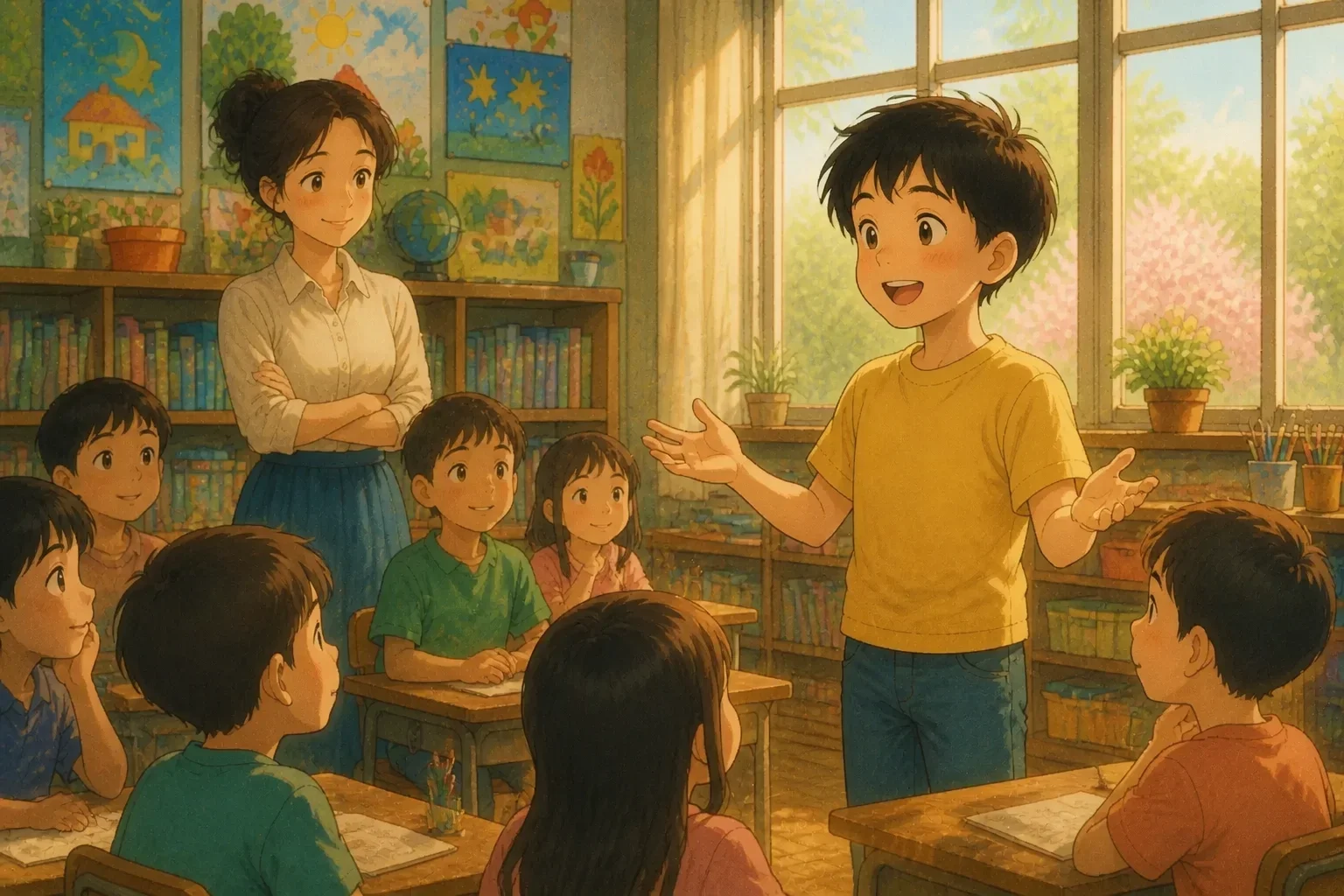
"Yes," he said. "But only if I don’t have to do the spaceship math by myself."
The class laughed kindly.
So did Jack.
From the back of the room, Mr. Williams gave him a proud nod.
It was a small gesture.
But to Jack, it felt bigger than applause.
The End-of-Year Ceremony
Summer crept closer. The trees outside the school turned full and green. Final projects were finished. Desks were cleaned out. The school year that had once looked impossible was almost over.
At the end-of-year ceremony, families gathered in rows of folding chairs in the school hall. The air smelled faintly of flowers and floor polish.
Students were invited to say a few words about the year.
Jack’s name was called.
He walked to the front, holding a small card in both hands.
For a second, the old nervousness returned.
Then he saw Mr. Williams in the audience, sitting still and attentive, exactly as he had sat beside Jack so many afternoons before.
Jack took a breath.
"This year," he began, "I learned math and science... but I also learned something else. I learned that needing help doesn’t mean you’re weak. It means you’re learning."
The room grew quiet.
Jack looked toward Mr. Williams.
"Thank you, Mr. Williams, for believing in me when I didn’t believe in myself. You didn’t just teach me lessons from books. You taught me not to give up."
His voice shook at the end, but he kept going.
"I think good teachers help you feel seen. And when someone really sees you, it can change everything."
For a moment, nobody moved.
Then the room filled with applause.
Mr. Williams blinked quickly and smiled, his eyes shining.
Jack smiled back.
He no longer felt like a boy trapped in a dark room.
He felt like himself—brave, capable, and ready for whatever came next.
And somewhere inside, the small lantern that had flickered on the first day of school was glowing brightly now.
Key Takeaways for Kids
- Asking for help is a sign of courage, not weakness.
- A kind teacher can make learning feel safe.
- Progress often happens in small steps.
- Believing in someone can help them believe in themselves.
- When others show us compassion, we can pass that kindness on.
Moral of the Story
Compassion can change a life. A caring teacher who listens, encourages, and believes in a student can help that student discover confidence, strength, and hope.
Why This Compassion Story Matters
Children and teenagers often remember the adults who made them feel understood. This school story shows that kindness is not just about being nice—it is about noticing when someone is struggling and helping them with patience and respect. For kids who feel shy, worried, or left behind in class, Jack’s journey is a comforting reminder that they are not alone.
If you are looking for children's moral stories, school stories for kids, or bedtime stories about kindness and confidence, this tale offers both warmth and an important lesson.

Watch the Animated Story
Watch on YouTube
Related Stories

The Cruel King Who Learned Kindness Moral Story for Kids
The Cruel King Who Learned Kindness In the kingdom of Eldoria, people lowered their voices whenever they spoke the…
Brave Nurse Sarah: A Heartwarming Compassion Story for Kids
The Brave Nurse Sarah On ordinary days, Sunshine Medical Center smelled like soap, clean sheets, and the lemon candies…

Doctor Ethan Story: A Compassion Moral Story for Kids
A Tale of Doctor Ethan On the busiest street in Willow Grove, between a bell-ringing bookshop and a flower store that…

Carnival of Togetherness | Moral Story About Inclusion
The Carnival of Togetherness Long before the first drumbeat echoed through Rio de Janeiro, the city already felt as if…
Heroic Policeman and the Boy on the Swing | Kindness Story
The Heroic Policeman and the Boy on the Swing In the little town of Willow Creek, people could tell the time by Officer…

Father Michael and the Rain of Hope | Compassion Story
Father Michael and the Rain of Hope On the edge of a small village, where green hills once rolled like soft blankets…
Sam's Kind Heart: A Moral Story for Kids About Courage
Sam’s Kind Heart In a small village tucked between green hills and a bright, winding river, everyone knew Sam. Not…

Mermaid’s True Love | Magical Moral Tale for Kids
The Mermaid’s True Love Story Far beneath the silver-blue sea, where seaweed swayed like ribbons and tiny fish flashed…
Power of Love: A Moral Story for Kids About Kindness
The Power of Love In the little town of Harmonyville, people said you could tell how the whole town was feeling just by…
The Pencil Maker | Moral Tale About Growth and Purpose
The Pencil Maker's Story On the edge of a quiet village, where the morning mist curled around little rooftops and…
Noble Knight Story: A Courage Story for Kids About Justice
The Noble Knight and the Cruel Tax Long before trains, traffic lights, and telephones, there stood a kingdom of stone…
True Friends: A Moving Friendship Moral Story for Kids
The Story of True Friends Everyone in the village said Jack and Tom were never far apart. If Jack was skipping stones…