
The Story of NOBLE KNIGHT
The Noble Knight and the Cruel Tax
Long before trains, traffic lights, and telephones, there stood a kingdom of stone bridges, wheat fields, and red-roofed cottages tucked between green hills. In that kingdom lived a knight named Sir Richard.
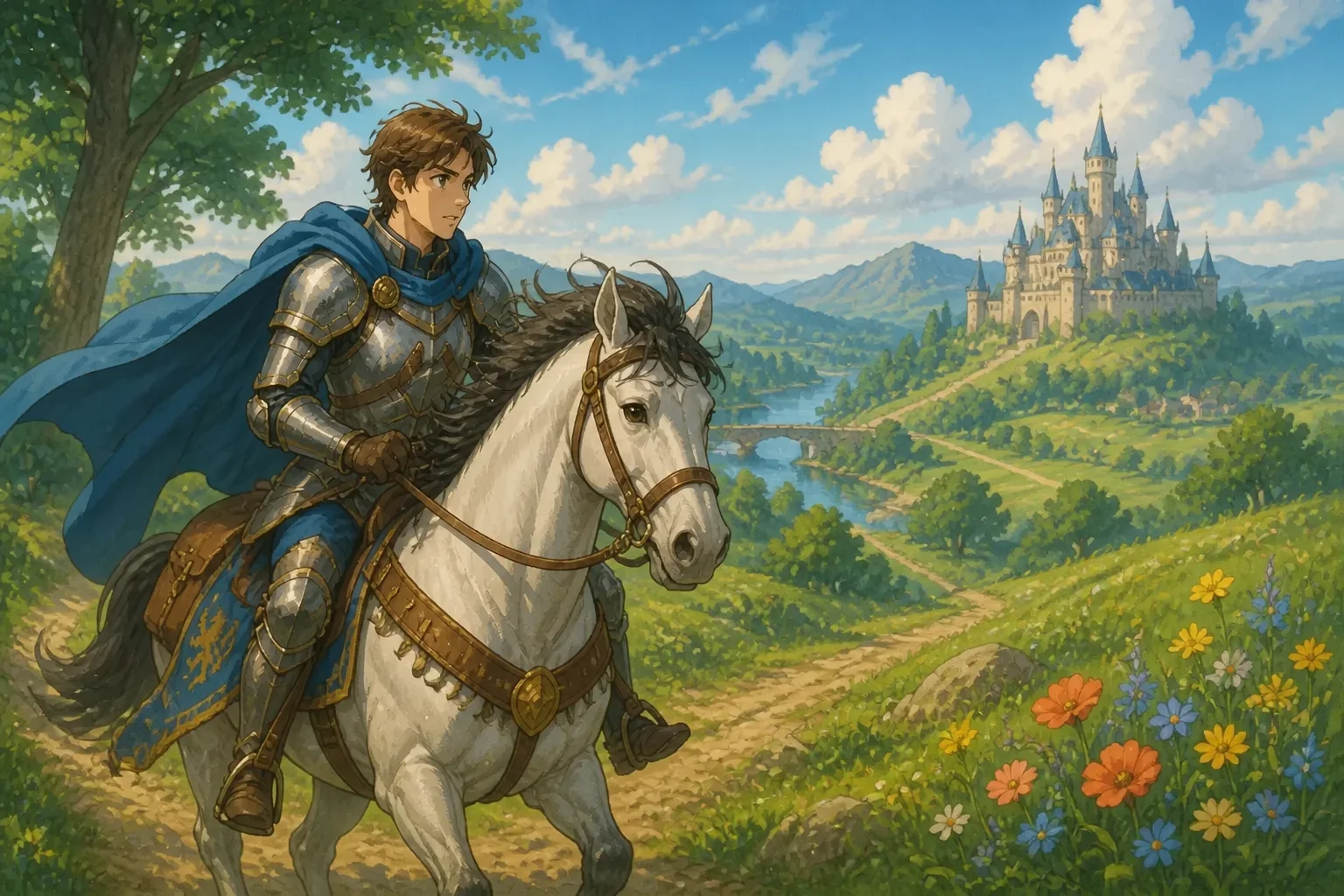
Children loved to watch him ride past at sunrise. His armor shone like silver water, his blue cloak fluttered behind him, and his horse, Valor, stepped proudly as if he understood every noble mission. But Sir Richard was not admired only because he was strong.
He was admired because he listened.
If a cart wheel broke, he stopped to help. If two neighbors argued over a fence, he tried to make peace. If a child cried over a lost lamb, Sir Richard would search until the lamb was found.
"A knight's sword is important," he often said, patting the hilt at his side, "but a knight's heart is even more important."
That was why, when trouble came to the kingdom, the people hoped Sir Richard would notice.
A Market Full of Worry
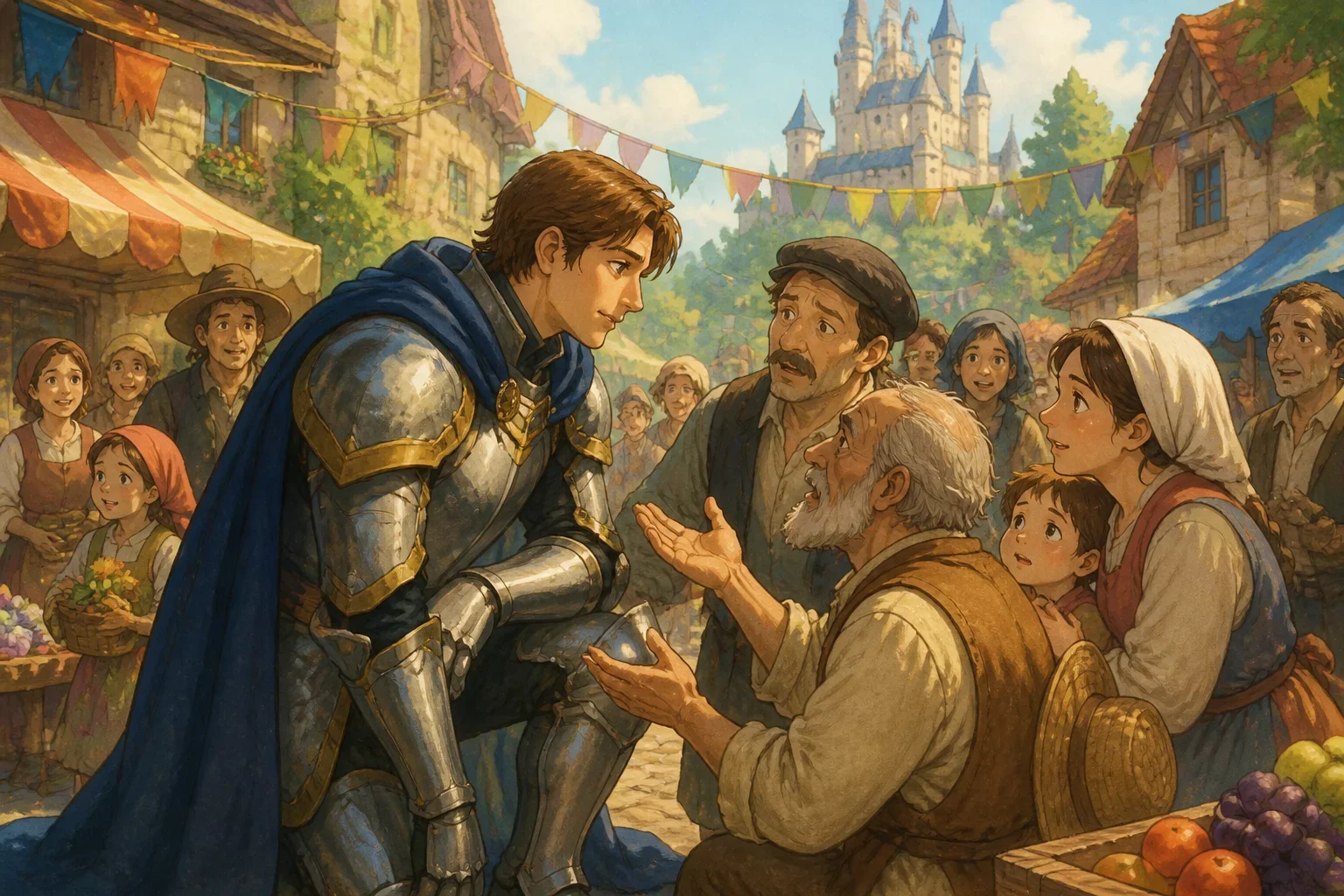
One golden morning, Sir Richard rode into the village market. Usually it was the liveliest place in the kingdom. Bakers called out about warm honey bread. Farmers stacked apples in shining red towers. Children chased one another between baskets of onions and flowers.
But that day, the market felt wrong.
The baker's table held only a few small loaves. The fruit seller stared down at half-empty crates. A little girl clutched her mother's hand and whispered, "Will we have enough for supper?"
Sir Richard slowed Valor and looked around carefully.
Near the well, a group of villagers stood in anxious silence. Their faces were lined with worry.
"Good people," Sir Richard said, dismounting, "what has happened here?"
An old farmer removed his cap. "The Baron has raised the taxes again, sir."
A seamstress with tired eyes added, "We pay for our homes, our grain, our sheep, even our firewood. Soon there will be nothing left."
A mother holding a baby said softly, "We work from dawn to dark, and still we are afraid."
Sir Richard felt a heaviness settle in his chest. He had heard whispers before, but now he saw the truth in the villagers' thin faces and trembling voices.
"Has no one spoken to the Baron?" he asked.
The old farmer gave a bitter little laugh. "Who would he listen to? Not us."
Another villager shook his head. "He sits in his great hall counting coins while our cupboards grow bare."
For a moment, Sir Richard was silent. He looked at the children standing close to their parents, at the empty baskets, at the market that should have been bright with laughter.
Then he straightened.
"I will go to him," he said.
A murmur passed through the crowd.
"Alone?" asked the seamstress.
"Yes," said Sir Richard. "And I will not go to threaten him, but to speak the truth. Sometimes courage means lifting a sword. Sometimes it means opening a door and walking into a room where no one wishes to hear you."
The little girl by the well looked up at him. "Will you really help us?"
Sir Richard knelt so his eyes were level with hers. "I will do everything I can."
The Ride to the Castle
By evening, the sky had turned the color of plums, and a cold wind whispered through the trees. Sir Richard rode toward the Baron's castle, which stood on a hill of dark rock. Its towers rose high against the fading light, and narrow windows glimmered like watchful eyes.
Valor's hooves clopped over the stone road.
Sir Richard's hands were steady, but his thoughts were busy.
The Baron was known for pride. He did not like being questioned. Many men feared his temper, and some feared his power even more.
Still, Sir Richard kept riding.
"If I stay silent because it is difficult," he murmured to Valor, "then what kind of knight am I?"
Valor snorted as if in agreement.
At the castle gate, two guards crossed their spears.
"State your business," one demanded.
"I am Sir Richard," he said calmly. "I have come to speak with the Baron on behalf of the villagers."
The guards exchanged a glance.
"At this hour?"
"Need does not wait for morning," Sir Richard replied.
Perhaps it was his steady voice, or perhaps even the guards had heard the villagers' worries. Whatever the reason, they let him pass.
In the Great Hall
The Baron's great hall was grand, but cold. Torches flickered along the walls. Heavy curtains shut out the night. At the far end, beneath a carved crest of lions and crowns, sat the Baron in a high chair, rings flashing on his fingers.
He looked down at Sir Richard with narrowed eyes.
"So," the Baron said lazily, "the famous knight arrives. Have you come seeking praise?"
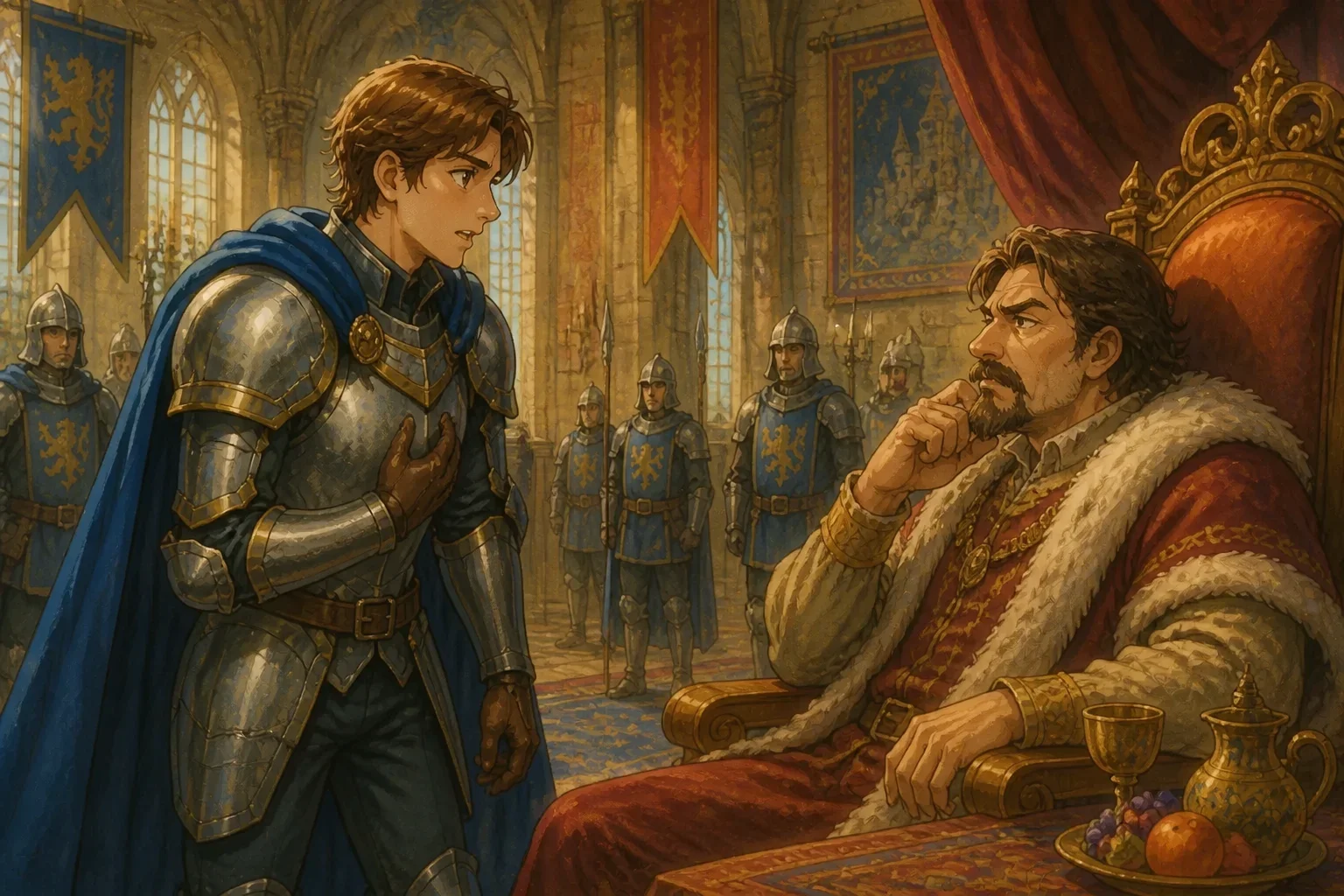
Sir Richard bowed, but not too low. "I have come seeking fairness."
The Baron's mouth curled. "Fairness is a word poor people use when they want more than they have earned."
Sir Richard did not answer in anger. Instead, he took a step forward.
"I rode through the market today," he said. "I saw mothers counting coins with shaking hands. I saw farmers with empty wagons. I saw children wondering whether there would be enough to eat."
The Baron tapped his chair arm impatiently. "Taxes keep order in the kingdom. Castles are not repaired with wishes. Roads are not built with smiles."
"That is true," Sir Richard said. "But a kingdom is not stone alone. A kingdom is its people. If they are crushed, then no wall is strong enough to save what remains."
The hall grew quiet.
Even the servants near the doorway seemed to stop breathing.
The Baron leaned forward. "You speak boldly for a man standing in my hall."
"Because the truth matters," Sir Richard replied. "And because those who suffer deserve someone brave enough to speak."
For a long moment, the Baron said nothing.
Then he stood and descended the steps of his dais. His boots echoed on the floor.
"Tell me, Sir Richard," he said, circling slowly, "if I lower taxes, how do I know the kingdom will not weaken?"
Sir Richard answered at once. "When people are treated fairly, they work with hope instead of fear. Fields are better tended. Shops are fuller. Families grow strong. A ruler gains more by earning loyalty than by demanding obedience."
The Baron stopped.
Those words seemed to land harder than any shouted accusation could have.
"Loyalty," the Baron repeated quietly.
Sir Richard nodded. "Power that depends only on fear stands on shaky ground. But justice builds something lasting."
The Baron's Decision
The Baron's face was unreadable. He turned away and walked toward the tall windows. Outside, the moonlight lay pale over the sleeping kingdom.
At last he spoke.
"When I was young," he said, almost as if speaking to himself, "my father said a ruler must never appear weak. So I hardened my heart before anyone else could test it."
Sir Richard listened.
"And now," the Baron continued, "you stand here telling me that strength may look different from what I was taught."
"Yes," said Sir Richard gently. "True strength protects. It does not crush."
The Baron was silent again.
Then, slowly, he turned.
"Very well," he said. "The taxes on grain and firewood will be reduced at once. The poorest families will be given relief until harvest. And I will hear from village leaders before new burdens are placed upon them."
Sir Richard let out a quiet breath he had not realized he was holding.
"You choose wisely," he said.
The Baron lifted his chin. "Do not mistake me for soft-hearted, knight."
A small smile touched Sir Richard's face. "No, my lord. I will only say that tonight you have chosen justice."
The Baron gave a short grunt, but he did not argue.
Bells in the Morning
At sunrise, church bells rang across the village.
Word had spread faster than swallows in spring.
When Sir Richard returned to the market, it was no longer silent and gray with worry. People gathered around him with bright eyes and grateful smiles. The baker held up a fresh loaf. The seamstress laughed for the first time in many days. The old farmer wiped his eyes with the back of his hand, pretending it was only dust.
"You did it!" cried the little girl from the well.
Sir Richard smiled and shook his head. "No. We did it. You spoke the truth about your suffering. I only carried your voices where they needed to be heard."
The villagers cheered, and someone began to play a fiddle. Soon feet were tapping, children were spinning in circles, and the market felt alive again.
The little girl ran up and placed a daisy in Valor's bridle.
"For bravery," she said.
Sir Richard laughed. "Then Valor deserves half the honor."
But deep inside, he hoped the villagers understood something even more important than his journey to the castle.
Bravery was not only for knights in shining armor.
Bravery lived in farmers who spoke honestly, in mothers who endured hard days with love, in children who kept hope alive, and in anyone who chose what was right even when it felt frightening.
And from that day on, whenever people told the story of Sir Richard, they did not speak first of his armor or his sword.
They spoke of the night he used courage, kindness, and truth to bring justice to those who needed it most.
Key Takeaways for Kids
- Real courage means standing up for what is right. Even when something feels scary, speaking the truth can help others.
- Kindness and bravery can work together. Sir Richard did not fight with anger. He used calm words and compassion.
- Good leaders listen to people. Fairness matters, especially when others are struggling.
- Peaceful solutions can be powerful. Problems are not always solved by force. Sometimes wise conversation changes everything.
Moral of the Story
A truly noble person is not known only by strength, but by the courage to stand up for justice with kindness, wisdom, and compassion.
Why This Courage Story Stays With Kids
This children's moral story shows that heroes are not only the people who win battles. Sometimes the bravest act is speaking for someone who cannot easily speak for themselves. That makes Sir Richard's story especially meaningful for kids learning about courage, fairness, and doing the right thing.
Watch the Animated Story
Watch on YouTube
Related Stories
Timmy the Brave Kitten | Courage Moral Story for Kids
The Adventure of Timmy the Brave Kitten On the edge of a cozy little village, where chimneys puffed soft clouds into…
Power of Will: Amelia's Inspiring Moral Story for Kids
The Power of Will: Amelia’s Story On the edge of a busy little town, in a small house with a leaky roof and a garden…
The Courageous Warrior and the Lonely Dragon: Courage
The Courageous Warrior and the Lonely Dragon On the edge of a bright green kingdom, where wheat fields swayed like…
Lazy Donkey Who Finally Helped: A Moral Story on Hard Work
The Lazy Donkey Who Finally Helped In a sunny little village tucked between green hills and golden fields, there lived…
The Retiring Carpenter Story: A Powerful Moral About Doing Your Best
The Retiring Carpenter In a quiet village where morning mist curled over the fields and sparrows nested in old apple…
True Friends: A Moving Friendship Moral Story for Kids
The Story of True Friends Everyone in the village said Jack and Tom were never far apart. If Jack was skipping stones…
The Most Loving Princess Story: A Tale of Kindness
The Most Loving Princess At the top of a green hill, where morning light touched the castle windows like melted gold,…
Frogs Who Wanted a King: A Memorable Aesop Fable for Kids
The Frogs Who Wanted a King On the edge of a quiet marsh, where dragonflies stitched silver lines through the air and…
Thanksgiving: A Heartwarming Story of Sharing and Kindness
The True Meaning of Thanksgiving On Thanksgiving morning, the Thompson house smelled like butter, cinnamon, and…
The Two Wolves Story: A Powerful Moral Tale About Choosing Kindness
The Story of Two Wolves On the edge of a quiet mountain village, where prayer flags fluttered in the wind and…