
The Viral Prank: A Moral Story for Tweens About Digital Footprints and Consequences
The Viral Prank
It was the Friday before Spring Break at Maple Hill Middle School, and the hallways were alive with a restless, humming energy. Backpacks banged against lockers, sneakers squeaked on linoleum, and everyone seemed eager for the last bell. Eighth graders snapped selfies and sent countdown GIFs in group chats. The teachers, too, glanced at the clock more than usual, and the promise of a week off made even the strictest seem a little more relaxed.
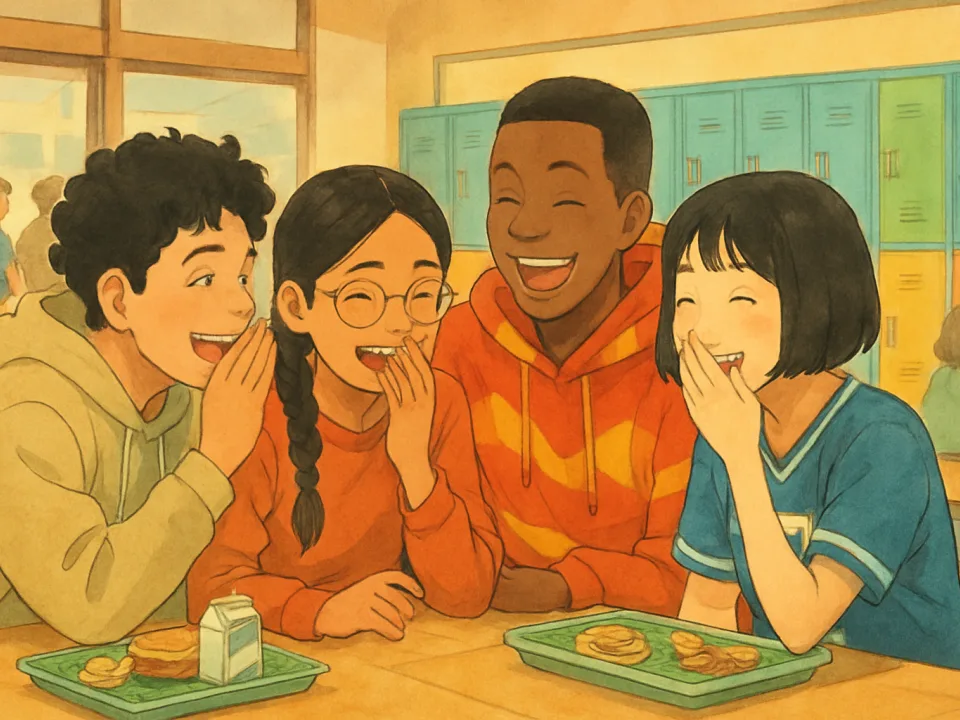
But for four friends—Jamie, Priya, Malik, and Zoe—today wasn’t just about vacation. They’d been plotting for weeks, whispering over lunch and texting late at night, searching for the perfect harmless prank to end the term. It had to be funny, not mean. Memorable, but not risky. And, most importantly, something that might just go viral.
Jamie had the idea. He was the techie of the group, always tinkering with apps and gadgets. Over a tray of pizza and curly fries, he leaned across the lunch table, eyes shining. “Guys, I found this app that can swap voices in real time. I’ve been playing with it all week.” He pressed play on his phone, and his own voice warbled out, sped up and squeaky, like a cartoon chipmunk.
Malik almost snorted milk out his nose. “Dude! That’s hilarious. We could totally use that on Mr. Dorsey.”
Priya hesitated, twirling her straw in her juice box. “You mean, like, record him? Are you sure he won’t get mad?”
Jamie grinned. “We’ll keep it totally harmless and anonymous. I’ll set my phone by the windowsill in science class while he’s taking attendance. He won’t even know. And after, we just share it with our friends. No big deal.”
Zoe, who had a reputation as the group’s moral compass, shrugged but allowed a small smile. “Just make sure it’s funny, not mean.”
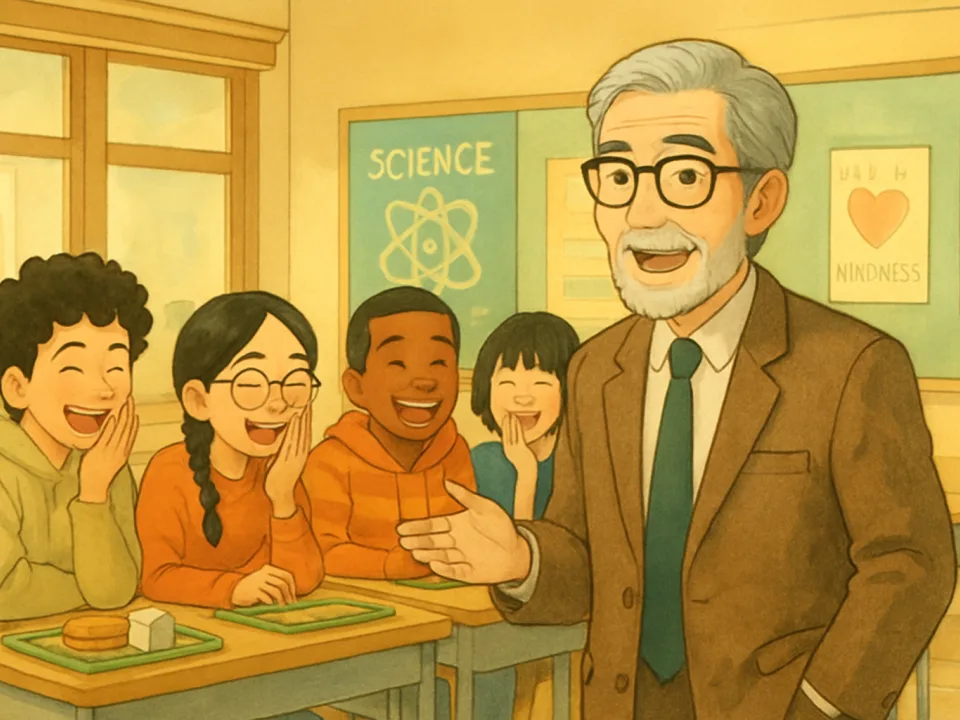
The plan set, the group could barely sit still through their afternoon classes. When the bell rang for science, they hustled to their seats, hearts thumping. Jamie slipped his phone onto the windowsill, screen dark, recording. As Mr. Dorsey—known for his booming voice and corny jokes about molecules—began calling names, Jamie tapped the app. Suddenly, Mr. Dorsey’s greetings echoed across the room in a high-pitched, chipmunk squeal.
The class erupted. Malik banged the table, tears streaming down his face. Priya giggled, hiding behind her textbook. Even Zoe cracked up. Mr. Dorsey paused, puzzled, but then chuckled along, shaking his head. “Must be something in the air today!” he quipped, and the students’ laughter doubled.
After class, Jamie played back the video for the group. “This is gold!” Malik crowed. “You gotta send me that.”
Jamie uploaded the clip to their private group chat. But Malik, riding the wave of excitement, couldn’t resist more. With a few taps, he posted it to his public account, captioning it, ‘Maple Hill’s Got Talent: Science Edition!’
The Video Goes Viral
That night, Jamie’s phone buzzed nonstop. Notifications poured in—likes, shares, comments. At first, it was just their classmates. But by Saturday morning, the video had traveled beyond their circle. Kids from other schools commented. Strangers tagged their friends. A meme page reposted the video with a new caption: ‘When your teacher’s voice hits puberty backwards.’
Zoe woke up to dozens of notifications. She scrolled through the comments, her excitement fading. Some were just silly jokes, but others mocked Mr. Dorsey’s accent, his old-fashioned sweater vest, even his hair. The original joke was getting lost in a tide of mean-spirited humor.
“Guys, this feels wrong now,” Zoe texted the group. “Look what people are saying.”
Priya replied, It wasn’t supposed to be mean. I feel awful.
Jamie’s stomach twisted. He liked Mr. Dorsey. He’d just wanted a good laugh—not this. He opened the app and tried to delete the video, but it was too late. Notifications popped up: ‘Your video has been downloaded 12 times.’ Screenshots and copies had already spread to other accounts.
Malik messaged, “I’m getting DMs from people I don’t even know. This is insane.”
By Sunday, parents started hearing about the video. A few teachers commented on the post, asking for it to be taken down. The group realized they’d lost all control.
The Fallout
Monday morning felt different. The halls were quieter, and the usual laughter was tinged with tension. Whispered conversations stopped when Jamie and his friends walked by. Some kids congratulated them on “blowing up,” but others looked away.
Mr. Dorsey came into class with his usual papers and mug, but the twinkle in his eye was dimmed. He smiled at the class, but it was a careful, practiced smile. He didn’t joke. He moved through the lesson quickly, barely looking up from his notes.
At lunchtime, an announcement crackled over the loudspeaker: “Will Jamie Torres, Malik Brown, Priya Patel, and Zoe Li please come to the principal’s office.”
The walk down the hallway felt endless. Priya’s hands shook. Malik tried to joke—“Maybe they’re giving us an award for best viral video”—but his laugh was hollow.
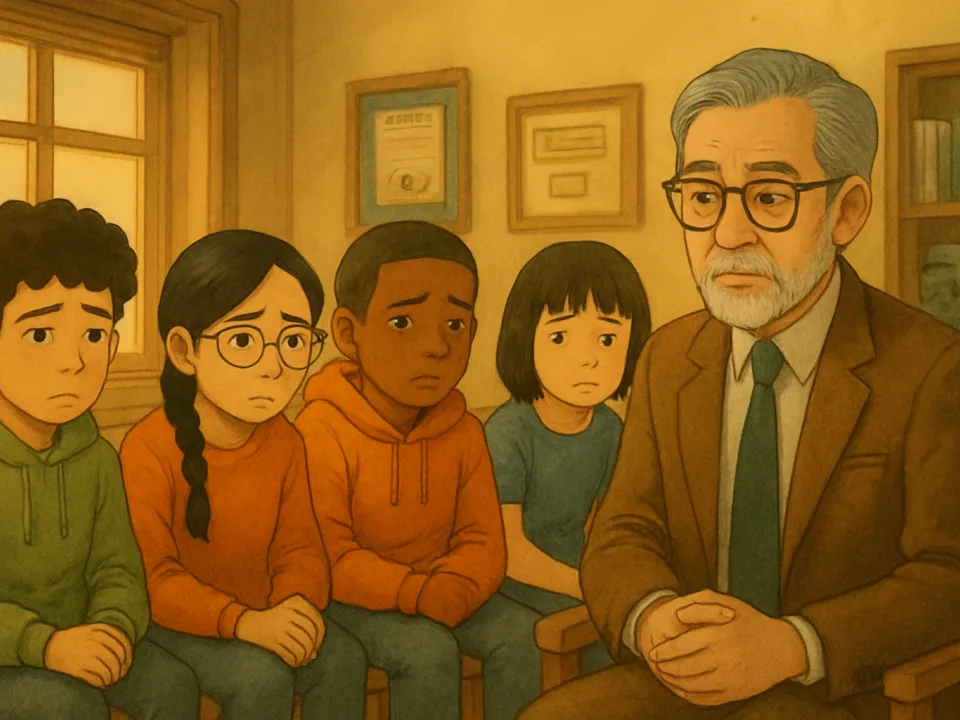
Principal Martinez’s office was quiet. She sat behind her desk, and beside her, Mr. Dorsey waited, looking tired. He smiled gently, but it didn’t reach his eyes.
Principal Martinez folded her hands. “We know about the video. What started as a joke has hurt a member of our community and spread far beyond these walls.”
Jamie’s voice was barely a whisper. “We’re sorry. We didn’t mean—”
Mr. Dorsey spoke softly. “I know you meant it as a joke. But the internet doesn’t always stay friendly. Once something is posted, it’s there forever.”
Malik stared at his sneakers. “We tried to take it down. But people kept sharing it.”
Principal Martinez nodded. “That’s the thing about digital footprints. You can’t always erase them.” She paused, letting her words sink in. “You’ll have one week without devices at school. And I’d like you to write an apology letter to Mr. Dorsey. But more importantly, you’ll give a presentation to the school about what you’ve learned about digital responsibility.”
The friends nodded, subdued. They filed out of the office, feeling smaller than they had that morning.
Making Amends
All week, the four spent their lunches in the library, researching digital footprints and internet safety. They found stories about viral videos used to bully people, about adults who lost jobs over old tweets, about how even deleted posts could resurface through screenshots and shares.
Priya stumbled upon an article about a college student whose silly high school post cost her a scholarship. “This stuff really doesn’t go away,” she said, wide-eyed.
Zoe added, “It’s not just about being caught. It’s about who gets hurt.”
Malik, usually the class clown, fell silent. “I just wanted everyone to laugh. I didn’t think it would get so mean.”
They worked together on their presentation, practicing in empty classrooms. Jamie designed slides showing how quickly things spread online. Priya explained the term ‘digital footprint’ and why it matters. Malik confessed to the urge to go viral—and what it cost them. Zoe practiced her closing lines, hoping her classmates would really listen.
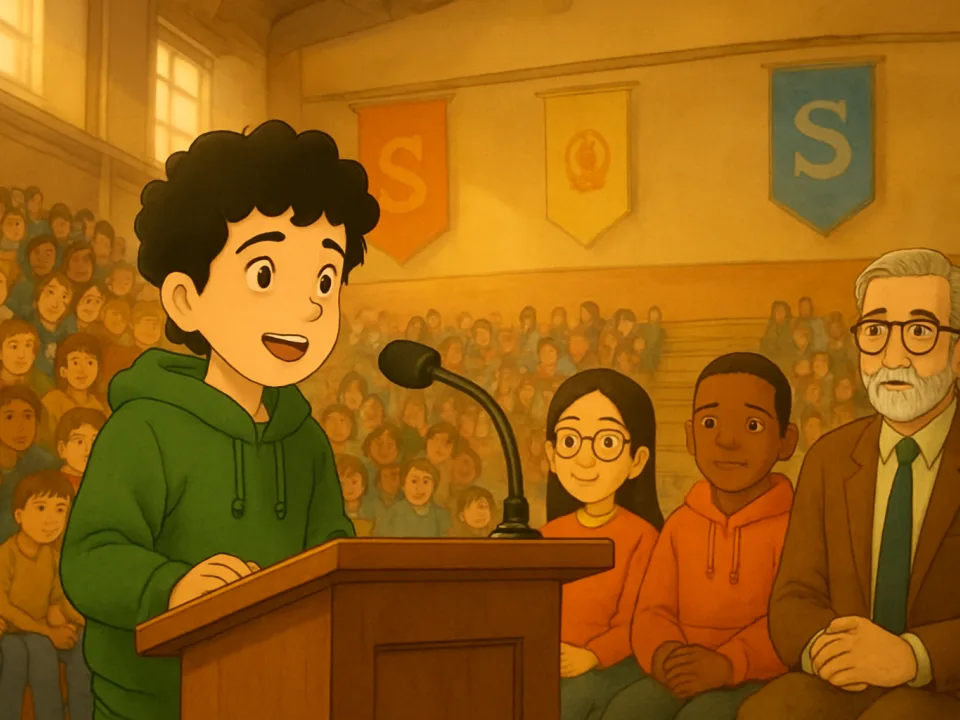
On the day of the presentation, the gym buzzed with students. Jamie’s hands shook as he took the microphone, but he spoke clearly. “We made a video we thought was funny. But we didn’t think about what could happen once it was out in the world. People twisted it. It hurt someone we care about. We can’t take it back, but we can make sure it doesn’t happen again.”
Priya pointed to her diagram of a digital footprint. “Even if you delete something, someone can save it. Once it’s out there, you can’t control where it goes.”
Malik faced the crowd. “Going viral sounds cool, but you can’t choose what happens next. We lost control of our joke, and it turned into something ugly. It’s not worth it.”
Finally, Zoe looked out at her classmates. “It’s easy to laugh when everyone is, but it’s harder to stand up when things go too far. Next time, I’ll speak up sooner—even if it’s hard.”
When they finished, the room was quiet. Mr. Dorsey came to the front. He smiled, this time genuinely. “We all make mistakes. What matters is how we grow from them.”
Moving Forward
As the weeks passed, the video faded under new trends and memes. Mr. Dorsey warmed up again, even joking about chipmunks one day in class, turning an awkward moment into laughter that felt safe.
The group stayed close, but their conversations changed. They checked in with each other before posting pictures or sharing inside jokes. When a new prank idea came up, Malik shook his head. “Let’s do something that makes people smile, not at someone else’s expense.”
So, the friends made a short film about kindness, starring their classmates—and Mr. Dorsey as the surprise guest. This time, everyone was in on the joke. The film made the rounds at Maple Hill, and kids laughed for the right reasons.
They’d learned that what you post online can echo far and wide, but so can your efforts to make things right. And that the best laughs are the ones you share—with everyone in on it, and no one left out.
Related Stories
Sneakers or Savings? A Moral Story for Tweens About Peer Pressure and Smart Money Habits
Sneakers or Savings? A Moral Story for Tweens About Peer Pressure and Smart Money Habits Jaden Martinez walked through…
When the Likes Stopped: A Modern Moral Story About Social Media Validation for Tweens
When the Likes Stopped: A Modern Moral Story About Social Media Validation for Tweens Ella Roberts wasn’t the most…
Leo and the Glowing Screen: A Moral Story About Screen Time Balance for Kids
Leo and the Glowing Screen Leo Martinez had always been a boy bursting with curiosity and boundless energy. His…
The Last Tree on Elm Avenue: An Earth Day Moral Story for Kids About Protecting Nature
The Last Tree on Elm Avenue Ruby’s sneakers squeaked on the wet sidewalk as she dashed past the neat rows of houses on…
The Rumor in Hallway B: A Middle-School Story About Gossip, Truth, and Loyalty
The Rumor in Hallway B The first bell at Lincoln [Middle School](/blog/back-to-school-stories-about-making-friends/)…
The Leaked Answer Key: A Moral Story for Tweens About Academic Honesty and Cheating
The Leaked Answer Key Spring at Willowbrook [Middle School](/blog/back-to-school-stories-about-making-friends/) brought…

Value of Time | Moral Story About Family and Priorities
The Father, the Piggy Bank, and Five Minutes of Sunset In the shining city of Silverstone, people often said that Elias…
The Story of Socrates for Kids: A Moral Tale About Asking Questions
The Story of Socrates Under the Olive Tree Long ago, in the busy city of Athens, there lived a man who did not wear a…