
THE TWO CRABS: A Simple Moral Story for Kids
The Two Crabs
When the tide slipped out each evening, the beach became a shining world of tiny wonders.
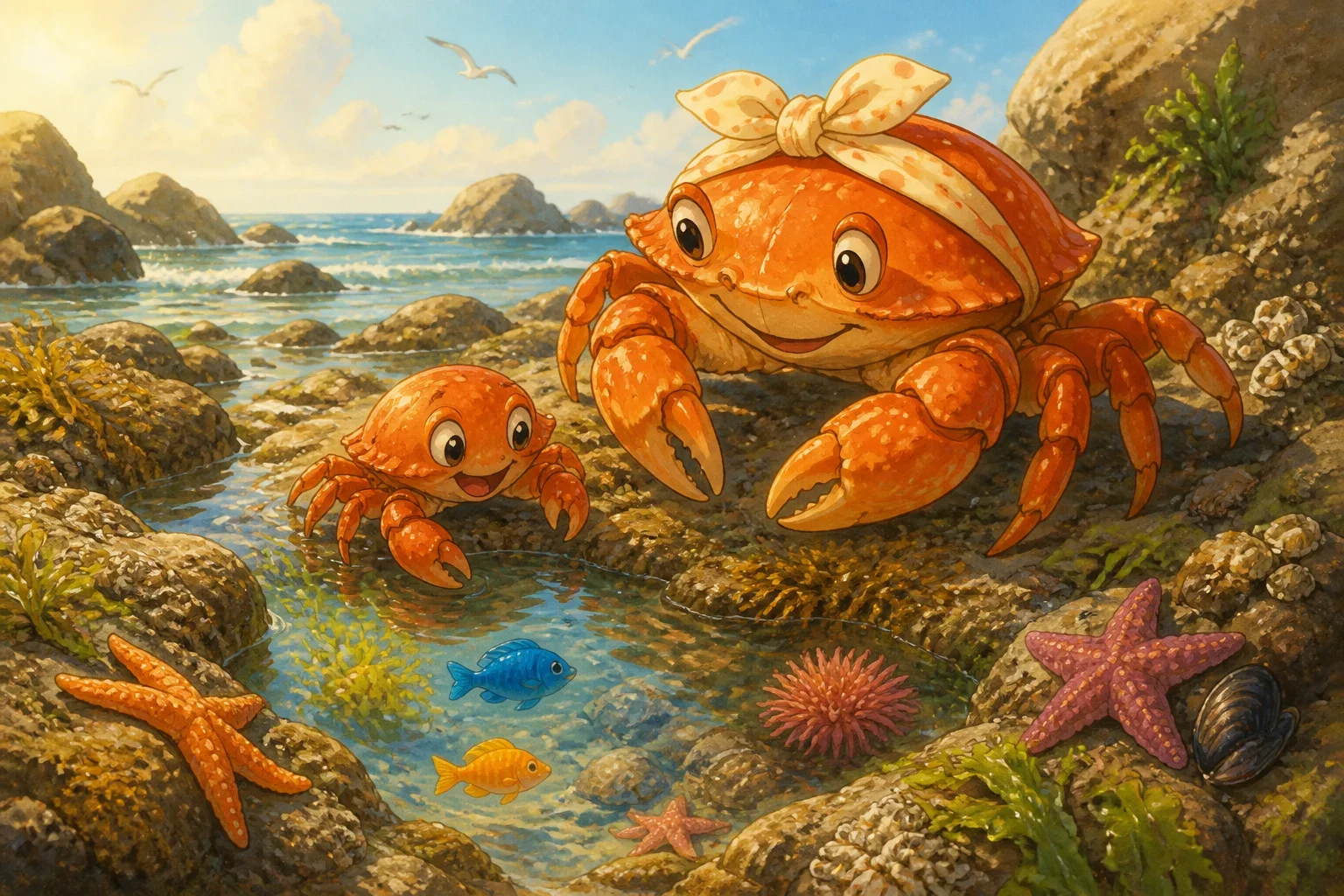
Pools of seawater glittered like mirrors. Shells winked in the sand. Seaweed ribbons swayed in the breeze. And under a smooth, sun-warmed rock near the shore lived two crabs: a mother and her little son.
The mother crab was called Clara. She was calm, clever, and kind, with bright eyes that noticed everything—the changing waves, the hidden shells, and the feelings in her son’s face before he even spoke.
Her son, Carl, was small, curious, and full of questions.
But Carl carried one quiet sadness in his heart.
Like all crabs, he was meant to scuttle sideways. At least, that was how it seemed to him. The other young crabs on the beach moved in smooth little swooshes across the sand—quick, neat, and easy.
Carl did not.
When he tried to move like them, his legs tangled. He wobbled. He zigged when he meant to zag. Sometimes he made such a twisty trail in the sand that even he had to stop and stare at it.
One morning, he watched a group of crabs racing near the tide pools.
Zip, zip, zip—they skimmed sideways as if the beach had been made just for them.
Carl tried to follow.
Zig.
Pause.
Zag.
Tumble.
A tiny shell rolled under him, and he plopped into the sand with a sigh.
Clara hurried over. “Are you hurt?”
Carl brushed sand from his claws. “No,” he mumbled.
But his eyes looked watery.
Clara sat beside him. The waves whispered nearby.
After a moment, Carl asked the question he had been holding in for many days.
“Mother… why can’t I walk like the others?”
Clara looked at the neat crab tracks crisscrossing the shore, then at Carl’s own funny, looping path.
“My dear,” she said gently, “there are many ways to move through the world.”
“But mine is the wrong way,” Carl said.
Clara smiled softly. “Is it wrong because it is different? Or only different because it is yours?”
Carl did not answer. He wasn’t sure.
So Clara stood up and said, “Come with me. Let’s visit the tide pools before the sun climbs too high.”
Carl followed her across the beach, making his usual zigzags in the sand.
The tide pools were full of life that day. Tiny silver fish flickered like splashes of moonlight. A starfish clung to a rock as still as a jewel. An anemone opened and closed its silky arms. Snails crept patiently over the stones.
And on a flat patch of wet sand, a group of young crabs were playing chase.
Carl stopped.
He wanted to join them.
He also wanted to hide behind his mother’s shell.
Clara noticed both feelings at once.
“Would you like to play?” she asked.
Carl stared at the others. “What if they laugh?”
“Then we will know they are not being kind,” said Clara. “But what if they smile because they like what makes you different?”
Carl swallowed. That seemed much harder to believe.
One of the crabs spotted him and waved a claw. “Hello! Do you want to come play?”
Carl took a tiny step forward. Then another crooked one.
“I… I don’t move very well,” he said.
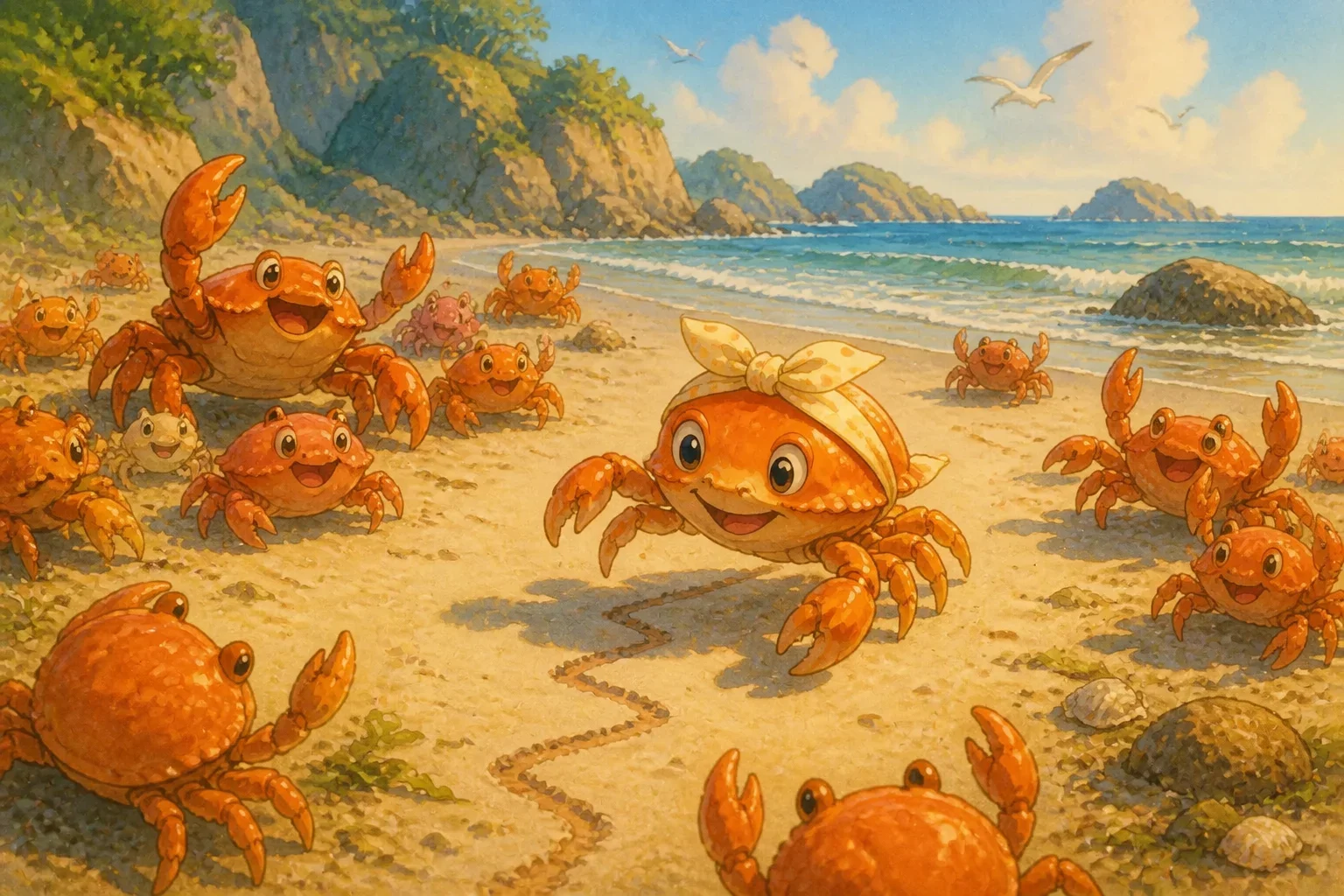
The crabs looked at him curiously, not meanly.
“What do you mean?” asked a sandy-brown crab with speckled claws.
Carl felt his face grow hot. “I don’t go smoothly sideways like everyone else. I sort of… zigzag.”
For a moment, no one spoke.
Carl wished the sand would open up and swallow him.
Then the speckled crab said, “Can you show us?”
Carl blinked. “Show you?”
“Yes!” said another. “What does zigzagging look like?”
Clara gave him a little nod.
Carl took a deep breath.
“All right,” he said.
He stepped onto the wet sand. First he went a little left. Then too far right. Then forward by mistake. Then sideways again in a quick, twisty hop.
Zig-zag. Zig-zag. Twist-hop. Skitter-stop.
He braced himself for laughter.
But what he heard instead was—
“That’s amazing!”
“It looks like a dance!”
“Do it again!”
Carl stared. “Really?”
“Really!” cried the others.
So Carl tried again, this time a little faster.
Zig-zag, twist-hop, skitter-stop!
The other crabs clapped their claws. One tried to copy him and spun in a silly half-circle. Another bumped into a shell and burst out laughing. Soon all the little crabs were practicing Carl’s funny pattern across the sand.
The tide pool shore became a jumble of joyful movement.
“Look at me!” shouted one crab, zigging wildly.
“No, like this!” called another, adding an extra hop.
Carl laughed so hard that he nearly tipped over.
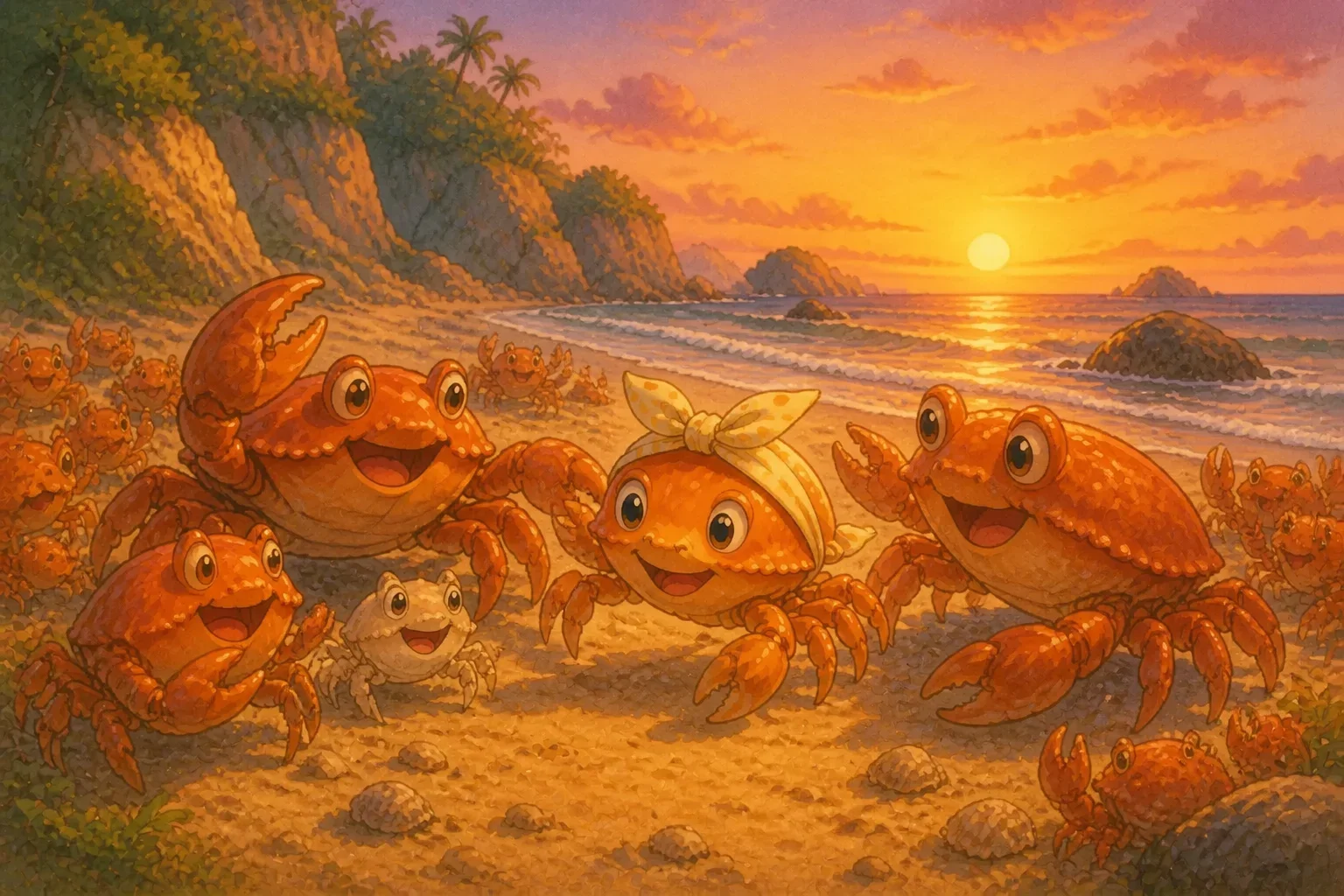
For the first time, the way he moved did not feel like a mistake.
It felt like his own special rhythm.
Even Clara joined in for a few careful zigzags, which made the young crabs cheer louder than ever.
By afternoon, they had invented a game called Zigzag Parade. The rules were simple: no one had to move exactly the same way. The more creative the steps, the better.
Some crabs swished. Some shuffled. Some bounced. Carl led them all with his twisty, zigzag dance.
As the sun began to sink, the tide pools turned gold and pink. The water shimmered. The beach glowed softly.
Carl stood beside his mother, tired and happy.
“Mother?” he said.
“Yes, my dear?”
“I think… I like my way of walking.”
Clara touched his claw with hers. “I hoped one day you would.”
Carl looked back at the sand. There were tracks everywhere now—straight ones, curved ones, tiny ones, messy ones, and his own cheerful zigzags crossing through them all.
He smiled.
They were different.
And together, they made the beach more beautiful.
Key Takeaways for Kids
- Everyone has their own special way of doing things.
- Being different does not mean being wrong.
- Confidence grows when we accept ourselves.
- Kind friends make others feel welcome and valued.
- What seems unusual at first can become something joyful and wonderful.
Moral of the Story
Acceptance—of ourselves and of others—helps friendship grow and lets each person shine in their own way.
Why This Story Connects With Children
Many children know what it feels like to compare themselves to others. This gentle animal story shows that differences do not have to be hidden. Sometimes the very thing that makes someone feel unsure is also what makes them special.
If you are looking for children's moral stories, bedtime stories, or short moral stories for kids about acceptance and self-confidence, The Two Crabs is a warm reminder that being yourself is something to celebrate.
Watch the Animated Story
Watch on YouTube
Related Stories
The Clever Cat and the Mice | Moral Story About Trust
The Clever Cat and the Mice: A Lesson in Trust and Caution On the edge of a cheerful village, where laundry flapped on…
The Ass in the Lion’s Skin: A Moral Story About Being Yourself
The Ass in the Lion’s Skin On the edge of a golden field, where tall grass swayed like waves and crickets sang in the…
Bees and the Beetles: A Moral Story About Hard Work
The Bees and the Beetles On the edge of a bright summer garden stood a tall old hive, golden in the afternoon sun. From…
The Loyal Dog Max: A Heartwarming Friendship Story for Kids
The Loyal Dog Max On the edge of a small, peaceful town stood a little yellow house with a crooked fence, a vegetable…
Loyal Dog in the Rain: A Moral Story About Loyalty
The Loyal Dog in the Rain The rain began with a whisper. It tapped lightly on the windows of Timmy’s cottage, then…
The Two Wolves Story: A Powerful Moral Tale About Choosing Kindness
The Story of Two Wolves On the edge of a quiet mountain village, where prayer flags fluttered in the wind and…