
The Golden Egg
The Goose That Laid the Golden Egg
In a small village where mornings smelled of wet earth and warm bread, there lived a farmer named Henry. He was not rich, but he was comfortable. He had a little cottage, a patch of green land, and a yard full of animals that knew his voice.
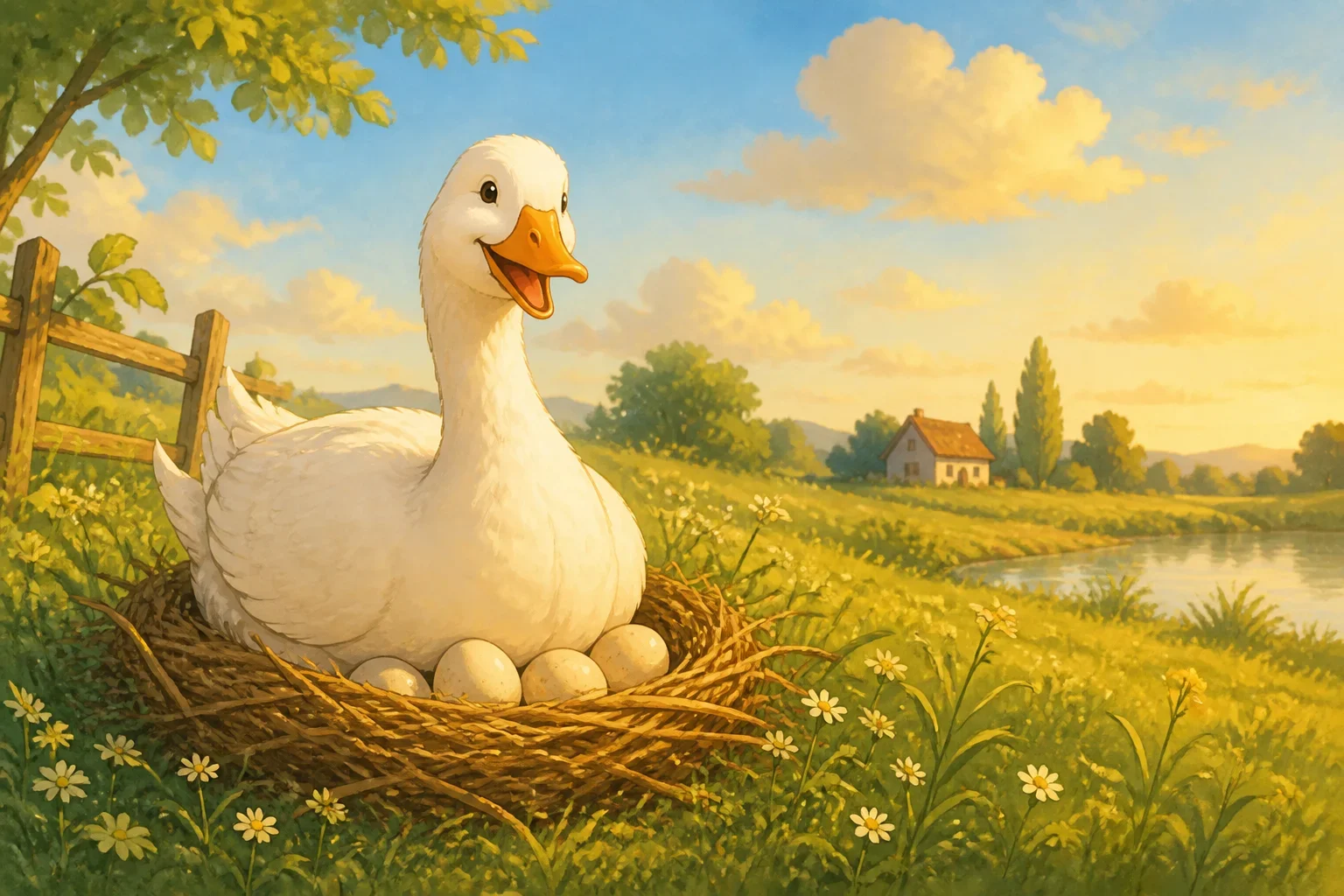
Of all his animals, the one he loved most was a gentle white goose named Gertrude.
Gertrude was not loud like the hens, nor stubborn like the donkey. She had bright eyes, soft feathers, and a funny little waddle that always made Henry smile.
Every morning, just as the sun painted the sky pink and gold, Henry would step into the barnyard with a basket on his arm.
And every morning, Gertrude would be waiting near her nest.
One day, Henry looked into the nest and froze.
There, glowing in the straw, lay an egg made entirely of gold.
He blinked once. He blinked twice. Then he picked it up with trembling hands.
It was heavy. Smooth. Cold. Real.
"Gertrude..." he whispered. "What sort of miracle are you?"
He hurried to the market, where the goldsmith examined the egg carefully.
"This is pure gold," the goldsmith said, staring in amazement. "Henry, this egg is worth a fortune."
Henry could hardly believe it.
With the money from that one egg, he repaired his roof, bought better seed for his field, and filled his pantry with flour, honey, and cheese. For the first time in many years, he slept without worrying about winter.
The next morning, Gertrude laid another golden egg.
And the morning after that, another.
Soon Henry’s life changed. His boots were newer. His table was fuller. His pockets were heavier. Neighbors began to whisper.
"Henry is the luckiest farmer in the village," they said.
At first, Henry felt deeply thankful. Each time he collected an egg, he patted Gertrude’s neck and said, "Thank you, my dear friend."
But little by little, something changed.
Thankfulness gave way to wanting. Wanting gave way to impatience. And impatience opened the door to greed.
Instead of smiling at one golden egg, Henry began frowning because there was only one.
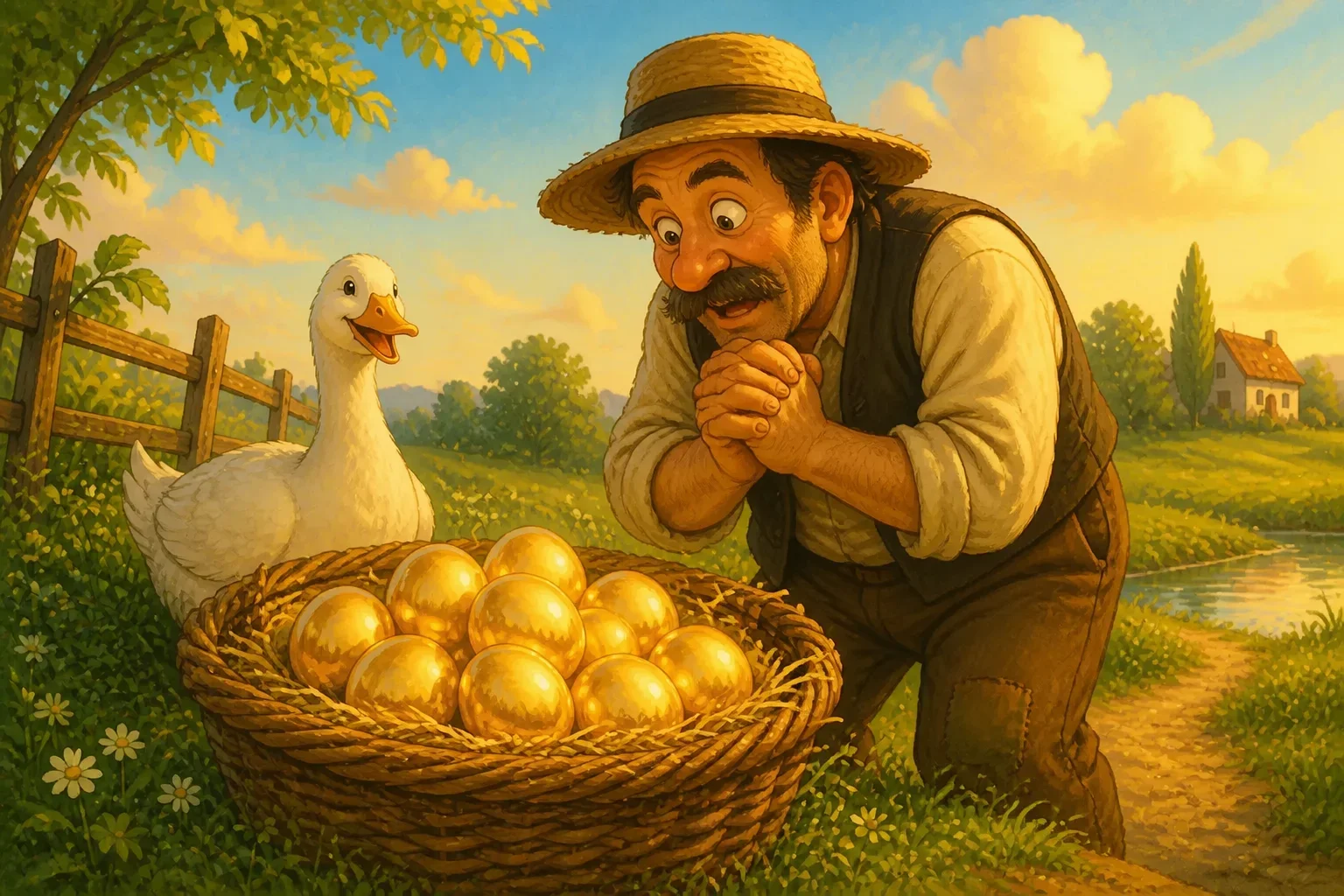
"Only one?" he muttered one morning. "Why not two? Why not ten?"
He sat at his table that night, tapping his fingers, his mind buzzing like a trapped fly.
"If Gertrude lays one golden egg each day," he said to himself, "then she must be full of them. Why should I wait day after day? Why not take them all at once and become the richest man in the whole country?"
The thought wrapped around his heart like a thorny vine.
The next morning, Gertrude waddled toward him as usual, trusting and calm.
For just a moment, Henry hesitated.
He looked at her bright eyes. He remembered the cold winters she had helped him survive. He remembered how grateful he had once felt.
But greed spoke louder than gratitude.
"It will only take a moment," he told himself.
In his foolish impatience, Henry killed Gertrude, expecting to find her filled with golden eggs.
But when he looked inside, he found nothing unusual at all.
No treasure. No pile of gold. No hidden miracle.
Only the terrible truth.
Gertrude had been exactly what she seemed: a living goose who could give one precious gift at a time.
Henry dropped to the ground in shock.
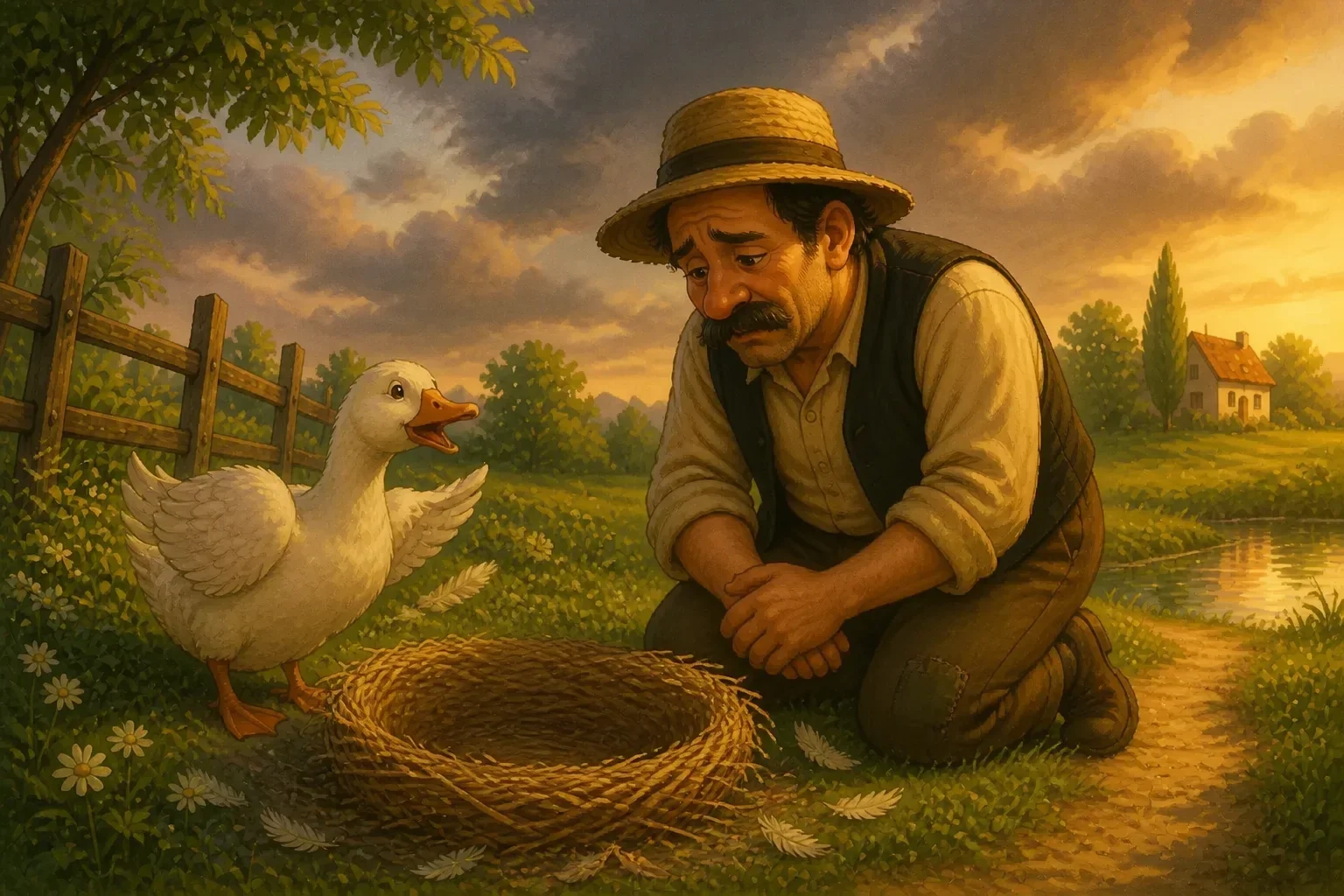
His hands shook. His face turned pale. And then the weight of what he had done came crashing down on him.
He had destroyed the very thing that had brought him comfort, hope, and plenty.
All because he wanted too much, too quickly.
The barnyard felt strangely quiet after that. No cheerful waddle. No waiting by the nest. No golden egg gleaming in the straw.
Henry sat alone outside his cottage many evenings, staring at the sunset and wishing he could take back one terrible choice.
But some mistakes cannot be undone.
From then on, Henry worked his fields with his own hands and lived simply once again. He never forgot Gertrude, and he never forgot the lesson her loss had taught him.
When children in the village grew impatient or greedy, their parents would tell them Henry’s story.
And they would say, "Be thankful for what you have. Greed can make a person lose even their greatest blessing."
Key Takeaways for Kids
- Greed can make people act without thinking.
- Good things often come little by little, and patience matters.
- Being grateful helps us make wiser choices.
- When we want too much all at once, we may lose what we already have.
Why This Story Still Matters
This classic moral story for kids remains memorable because it teaches an important truth in a simple way: rushing for more can ruin something precious. Children can easily understand Henry’s mistake and remember the value of patience, gratitude, and self-control.
Moral of the Story
Greed can lead to loss. Be patient, be grateful, and value the good things you already have.

Watch the Animated Story
Watch on YouTube
Related Stories
Goose That Laid the Golden Eggs | Aesop Moral on Greed
The Goose That Laid the Golden Eggs On the edge of a quiet village, where smoke curled from chimney tops each evening…

The Power of Forgiveness: A Short Moral Story for Kids
The Power of Forgiveness In a quiet village tucked between green hills and a silver stream, everyone knew James. He was…
Simple Life of Lila: A Beautiful Moral Story for Kids
The Simple Life of Lila On the edge of a quiet village, where the mornings smelled of wet earth and jasmine, stood a…

Jack and the Lost Coins: An Honest Bedtime Story for Kids
Jack and the Lost Coins On the edge of a quiet village, where white geese waddled across dusty lanes and sunflowers…