
Rich Dad, Spoiled Son Story
The Rich Father and His Spoiled Son
In the busiest part of a bright little town stood the largest house on Maple Road. It had white pillars, iron gates, a fountain shaped like a swan, and a garden so neat that not even one leaf dared lie out of place.
Inside that grand house lived Richard, a wealthy businessman known by everyone in town. He worked hard, gave to charity, and spoke kindly to workers, shopkeepers, and neighbors alike.
But the person he worried about most was not a stranger.
It was his son.
William, who was fourteen, had everything a boy could ask for—new clothes, expensive shoes, the latest games, a sparkling bicycle, and a room full of things he barely used. Yet the more he had, the less he seemed to notice what others needed.
If a servant was slow, William complained. If a meal was not his favorite, he pushed the plate away. If another child admired his bicycle, William held it tighter and rode off.
Richard watched all this quietly, and his heart grew heavy.
"My son has a full cupboard," he thought, "but an empty understanding."
He did not want William to grow into a man who knew the price of everything and the value of nothing.
So one afternoon, Richard decided it was time.
The Keys
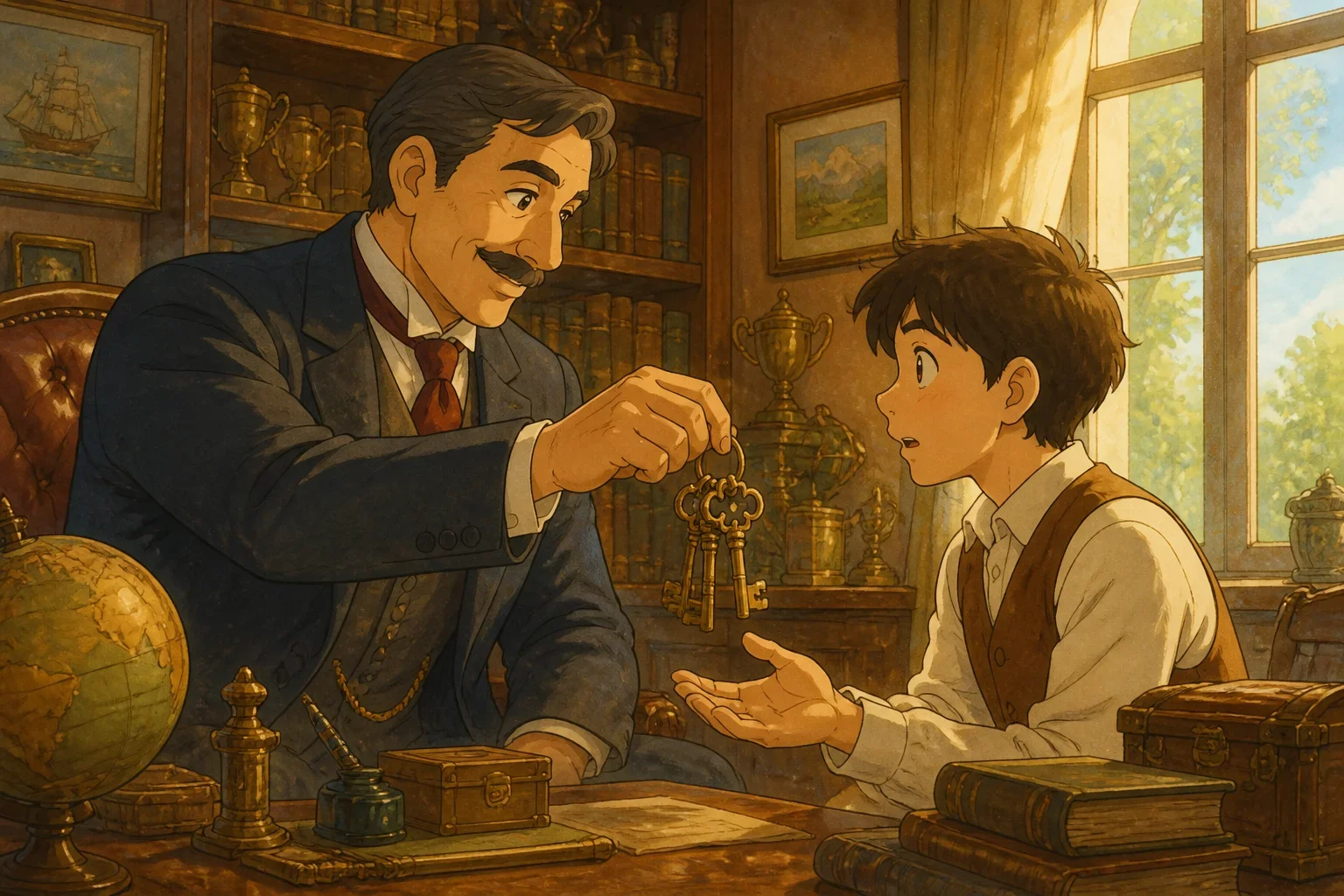
Sunlight streamed through the tall windows of Richard’s study, making the polished desk shine. William walked in lazily, expecting perhaps a new gadget or pocket money.
Instead, his father held up a small ring of car keys.
They jingled softly.
William’s eyes widened. "For me?"
Richard nodded. "Yes. I want you to take the family car and drive through town. Not to show off. Not to race. Just to look around carefully."
William frowned. "That sounds boring. I’d rather ride my bike with my friends."
Richard leaned back in his chair. "Sometimes the most important journeys are the ones we do not feel excited to take. Go, observe, and come back before evening."
William twirled the keys in his hand. He still did not understand why his father was acting so strangely, but the chance to drive felt too important to refuse.
A few minutes later, he was on the road.
A Boy by the Sidewalk
At first, William enjoyed himself. He drove past the bakery with warm bread in the window, the fruit market with stacked oranges and bananas, and the park where children laughed on swings.
But as he turned into a narrower street near the edge of town, the houses changed. The paint was faded. The roads were rougher. The gardens were dry.
That was when he saw him.
A boy about his own age sat on the sidewalk beside a broken bicycle. One wheel bent awkwardly. The chain hung loose like a tired snake. The boy’s shirt was worn, and his hands were dark with grease.
William slowed the car.
Normally, he might have looked once and driven on.
But something about the boy’s face stopped him. He did not look angry. He did not even look embarrassed.
He looked determined.
William rolled down the window. "What happened?"
The boy looked up, surprised that anyone had stopped. "The chain slipped, and the wheel got stuck. I’ve been trying to fix it for an hour."
William hesitated. "Can’t you take it to a repair shop?"
The boy gave a small shrug. "I can’t afford that. If I fix it, I can ride to school tomorrow. If I don’t... I’ll have to walk."
That answer landed heavily in William’s chest.
Ride to school.
William had never thought of a bicycle as something necessary. To him, it had only ever been for fun.
He parked the car and stepped out.
"Maybe I can help," he said.
The boy blinked. "Really?"
"I think so. There are tools in the car."
The boy smiled for the first time. "I’m Samuel."
"William," he replied.
Grease on His Hands
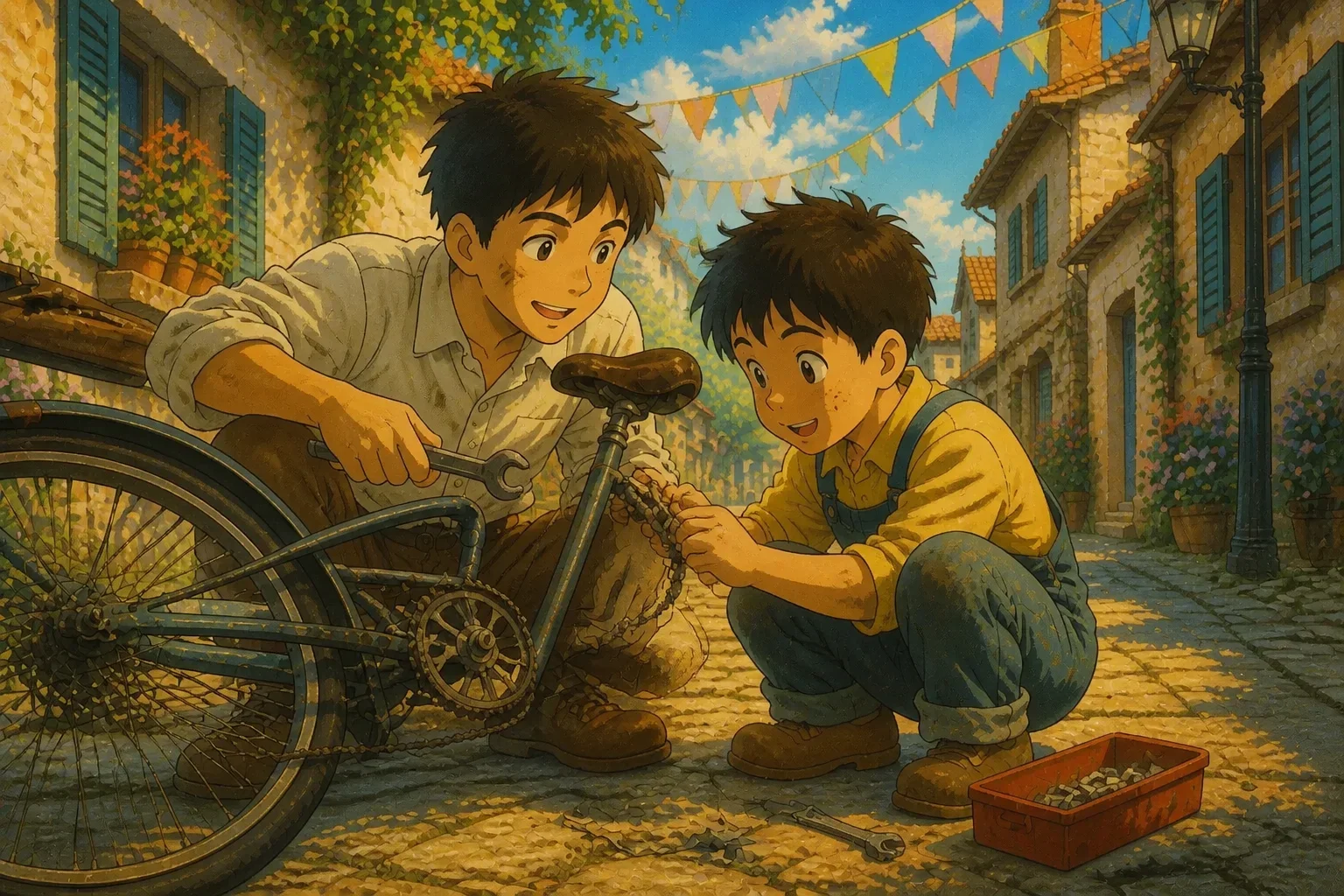
Together they turned the bicycle upside down. William fetched the tool kit from the car. At first, his hands moved awkwardly. He was not used to fixing things himself. At home, someone always repaired whatever was broken.
Samuel, however, knew exactly where to hold the frame and how to guide the chain back into place.
"Like this," Samuel said patiently. "Careful—don’t pinch your fingers."
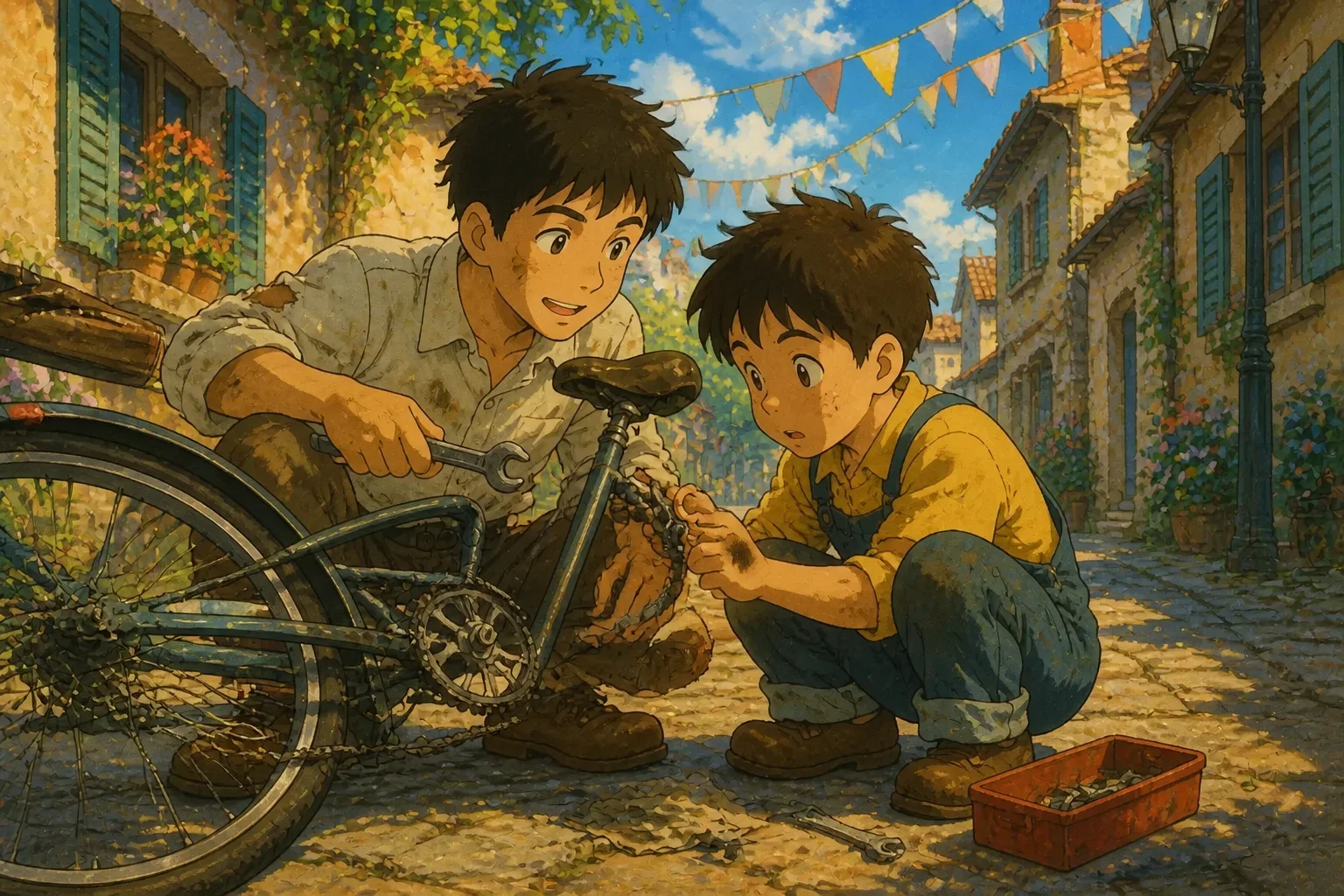
William laughed nervously. "Too late."
Samuel grinned.
For the next half hour, they worked side by side. Their hands became black with oil. Sweat dripped down William’s forehead. His expensive shirt got smudged. For once, he did not care.
As they worked, they talked.
Samuel told him he lived with his mother and little sister. His mother cleaned houses. He helped by running errands, carrying groceries, and looking after his sister after school.
"This bike helps me get places faster," Samuel said. "If it breaks, everything takes longer."
William looked at the bent wheel, then at Samuel’s calm face.
"Don’t you get upset?" he asked. "About... all of it?"
Samuel tightened a bolt and thought for a moment. "Sometimes. But being upset doesn’t fix a bicycle."
William went quiet.
No one had ever spoken to him like that before—so simply, so honestly.
When the chain was back in place and the wheel adjusted as best they could, Samuel lifted the bicycle and tested it.
It rolled.
Then it rolled smoothly.
Samuel’s face lit up. "It works!"
He looked at William with such pure gratitude that William felt something strange and warm spread through him.
It was different from the excitement of getting a new toy.
Different from winning.
Better.
The Ride Home
Samuel held the handlebars and said, "Thank you. Really."
William shrugged at first, out of habit. But then he said honestly, "I’m glad I stopped."
Samuel nodded. "Me too."
Before leaving, William glanced at the quiet street, the worn homes, and the patched-up bicycle that meant so much to Samuel.
As he drove away, the town looked different than it had before.
The bakery was still there. The fruit market was still colorful. The park was still full of laughter.
But now William noticed more.
He noticed the delivery man carrying heavy boxes. He noticed the old woman walking slowly with two bags. He noticed a little girl sharing her snack with her younger brother.
For the first time, he was not only seeing people.
He was understanding them.
A Different Boy Walks In
When William returned home, Richard was waiting in the study.
"Well?" his father asked.
William looked down at his greasy hands and gave a small, thoughtful smile.
"I met a boy named Samuel," he said. "His bicycle was broken. He needed it to get to school. We fixed it together."
Richard listened quietly.
William continued, his voice softer now. "Dad... I never realized how easy my life has been. I complain about silly things. Samuel has so little, but he works hard and doesn’t feel sorry for himself."
Richard’s eyes warmed with pride. "And how did helping him make you feel?"
William answered without delay.
"Happy. But not the usual kind. It felt... important."
Richard stood and placed a hand on his son’s shoulder. "That is because kindness gives us something money cannot buy."
William nodded slowly.
That evening, he did something that surprised everyone in the house.
He thanked the cook for dinner. He carried his own plate to the kitchen. And before going to bed, he looked at his room full of possessions and wondered how many things he truly needed.
Something inside him had begun to change.
And this time, it was not because he had been given more.
It was because he had finally learned to care.
Key Takeaways for Kids
- Having many things does not always teach us how others feel.
- A small act of help can change someone else’s day—and your own heart.
- Real happiness often comes from kindness, not from showing off.
- Listening to other people’s struggles helps us grow wiser and more caring.
- Responsibility means using what we have in a good way.
Moral of the Story
True wealth is not measured by money, clothes, or possessions. True wealth is shown through kindness, empathy, and the good we do for others.
Why This Moral Story Matters
This children’s moral story reminds kids that privilege should never lead to pride. It teaches that when we step outside our own comfort and notice the struggles of others, we become more compassionate, grateful, and responsible.
If you are looking for moral stories for kids, kindness stories, or a meaningful bedtime story with a life lesson, this tale offers a gentle but memorable message children can carry into everyday life.

Watch the Animated Story
Watch on YouTube
Related Stories

Value of Time | Moral Story About Family and Priorities
The Father, the Piggy Bank, and Five Minutes of Sunset In the shining city of Silverstone, people often said that Elias…
The Story of Socrates for Kids: A Moral Tale About Asking Questions
The Story of Socrates Under the Olive Tree Long ago, in the busy city of Athens, there lived a man who did not wear a…

Bees and the Beetles: A Moral Story About Hard Work
The Bees and the Beetles On the edge of a bright summer garden stood a tall old hive, golden in the afternoon sun. From…
Ass and His Masters: A Classic Aesop Story for Kids
The Ass and His Masters In a dusty little village at the edge of wide brown fields, there lived an ass who was never…

Emily the Celebrity| Inspiring Moral Story for Kids
Emily the Celebrity and the Girl With the Sketchbook In the city of Starville, everything seemed to sparkle. Billboards…
Lazy Donkey Who Finally Helped: A Moral Story on Hard Work
The Lazy Donkey Who Finally Helped In a sunny little village tucked between green hills and golden fields, there lived…
The Retiring Carpenter Story: A Powerful Moral About Doing Your Best
The Retiring Carpenter In a quiet village where morning mist curled over the fields and sparrows nested in old apple…
The Little Red Hen Story for Kids About Hard Work and Care
The Little Red Hen: A Story of Hard Work and Responsibility On a small farm where the grass swayed like green ribbons…