Grandma’s Special Gift: A Heartwarming Bedtime Story (Silent Ghibli Style)
Grandma’s Special Gift
On winter evenings, when the windows glowed gold against the snow and the kettle hummed on the stove, Tommy always knew exactly where to find Grandma Rose.
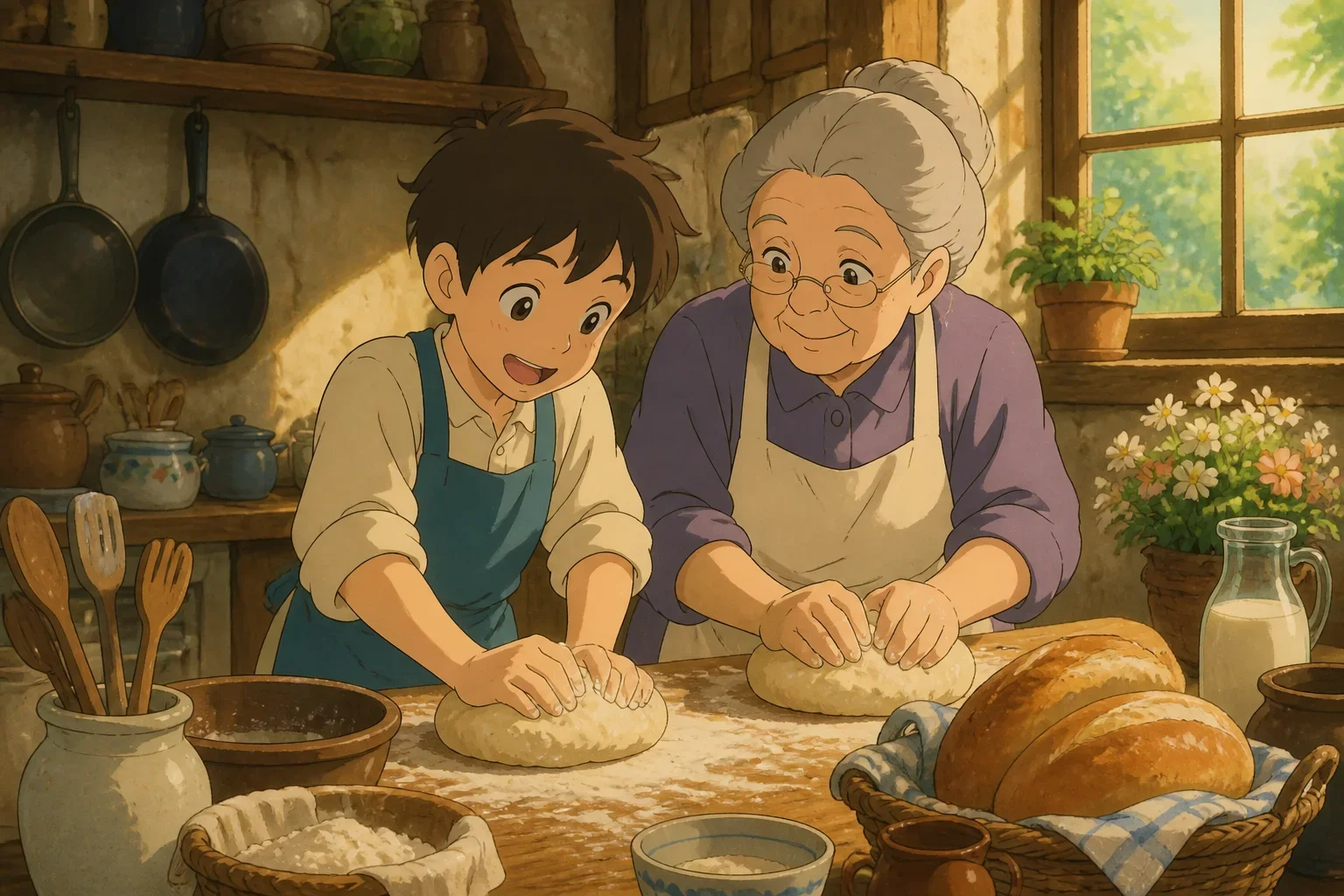
She would be in the kitchen.
Not just standing there—belonging there, as if the kitchen itself had grown around her soft footsteps, her flour-dusted apron, and her warm, crinkly smile. The wooden table was scarred with years of rolling pins and mixing bowls. Copper pans hung above the stove like little moons. A pot of soup usually bubbled in one corner, and on the windowsill sat a tiny jar of rosemary that somehow stayed green even in the coldest month.
But Tommy loved one thing most of all.
The bread.
Whenever Grandma made bread, the whole cottage changed. The air turned rich and yeasty. The walls seemed warmer. Even the old clock above the door ticked more gently, as if it, too, wanted to listen.
“Grandma,” Tommy would ask, climbing onto the stool beside her, “how do you always make it smell this good?”
Grandma Rose would laugh, a quiet laugh like paper rustling. “That,” she said, tapping the tip of his nose with a floury finger, “is the easiest part.”
Tommy blinked. “It is?”
“Yes,” she said. “The secret is not in making bread smell good. The secret is in making bread feel loved.”
Tommy thought that sounded like one of Grandma’s mysterious kitchen sayings. She had many of them.
Soup listens when you stir kindly.
Jam knows when you are patient.
Bread remembers your hands.
Tommy didn’t always understand what she meant—but he loved hearing her say those things.
The Recipe That Was More Than a Recipe
One snowy afternoon, Grandma tied Tommy a little apron made from an old blue dish towel.
“Today,” she announced, “you are no longer just my kitchen helper.”
Tommy stood very still. “I’m not?”
She shook her head solemnly. “No. Today you become the Keeper of the Bread.”
Tommy’s mouth dropped open. It sounded like the most important job in the world.
She pulled out a large mixing bowl, cloudy with age, and set it between them.
“First,” she said, “flour.”
A soft white puff floated into the air.
“Then yeast. Then warm water—not too hot, not too cold. Bread likes comfort.”
Tommy poured carefully, his tongue peeking from the corner of his mouth.
Grandma placed her hands over his. “Now mix.”
At first the dough was sticky and clumsy. It clung to Tommy’s fingers and refused to behave.
“It’s a mess,” he groaned.
Grandma smiled. “Most good things are, at the beginning.”
Together they kneaded. Push, fold, turn. Push, fold, turn.
“Listen with your hands,” Grandma said.
Tommy frowned. “Hands can’t listen.”
“Oh, they can,” she replied. “Your hands can tell when the dough is tired, when it needs more flour, when it needs more time. People are a little like that too.”
Tommy looked down at the dough, then back at her face. “So bread is like a person?”
Grandma chuckled. “No, dear heart. But caring for bread teaches you how to care for many things.”
That afternoon, while the dough rose under a linen cloth, Grandma told him stories—about baking with her own mother, about winters when the snow reached the fence posts, about neighbors who came by with empty baskets and left with full hearts.
Tommy listened to every word.
He thought those afternoons would go on forever.
When the Seasons Changed
But seasons do not ask what we want.
Spring came. Then summer. Then autumn painted the trees copper and gold.
And slowly, gently, things began to change.
Grandma Rose still smiled. She still baked. She still kissed Tommy’s forehead and called him “dear heart.” But now she moved more slowly. Sometimes she paused to catch her breath after carrying the flour tin. Sometimes she sat down while the soup simmered, looking out the window longer than before.
Tommy noticed.
Children notice more than grown-ups think.
One windy afternoon, leaves skittered across the yard like little orange boats. Grandma and Tommy sat at the kitchen table with a loaf cooling between them. The room smelled of crust and butter.
Grandma rested her hand over his.
“Tommy,” she said softly, “there may come a day when you will bake this bread without me beside you.”
He stared at her. “Why would I do that?”
Her eyes were tender, but serious. “Because that is how love keeps going.”
His throat tightened. “I don’t want that day.”
“I know.” She squeezed his fingers. “I don’t want to leave you sad. So I must teach you something important now.”
Tommy looked down at the loaf.
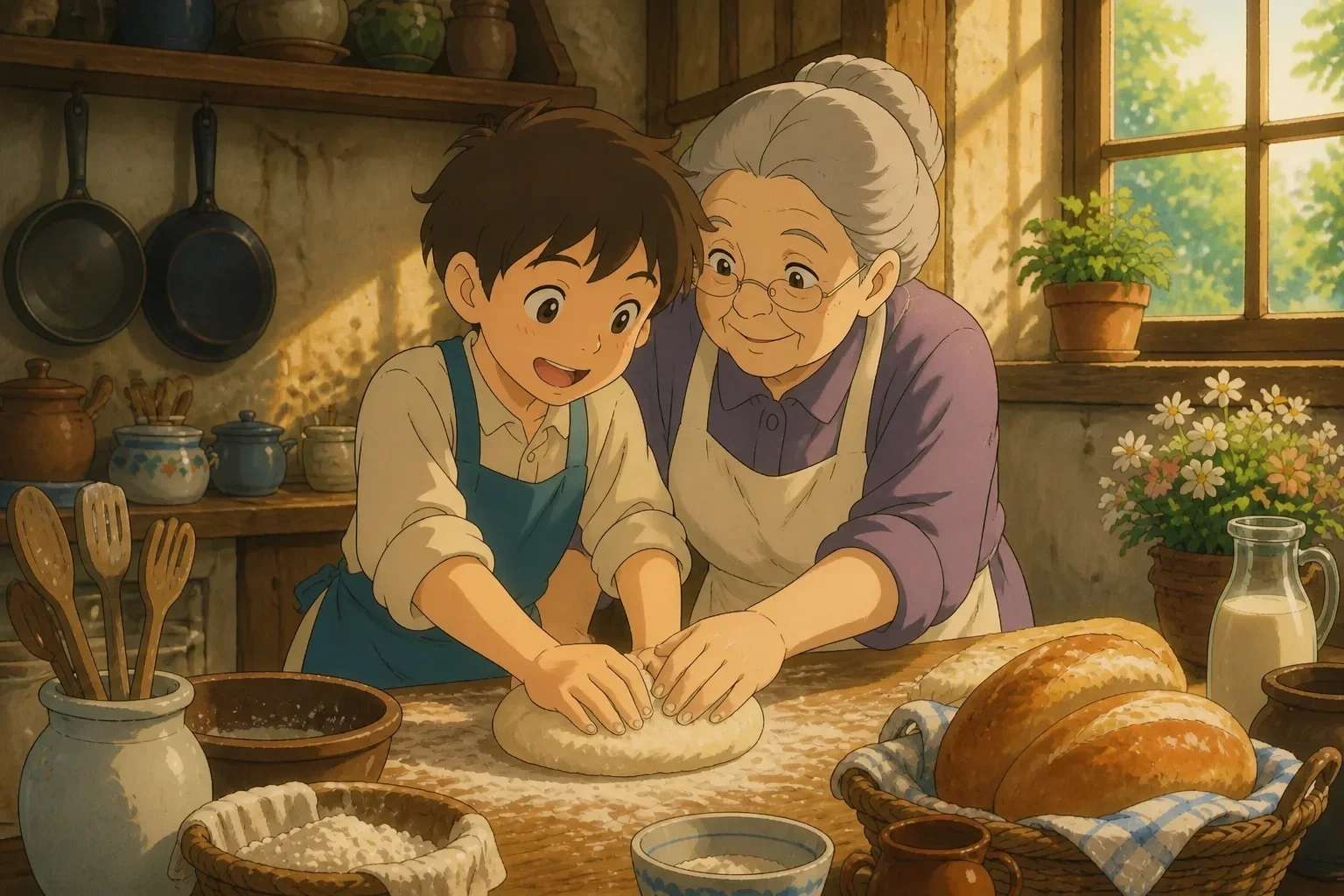
Grandma continued, “When people we love are gone, the love is not gone. It changes shape. Sometimes it becomes a memory. Sometimes it becomes courage. Sometimes”—she smiled at the bread—“it becomes something warm you can share.”
Tommy leaned against her shoulder. He didn’t fully understand.
But he remembered every word.
The Quiet House
Winter returned.
And one cold evening, when the sky turned pale as frosted glass, Grandma Rose passed away.
After that, the cottage felt far too still.
The kettle no longer hummed at the right time. No flour dust floated through the afternoon light. No gentle voice said, “Taste this,” or “Pass me the bowl,” or “That dough needs patience.”
Tommy walked through the quiet rooms as if he were afraid to make a sound.
He missed everything.
He missed her apron hanging by the door. He missed her slow footsteps. He missed the way she cut bread into thick slices and always gave him the warm end piece.
Most of all, he missed the feeling that the kitchen had a heartbeat.
For many days, Tommy could not bear to step inside it for long.
Then one evening, as snow tapped softly against the window, he opened the old cupboard looking for tea.
There, tucked behind a stack of bowls, was Grandma’s recipe book.
Its cover was faded. The corners were bent. A dusting of flour still clung to the spine, as if she had only just set it down.
Tommy carried it to the table with both hands.
Inside were notes in Grandma’s looping handwriting.
Add a little more water on dry days.
Let it rise by the stove in winter.
Do not rush. Bread dislikes hurry.
And on the page for the special loaf, at the very bottom, she had written:
For Tommy, when he is ready.
Tommy’s eyes filled with tears.
He traced the words with one finger.
Then, with a shaky breath, he whispered, “I’m ready to try.”
Baking Alone—But Not Alone
He set out the bowl. He measured the flour. He warmed the water. He crumbled the yeast.
At first, his hands trembled.
The kitchen felt too big without Grandma in it.
When the dough turned sticky, Tommy almost gave up.
“It’s a mess,” he muttered.
And then, as clearly as if she were right beside him, he remembered her answer:
Most good things are, at the beginning.
He laughed through his tears.
“All right,” he said to the dough. “Let’s try again.”
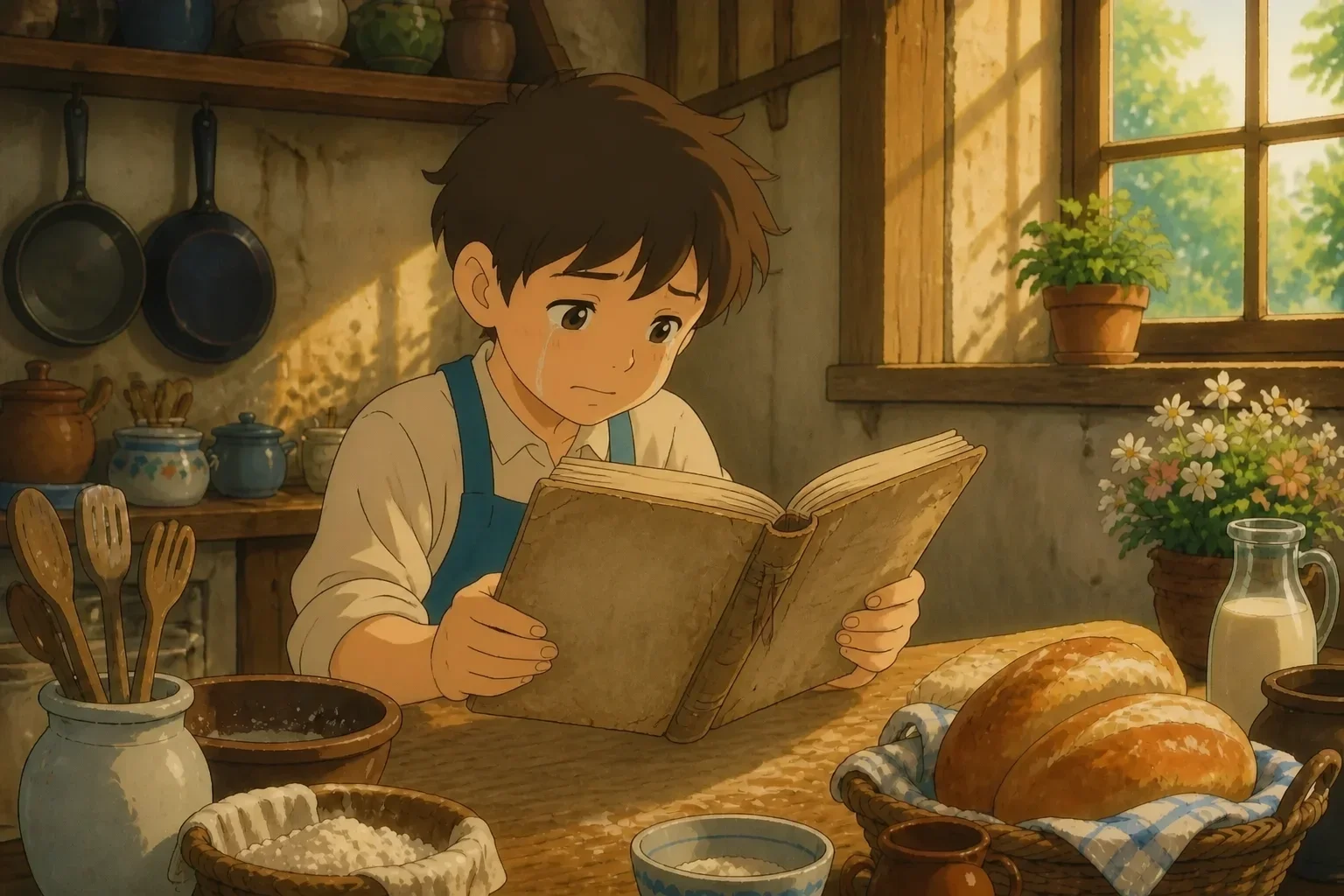
Push, fold, turn. Push, fold, turn.
Soon the rhythm returned to him. The dough softened. It warmed under his palms. He covered it with the linen cloth and placed it near the stove.
As he waited, the cottage no longer felt empty in the same way.
It felt full.
Full of remembered words. Full of old laughter. Full of all the afternoons that had come before.
When the bread finally baked, the smell rose through the house exactly as it always had—rich, golden, comforting, alive.
Tommy stood very still.
For one shining moment, it felt as though the kitchen had taken a breath.
He pulled the loaf from the oven and set it on the table. The crust crackled softly as it cooled.
Tommy broke off the end piece—the warmest part.
He took a bite.
And there, in the taste of butter and salt and home, was Grandma.
Not in a ghostly way. Not in a magical way. But in the truest way.
In memory. In love. In what she had taught him and left in his hands.
Tommy smiled, even with tears on his cheeks.
The next morning, he wrapped half the loaf in a clean cloth and carried it next door to an elderly neighbor who lived alone.
“Grandma used to share,” he said shyly.
The neighbor accepted it with trembling hands and a grateful smile.
And as Tommy walked home through the snow, he understood Grandma’s final lesson at last:
Love keeps going when we pass it on.
Key Takeaways for Kids
- Special memories can stay with us through the things our loved ones teach us.
- It is okay to feel sad when someone we love is gone.
- Family traditions, like cooking or baking together, can bring comfort.
- Love grows when we share kindness with others.
- Learning something from a grandparent can become a gift for life.
Moral of the Story
The people we love may not stay with us forever, but their love lives on in our hearts, our memories, and the kindness we share with others.
Why This Bedtime Story Stays in Children’s Hearts
This gentle family story speaks to children about love and loss in a safe, comforting way. Tommy’s journey shows that grief can feel quiet and heavy, but memories, traditions, and small acts of kindness can help us heal. That is why stories like this remain treasured among children's moral stories and bedtime stories for families.
If you are looking for heartwarming moral stories for kids about grandparents, family love, and remembering someone special, Grandma’s Special Gift offers comfort, warmth, and hope.
Watch the Animated Story
Watch on YouTube
Related Stories

The Blue Umbrella Story for Kids About Love, Waiting, and
The Blue Umbrella: A Story of Love, Waiting, and Letting Go On rainy days, Mia always looked for one thing first. Not…
Boy and New Shoes: A Family Moral Story About Gratitude
The Boy and the New Shoes On the edge of a small sunlit village, where dusty paths curled between little houses and the…
Old Wooden Chair: A Gentle Family Story About Love
The Old Wooden Chair On Sunday afternoons, when the sun turned the village lanes honey-gold, Oliver would run up the…
Tree of Love: A Gentle Story for Kids About Friendship
The Tree of Love: A Gentle Moral Story for Kids About Friendship, Gratitude, and Sacrifice At the edge of a quiet…

Mia and Ethan Story| A Heartfelt Love and Family Story for
Mia and Ethan Under the Oak Tree In the little town of Havenbrook, the streets were made of old gray stone that clicked…
Devoted Sister: A Moral Story About Sibling Love, Sacrifice
The Devoted Sister: A Heartwarming Tale of Love, Sacrifice, and Self-Care At the edge of a quiet village, where the…
A Father’s Love for His Daughter: A Touching Moral Story for
A Father’s Love for His Daughter On the coldest evening of winter, little Emily woke to a sound she had never really…
Light That Never Left: A Bedtime Story About Love and Hope
The Light That Never Left On the edge of a quiet village, where the hills wore morning mist like soft scarves, there…
Halloween Kindness Story: A Heartwarming Moral Story for
The Halloween Kindness Lily Carried On Halloween night, Maplewood always seemed to glow from the inside out. Porch…
Power of Love: A Moral Story for Kids About Kindness
The Power of Love In the little town of Harmonyville, people said you could tell how the whole town was feeling just by…