
5 Wit Stories for Kids: Sharp Intelligence & Quick Solutions
Children are naturally curious and quick-witted, often surprising adults with their cleverness and problem-solving skills. Stories that highlight these traits not only entertain but also teach valuable life lessons about how brains and quick thinking can overcome challenges. Introducing children to wit stories for kids helps nurture their intelligence, creativity, and resilience, encouraging them to approach problems with confidence and resourcefulness. This collection of stories showcases young protagonists using their sharp minds to solve dilemmas, outsmart opponents, and make thoughtful decisions—skills that serve them well throughout life.
In today's fast-paced world, cultivating mental agility and quick solutions is more important than ever. Kids who develop their wit are better equipped to handle everyday situations, from school puzzles to social conflicts. These stories also promote critical thinking and inspire children to trust their intuition and ingenuity. Whether you’re seeking bedtime stories or engaging tales to boost your child’s problem-solving abilities, you’ll find that stories emphasizing wit are an excellent way to nurture their smart and resourceful spirit.
Why Wit Matters
Developing wit and quick thinking plays a crucial role in a child's growth. It enhances their ability to analyze situations rapidly, react appropriately, and find creative solutions on the spot. Wit also fosters confidence, independence, and resilience—traits essential for facing life's unpredictability. When children learn to rely on their intelligence and sharpness, they can navigate social interactions, school challenges, and everyday obstacles more effectively. These stories serve as practical examples of how quick solutions can lead to positive outcomes, reinforcing the idea that cleverness is a valuable asset.
Moreover, promoting wit through storytelling encourages children to think outside the box and develop their problem-solving skills in a fun and engaging way. It teaches them that intelligence isn't just about memorizing facts but also about applying knowledge creatively. As they listen to these stories, kids gain insights into how their mental agility can help them make better choices, prevent problems, and even outsmart adversaries. Building these skills early on lays a strong foundation for lifelong success, resilience, and moral integrity.
7 Cleverness Stories for Kids: Problem-Solving With Your Brain · 4 Resourcefulness Stories for Kids: Making Do With Minimal Tools · 5-Minute Bedtime Stories With Morals: Quick Reads for Busy Parents · Free Downloads: 5 Printable Moral Stories With Comprehension Questions
Table of Contents
- 1. The Clever Rabbit and the Lion
- 2. The Wise Fox and the Stuck Hunter
- 3. The Little Girl Who Outwitted the Thief
- 4. The Boy Who Solved the Puzzle Faster Than Anyone
- 5. The Clever Crow and the Empty Jar
- 6. The Smart Merchant’s Surprise Solution
- 7. The Quick Thinker’s Rescue Mission
- 8. The Young Inventor’s Clever Invention
- Practical Takeaways
- Conclusion
Introduction
Wit is a special kind of cleverness that helps us solve problems, make jokes, and think quickly on our feet. It’s not just about being funny, but about using our brains to find smart solutions and see things from a new perspective. Having wit can help us in school, at home, and in everyday life, making us more resourceful and confident.
Story 1: The Clever Fox and the Cleverer Farmer
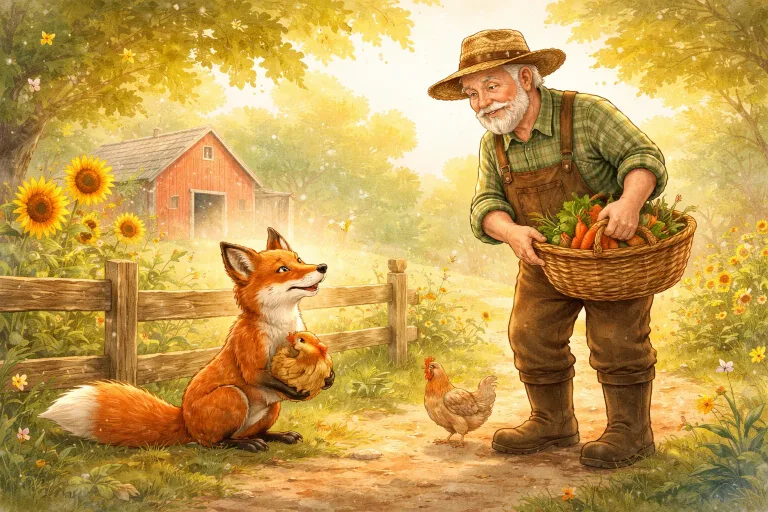
Once upon a time, in a quiet village, there was a clever fox named Felix. Felix was known for his quick wit and sneaky plans. One morning, Felix found himself hungry and decided to visit the farmer’s barn. But the farmer, Mr. Green, was very smart and didn’t want Felix stealing his chickens.
Felix thought hard. He needed to find a clever way to get food without getting caught. Suddenly, he remembered the farmer’s favorite blue hat hanging on a hook by the door. An idea sparked. Felix grabbed the hat and darted into the barn, pretending to be the farmer’s long-lost brother in disguise.
Mr. Green was surprised to see Felix wearing his hat but played along. “Ah, my brother! I see you’ve come for dinner,” said the farmer. Felix nodded and pointed towards the chickens, trying to look hungry. Mr. Green was amused but suspicious.
Quick-witted as he was, Felix said, “I hear the chickens are very clever too. Maybe they can help me find some food.” Mr. Green chuckled, realizing Felix was trying to play a trick. But instead of being angry, he admired Felix’s cleverness.
He said, “Felix, I see you’re quite smart. But it’s better to ask nicely than to sneak around. Here, take some eggs for your breakfast, but no more sneaking, okay?”
Felix learned that being clever isn’t just about trickery but about being respectful and honest. From that day, Felix and Mr. Green shared a funny story about wit and wisdom.
Moral: Wit is clever, but kindness and honesty are the real treasures.
Talk About It
- What did Felix do to outsmart the farmer?
- Why is it important to be honest even if you are clever?
- Can you think of a time when being kind helped you solve a problem?
Story 2: The Little Mouse and the Big Problem
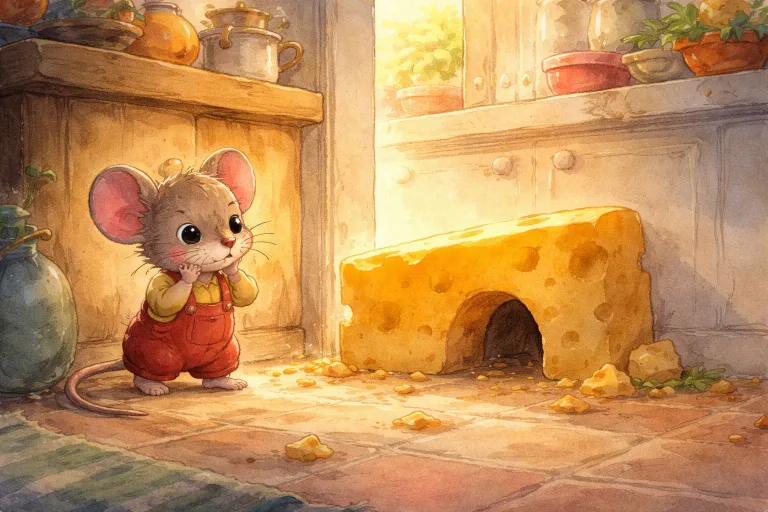
In a peaceful village, lived a tiny mouse named Max. Max was small but known for his quick wit. One day, a hungry fox crept into the barnyard, eyeing the chickens and grains. The animals panicked—how could they stop such a big, sneaky predator?
Max thought hard. The fox was clever but also quite proud. He decided to outsmart the fox with a trick. Max hurried to gather a pile of shiny, colorful buttons and shiny pebbles. He arranged them in a circle, making a sparkling mosaic in the barnyard. Then, he hid behind a haystack, waiting.
Soon, the fox returned, sniffing eagerly for food. When he saw the shiny mosaic, he thought it was some kind of treasure or magical trap. Curious, he leapt right onto the mosaic, trying to paw at the shiny objects. But the buttons and pebbles rolled and jingled under his paws! The fox was so surprised and confused that he slipped and tumbled into a nearby puddle, soaking his fur and losing interest in the barnyard.
Max’s quick thinking saved the day. He told the other animals that sometimes, cleverness can be more powerful than size or strength. The barnyard animals cheered and knew they could rely on each other’s wit in tight spots.
Moral: Using your cleverness can turn a tricky situation into an opportunity to outsmart bigger problems.
Talk About It
- Why was Max able to trick the fox?
- Can you think of a time when thinking quickly helped you?
- Why is it important to use your brain and not just muscles?
Story 3: The Hare’s Clever Trick
Once upon a time in a lush green forest, a hare named Hattie loved to boast about how fast she was. She would often tease the slower animals, laughing at them for not being quick enough. One sunny morning, Hattie overheard a group of animals talking about a mysterious treasure hidden deep in the forest. Excited by the idea of finding something special, Hattie decided to claim she knew the way and that she would find the treasure first.
As she hopped along confidently, Hattie suddenly came to a fork in the path. Remembering her bragging about her speed, she thought, “I’ll take the left path. It looks easier.” She dashed off, leaving behind a cautious squirrel named Sammy and a wise old owl named Oliver.
Unbeknownst to Hattie, the right path was trickier because it was filled with tangled bushes and tricky turns. Meanwhile, Sammy and Oliver, who knew the forest well, took the right path carefully. Sammy suggested they use their wit to outsmart Hattie, who was rushing without thinking.
While Hattie was busy bragging, Sammy whispered a clever idea to Oliver. “Let’s make a false trail with some shiny pebbles and leaves, so Hattie will waste her time following the wrong trail!” Oliver nodded wisely, and they quickly crafted the trail.
When Hattie reached a clearing and saw a shiny rock that looked like part of the treasure, she was thrilled. She snatched it up and called out, “I found the treasure!” But suddenly, she realized she had been tricked when she saw the false trail of pebbles leading back to her starting point.
Meanwhile, Sammy and Oliver quietly followed their own trail and found the real treasure—a beautiful, sparkling fruit tree filled with delicious fruit. They shared the treasure with the other animals, teaching everyone that being quick is good, but using your wit to think carefully is even better.
Moral: Wit is the true treasure—using your cleverness can help you outsmart trouble and find real rewards.
Talk About It
- Why do you think Hattie’s quickness didn’t help her find the treasure?
- How did Sammy and Oliver use their cleverness to find the treasure?
- Have you ever used your wit to solve a problem? What did you do?

Story 4: The Sly Raven and the Lost Key
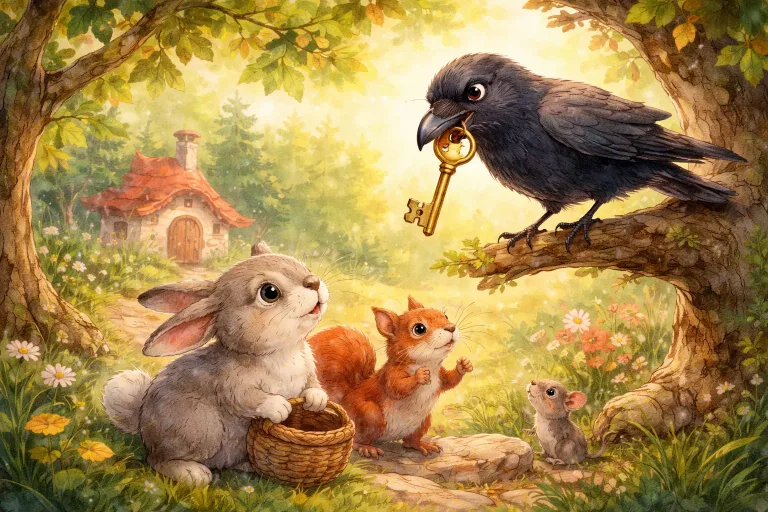
Once upon a time, in a lush green forest, there was a clever raven named Rina. Rina was known throughout the woods for her quick thinking and resourcefulness. One sunny morning, Rina’s friend, Benny the Bunny, came rushing to her, looking very worried.
"Benny, what's wrong?" asked Rina, flapping her wings gently.
"I lost my shiny key," Benny sighed. "It opens my favorite burrow, and I can't find it anywhere! I looked everywhere, but it's gone."
Rina tilted her head thoughtfully. "Well, Benny, where did you last see it?"
Benny looked around and said, "I think I was playing near the big oak tree yesterday. I might have dropped it there."
Rina decided to help her friend. She flew up high to get a better look around. From her perch, she spotted something shiny sparkling near the roots of the oak tree. "Benny! I see something shiny over there," she called down.
Benny hurried over, and sure enough, it was his missing key! But as he reached down, he saw that the shiny object was surrounded by a tangle of vines.
"How do I get to it without getting caught?" Benny asked anxiously.
Rina thought quickly. "Let me help. I’ll distract the vines while you carefully grab the key."
Rina flapped her wings loudly, squawking and fluttering around the vines to attract attention. The vines, startled by her sudden movement, loosened their grip. Meanwhile, Benny tiptoed carefully and grabbed his key.
When Benny had the key in his paws, he looked at Rina happily. "Thank you! You're so clever!"
Rina smiled. "Sometimes, a quick plan and a bit of wit can solve even the biggest problems."
From that day, Benny learned that thinking carefully and asking for help could turn a tricky situation into a simple fix.
Moral: Wit is about using your brain to solve problems creatively and quickly.
Talk About It
- Have you ever solved a problem by thinking quickly like Rina?
- Why is it helpful to ask for help when you're stuck?
- Can you think of a time when being clever helped you fix something?
Story 5: The Wit of the Wise Little Bird
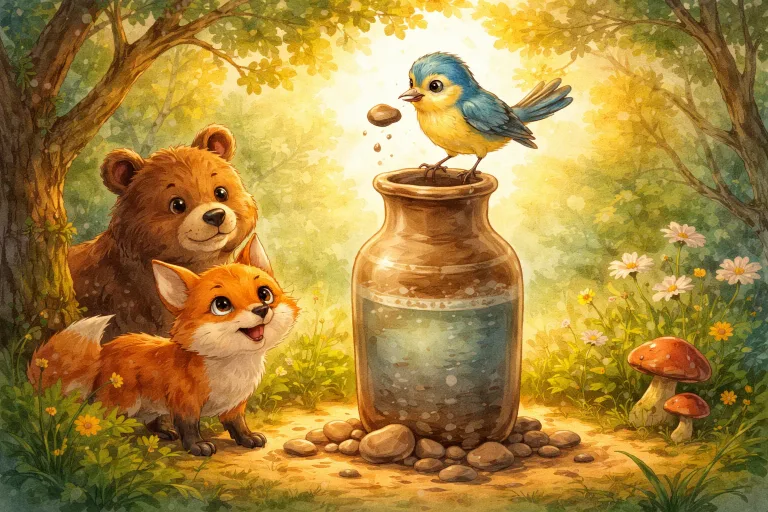
Once upon a time, in a lush green forest, there was a tiny bird named Pip. Pip was not the biggest or the loudest bird, but he was known throughout the forest for his quick thinking and clever ideas. One day, a group of animals gathered by a big pond, arguing about who should get to drink first. The strongest lion, the fastest rabbit, and the biggest elephant all wanted to go first. They started to argue loudly, each claiming their turn was the most important.
Pip, watching from a nearby branch, decided to help. He chirped loudly, getting everyone's attention. "Why don't we settle this with a game of wit?" he suggested. The animals looked at each other curiously. Pip proposed, "Let’s each tell a trick or a clever thing we can do. The one with the smartest idea will go first."
Practical Takeaways
- Use your brain to think of creative solutions.
- Wit is best when combined with kindness.
- Being honest helps others trust and respect you.
Conclusion
Developing wit is like sharpening a tool—use it wisely and kindly. When you think quickly and act with kindness, you can solve problems and make friends along the way. Wit isn't just about being smart; it’s about being thoughtful and respectful too.
Continue Exploring Moral Stories
Discover animated moral stories, browse by category, or find age-appropriate reads for your family.
You May Also Like
5 Cleverness Stories for Kids: Problem-Solving With Your Brain
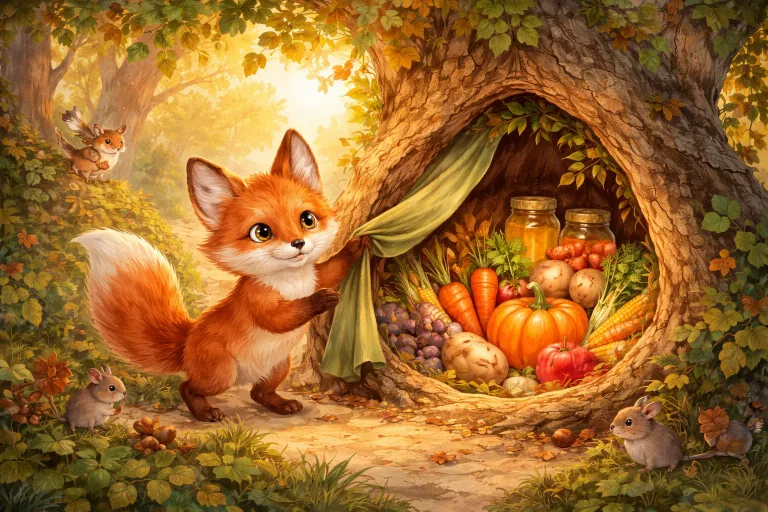
Fox crafted a clever scarecrow with shiny pebbles to protect the harvest, teaching that simple, thoughtful ideas can solve problems effectively.

4 Wisdom Stories for Kids: Making Thoughtful Decision-Making
Stories teach children the importance of patience, listening, and wise decision-making, helping them grow into empathetic and thoughtful individuals.

3 Common Sense Stories for Kids: Practical Everyday Judgment
Teaching children practical everyday judgment through stories helps them make safe, honest, and responsible choices, fostering life skills for the future.

Piggy Bank Lessons: 5 Stories That Teach Kids Money Management
Discover five engaging stories that make money management simple and meaningful for children, teaching saving, wise spending, and generosity through age-appropriate storytelling.