
How to Teach Empathy: 5 Powerful Anti-Bullying Stories for Kids
Empathy is more than just a kind feeling—it's the foundation for kindness, inclusion, and a safer school or home environment. When children learn to understand and connect with others' emotions, they are less likely to bully and more likely to stand up for their friends. Storytelling is one of the most effective ways to help kids see through someone else’s eyes. In this article, you’ll find five anti-bullying stories that gently teach empathy, followed by age-appropriate discussion guides and practical tips for parents and teachers.
Table of Contents
- What Is Empathy? Why It Matters for Bullying Prevention
- How Stories Can Teach Empathy and Kindness
- Story 1: The New Kid’s Shoes
- Story 2: The Lunch Table Bridge
- Story 3: The Lonely Pine Tree (Traditional Retelling)
- Story 4: Maya and the Missing Drawing
- Story 5: The Kindness Ripple
- Discussion Guides: Questions & Activities
- More Empathy and Kindness Stories
What Is Empathy? Why It Matters for Bullying Prevention
Empathy is the ability to recognize, understand, and share the feelings of others. For children, that means noticing when someone is hurt, left out, or sad—and imagining what that experience might be like. When kids develop empathy, they are less likely to engage in bullying and more likely to help someone who is being bullied.
Children aren’t born with full empathy. They learn it through observation, conversation, and—most powerfully—through stories. By hearing about characters who experience exclusion, hurt feelings, or bravery in the face of bullying, children can begin to see the world from a new perspective.
How Stories Can Teach Empathy and Kindness
Stories offer a safe, gentle way to explore tough topics. They allow children to experience different emotions, mistakes, and moral choices from a distance. When stories focus on bullying and kindness, they encourage readers to reflect: "How would I feel? What would I do?"
Reading and discussing stories about empathy helps children:
- Identify different emotions
- Recognize when someone needs help
- Understand the impact of words and actions
- Practice standing up for others
- Develop the courage to repair harm
Let’s explore five stories designed to spark these conversations and nurture empathy.
Story 1: The New Kid’s Shoes
Theme: Inclusion, standing up for others, understanding differences
The Story
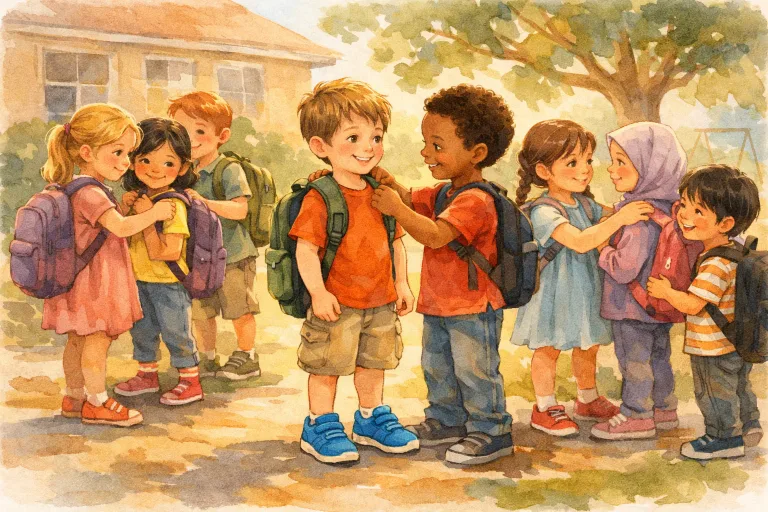
When Farid moved to a new town, he wore bright blue shoes with yellow lightning bolts. On his first day at Oakwood Elementary, everyone stared. Some kids whispered and snickered. At recess, Olivia, who usually played with everyone, noticed Farid sitting alone on the bench, looking down at his shoes.
A group of classmates started making jokes: "Are those magic shoes? Can you fly with them?" Farid’s cheeks turned red. Olivia felt uncomfortable.
But then Olivia remembered how nervous she felt when she first joined art club and nobody spoke to her. She walked over, sat beside Farid, and said, “I think your shoes are awesome! My brother would love them. Want to play tag?”
Farid smiled, and soon other kids joined in. By the end of recess, Farid’s shoes weren’t a joke anymore—they were a conversation starter.
Discussion Guide
- How do you think Farid felt when the other kids made fun of his shoes?
- Why did Olivia decide to help him?
- Have you ever seen someone left out at school? What could you do?
- Why is it brave to stand up for someone who is being picked on?
Story 2: The Lunch Table Bridge
Theme: Inclusion, friendship, stopping exclusion
The Story
Sam loved lunchtime. But when his best friend moved away, he found himself eating alone. A group of kids at another table always sat together, leaving no room for anyone else.
One day, a new student, Mia, tried to sit with them. The group told her there was no space—even though there was. Mia looked embarrassed and walked away.
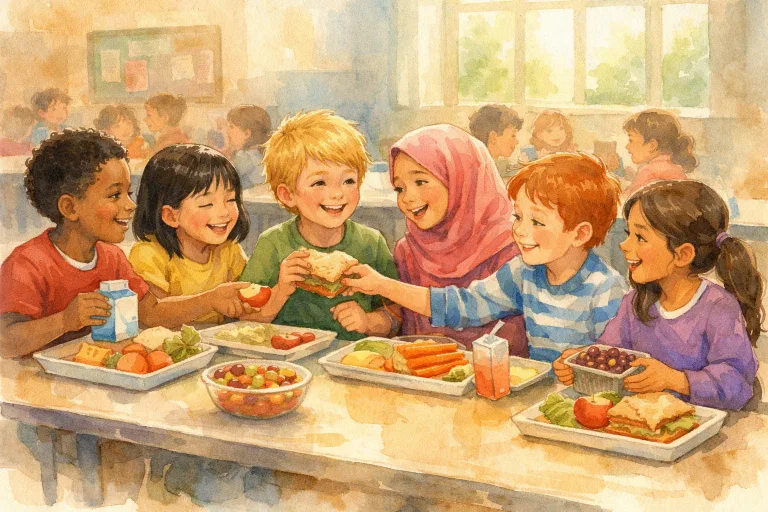
Seeing this, Sam made a decision. The next day, he invited Mia to sit with him. Soon, others noticed, and two more kids joined. Over the next week, their table grew bigger. The group at the other table started to wave and even asked to join them. Together, they decided to push the tables together, creating a long “bridge” that welcomed everyone.
Discussion Guide
- What happened when Mia tried to join the lunch table?
- Why did Sam invite Mia to sit with him?
- How did their actions change the lunchroom?
- What can you do if you see someone eating alone?
Story 3: The Lonely Pine Tree (Traditional Retelling)
Theme: Compassion for outsiders, empathy for those who are different
The Story
Once, in a forest full of oak and maple trees, there stood a single pine tree. The other trees teased the pine: “Your needles are sharp! Your branches are prickly!” The pine felt lonely and wished to be like the others.
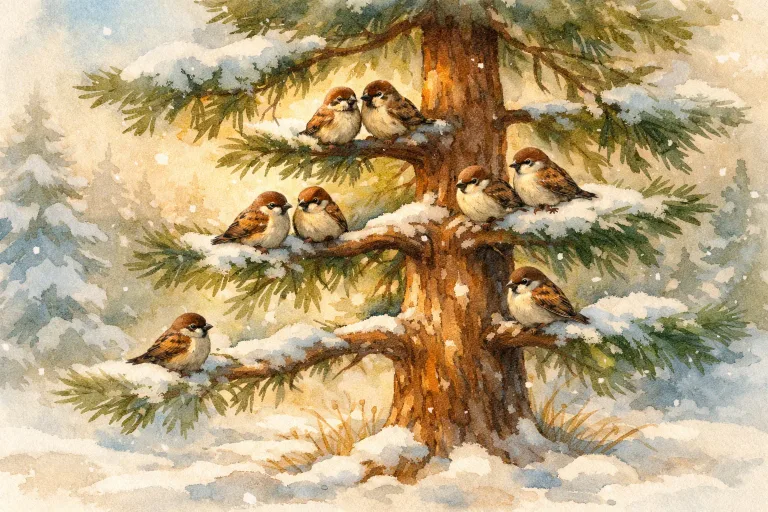
One winter, a group of cold sparrows flew into the forest, looking for shelter. The oak and maple trees wouldn’t let the birds rest in their branches, afraid they’d lose their leaves. But the pine tree, despite its prickly needles, opened its branches wide.
The sparrows slept safely through the storm. In spring, the birds thanked the pine by singing beautiful songs. The other trees realized they had been unkind. They learned that kindness and empathy, not appearances, are what matter most.
Discussion Guide
- How did the other trees treat the pine tree?
- Why did the pine decide to help the sparrows?
- How did the pine tree’s kindness change the forest?
- Can you think of a time someone was left out because they were different?
Story 4: Maya and the Missing Drawing
Theme: Repairing harm, apologizing, forgiveness
The Story
Maya was excited for art class. She worked hard on her drawing, using every color in her crayon box. At lunchtime, she left it on her desk to dry. When she returned, her drawing was gone. She felt her eyes fill with tears.
Later, her friend Lucas quietly handed Maya the drawing. It had a big scribble across the middle. "I’m sorry," Lucas whispered. "I was mad about my own drawing and ruined yours."
Maya was angry. But then she noticed Lucas’s sad face and remembered how she felt when someone ruined her work. She took a deep breath. “I’m hurt, but I know you feel bad. Next time, let’s talk instead of hurting each other.”
They worked together to fix the drawing, turning the scribble into a bright rainbow.
Discussion Guide
- How did Maya feel when she found her drawing was ruined?
- Why did Lucas ruin her drawing?
- How did Maya show empathy?
- What does it mean to repair harm after a mistake?
Story 5: The Kindness Ripple
Theme: Small acts of kindness, ripple effect, bystander courage
The Story
Jaden saw a classmate, Priya, drop all her books in the hallway. A group of kids nearby laughed. Jaden hesitated, then bent down to help her. “Thanks,” Priya said, smiling.
Later that day, Jaden saw Priya help a younger student tie his shoes. The next day, that younger student shared his snack with someone who forgot theirs. Slowly, more acts of kindness spread throughout the school. Jaden realized that one small, brave act could create a ripple of empathy and kindness.
Discussion Guide
- What did Jaden do when Priya dropped her books?
- How did kindness spread in the story?
- Why do small acts of empathy matter?
- Have you ever seen kindness spread from one person to another?
Discussion Guides: Questions & Activities
Use the questions after each story as conversation starters. Here are additional ideas for bringing empathy into daily life:
Activities
- Role-play: Practice what to say when someone is being left out or teased.
- Emotion Charades: Act out different feelings and guess them together.
- Empathy Journal: Have children write or draw about a time they helped someone or were helped.
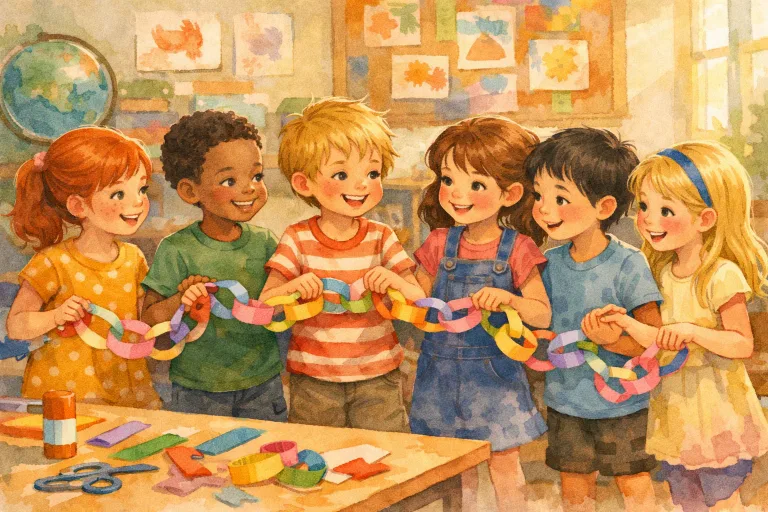
- Kindness Chain: Each act of kindness earns a paper link; watch the chain grow!
Tips for Parents & Teachers
- Model empathy by describing your own feelings and asking about others’ experiences.
- Praise moments when children notice or help others.
- Remind children that apologies and forgiveness are important after mistakes.
- Create classroom or family rituals for gratitude and kindness.

More Empathy and Kindness Stories
Looking for even more inspiration? These stories gently nurture empathy, kindness, and the courage to stand up for others:
- Random Acts of Kindness: 7 Short Stories That Inspire Empathy
- The Beggar’s Blessing: A Moral Story About Kindness for Kids
- Kindness Moral Stories
- Sparrow and the Rabbit: A Kindness Moral Story for Kids
- Stories About Compassion
- Friendship Moral Stories
Teaching empathy isn’t a one-time lesson—it’s an ongoing conversation. Every story, every moment of courage, and every act of kindness helps children grow into compassionate, confident upstanders. The world is kinder when we walk in someone else’s shoes—even if they’re bright blue with lightning bolts.
Continue Exploring Moral Stories
Discover animated moral stories, browse by category, or find age-appropriate reads for your family.
You May Also Like
Random Acts of Kindness: 7 Short Stories That Inspire Empathy
Discover seven heartfelt short stories that celebrate random acts of kindness, inspiring empathy and everyday compassion in children and families.
Navigating Peer Pressure: 5 Impactful Moral Stories for Teenagers
Explore five meaningful stories for teens that reveal how to handle peer pressure, stay true to values, and make courageous choices.
How to Say Thank You: 7 Beautiful Stories That Teach Kids Gratitude
Discover seven heartwarming moral stories that teach children the beauty of gratitude and thankfulness, along with simple family habits to nurture appreciation every day.
7 Simple Stories About Sharing to Teach Your Toddler Kindness
Teach your toddler kindness and empathy with these seven gentle, easy-to-understand stories about sharing, perfect for family read-aloud time.