
Wisdom of the Zen Master
The Zen Master’s Wisdom
At the edge of a small mountain village, where morning mist curled around bamboo fences and crickets sang at dusk, stood a simple cottage with a pebble path leading to its door. In that cottage lived an old Zen master.
He did not wear jewels. He did not sit on a golden throne. He owned no grand library and gave no loud speeches in the marketplace.
Yet people came from faraway towns just to sit beside him.
They came because when he listened, they felt quieter inside.
They came because when he spoke, his words stayed in their hearts.
And they came because no matter what happened—harsh weather, lost harvests, broken plans, or sad news—the Zen master seemed as calm as a still pond.
One spring morning, a boy named Jun climbed the hill to visit him.
Jun was young, thoughtful, and full of questions. He had traveled with dusty sandals, a rumbling stomach, and a mind that never seemed to rest.
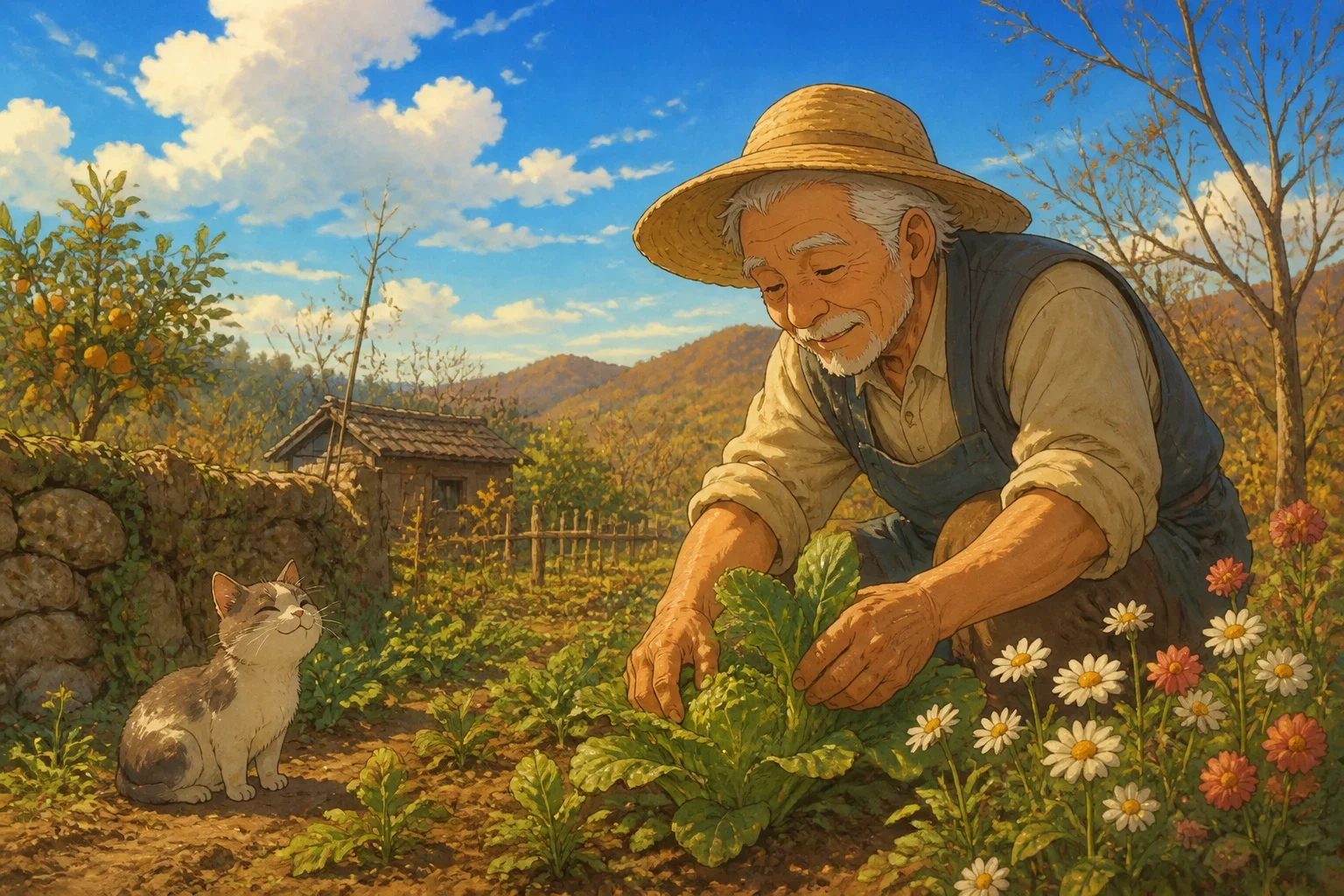
When he reached the cottage, he found the Zen master in the garden, kneeling beside a patch of tiny green shoots.
The old man was pouring water from a clay pot so slowly that not a drop was wasted.
Jun bowed politely.
“Master,” he said, “I have come to learn how to be peaceful. My mind worries all the time. When life goes wrong, I feel upset and afraid. How can I be calm like you?”
The Zen master looked up and smiled, his eyes warm and bright.
“Help me with the garden,” he said.
Jun blinked. He had expected a secret lesson, perhaps a riddle, perhaps a long speech full of mysterious wisdom.
But he said nothing. He picked up another clay pot and followed the master between rows of beans, herbs, and young cabbages.
For a while, neither of them spoke.
The breeze rustled the leaves. A bird pecked at the ground. Somewhere below, the village bell rang.
At last Jun could not hold his question any longer.
“Master,” he asked, “is peace really found in watering vegetables?”
The Zen master chuckled softly.
“Sometimes,” he said, “it is.”
Then he sat on a flat stone near the garden wall and motioned for Jun to sit beside him.
The Year Without Rain
“There was once a year,” the Zen master began, “when the rain did not come.”
Jun leaned closer.
“The clouds passed overhead but gave nothing. The earth cracked. The grass turned yellow. The river shrank until even the fish hid in its deepest shadows.
“The villagers grew frightened. Every morning they searched the sky. Every evening they complained to one another.
“‘What if the crops fail?’ they said.
“‘What if the wells dry up?’
“‘What will become of us?’”
The master picked up a dry leaf from the ground and turned it gently in his fingers.
“I was younger then,” he continued, “but I remember their fear well. Fear can spread through a village faster than fire through straw.”
Jun nodded. He knew that feeling. One worried voice often made many others worry too.
“What did you do?” he asked.
The Zen master placed the leaf on his knee.
“I woke early each day. I carried water carefully from the well. I gave each plant only what it truly needed. I shaded the smallest seedlings from the hottest sun. I loosened the soil so the little moisture left in the ground could stay there longer.
“And while I worked, I did not spend my strength shouting at the sky.”
Jun frowned thoughtfully. “Weren’t you worried too?”
“Oh, yes,” said the master honestly. “My heart was not made of stone. I cared for the garden. I cared for the people. I knew we might lose much.”
He looked at Jun kindly.
“But worrying about the sun did not cool it. Being angry at the clouds did not make them rain.”
Jun was quiet.
The Zen master continued, “So I asked myself a simple question: What is in my hands today?
“The weather was not in my hands.
“But my patience was.
“My effort was.
“My care was.
“My attitude was.”
What the Neighbors Saw
Day after day, the drought continued.
Some villagers became so upset that they stopped tending their fields. “What is the use?” they sighed.
Others rushed from one idea to another, never finishing any task. They were too busy panicking to notice what their crops needed.
But the Zen master kept working steadily.
Not quickly.
Not angrily.
Not hopelessly.
Steadily.
He carried water. He pulled weeds. He protected what he could protect.
At times, he felt tired. At times, he felt uncertain.
Still, he kept going.
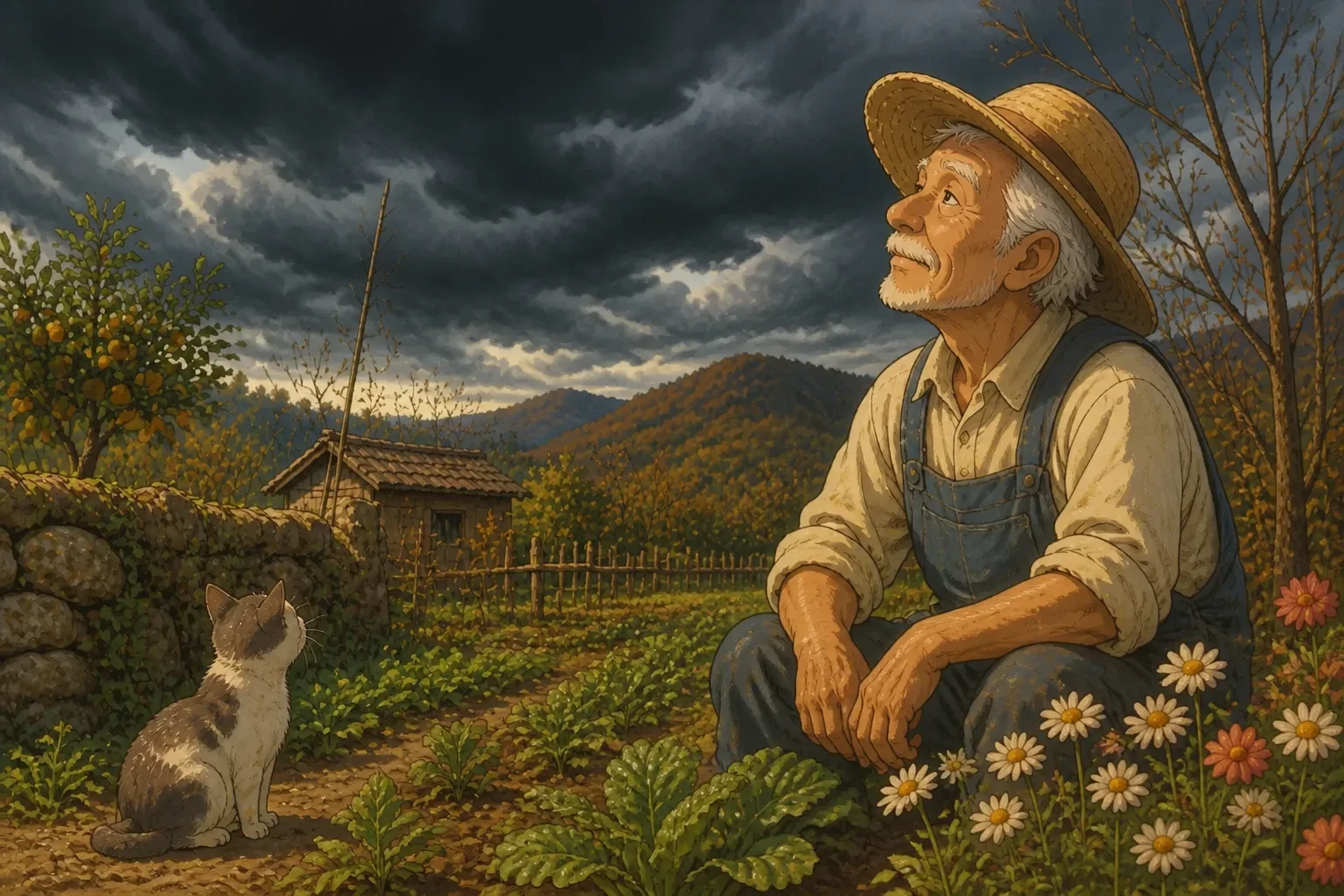
Then one evening, when the whole village had nearly given up, the wind changed.
The air smelled different—cooler, deeper, alive.
Children looked up first.
“Clouds!” one cried.
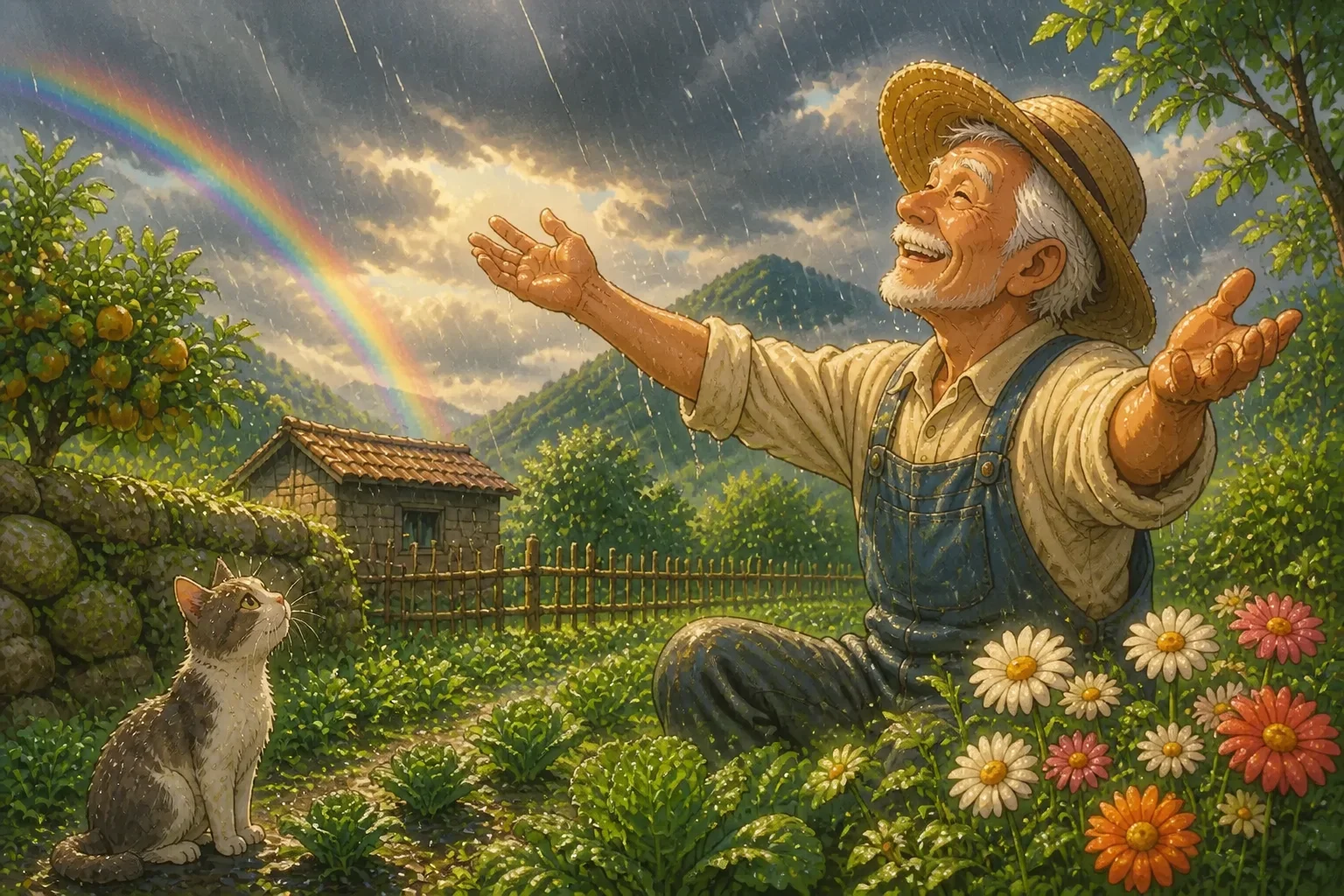
Dark gray clouds rolled over the hills. Thunder rumbled like a giant drum. Then, at last, rain spilled from the sky.
It splashed on rooftops, soaked dusty roads, and drummed joyfully on thirsty fields.
The villagers laughed, cried, and danced in the downpour.
Jun smiled as he imagined it.
“Your garden survived?” he asked.
The Zen master nodded. “Much of it did. Not because I controlled the rain, but because I cared for the garden while waiting for what I could not control.”
The Real Lesson
“The next morning,” the master said, “some neighbors came to me.
“They asked, ‘How did you stay so calm? Were you never afraid?’
“I told them, ‘Calm does not mean never feeling fear. It means not letting fear choose your actions.’”
Jun repeated the words softly, as if testing them. “Not letting fear choose your actions...”
The Zen master smiled.
“Many people think acceptance means giving up,” he said. “But true acceptance is different. It means seeing clearly what is real.
“If a storm is coming, pretending the sky is sunny is foolish.
“But screaming at the storm is foolish too.
“Wisdom is knowing the storm is here, then asking, ‘What can I do now?’”
A long silence followed.
Not an empty silence.
A thinking silence.
Jun watched the garden leaves flutter in the breeze. He noticed how some plants bent without breaking.
At last he said, “I think I understand. We cannot choose everything that happens to us. But we can choose how we meet it.”
The Zen master’s face brightened.
“Yes,” he said. “That is the beginning of peace.”
Jun’s New Understanding
The sun was sinking behind the hills now, painting the sky orange and rose. The garden, which had seemed ordinary when Jun arrived, now looked full of lessons.
The bamboo swayed and did not snap.
The herbs grew slowly but faithfully.
The master’s little clay pots, plain and worn, had carried enough water to keep life going.
Jun took a deep breath.
For the first time in many days, his thoughts felt less tangled.
He realized that he had spent much of his life fighting things he could not change—rain that fell on travel days, mistakes already made, harsh words already spoken, delays, disappointments, and fears about tomorrow.
No wonder his heart felt tired.
He bowed to the Zen master.
“Thank you,” he said. “You did not teach me by giving me a grand speech. You showed me that peace grows from acceptance, patience, and steady effort.”
The Zen master stood and handed Jun the empty clay pot.
“Then take this lesson with you,” he said. “Whenever life feels too heavy, ask yourself: What is in my hands today? Begin there.”
Jun smiled.
He would remember.
And as he walked back down the mountain path, the evening air seemed softer, the world less frightening, and his own heart a little wiser than before.
Key Takeaways for Kids
- You cannot control everything that happens.
- You can control your actions, effort, and attitude.
- Acceptance does not mean giving up; it means facing reality calmly.
- Fear is normal, but we should not let fear make all our choices.
- Small, steady efforts can make a big difference during hard times.
Moral of the Story
True wisdom comes from accepting what we cannot change and choosing a calm, steady response to life’s challenges.

Watch the Animated Story
Watch on YouTube
Related Stories
The Wise Witch Story: Amelia, the Rain, and the Lesson of
The Wise Witch When the wind stopped singing over the fields, everyone in the village knew something was wrong. For…
The Wise Old Woman and the Proud Traveler: Humility for Kids
The Wise Old Woman and the Proud Traveler At the edge of a quiet village, where the hills rolled like green blankets…
Lazy Donkey Who Finally Helped: A Moral Story on Hard Work
The Lazy Donkey Who Finally Helped In a sunny little village tucked between green hills and golden fields, there lived…

Timmy the Brave Kitten | Courage Moral Story for Kids
The Adventure of Timmy the Brave Kitten On the edge of a cozy little village, where chimneys puffed soft clouds into…
Frogs Who Wanted a King: A Memorable Aesop Fable for Kids
The Frogs Who Wanted a King On the edge of a quiet marsh, where dragonflies stitched silver lines through the air and…
The Ass in the Lion’s Skin: A Moral Story About Being Yourself
The Ass in the Lion’s Skin On the edge of a golden field, where tall grass swayed like waves and crickets sang in the…

Bees and the Beetles: A Moral Story About Hard Work
The Bees and the Beetles On the edge of a bright summer garden stood a tall old hive, golden in the afternoon sun. From…
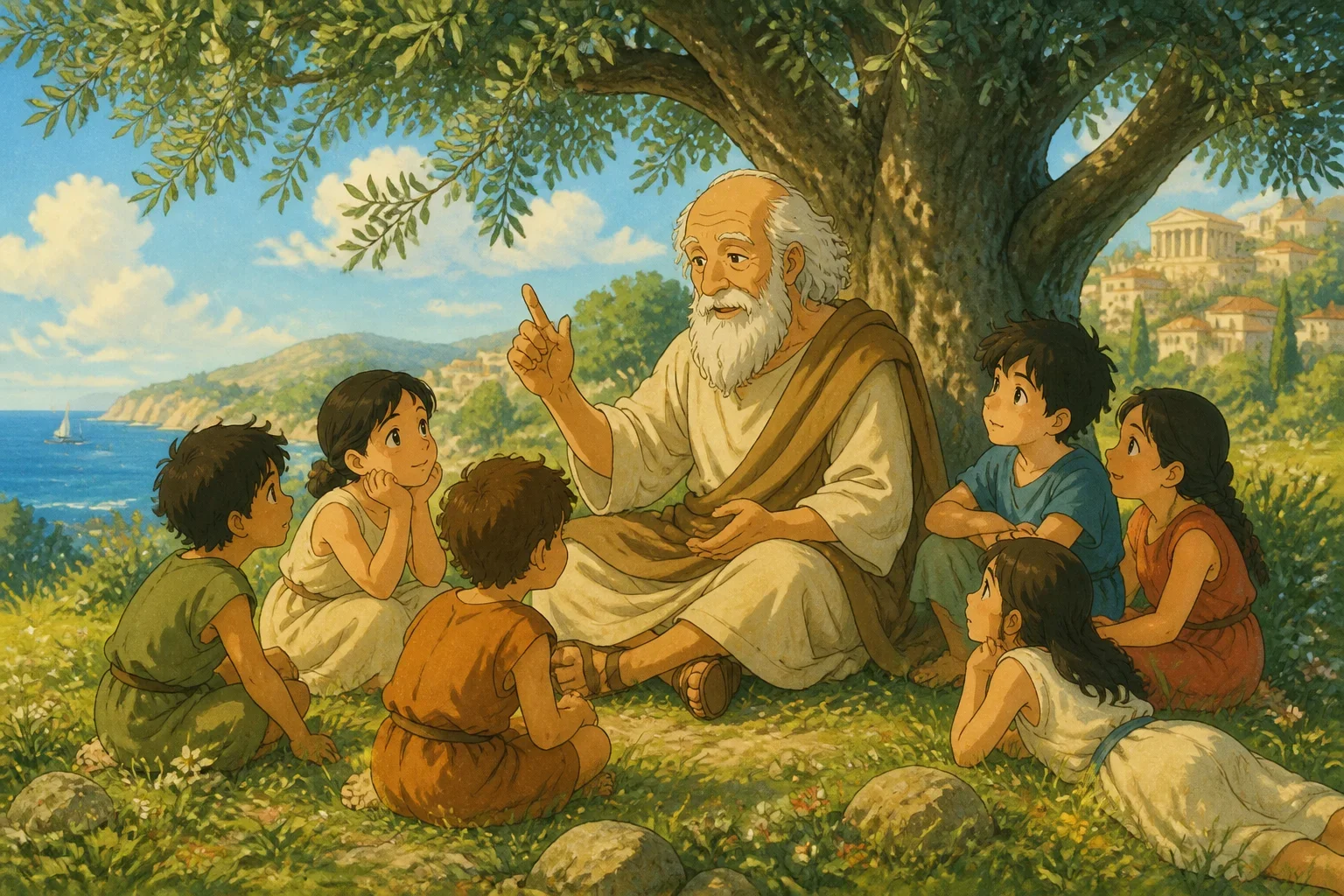
The Story of Socrates for Kids: A Moral Tale About Asking Questions
The Story of Socrates Under the Olive Tree Long ago, in the busy city of Athens, there lived a man who did not wear a…