
The Power of Small Deeds: A Moral Story About Kindness
The Power of Small Deeds: A Gentle Kindness Story for Kids
In a little town tucked between green hills and a silver-bright stream, people were always busy.
The baker hurried before sunrise. The seamstress stitched by her window. Children raced through the square with untied shoelaces and crumbs on their cheeks. Carts rattled, doors swung, dogs barked, and the air often smelled like warm bread, rain on stone, and wild mint growing by the path.
It was a happy town in many ways. But it was also a hurried one.
People nodded to one another without really looking. They passed by small troubles as if they were pebbles in the road. A dropped scarf. A lonely face. A tired sigh.
At the edge of town, in a weathered cottage with blue shutters, lived Mr. Elwood.
He was not rich or famous. He did not make speeches in the square. He did not ask anyone to notice him.
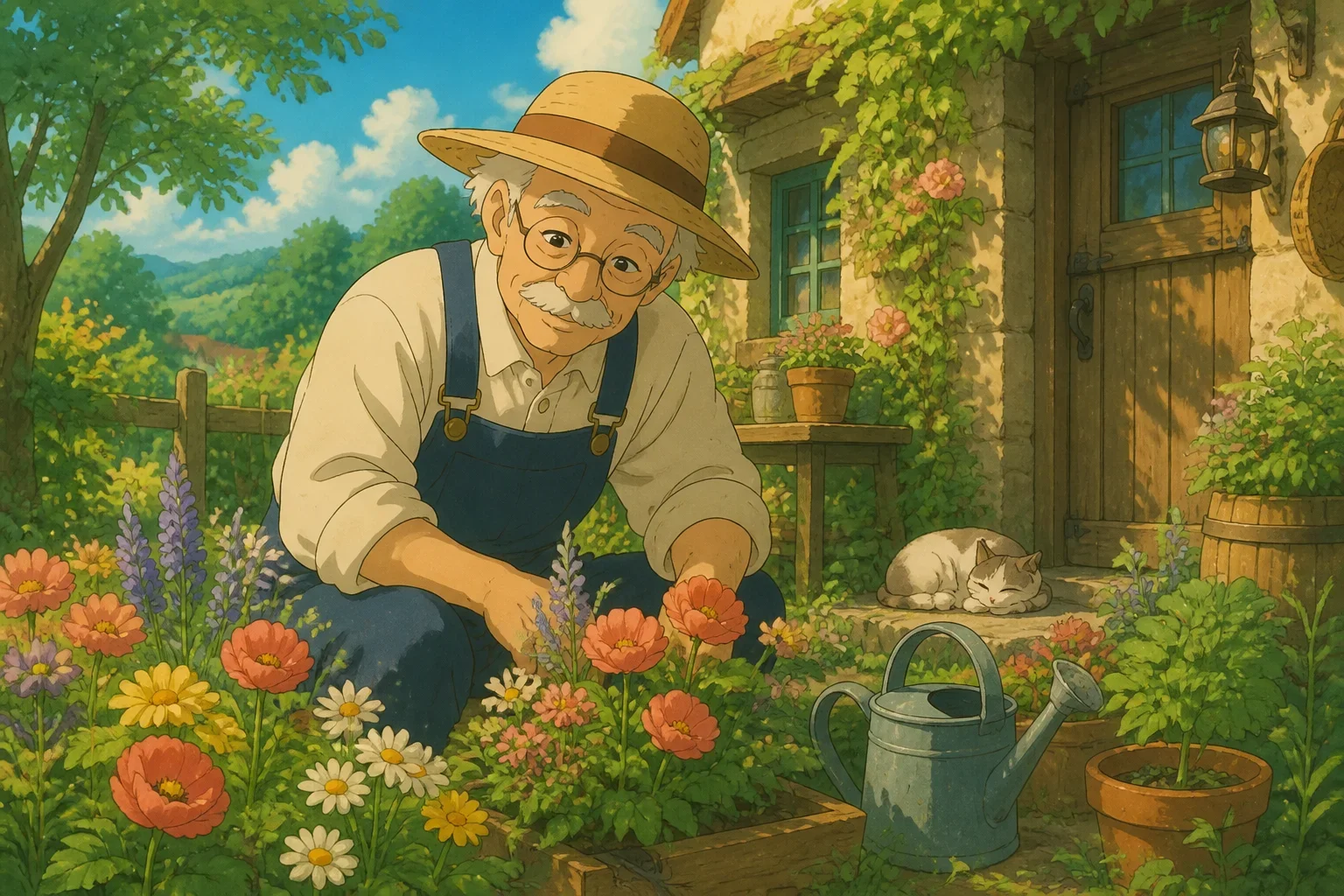
But every morning, before the bells rang and before the first loaf came out of the oven, Mr. Elwood stepped into his garden with a tin watering can in one hand and a basket in the other.
His garden was a place of soft wonders. Marigolds glowed like little suns. Lavender swayed in purple rows. White daisies opened to the morning light. Sweet peas climbed the fence as if they were trying to peek into the sky.
Mr. Elwood cared for each plant slowly and gently, as though every leaf mattered. He picked up fallen branches from the lane so no one would trip. He left sprigs of rosemary on neighbors’ steps when someone was ill. He tied up broken gates. He returned runaway hats. He mended what he could.
Most people barely noticed. But somehow, their days went a little more smoothly because Mr. Elwood was in them.
A Sad Face in the Park
One bright afternoon, Mr. Elwood carried a small bunch of wildflowers through the park. The sky was pale blue, and the pond shimmered like glass. Sparrows hopped beneath the benches, looking for crumbs.
That was when he saw her.
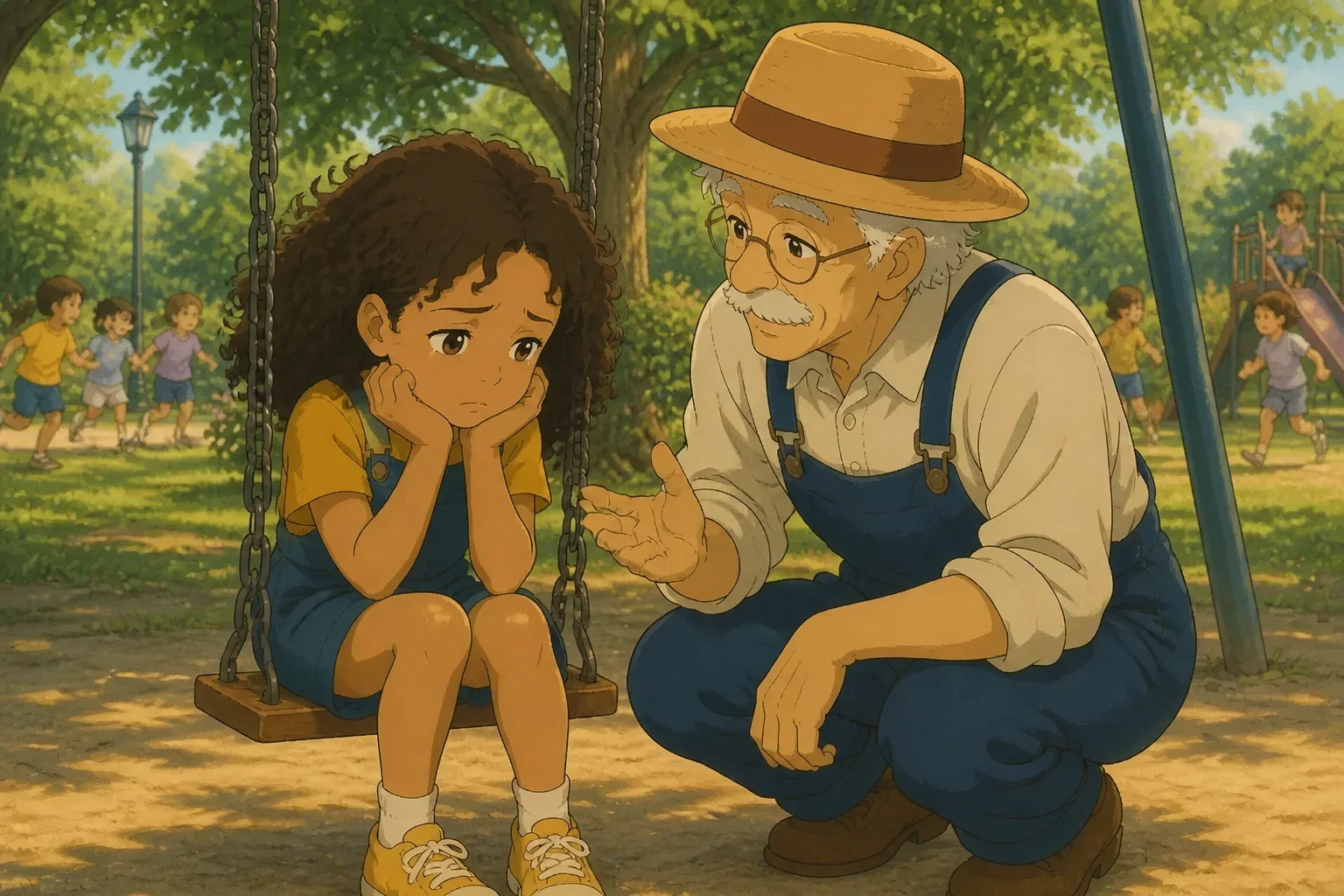
A little girl sat alone on a swing, one foot dragging in the dust. Her curls were messy from play, and her eyes looked shiny, as if tears were trying very hard not to fall.
Mr. Elwood stopped.
He did not rush over. He did not ask too many questions at once. He simply sat on the bench nearby and waited a moment, the way kind people do when they know sadness needs room.
After a while, he said softly, “That swing should be flying much higher than that.”
The girl gave the tiniest sniff and looked up.
Her name was Lila.
“I can’t swing properly today,” she murmured.
“And why is that?” Mr. Elwood asked.
Lila opened her hand. It was empty, but she looked at it as if something precious ought to be there.
“I lost my toy,” she whispered. “My tiny blue dragon. I take it everywhere. I had it this morning, and now it’s gone.”
Mr. Elwood nodded as though she had told him something very important.
Because she had.
“A blue dragon is not a thing to give up on easily,” he said.
Lila blinked. “You don’t think it’s silly?”
“Not at all,” said Mr. Elwood. “Important things are important because they matter to someone.”
For the first time that afternoon, Lila’s face changed a little.
“Will you help me look?” she asked.
Mr. Elwood smiled. “Of course.”
The Search Begins
They started near the swing.
They looked under the bench, beneath the slide, around the roots of the old oak tree. Lila searched quickly at first, with the nervous, jerky movements of someone afraid hope might run out. Mr. Elwood searched differently. He was calm and careful, peeking behind flowerpots, lifting fallen leaves one handful at a time, checking all the places a tiny dragon might hide.
“Where did you last see it?” he asked.
“By the fountain,” Lila said. “No—maybe near the path. I made it fly over the bench. Then I fed ducks with Mama. Then…” Her voice wobbled. “I don’t remember.”
“That’s all right,” said Mr. Elwood. “We’ll let the afternoon tell us.”
Lila frowned a little, but she followed him.
They searched by the fountain. They searched beside the duck pond. They searched under a patch of tall grass that brushed their ankles.
As they looked, Mr. Elwood pointed out things Lila had not noticed before.
“A ladybug on that leaf,” he said.
“A feather there—see the silver edge?”
“The wind has tucked three yellow leaves behind that stone.”
Soon Lila began to notice things too.
“There’s a snail trail!” she said.
“And a heart-shaped pebble,” said Mr. Elwood.
“And that cloud looks exactly like a sheep,” Lila added.
Even while she was worried, the world did not seem quite so heavy anymore.
One Child, Then Another
A boy named Timmy, who had been bouncing a ball nearby, wandered over.
“What are you doing?” he asked.
“Looking for a dragon,” said Mr. Elwood.
Timmy’s eyes widened. “A real one?”
“A very small blue one,” Lila said.
Timmy grinned. “I’ll help.”
Then came Mina from the hopscotch squares. Then Jasper, still holding half a pear. Then two sisters with ribbons in their braids.
Soon children were crouching under bushes, peering behind tree trunks, and calling out clues.
“Not here!”
“I found a marble, but not a dragon!”
“Check the flowerbed!”
“Maybe it flew to the fountain!”
The park changed. What had begun as one girl’s quiet sadness became a shared mission. Children who had not been speaking to each other five minutes earlier were suddenly searching side by side. One held back branches while another looked underneath. One brushed dirt off a stone so another could see behind it.
Even a few grown-ups joined in. A baker’s apprentice looked beneath the bench with flour still on his sleeve. An old woman with a cane checked around the rose bushes. A mother pushing a pram scanned the path carefully.
Mr. Elwood said very little. He only kept searching, and smiling, and making room for others to help.
The Blue Flash in the Grass
The sun was beginning to lower, turning the park golden. Shadows stretched long across the ground.
Lila’s hope started to sink again.
“Maybe it’s gone forever,” she said quietly.
Mr. Elwood knelt beside her.
“Sometimes,” he said, “the last place we look is not the last place because we are lucky. It is the last place because we kept going.”
Lila took a breath and nodded.
Then, from near the hedge by the park gate, came a shout.
“I found something!” Timmy called.
Everyone turned.
He was on his knees in the grass, one hand raised high. In his palm, glowing in the late sunlight, was a tiny blue dragon.
Its painted wings were scuffed. One eye had a scratch. But it was unmistakably Lila’s.
Lila gasped. Then she ran.
“My dragon!” she cried.
She took it carefully, as if it were made of glass and moonlight. For one second she just held it to her chest, eyes squeezed shut with relief.
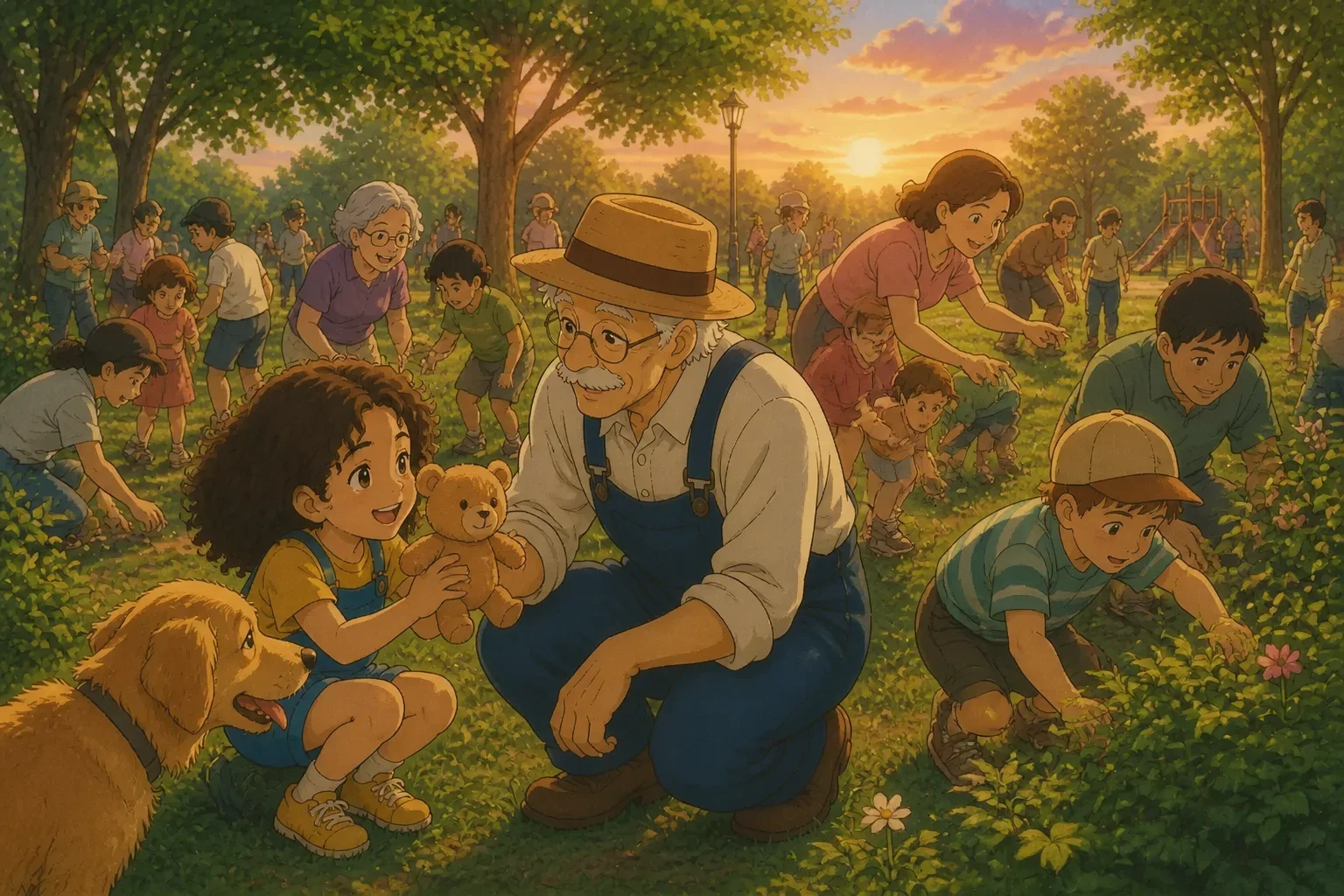
Then she looked up at everyone around her.
At Timmy. At the children. At the grown-ups. At Mr. Elwood.
“Thank you,” she said, and her voice was small but full. “Thank you for helping me.”
The children cheered. Timmy puffed up proudly. Someone clapped. Even the ducks seemed pleased, bobbing at the edge of the pond.
Mr. Elwood only tipped his hat. But inside, his heart felt warm as fresh bread.
How Kindness Traveled
The next morning, something curious happened.
Timmy helped a younger boy gather spilled pencils without being asked. Mina shared her umbrella with the ribbon-haired sisters when a quick rain came. The baker’s apprentice carried an old woman’s basket all the way to her gate. Someone repaired the loose step outside the library. Someone left apples on a doorstep. Someone watered flowers that were not their own.
The town did not transform all at once with trumpets and banners. It changed the quiet way seeds grow. Slowly. Steadily. Almost invisibly at first.
But day by day, people began to notice one another more. They stopped when someone dropped something. They listened when someone sounded sad. They offered help before being asked.
And because kindness often invites kindness back, these small deeds kept traveling. From one person to another. From one morning to the next. From one doorstep to the whole town.
Before long, Mr. Elwood’s garden became a favorite meeting place. Children came to see what was blooming. Neighbors paused to chat by the gate. People traded stories, cuttings, recipes, and smiles.
Lila visited often, her blue dragon tucked safely in her pocket. Sometimes she helped water the marigolds. Sometimes she pulled tiny weeds with very serious concentration.
One afternoon she asked, “Did you know everyone would help me that day?”
Mr. Elwood looked at the flowers swaying in the breeze.
“No,” he said. “I only knew that you were sad, and I could help with that part.”
Lila thought about this for a long moment. Then she smiled the kind of smile that means a lesson has settled deep inside.
A small deed, she realized, does not stay small for long.
Key Takeaways for Kids
- A small act of kindness can brighten someone’s whole day.
- Helping one person can inspire many others to help too.
- Things that matter to someone should be treated with care and respect.
- You do not need to be loud or important to make a big difference.
- Kindness spreads from person to person, just like ripples in water.
Moral of the Story
Even the smallest act of kindness can grow into something wonderful. Kindness does not need to be big or noisy to change the world around us.
Why This Kindness Story Stays in Children’s Hearts
Children remember stories like this because the problem feels real: losing something precious, feeling alone, and hoping someone will care. Mr. Elwood does not solve the day with magic. He notices, helps, and stays patient. That makes the lesson powerful and easy for kids to carry into real life.
If you are looking for children's moral stories, bedtime stories about kindness, or gentle stories that show how communities grow stronger through caring, this tale is a warm reminder that goodness often begins with one small choice.

Watch the Animated Story
Watch on YouTube
Related Stories

The Forest Spirit’s Gift: A Bedtime Story About Hope
The Forest Spirit’s Gift: A Gentle Story About Hope and Kindness By the end of summer, the village of Eldergrove no…
The Baker’s Kindness: A Gentle Story for Kids About Sharing
The Baker’s Kindness: A Short Moral Story About Sharing Before the village roosters crowed, before windows glowed, and…

The Fox and the Umbrella: A Gentle Kindness Story for Kids
The Fox and the Umbrella The rain began with a whisper. It tapped softly on fern leaves, slid down pine needles, and…
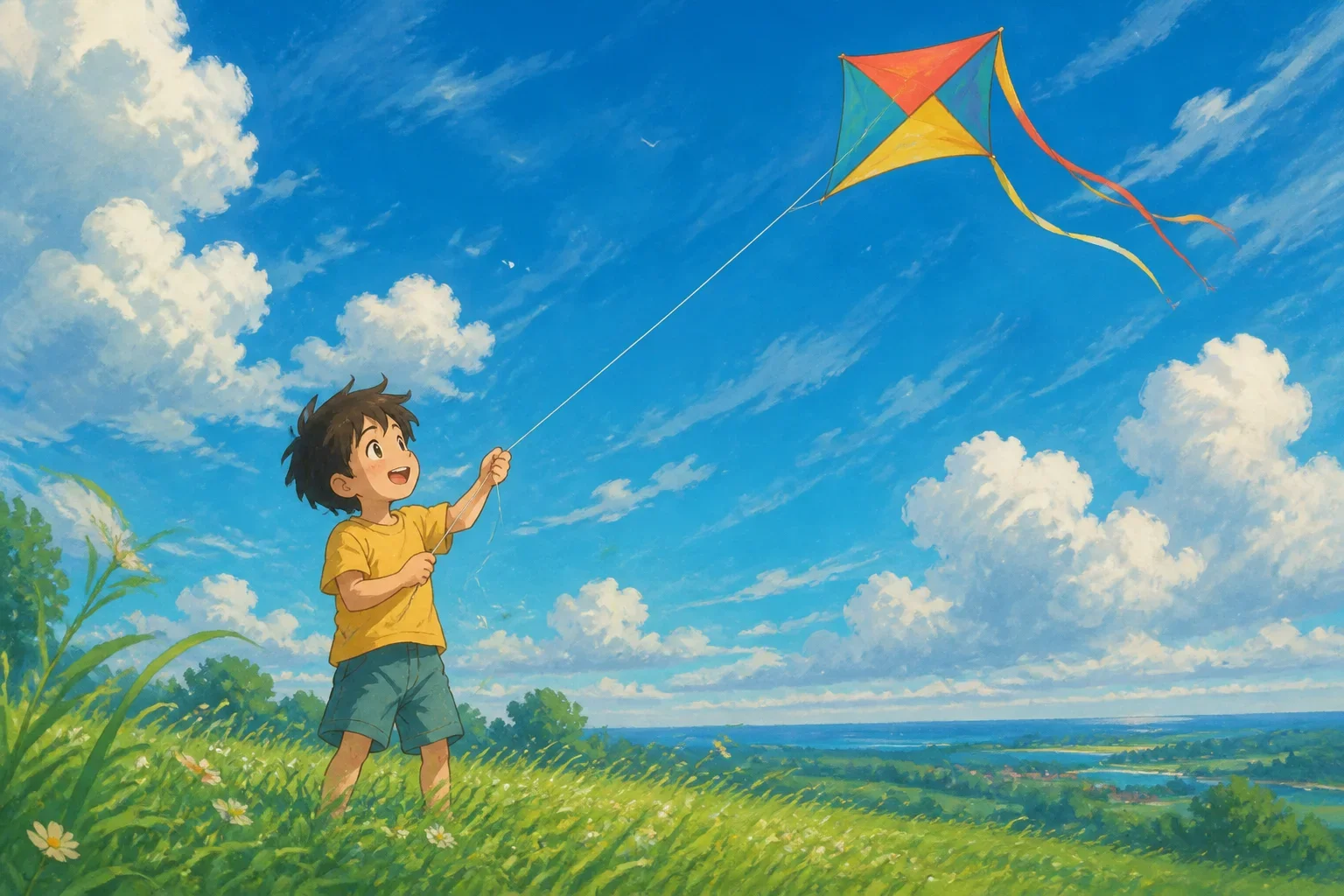
Broken Kite: A Gentle Story for Kids About Helping Others
The Broken Kite On the windiest hill outside Breezy Hollow, children liked to say the sky came down low enough to play.…
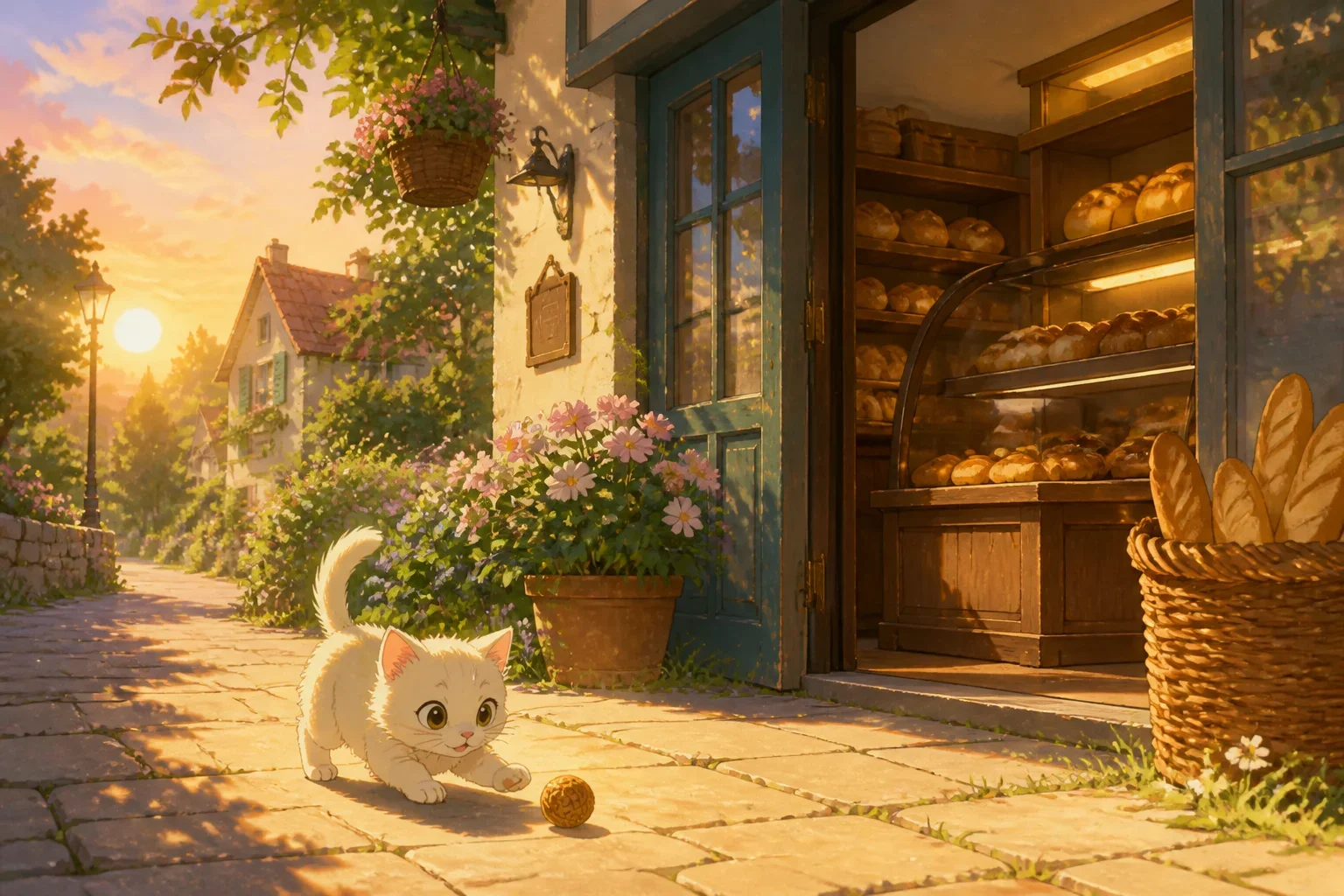
The Bakery Kitten | Moral Story of Kindness and Courage
The Bakery Kitten: A Short Moral Story about Kindness and Courage Before the sun rose over the village, the bakery…
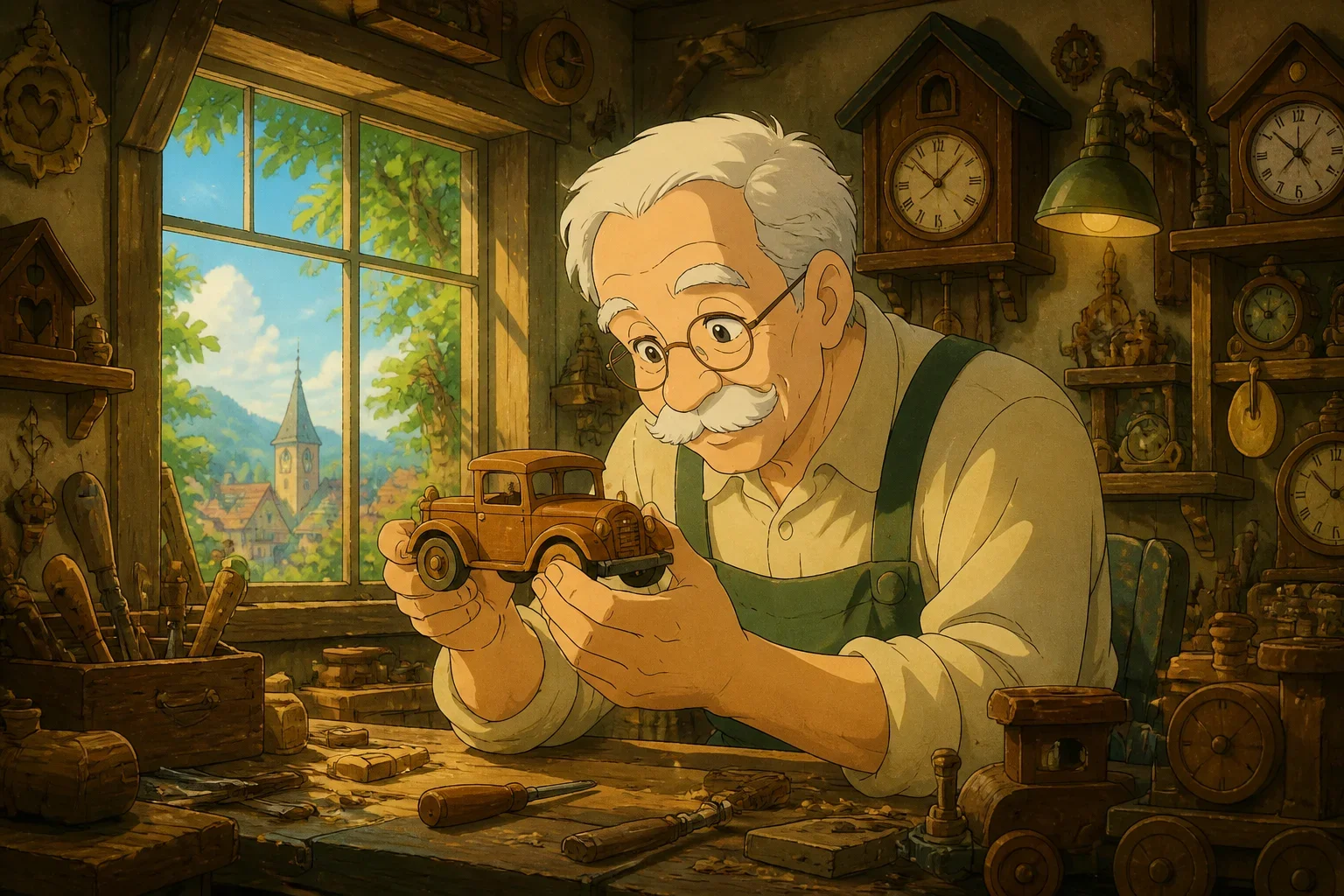
Old Clockmaker and the Broken Toy | Kindness Moral Story
The Old Clockmaker and the Broken Toy At the very end of a cobbled lane, where ivy climbed stone walls and sparrows…

Lost Medal: A Heartwarming Kindness Story for Kids
The Lost Medal On the morning of the city marathon, Noah woke before the sun. For a moment, he lay still in bed,…
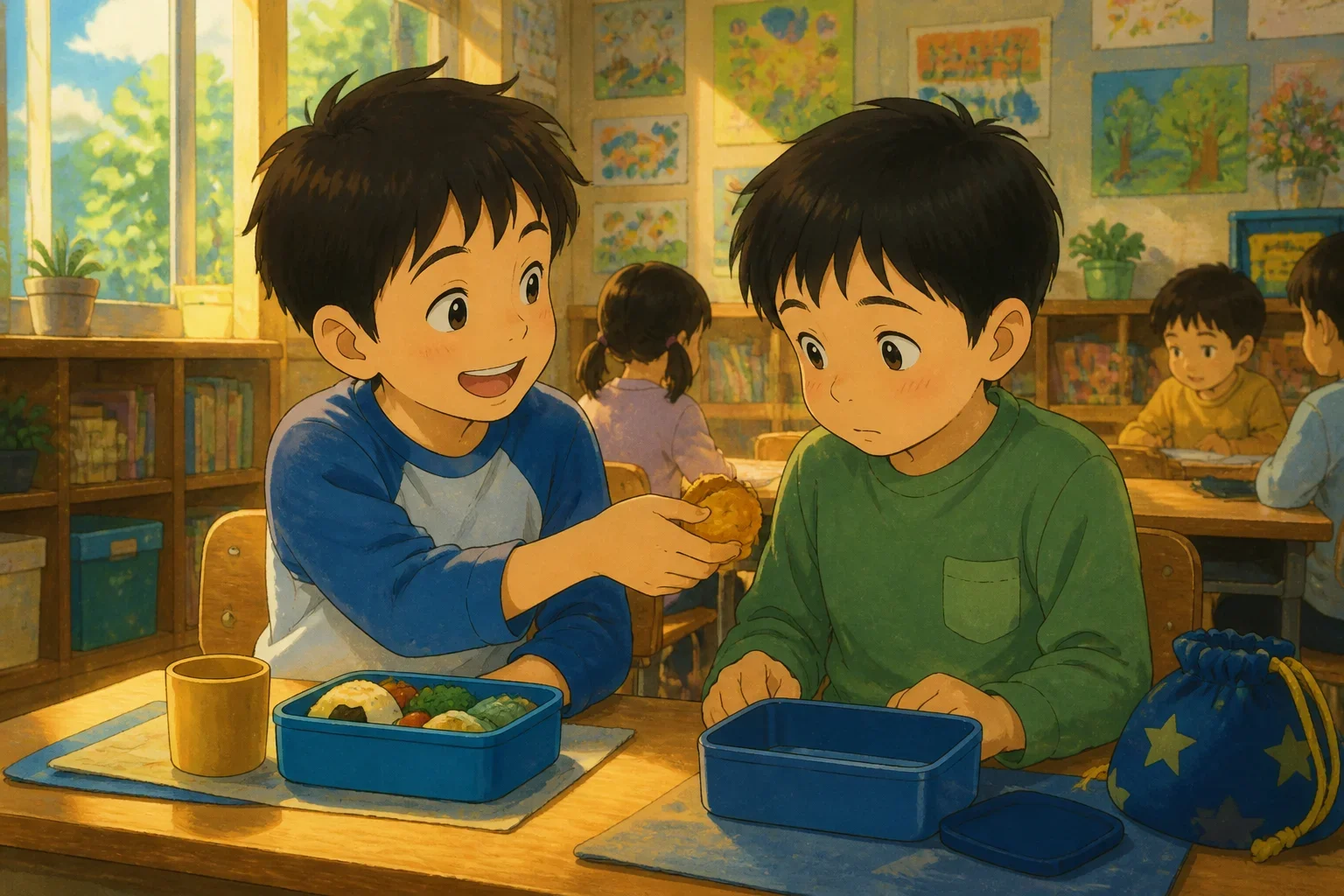
The Empty Lunch Box | Kindness Story About Sharing
The Empty Lunch Box On the first Monday of the school year, Maplewood Elementary smelled like sharpened pencils,…
Traveler Who Let a Star Go: A Moral Story About Letting Go
The Traveler Who Let a Star Go On the far edge of a quiet road, where the hills rolled like sleeping giants and the…
Tree of Love: A Gentle Story for Kids About Friendship
The Tree of Love: A Gentle Moral Story for Kids About Friendship, Gratitude, and Sacrifice At the edge of a quiet…