
The Emperors New Clothes
The Emperor’s New Clothes: A Funny and Wise Moral Story for Kids
In a grand city of bells, banners, and busy market streets, there lived an Emperor who loved beautiful clothes more than anything else in the world.
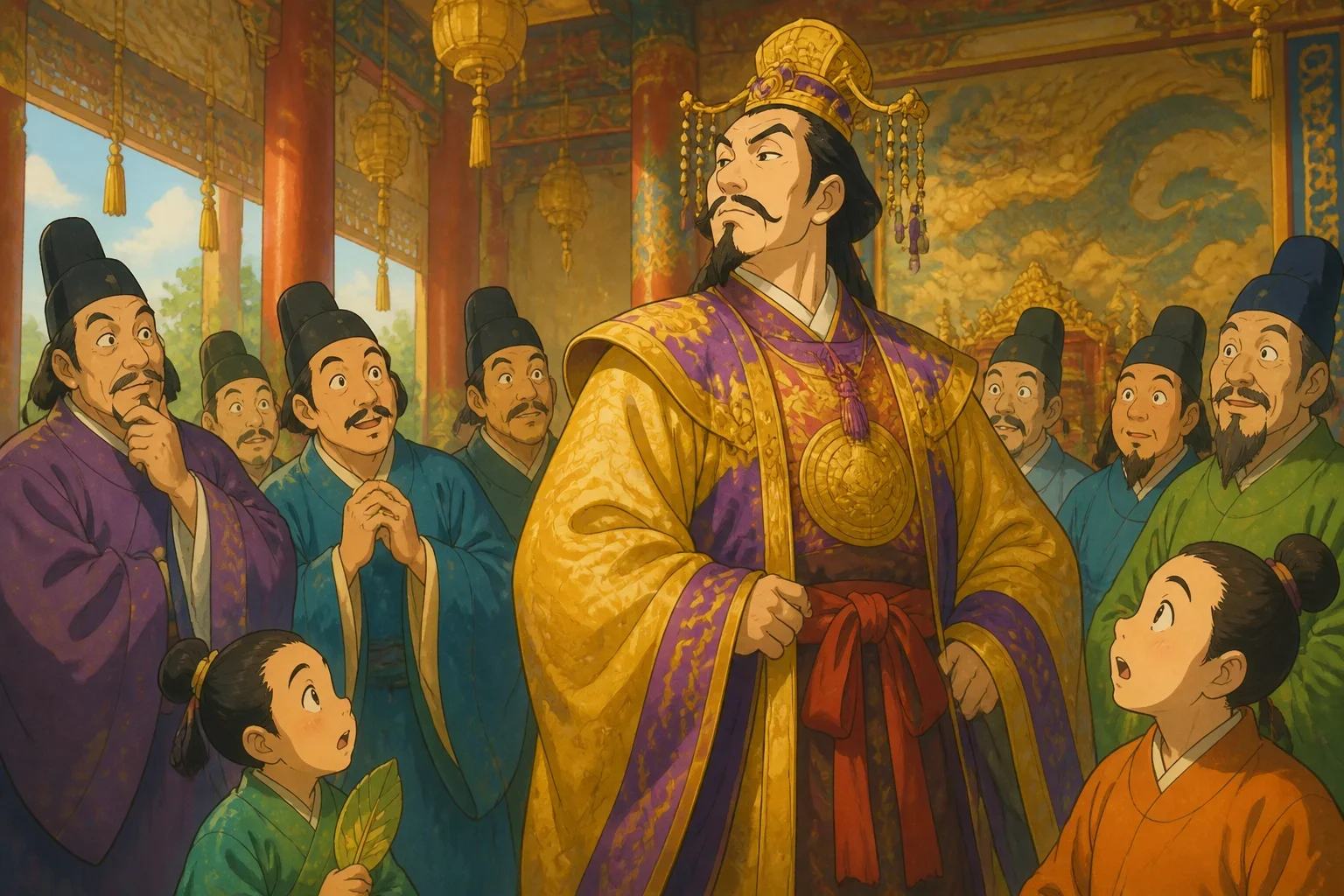
He loved clothes more than parades. He loved clothes more than feasts. He even loved clothes more than ruling.
While other kings spent their mornings reading reports or meeting advisers, this Emperor spent his time choosing velvet robes, silk capes, pearl buttons, golden slippers, and hats trimmed with feathers from faraway lands. He had coats for cloudy days, cloaks for sunny days, and special jackets for walking in the rose garden.
Every hour, he changed into something new.
“His Majesty is in the Sapphire Room,” the servants would say.
“No, no,” another servant would whisper, hurrying past with an armful of embroidered sleeves. “Now he is in the Mirror Hall, trying on his noon outfit.”
The Emperor was never happier than when someone gasped, “What magnificent clothes!”
So it is no surprise that when two strangers arrived at the palace gates, carrying empty trunks and wearing sly little smiles, the Emperor welcomed them at once.
The Strangers With a Remarkable Claim
The two men bowed low.
“Your Majesty,” said the taller one, “we are master weavers.”
“The finest in all the world,” added the other.
“We can make a suit unlike any ever seen.”
The Emperor leaned forward on his velvet throne. “Unlike any ever seen?”
The taller weaver nodded. “The cloth will be so delicate, so elegant, and so extraordinary that it will appear invisible to anyone who is foolish…”
“…or unfit for their position,” finished the second.
The Emperor’s eyes widened.
Invisible to fools? Invisible to those who did not deserve their jobs?
What a marvelous idea!
With such cloth, he could wear the most astonishing outfit in the world and also discover which of his ministers were wise and which were not.
“Begin at once!” cried the Emperor. “You shall have silk, gold thread, silver thread, and all the money you require.”
The weavers bowed again, hiding their grins.
They were not weavers at all. They were tricksters.
But no one in the palace knew that.
The Empty Looms
The Emperor gave the men a bright workshop with tall windows and excellent light. Servants carried in chests of silk, baskets of thread, and bags of gold. The two tricksters thanked them politely, then tucked away the silk and gold for themselves.
After that, they got to work on… nothing.
They set up looms with empty frames. They moved their hands through the air. They snipped invisible cloth with giant scissors. They sewed with needles that held no thread at all.
Still, they worked with such serious faces that anyone peeking through the door might think something very important was happening.
The Emperor was eager to see the cloth, but after a moment of excitement came a nervous thought.
What if I cannot see it?
He shifted uneasily in his jeweled chair.
No, no, he told himself. I am Emperor. Of course I shall see it. Still… perhaps I will send someone else first.
So he called for his oldest minister, a man known for his careful manners and long silver beard.
“Go to the workshop,” said the Emperor, “and tell me how the cloth looks.”
The minister bowed. “At once, Your Majesty.”
The Minister Who Was Afraid to Tell the Truth
The old minister walked slowly to the workshop.
The two tricksters greeted him warmly.
“Ah! A man of taste!” said one.
“Come closer,” said the other. “Look at the pattern. Notice the colors. Have you ever seen anything so refined?”
The minister peered at the loom.
He blinked. He leaned closer. He adjusted his spectacles.
He saw absolutely nothing.
His heart began to thump.
Nothing? I see nothing at all!
A cold feeling ran down his back.
Does this mean I am foolish? Does this mean I am unfit for my office? Oh dear, oh dear… I must not let them know.
So he smiled a shaky smile.
“Oh! Yes. Ah yes… very unusual,” he said.
“Isn’t the pattern splendid?” asked a weaver.
“Splendid,” said the minister.
“And the colors?”
“Magnificent,” he whispered, though his ears had turned pink.
The tricksters described colors that did not exist and patterns that were not there. The poor minister nodded and tried to remember every word.
When he returned to the Emperor, he bowed low and said, “Your Majesty, the cloth is the finest I have ever seen. The colors are rich, and the design is wonderfully clever.”
The Emperor clapped his hands in delight.
Then he sent another official. And another. And another.
Each one entered the workshop, stared at the empty looms, felt fear rise in their chest, and praised the cloth more loudly than the last.
Soon the whole palace buzzed with admiration for a fabric no one had ever seen.
The Emperor Visits the Workshop
At last, the Emperor could wait no longer.
He gathered a group of trusted courtiers and swept down the hallway to the workshop in a robe of midnight blue.
The tricksters bowed deeply.
“Your Majesty! We are honored.”
They gestured to the empty looms.
“Please, behold the fabric.”
The Emperor looked.
And looked again.
His smile froze.
He saw nothing.
Not a thread. Not a ribbon. Not even a scrap.
For one terrible moment, his stomach dropped.
Can it be? he thought. Am I foolish? Am I not fit to be Emperor? No one must ever suspect such a thing.
Around him, the courtiers were nodding with wide eyes and saying things like, “Exquisite!” and “Such delicate workmanship!”
The Emperor lifted his chin.
“Yes,” he said slowly, “it is… extraordinary.”
The tricksters bowed. “We knew Your Majesty would appreciate its rare beauty.”
The Emperor ordered that the weavers should finish the suit at once. He even gave them medals and called them Royal Weavers of the Loom.
The two men thanked him and worked all night at their empty frames, candles flickering around them as they pretended to stitch the final pieces.
Dressing for the Great Procession
A few days later, the city prepared for a grand procession. Flags fluttered from windows. Musicians polished their instruments. Children sat on their fathers’ shoulders to get a better view.
“This is the day!” cried the townspeople. “The Emperor will wear his new suit!”
Inside the palace, the tricksters carried their invisible garments as carefully as if they were made of moonlight.
“Here are the trousers, Your Majesty.”
“And here is the coat.”
“And the robe, light as a spiderweb.”
They lifted nothing from the air and helped the Emperor out of his clothes. Then they bent and fussed and tugged, pretending to dress him piece by piece.
“How well it fits!” said one.
“How gracefully it falls!” said the other.
The Emperor turned before the tall mirror.
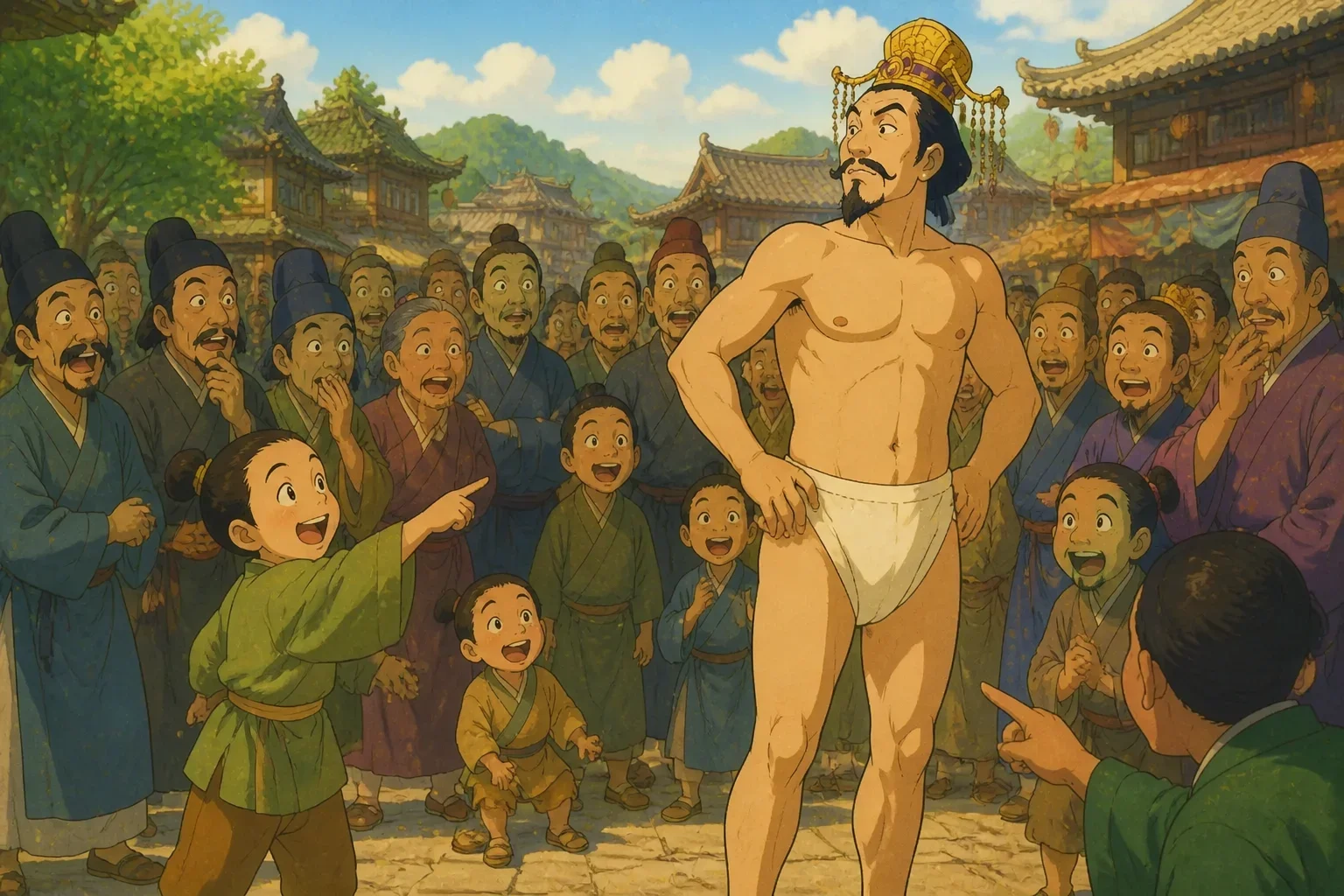
He saw himself wearing only his underclothes.
But behind him, the courtiers clasped their hands and cried, “Perfect!”
“Stunning!”
“Your Majesty has never looked more splendid!”
The Emperor swallowed his doubt. If everyone else could see the suit, then he must continue as if he saw it too.
He lifted his chin, straightened his back, and stepped toward the palace doors.
The Procession Through the City
Trumpets rang out.
The palace doors opened wide.
The Emperor walked into the bright afternoon sun, trying to appear calm and majestic while noblemen behind him pretended to carry a long robe that did not exist.
The streets were crowded. Shopkeepers leaned from their windows. Bakers came out dusted in flour. Flower sellers stood with baskets on their arms. Everywhere people stared.
At first, no one said a word.
They looked at the Emperor. Then at one another. Then back again.
Each person thought the same frightened thought:
I cannot see the clothes. Does that mean I am foolish?
So one voice called out, “What beautiful fabric!”
Another said, “Such elegant sleeves!”
“A marvelous train!” cried a third.
Soon the whole crowd was praising the invisible outfit.
The Emperor heard them and walked even more proudly, though his cheeks felt hot.
Then, from near the front of the crowd, a small clear voice broke through the noise.
A little child, perched beside his mother, pointed with complete surprise.
“But he isn’t wearing any clothes at all!”
For one heartbeat, everything went still.
The child’s mother tried to hush him. “Shh!”
But children are often the quickest to repeat what is true.
“He isn’t wearing anything!” said another child.
And then someone in the crowd whispered, “The child is right.”
Another murmured, “There are no clothes.”
Then the whisper spread like wind through leaves.
“No clothes.”
“He’s wearing nothing!”
“The weavers tricked us!”
Soon the whole street was alive with gasps, laughter, and astonished voices.
The Emperor heard it all.
And in that moment, he knew.
He had been fooled. So had his ministers. So had the whole city.
Because everyone had been too afraid to speak the truth.
The Emperor felt his face burn with embarrassment. He wanted to run back into the palace and hide behind the tallest curtain in the kingdom.
But the procession had already begun, and all eyes were upon him.
So he kept walking.
Step by step. Past the market. Past the fountain. Past the rows of laughing, whispering people.
And though he held his head high, deep inside he had learned a lesson he would never forget.
A Wiser Emperor
Later, when the procession was over and the tricksters had vanished with the silk, gold, and silver, the Emperor sat quietly in his chamber.
For once, he did not ask for a new robe. He did not ask for his mirror. He did not ask who had admired him most.
Instead, he thought about the child’s voice—small, honest, and brave.
The next morning, the Emperor called his ministers together.
“I was foolish,” he said plainly. “I cared too much about appearances and too little about truth. From now on, I want honesty in this palace—even when the truth is uncomfortable.”
The ministers looked at one another in surprise.
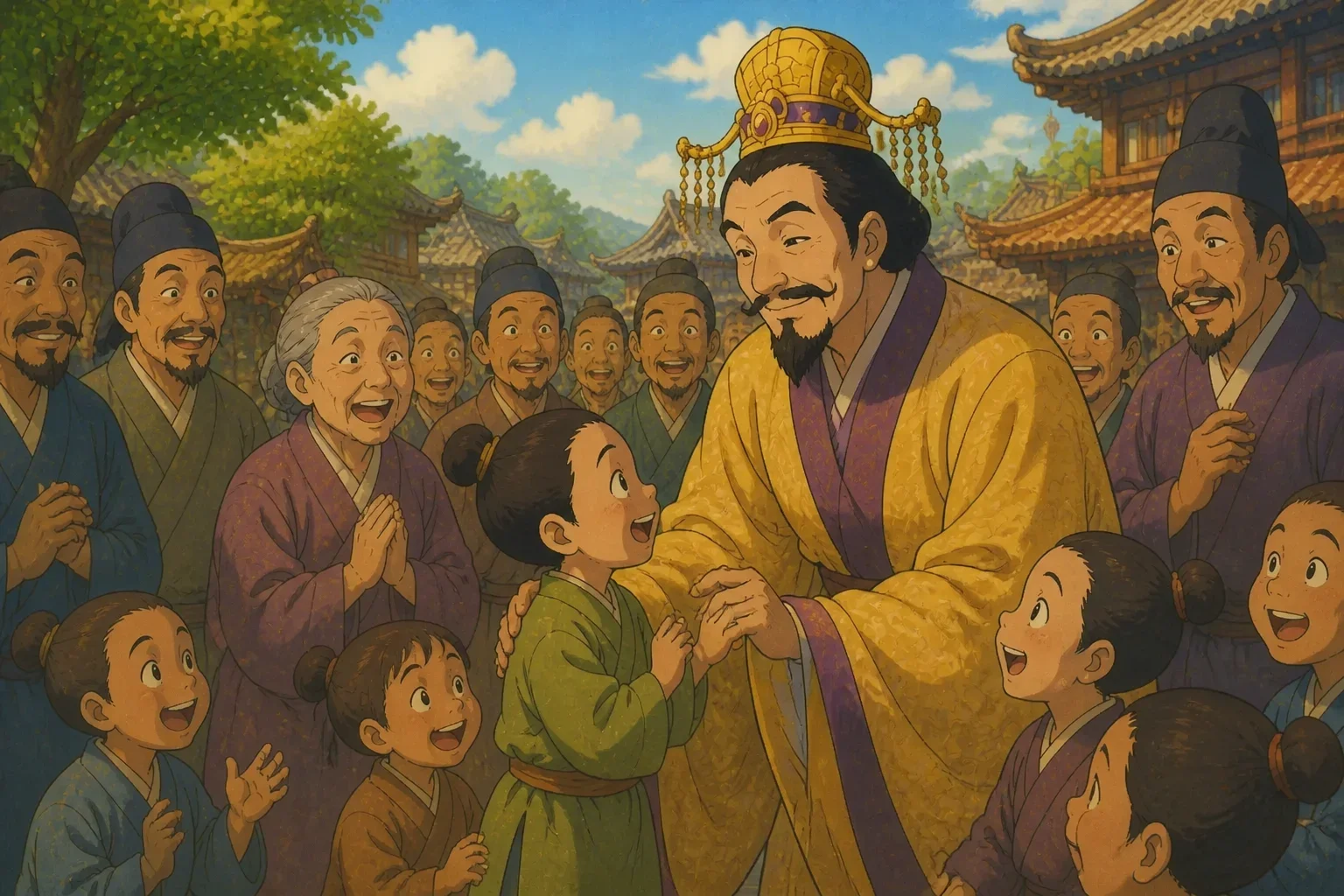
And from that day on, the Emperor changed little by little. He still dressed neatly, but he no longer believed fine clothes made someone wise or important. He listened more carefully. He spoke more humbly. And the people respected him far more for that than for all the silks in his wardrobe.
As for the child, people remembered that brave voice for many years.
Because sometimes the simplest truth is the hardest one to say. And sometimes the smallest voice is the one that helps everyone see clearly.
Key Takeaways for Kids
- Always tell the truth: Even when others stay silent, honesty matters.
- Don’t be fooled by appearances: Fancy things do not make a person wise or good.
- It is brave to speak up: The child helped everyone by saying what was true.
- Admitting mistakes helps us grow: The Emperor became better when he learned from his embarrassment.
Moral of the Story
The Emperor’s New Clothes teaches that vanity and fear can blind people, but honesty and courage reveal the truth.
Why This Classic Story Still Matters
This beloved children’s moral story remains memorable because it is funny, surprising, and deeply true. Kids enjoy the absurd image of the Emperor proudly showing off invisible clothes, while parents and teachers appreciate the lesson about honesty, humility, and the courage to speak up.
If you are looking for moral stories for kids, bedtime stories with lessons, or classic fairy tales about truth and bravery, The Emperor’s New Clothes is a timeless choice.

Watch the Animated Story
Watch on YouTube
Related Stories

The Proud Rose Story for Kids About Humility and Kindness
The Proud Rose: A Tale of Humility, Kindness, and True Beauty In the middle of a bright, cheerful garden, where…

The Enchanted Book Story: A Magical Tale About Wishes
The Story of The Enchanted Book In the little village of Eldergrove, where ivy curled around stone cottages and the…

The Ass in the Lion’s Skin: A Moral Story About Being Yourself
The Ass in the Lion’s Skin On the edge of a golden field, where tall grass swayed like waves and crickets sang in the…

Bees and the Beetles: A Moral Story About Hard Work
The Bees and the Beetles On the edge of a bright summer garden stood a tall old hive, golden in the afternoon sun. From…
Princess and Little Devils: A Moral Story About Good Company
The Princess and the Little Devils In a kingdom edged with blue mountains and silver rivers, there lived a young…
Corrupt Politician: A Moral Story About Honesty and Courage
The Tale of the Corrupt Politician Every Saturday morning, the bell in Willowbrook’s clock tower rang nine bright…
Power of Love: A Moral Story for Kids About Kindness
The Power of Love In the little town of Harmonyville, people said you could tell how the whole town was feeling just by…
Lazy Donkey Who Finally Helped: A Moral Story on Hard Work
The Lazy Donkey Who Finally Helped In a sunny little village tucked between green hills and golden fields, there lived…

The Honest Woodcutter | Moral Tale About Honesty
The Honest Woodcutter: A Moral Story About Honesty, Hard Work, and Wisdom At the edge of a quiet village, where the…
Timmy the Brave Kitten | Courage Moral Story for Kids
The Adventure of Timmy the Brave Kitten On the edge of a cozy little village, where chimneys puffed soft clouds into…
The Beggar’s Blessing: A Moral Story About Kindness for Kids
The Beggar’s Blessing In a lively little town where market bells rang each morning and the smell of fresh bread drifted…
The Story of Socrates for Kids: A Moral Tale About Asking Questions
The Story of Socrates Under the Olive Tree Long ago, in the busy city of Athens, there lived a man who did not wear a…