The Blind Man's Light - A Moral Story #moralstory @shortmoraltales
The Blind Man’s Light
On the edge of a busy little town lived a blind man named Jacob. He was known for his calm smile, careful footsteps, and the warm way he greeted everyone he met.

Every morning, Jacob walked through the market with his cane in one hand and a cloth bag in the other. He knew the town by its sounds—the clatter of cart wheels, the flutter of pigeons, the sing-song calls of fruit sellers, and the laughter of children racing through the square.
He could not see the red apples stacked in neat towers or the blue ribbons hanging outside the tailor’s shop. But he knew where the baker sprinkled flour on the doorstep, where the blacksmith’s hammer rang like a bell, and where the jasmine climbed over old stone walls and filled the air with sweetness.
The townspeople liked Jacob very much.
“Good morning, Jacob!” called Mrs. Thompson, the baker.
“Good morning,” Jacob replied with a cheerful nod. “Your bread smells especially wonderful today.”
Mrs. Thompson laughed. “And your nose is especially sharp today.”
Jacob laughed too, and continued on his way.
He was never bitter about being blind. Instead, he listened closely, spoke kindly, and noticed things many others missed. If someone sounded worried, he asked if they were all right. If a child was crying, he stopped to comfort them. If an old man dropped his walking stick, Jacob was often the first to hear it hit the ground.
So people often said, “Jacob sees more with his heart than most of us do with our eyes.”
A Strange Sight at Night
One evening, Jacob visited a friend in the next lane. They talked a long while, and by the time Jacob started home, the sky had turned dark as velvet. The moon was hidden behind clouds, and the narrow streets were dim and quiet.
Before leaving, Jacob’s friend pressed something into his hand.
“Take this lantern, Jacob,” he said. “The road is dark tonight.”
Jacob smiled. “You know I cannot see the light.”
“I know,” said his friend gently, “but carry it anyway.”
So Jacob lit the lantern and began his walk home. Its small golden glow bobbed beside him as he moved slowly along the road, his cane tapping the ground—tap, tap, tap.
After a while, a group of young men came hurrying around the corner. They were talking loudly and not paying much attention. One of them nearly bumped into Jacob, then stopped short.
He stared in surprise and blurted out, “Jacob! Why are you carrying a lantern? You’re blind. What use is a light to you?”
The others chuckled.
For a moment, the night went still.
Then Jacob lifted his face and answered in a calm, steady voice.
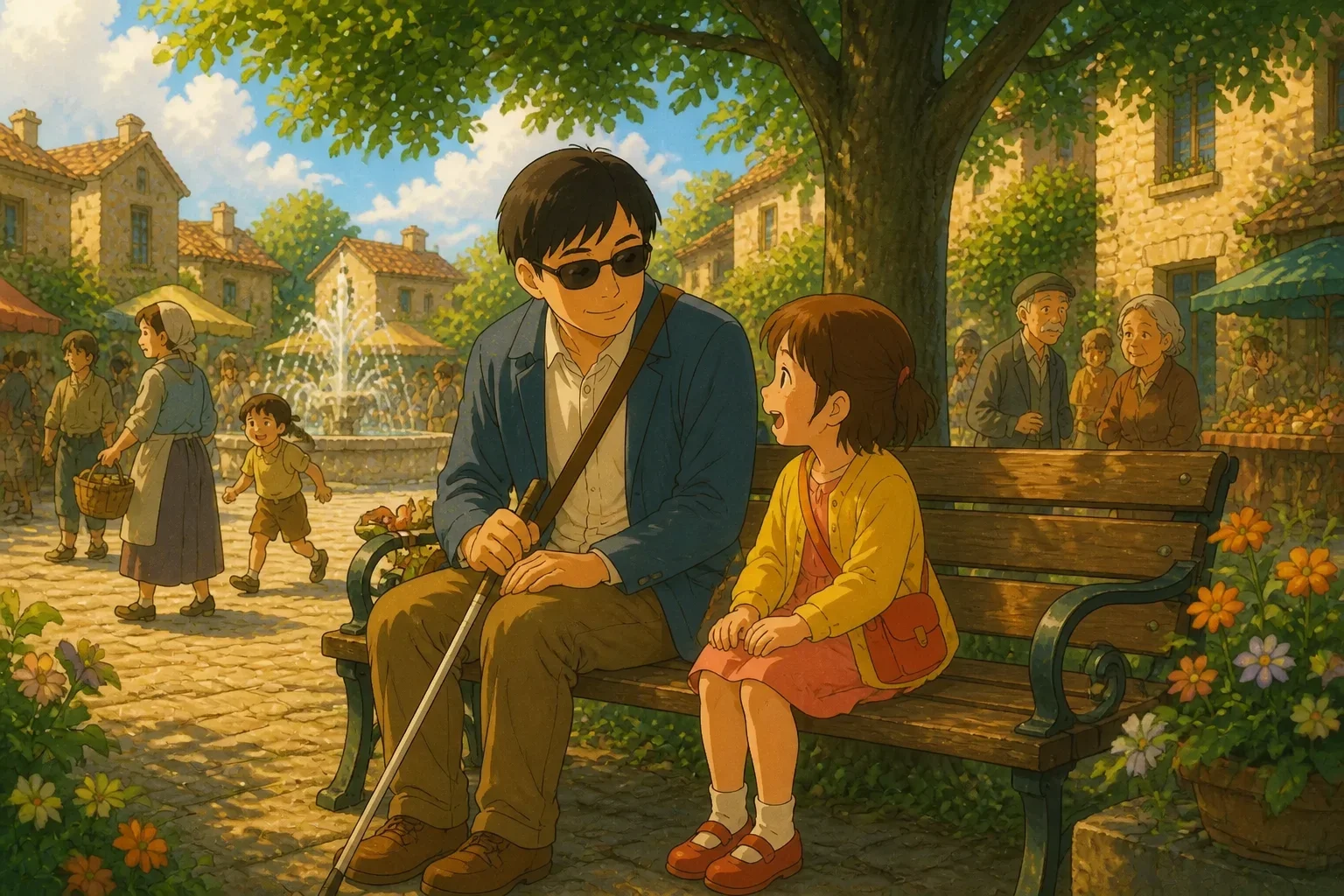
“This lantern is not for me,” he said. “It is for you.”
The laughter faded.
Jacob continued, “I may not see the road, but others can see me because of this light. Without it, someone might walk into me in the dark. I carry the lantern so no one gets hurt.”
The young men fell silent.
One looked down, ashamed. Another shifted his feet. They had expected a foolish answer. Instead, Jacob had given them a wise one.
At last, the youngest said softly, “We didn’t think of that.”
Jacob gave a small smile. “Many kind things are done not for ourselves, but for others.”
The young men walked with him for the rest of the lane, more quietly now. One even offered, “May we help you home?”
“Yes,” Jacob said, “that would be kind.”
And together they walked beneath the dark sky, guided by a little lantern and a much brighter lesson.
The Next Morning
By sunrise, the story had spread through the town.
At the well, by the bakery, near the market stalls—everywhere people repeated Jacob’s words.
“This lantern is not for me. It is for you.”
Parents told it to their children. Teachers shared it with their students. Even the young men who had laughed the night before retold the story, though now with red faces and respectful voices.
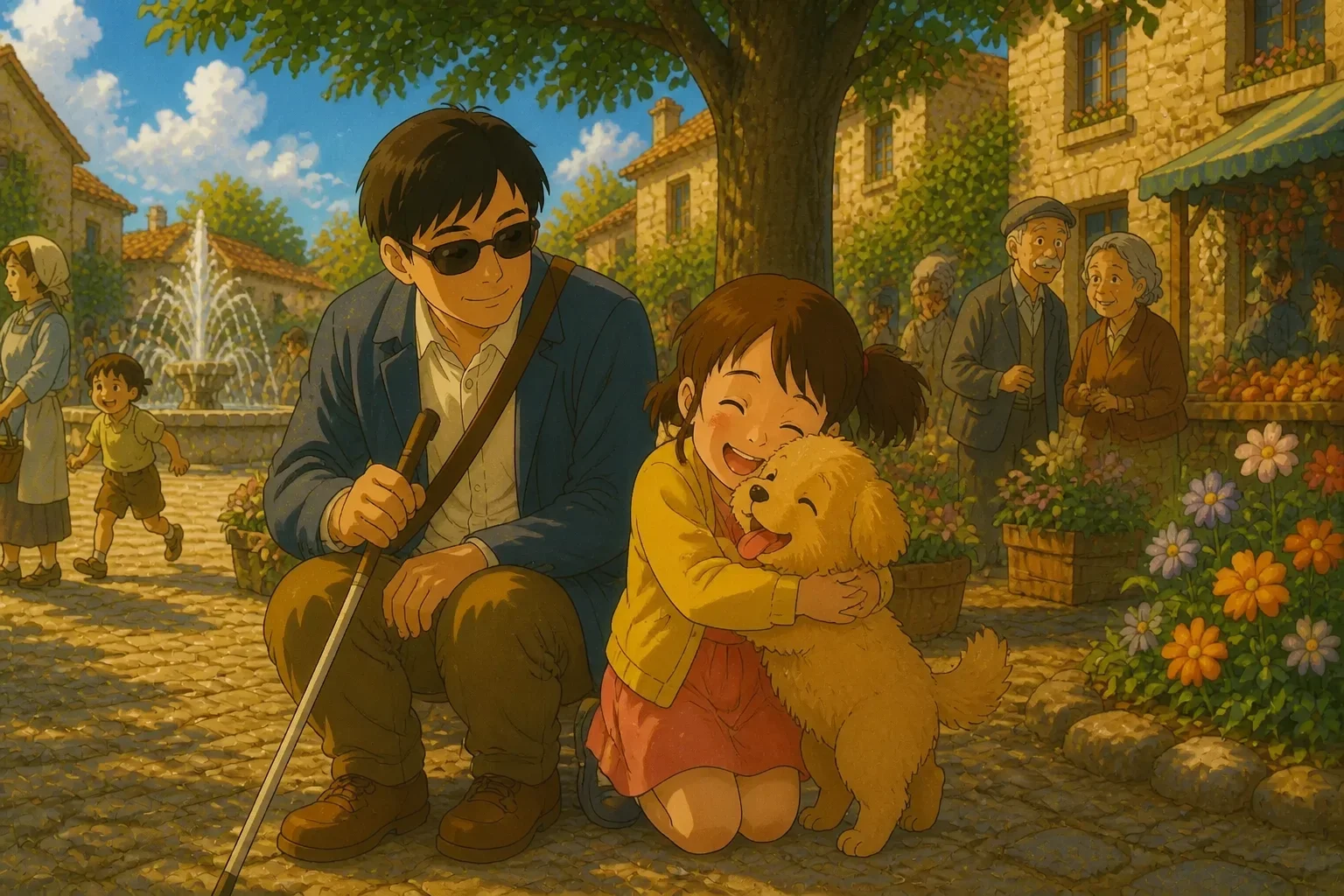
That evening, something unusual happened.
People began thinking more carefully about one another.
A shopkeeper hung an extra lamp outside his door so travelers would not stumble. A boy moved his toy cart out of the middle of the road. A girl carried water for her elderly neighbor before the sun grew too hot. Mrs. Thompson left a basket of rolls by the widow’s gate.
And Jacob, without seeing any of it, somehow felt it.
The town sounded gentler. Doors opened faster. Voices softened. Footsteps paused more often to help.
When Mrs. Thompson told him what had changed, Jacob bowed his head and smiled.
“Then the lantern did its work,” he said.
Why This Story Stays in Children’s Hearts
Children remember this story because its lesson is simple and surprising: sometimes we do the right thing not because it helps us, but because it protects, comforts, or guides someone else. Jacob’s lantern becomes a symbol of kindness, thoughtfulness, and wisdom.
Key Takeaways for Kids
- Kindness means thinking about how our actions affect other people.
- A wise person helps others even when there is no reward.
- We should never laugh at someone before understanding them.
- Small thoughtful actions can keep others safe and happy.
- True goodness shines from the inside.
Moral of the Story
Real kindness is thinking beyond yourself. Even a small light can make the path safer for someone else.
If you enjoy children's moral stories, bedtime stories, and kindness stories for kids, The Blind Man’s Light is a beautiful reminder that thoughtfulness can brighten the world for everyone.
Watch the Animated Story
Watch on YouTube
Related Stories
The Beggar’s Blessing: A Moral Story About Kindness for Kids
The Beggar’s Blessing In a lively little town where market bells rang each morning and the smell of fresh bread drifted…

The Most Loving Princess Story: A Tale of Kindness
The Most Loving Princess At the top of a green hill, where morning light touched the castle windows like melted gold,…
Thanksgiving: A Heartwarming Story of Sharing and Kindness
The True Meaning of Thanksgiving On Thanksgiving morning, the Thompson house smelled like butter, cinnamon, and…
Sam's Kind Heart: A Moral Story for Kids About Courage
Sam’s Kind Heart In a small village tucked between green hills and a bright, winding river, everyone knew Sam. Not…