
5 Self-Reliance Stories for Kids: Independence & Effort
Learning to be self-reliant is a vital part of growing up. Children who develop independence and a strong sense of effort are better equipped to face life's challenges confidently. Through engaging stories, kids can discover the importance of trusting their abilities, persevering through difficulties, and taking ownership of their actions. These lessons not only foster resilience but also encourage a proactive attitude towards solving problems and achieving goals. Whether it's learning to do small chores or tackling big dreams, cultivating self-reliance helps kids become capable and confident individuals.
In this collection of stories, children will explore the value of effort, the rewards of independence, and lessons on persistence. By connecting moral lessons to relatable characters and situations, these stories make it easier for kids to understand why self-reliance is a key ingredient for success. For further insights into virtues that complement self-reliance, you might want to check out 8 Laziness Stories for Kids: The Value of Hard Work & Effort. Let's inspire young minds to believe in themselves and strive for greatness!
Why Self-reliance Matters
Self-reliance is more than just doing things on your own; it’s about developing confidence in your abilities and trusting your judgment. When children learn to rely on themselves, they become more independent, resilient, and capable of handling setbacks without giving up. This independence fosters a strong sense of responsibility, teaching kids to own their actions and learn from mistakes. Such qualities are essential for future success, whether in school, relationships, or personal ambitions.
Introduction
Self-reliance is the ability to depend on your own judgment and skills. It helps us feel confident and capable, especially when faced with challenges. Learning to be self-reliant is important because it encourages independence, problem-solving, and resilience.
Table of Contents
- The Little Tree That Grew Strong
- Emma and the Missing Puzzle Piece
- Milo and the Mountain of Challenges
- The Little Rabbit Who Learned to Hop Alone
- The Little Fox and the Hidden Path
- Lily’s Solo Art Show
- Ben Builds a Treehouse
Story 1: The Little Tree That Grew Strong
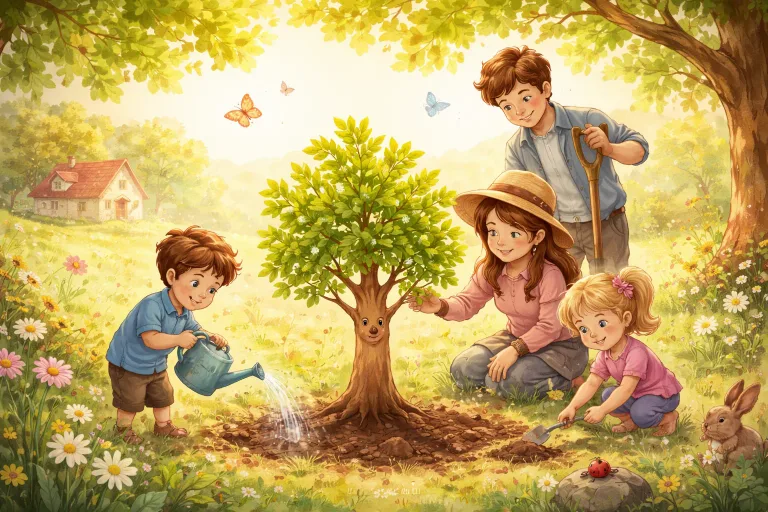
Once upon a time, in a lush meadow, there was a tiny seed that dreamed of becoming a mighty tree. The seed was nervous—what if it didn’t grow tall enough or strong enough? One day, a gentle breeze nudged the seed into the soil, and it started to sprout. At first, it was just a tiny sprout, fragile and unsure. The little sprout looked around and saw bigger, stronger trees nearby. It felt small and timid, doubting itself.
But the little sprout remembered what it had heard from the wise old oak: “Trust your roots, listen to your strength.” So, the sprout decided to focus on growing. Each day, it pushed its little leaves up, reaching for the sun, and its roots sank deeper into the earth, finding water. Sometimes, the wind tried to shake it, but the sprout held firm, knowing it had to stand on its own.
Over the years, the tiny sprout grew into a tall, sturdy tree. It provided shelter for birds, shade for animals, and even inspired new seeds to grow. The tree learned that trusting itself and working hard every day made it strong and independent. It didn’t need to compare itself to other trees; it simply grew at its own pace.
Moral: When you believe in yourself and take small steps with confidence, you can grow into something strong and wonderful, just like the little seed becoming a mighty tree.
Talk About It
- Why is trusting yourself important when you're trying something new?
- How can you be more like the little tree in your own life?
- Have you ever grown stronger because you kept trying even when things were difficult?
Story 2: Emma and the Missing Puzzle Piece
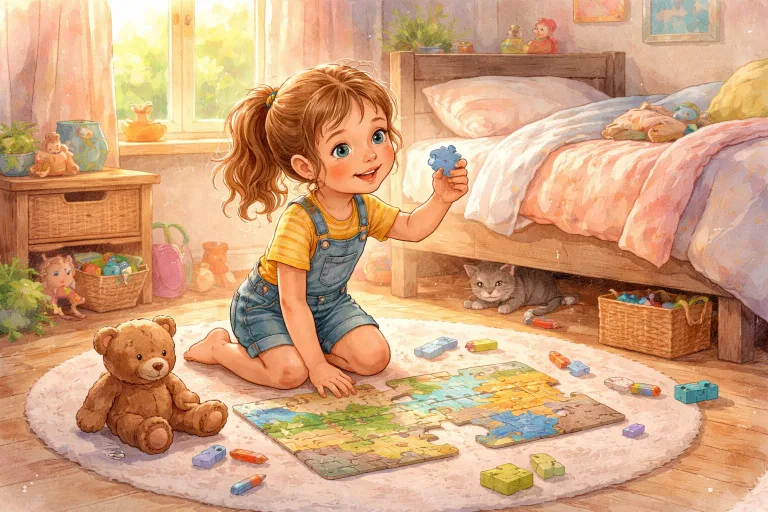
Once upon a time, in a small colorful town, there was a girl named Emma who loved to do puzzles. Every afternoon, Emma would sit at her kitchen table and work on her favorite big puzzle of a vibrant garden full of butterflies and flowers. One day, as she was about to finish her puzzle, Emma reached for the last piece — but it was missing!
Emma looked everywhere. She checked under the table, in her toy box, and even in her shoe closet. But the puzzle piece was nowhere to be found. Emma became sad because finishing her puzzle made her happy, and now she couldn’t complete it.
Instead of giving up, Emma decided to think about what she could do. She remembered that once she saw her neighbor, Mr. Jenkins, working in his garden. Emma went over and asked, “Mr. Jenkins, I lost the last piece of my puzzle. Do you have any ideas?”
Mr. Jenkins smiled warmly. “Well, Emma, sometimes when we can't find something, we have to be creative and try new ways to solve problems. Would you like to try making your own puzzle piece?”
Emma nodded excitedly. She got some paper, scissors, and crayons. Carefully, she drew her own unique puzzle piece, decorated with little butterflies and flowers to match her puzzle. When she finished, she cut it out and, to her surprise, it fit perfectly!
Emma felt proud. She had found her own solution without waiting for anyone else to help her. From that day on, Emma understood that even when things don’t go as planned, she has the strength inside to find new solutions. Self-reliance isn’t just about fixing problems — it’s about believing in yourself and trying your best, no matter what.
Moral: When faced with challenges, trust in your ability to find your own solutions. Sometimes, you just need to think creatively and believe in yourself.
Talk About It
- Have you ever had to solve a problem on your own? What did you do?
- Why is it important to try to find solutions by yourself before asking others for help?
- How can being self-reliant help you in your everyday life?
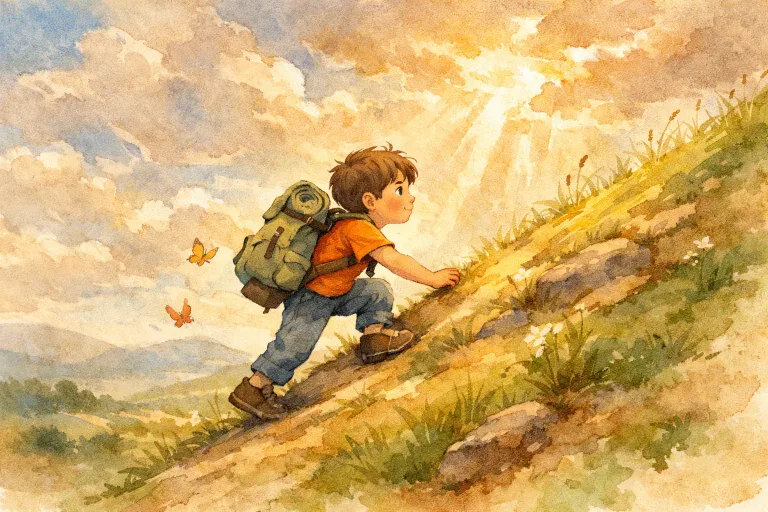
Story 3: Milo and the Mountain of Challenges
Once in a bustling little town nestled at the foot of a great mountain, there lived a boy named Milo. Milo loved to play and explore, but he had never tried to climb the mountain. One day, he overheard some older kids talking about the "Mountain of Challenges," where only brave and self-reliant children dared to go.
Milo’s curiosity grew. He decided that he wanted to try and reach the top, not because he wanted fame or applause, but because he wanted to see if he could do it on his own. Early the next morning, Milo packed his small backpack with a water bottle, a snack, and a map he drew himself. His parents looked worried but encouraged him to be brave and cautious.
As he started his climb, Milo faced his first obstacle: a rickety bridge over a deep ravine. His heart pounded, but he remembered what his teacher once told him: “Take your time, look carefully, and trust your own judgment.” He stepped slowly, holding onto the ropes tightly, and crossed safely.
Next, Milo encountered a tangled maze of thorny bushes. Instead of trying to push through blindly, he paused, looked around and found a clearer path around the thorns. When he reached a tricky slope, Milo used a sturdy stick as a walking staff to steady himself.
Along the way, sometimes he felt tired and wanted to turn back, but he reminded himself of his goal. "I can do this," he whispered. With each step, he gained confidence. By midday, Milo had reached the halfway point, and he realized that trusting himself and solving each problem as it came was the key to moving forward.
Finally, after hours of climbing, Milo reached the summit. The view was breathtaking, and he felt a warm glow of pride. He had done it — all on his own. When Milo returned home, he was tired but happy, knowing he had proven to himself that he could face challenges independently.
Moral: Self-reliance means trusting yourself to solve problems, face fears, and keep going even when things are tough. You don’t always need help — sometimes, your own strength and courage are enough.
Talk About It
- Have you ever faced a challenge you thought was too hard? How did you handle it?
- Why do you think it’s important to try solving problems on your own before asking for help?
- Can you think of a time when trusting yourself helped you succeed?

Story 4: The Little Rabbit Who Learned to Hop Alone
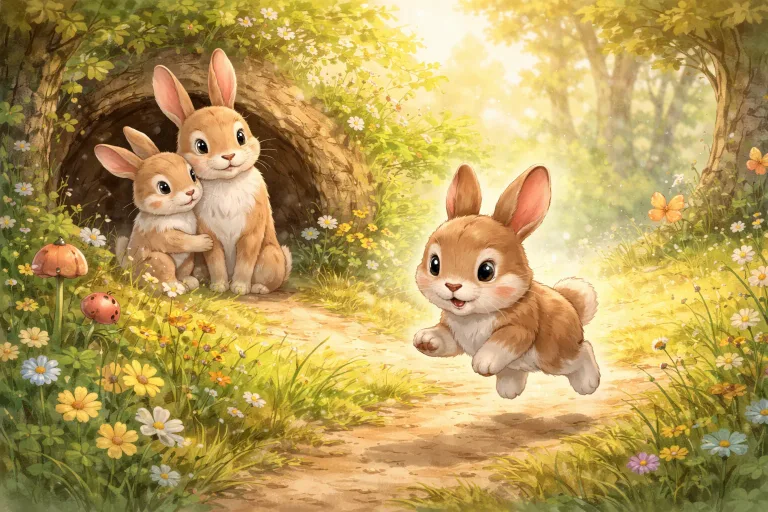
Once upon a time, in a lush green forest, there was a tiny rabbit named Benny. Benny loved hopping around with his family and friends, always sticking close to those he trusted. But Benny was curious about the world beyond their cozy burrow. One day, he saw a tall hill he had never explored before and decided to venture up on his own.
At first, Benny was excited. He hopped and darted over rocks and through bushes, feeling proud of his independence. But soon, he realized he didn’t recognize the way back home. The forest looked different from up high, and the sun was starting to set. Benny began to worry. His heart pounded as he tried to remember the way, but everything looked unfamiliar.
Just then, Benny remembered what his mother had told him: “If you get lost, stay calm and think about what you've learned.” Benny took a deep breath and looked around carefully. He saw a few familiar trees and listened to the sounds of the forest, noticing the chirping of birds and the rustling of leaves. Slowly, he retraced his steps, paying close attention to the landmarks he had passed.
After a little while, Benny saw the familiar entrance to his burrow. He was tired but proud. Benny learned that being brave is good, but knowing how to take care of yourself is even better. From that day on, Benny explored more, but he also remembered to be prepared, always watching where he was going and trusting his own judgment.
The next day, Benny played with his friends, sharing what he had learned: that self-reliance means trusting yourself to make good choices and staying calm in tricky situations. Benny knew he could face new adventures because he believed in his own ability to handle whatever came his way.
Moral: Being brave means more than just trying new things—it also means trusting yourself to find your way, even when you're on your own.
Talk About It
- Why is it important to stay calm and think when you’re lost?
- How can believing in yourself help you try new things?
- What are some safe ways to explore new places?
Story 5: The Little Fox and the Hidden Path
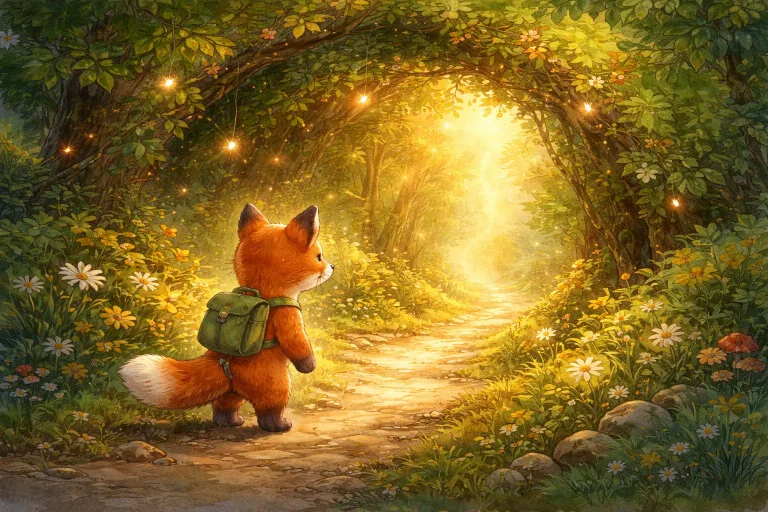
Once upon a time, in a lush green forest, there lived a curious little fox named Finn. Finn loved exploring and discovering new places, but he often relied on his friends for help. One day, Finn overheard some older foxes talking about a hidden path that led to the most secretive part of the forest, full of shiny berries and sweet-smelling flowers. Excited to see it himself, Finn decided to find this path.
At first, Finn looked at the map the elders had given him, but he couldn’t quite understand all the symbols. "Maybe I should ask Daisy the deer for help," he thought. But then he remembered how proud he felt when he figured things out on his own. “I can do this,” he told himself.
Finn took a deep breath and examined his surroundings carefully. He looked for clues—twigs that might point in the right direction, footprints that he hadn't noticed before, and the way the sunlight played through the trees. He remembered the stories his mother told him about trusting his instincts and paying attention to details.
The path was tricky and full of twists and turns, but Finn kept going. Sometimes he hesitated, second-guessing himself, but he pushed forward. After a while, he found a small opening behind a thick bush. Heart pounding with excitement, Finn squeezed through and discovered the hidden path he’d heard about. The berries there were even more delicious than he had imagined, and the flowers smelled sweeter than any he’d ever smelled before.
Finn felt a surge of pride for relying on his own senses and courage. From that day on, he realized that believing in himself and trusting his abilities made him feel stronger and more independent. Finn understood that sometimes, the best way to learn and grow is to take a leap and explore on your own.
Moral: Self-reliance means trusting your own judgment and abilities to solve problems and discover new things. It helps you grow confident and independent.
Talk About It
- Have you ever solved a problem or found something on your own that made you feel proud? What was it?
- Why do you think it's important to try things by yourself sometimes, even if you’re unsure?
- How can trusting yourself help you in everyday life?
Practical Takeaways
- Encourage children to try solving problems by themselves before stepping in.
- Praise efforts and persistence, not just results.
- Teach children to trust their instincts while also knowing when to seek help.
- Provide opportunities for children to make decisions independently, like choosing their clothes or activities.
- Reinforce that mistakes are part of learning and self-growth.
Conclusion
Continue Exploring Moral Stories
Discover animated moral stories, browse by category, or find age-appropriate reads for your family.
You May Also Like
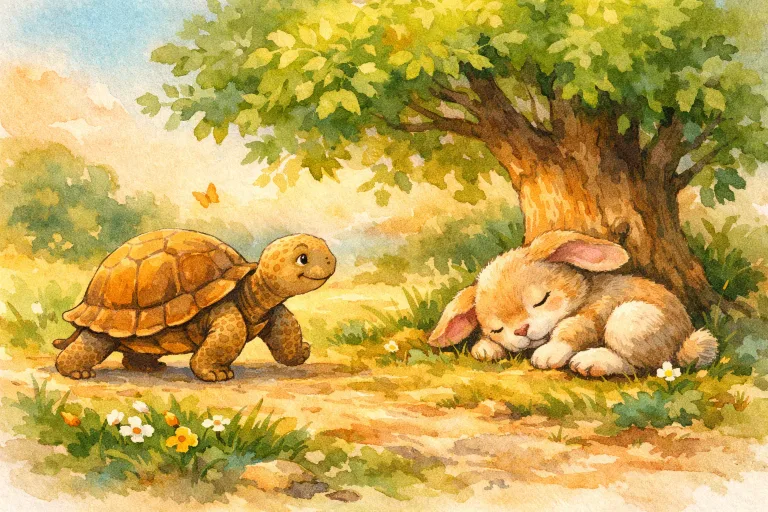
7 Perseverance Stories for Kids: Lessons on Never Giving Up
Discover inspiring perseverance stories for kids that teach resilience, determination, and never giving up. Perfect for parents and teachers to inspire young minds.
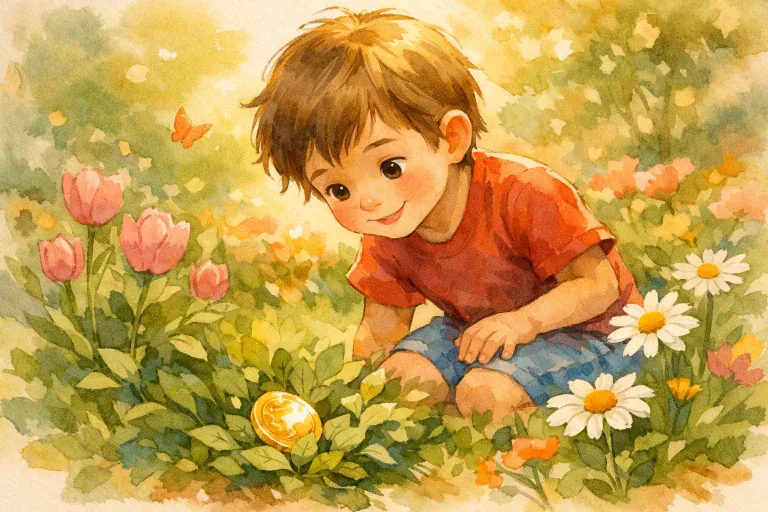
4 Responsibility Stories for Kids: Lessons on Ownership
Discover inspiring responsibility stories for kids that teach accountability, ownership of actions, and pride in completing daily duties. Perfect for parents and teachers!
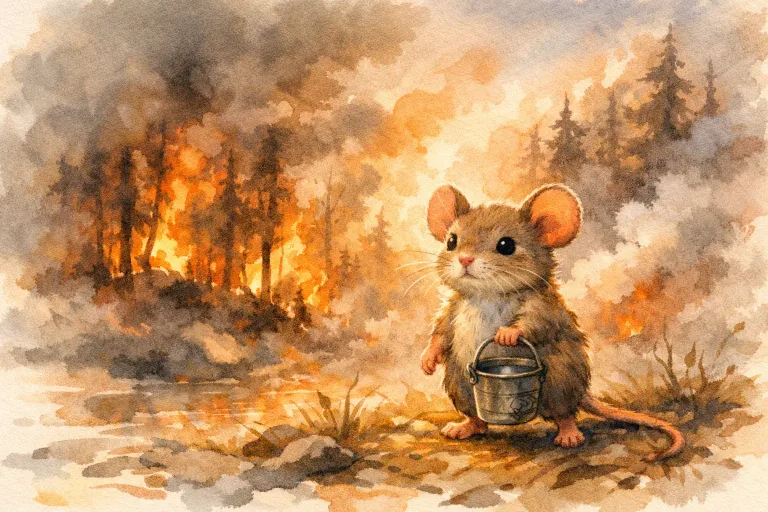
7 Courage Stories for Kids: Inspiring Tales of Bravery
Discover 7 inspiring courage stories for kids that teach bravery, confidence, and inner strength through engaging moral tales. Perfect for parents and teachers!
The Hard Work Secret: 5 Inspiring Perseverance Stories for Students
Discover five perseverance stories that encourage students to keep trying, embrace hard work, and never give up—perfect for classrooms and home reading.