The Boy Who Cried Wolf
The Boy Who Cried Wolf
On the edge of a quiet village, where the hills rolled like green blankets and the wind combed through tall grass with a whispering hush, a shepherd boy spent his days watching sheep.
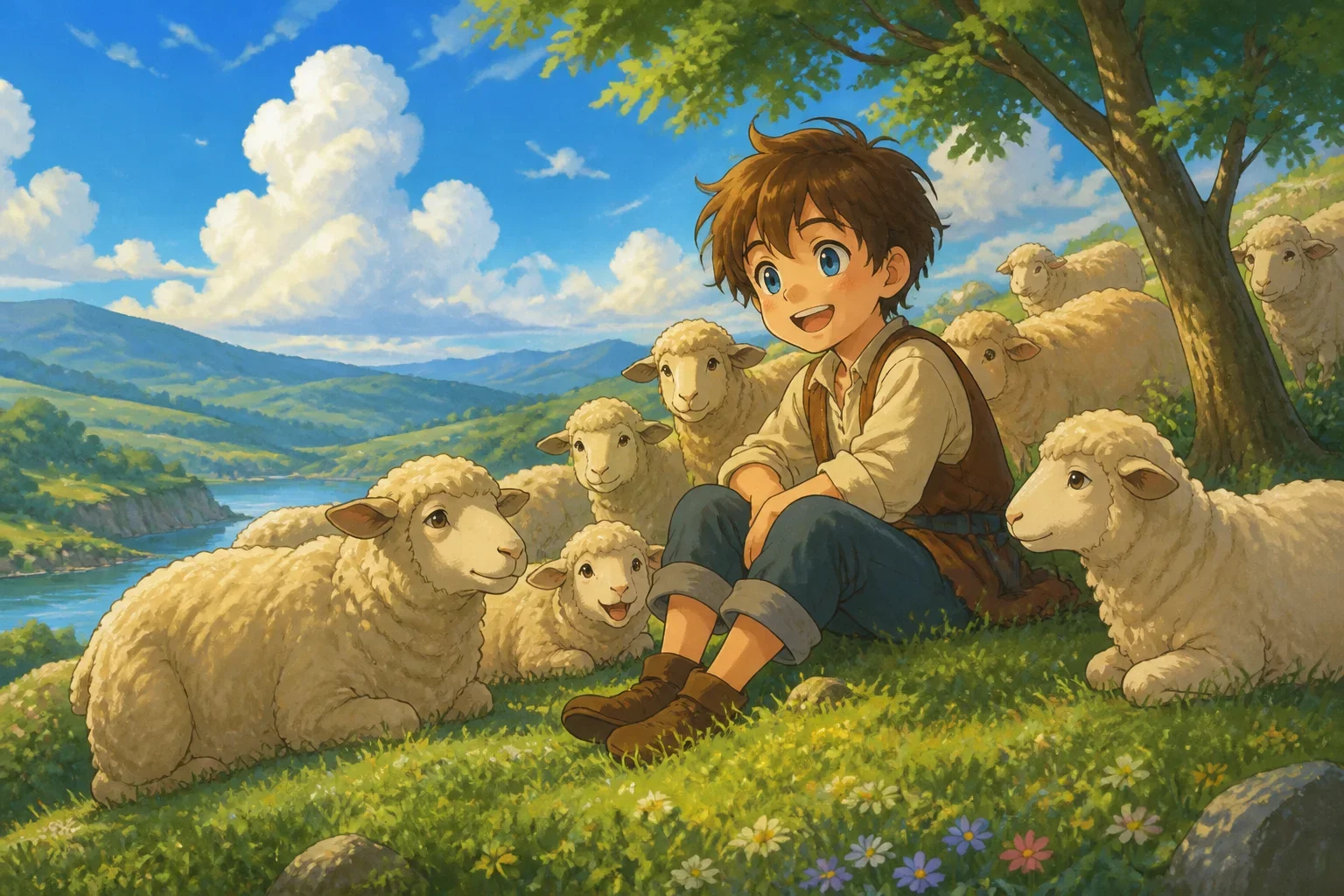
His name was Peter.
At first, Peter thought being a shepherd would feel important and adventurous. He imagined brave rescues, wild chases, and stories to tell by the fire at night. But most days were slow. The sheep only nibbled clover, wandered in circles, and occasionally bleated at clouds as if clouds might answer back.
Peter sighed, tossed pebbles into the dirt, and stretched out on the hill. The sky was huge. The afternoon was long. And boredom, he decided, was a terrible thing.
"There has to be something exciting I can do," he muttered.
Below him, the village bustled with life. Bakers pulled bread from ovens. Farmers stacked hay. Mothers called children in from the lane. Everyone seemed busy. Everyone seemed important.
Peter sat up slowly.
Then a mischievous smile crept across his face.
A Joke That Went Too Far
He cupped his hands around his mouth and shouted with all his might:
"Wolf! Wolf! Help! A wolf is after the sheep!"
His cry flew down the hillside like a stone skipping over water.
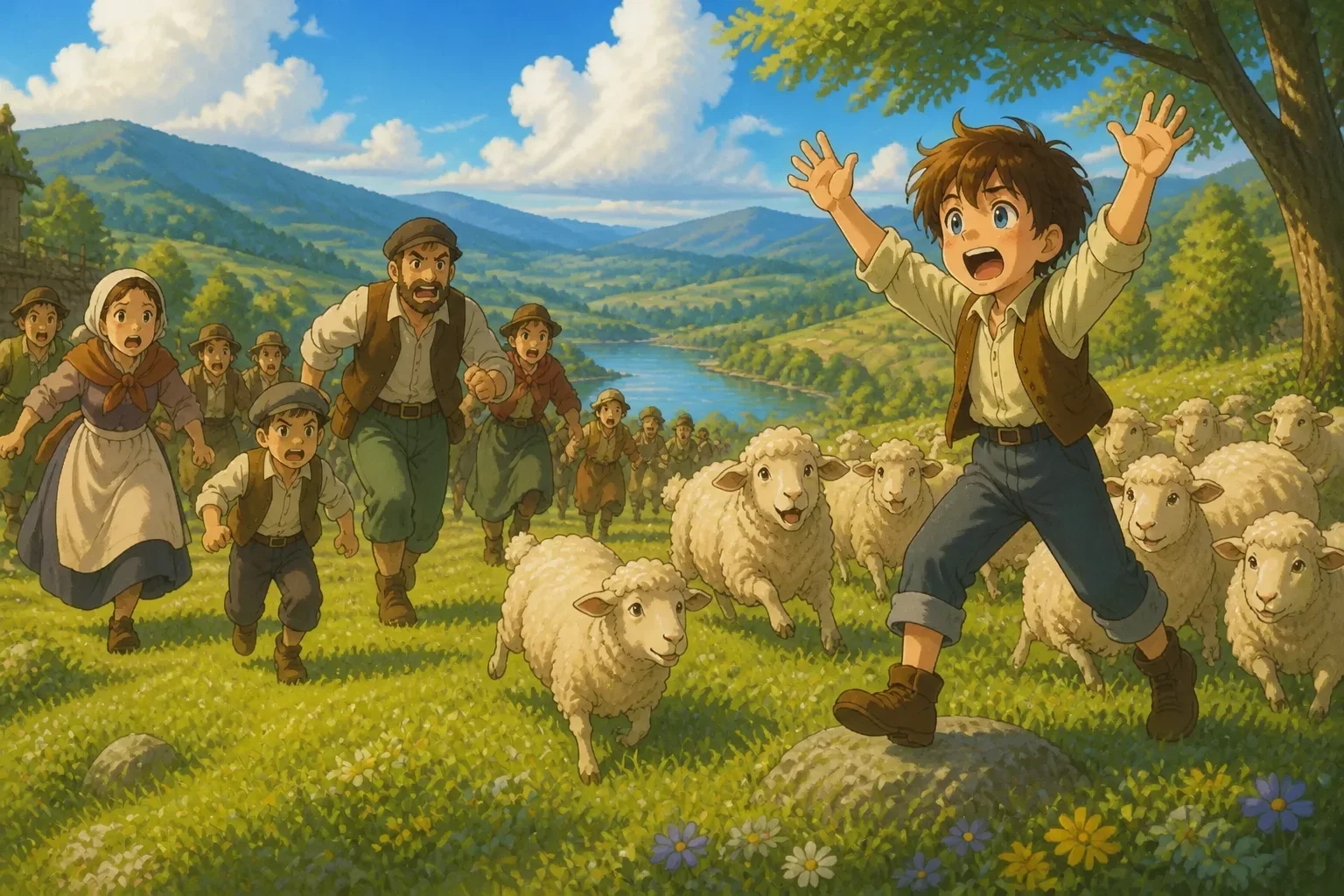
At once, the villagers dropped what they were doing.
A farmer came running with a rake. A baker hurried up still wearing a flour-dusted apron. Two women gathered their skirts and climbed the hill as fast as they could. Even the village elder came, breathing hard, his walking stick thumping against the ground.
"Where is it?" shouted one man.
"Which way did it go?" cried another.
Peter pointed wildly for a moment—then burst into laughter.
"There is no wolf!" he gasped. "I only wanted to see how fast you would run!"
The villagers froze.
No one laughed.
The baker frowned. The farmer lowered his rake. The elder’s face grew grave.
"That is not a game," he said. "When someone cries for help, people come because they care. Do not make fools of us, Peter."
But Peter was still chuckling as they trudged back down the hill.
To him, it had been the most interesting part of the whole week.
The Second Cry
The next day was even duller.
The sun hung overhead. Grasshoppers clicked in the weeds. The sheep drifted lazily from one patch of grass to another.
Peter remembered the villagers racing up the hill and grinned.
"Just one more time," he whispered to himself.
So again he shouted:
"Wolf! Wolf! Come quickly!"
Once again the villagers came running.
This time they looked frightened before they even reached him. One woman clutched her shawl to her chest. A young man had brought a rope. The farmer looked angry before he arrived.
And once again, there was no wolf.
Peter laughed so hard he nearly fell over.
But the villagers did not laugh at all.
"You lied to us yesterday," said the farmer, "and now you have lied again."
"What if someone truly needed help while we were here chasing your foolishness?" asked the baker.
The elder stepped forward. His voice was calm, but it carried more weight than shouting.
"Listen carefully, Peter. A lie may sound small when it leaves your mouth, but it grows heavy in the hearts of those who hear it. If you keep calling out when nothing is wrong, people will stop believing you—even when you tell the truth."
Peter looked away.
For a moment, he felt a tiny sting of shame.
But when the villagers left, the hill grew quiet again, and Peter soon forgot the warning.
The Real Wolf
A few evenings later, the air changed.
The breeze that usually smelled of clover turned sharp and still. The birds that chattered in the hedges went silent. Even the sheep lifted their heads and huddled closer together.
Peter noticed it then—a gray shape moving low through the grass.
Not a dog. Not a shadow. Not a joke.
A wolf.
Its eyes were fixed on the flock.
Peter’s heart slammed against his ribs.
He jumped to his feet and waved his stick. "Go away!" he shouted, but his voice shook. The wolf bared its teeth.
Suddenly Peter understood how foolish he had been.
He ran to the top of the hill and screamed until his throat hurt.
"Wolf! Wolf! Please help! This time it’s real!"
His voice cracked in the wind.
Down in the village, a few people heard him.
A woman at the well paused. A farmer looked up from his cart. The baker stood in his doorway.
But no one moved.
"It’s only Peter again," someone said.
"Let him laugh by himself this time," said another.
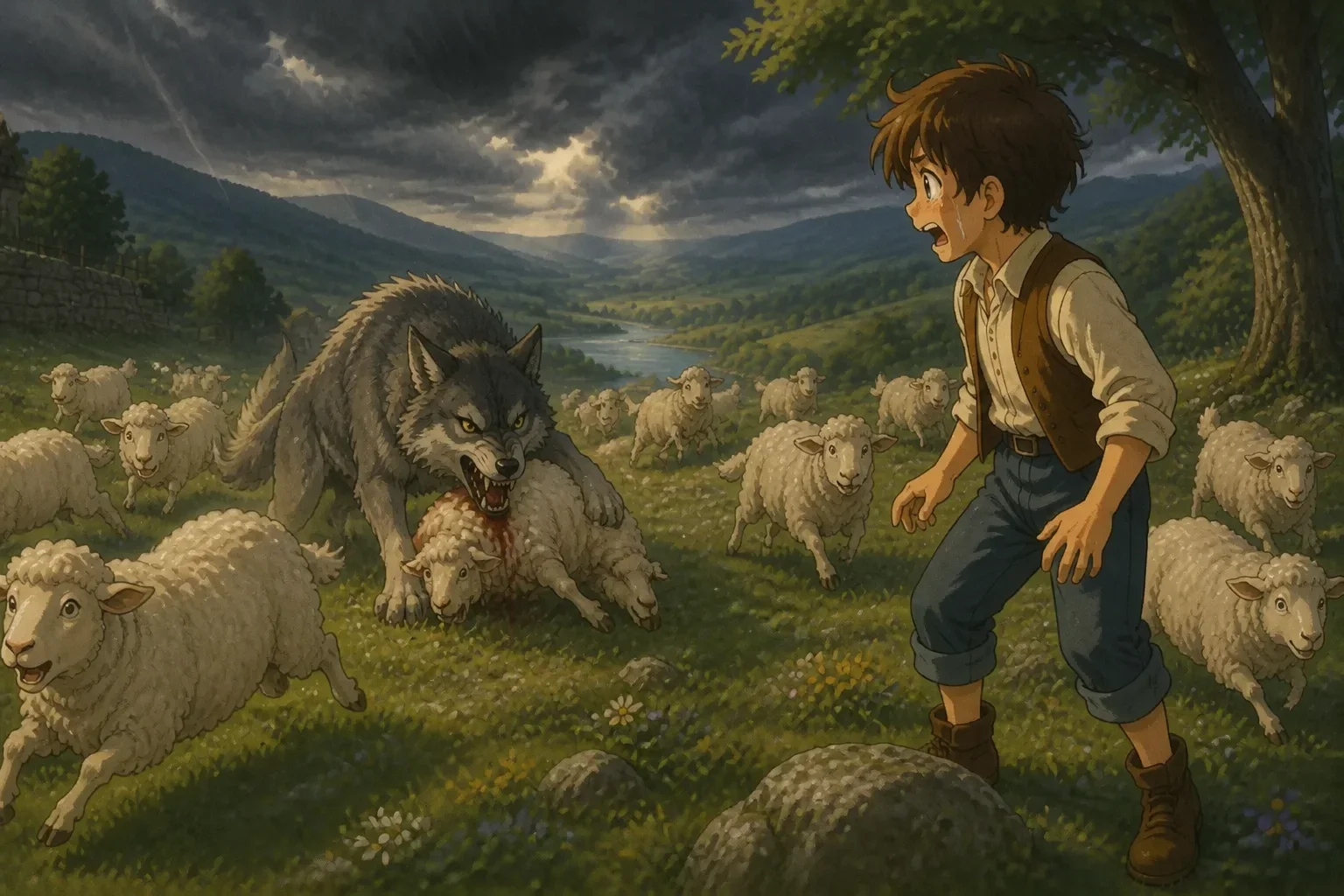
Peter shouted again, louder, more desperately than ever before.
"Please! Please come!"
But the hill remained empty.
The wolf rushed the flock. Sheep scattered in panic, their frightened bleats filling the air. Peter tried to chase the wolf away, but he was only one boy, trembling and terrified. By the time the villagers finally realized something was truly wrong and hurried up the hillside, the damage had already been done.
The sheep were gone.
Peter sat on the grass with tears on his cheeks, his shepherd’s stick limp in his hands.
When the villagers reached him, no one scolded him at first. The sight before them was punishment enough.
At last, the elder spoke softly.
"We wanted to trust you," he said.
Peter bowed his head. "I know," he whispered. "I told lies, and when I needed help, no one believed me."
The elder nodded sadly.
That evening, Peter walked home more quietly than ever before. The path seemed longer. The village seemed different too—not because it had changed, but because he had.
He had learned that trust is not built in a single moment. It is earned little by little, truth by truth. And once broken, it can be very hard to mend.
From that day on, Peter spoke carefully and honestly. He knew now that words matter. People listen. And when honesty is lost, even a true cry may sound like a lie.
Key Takeaways for Kids
- If you lie for fun, people may stop believing you.
- Trust is precious and can be hard to win back.
- Honest words help keep everyone safe.
- Small choices can lead to big consequences.
Moral of the Story
The Boy Who Cried Wolf teaches that if you lie again and again, people may not believe you even when you are telling the truth. Honesty builds trust, and trust matters.
Why This Story Still Matters
This classic moral story for kids remains powerful because children understand both parts of Peter’s problem: feeling bored and wanting attention, and then facing the consequences of a bad choice. It gently reminds readers that honesty is not just about following rules—it is about protecting trust with family, friends, teachers, and neighbors.
If you are looking for children's moral stories, bedtime stories, or honesty stories for kids, The Boy Who Cried Wolf is one of the most memorable tales to read and discuss together.
Watch the Animated Story
Watch on YouTube
Related Stories

The Ass in the Lion’s Skin: A Moral Story About Being
The Ass in the Lion’s Skin On the edge of a golden field, where tall grass swayed like waves and crickets sang in the…

Frogs Who Wanted a King: A Memorable Aesop Fable for Kids
The Frogs Who Wanted a King On the edge of a quiet marsh, where dragonflies stitched silver lines through the air and…
The Milkmaid and Her Pail Story for Kids About Dreams and
The Milkmaid and Her Pail Patty balanced the brimming pail on her head and stepped carefully onto the dusty village…
The Tortoise and the Hare Moral Story: An Aesop Fable
The Tortoise and the Hare On the edge of a sunlit meadow, where daisies nodded in the breeze and dragonflies skimmed…
The Bundle of Sticks Story: A Powerful Fable About Unity and
The Bundle of Sticks: A Heartwarming Story About Unity and Strength On the edge of a quiet village, where smoke curled…

The Fox and the Sour Grapes Story: Aesop’s Moral Tale
The Fox and the Sour Grapes On a hot afternoon, when even the wind seemed too sleepy to move, a hungry fox wandered…